


 Claim Ownership
The Story Exchange
Subscribed: 27Played: 289
Subscribe

© AMBRICA PRODUCTIONS. ALL RIGHTS RESERVED.
Description
The Story Exchange podcast showcases the stories and strategies of entrepreneurial women from San Diego to New York and beyond. Hosted by Colleen DeBaise. TheStoryExchange.org
80 Episodes
Reverse

Invented: The Myth of the American Housewife - Episode 1 Meet the Cold War-Era Housewife, Complete with Pearls and Aprons With men back from World War II, working women are thrust back into the home – and become a potent new symbol of the American way of life. With so much surprising (and complicated) interest in "tradwives," we decided to go back in time to understand the history of the American housewife in the first place. We were blown away by what we learned. It turns out that the fantastical image of the American housewife, which sprung up after World War 11, was just that: A fantasy. While women were once encouraged to be Rosie the Riveter, as soon as the men came back from war, the wives were pushed back into the home. The newly minted "housewife" was everywhere – in magazine ads, on TV shows, and in home economics filmstrips watched by school kids. "She's doing her housework in a tidy little dress with a little apron and high heels, as if that's the way women do their housework," says Elaine Tyler May, who studied housewives for decades at the University of Minnesota. As we learn in the podcast, the "housewife" was nothing more than an invention. As the Cold War raged, the United States competed with the Soviet Union – and in a show of one-upmanship, took to flaunting the American housewife as a sign of our cultural superiority. "That was really quite deliberately about the Cold War," May says. The housewife with her shiny new blenders, toasters and coffee makers "was promoted as part of the American way of life, the American dream." The problem? American women were never consulted. Join us in part one of Invented: The Myth of the American Housewife. (Photo credit: Ladies' Home Journal, Wikimedia Commons)
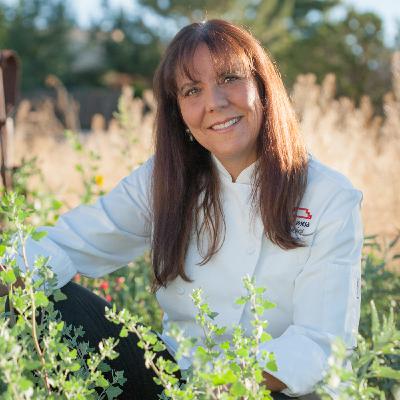
In our final episode, we explore our original food – the culinary traditions of Turtle Island, which is how many Indigenous cultures refer to North America. With many celebrations planned for the 250th anniversary of the United States, we thought it would be a particularly poignant time to look back to Native food. "Food is a gift from the land in our way of thinking," says Jill Falcon Ramaker, at Montana State University. "If we're able to receive those gifts and work with the land, tending wild plots, taking care of buffalo, then we're expressing our food sovereignty." Ramaker is one of many experts who told us about an awakening that's happening when it comes to Indigenous food, which was plentiful and important for thousands of years before European settlers arrived. In Oakland, California, Crystal Wahpepah is serving dishes like hand-harvested wild rice fritters and "three sisters" veggie bowls at her restaurant, Wahpepah's Kitchen. And in Minneapolis, a restaurant called Owamni, co-founded by Sean Sherman and Dana Thompson, specializes in "pre-contact" indigenous foods (no wheat flour, dairy, refined sugar, or factory-farmed beef, pork and chicken). While these restaurants are winning accolades, it's safe to say that many Americans are profoundly unfamiliar with Native food. By some estimates, there are less than 20 Indigenous restaurants in the U.S. "If something isn't practiced, it disappears," says Lois Ellen Frank, co-owner of Red Mesa Cuisine in Santa Fe, New Mexico, a small catering company specializing in Indigenous food and cultural education. She's also the author of "Foods of the Southwest Indian Nations," the first Native American cuisine cookbook to win a James Beard award, back in 2003. "The only way to keep these foods alive, the only way to perpetuate them, is if people make it." While much of Indigenous cuisine has been ignored, forgotten, and nearly wiped out, we found early documented examples – including the "The Indian Cook Book," published in 1933 by the Indian Women's Club of Tulsa, Oklahoma. In this episode, we talk to Frank about her mentor, Juanita Tiger Kavena, author of the 1980 cookbook "Hopi Cookery." And we also speak to Robert Caldwell at the University at Buffalo about modern-day Indigenous cuisine. (Photo: Lois Ellen Frank by Daphnehougard, Wikimedia Commons)
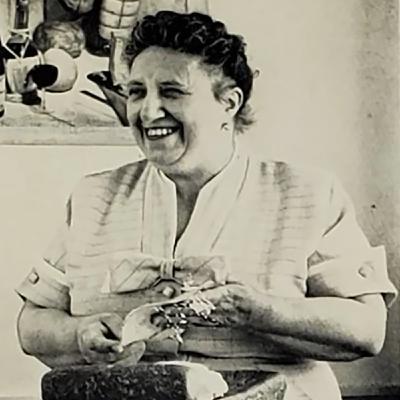
Elena Zelayeta was a Mexican-American chef working in California starting in the 1930s. She had a popular restaurant called Elena's Mexican Kitchen, which served dishes like enchiladas, chili rellenos and fajitas – dishes that many Americans weren't familiar with at that time. Later, she hosted a TV show called "It's Fun to Eat" and is widely credited with introducing Mexican flavors to a U.S. audience. Zelayeta's story is fascinating and inspiring. Born in Mexico City, she originally came to the U.S. as a young girl with her family, fleeing the Mexican Revolution of 1910. She notably managed to achieve success with her home-based restaurant, Elena's Mexican village, during the Great Depression, at a time when a competition for jobs and a backlash against immigrants resulted in the repatriation of over a million people back to Mexico. This podcast delves into all that, plus a personal tragedy that Zelayeta suffered at the height of her career: As a result of a childhood bout with scarlet fever, she went completely blind. After a long period of profound darkness, Zelayeta pulled herself back from the brink by teaching herself how to cook again. She went on to star in the TV show, publish cookbooks and even start a frozen food line. "It's made me happy to be able to see Elena's story getting a new life," says Gustavo Arellano, author of Taco USA, who joins us for this episode. "She was a Mexican immigrant in a world that until very recently was dominated by white people, namely people who taught Americans how to cook Mexican food." The episode also features Jeffrey Pilcher, a professor of history and food studies at the University of Toronto. And lastly, we're joined by Zarela Martinez, a Mexican-American chef who ran Zarela's restaurant in New York City for many years, and her son, Aarón Sánchez, co-star of Food Network's hit series, Chopped, who discuss Zelayeta's lasting influence.
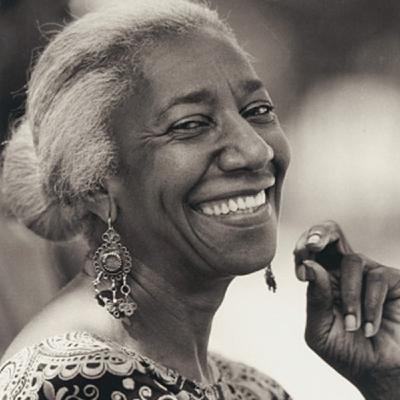
Edna Lewis was a chef and cookbook author whose memories and devotion to the delicious, fresh flavors of her Virginia childhood forever changed the way we think of Southern food. While our previous episodes have focused on women who time may have forgotten – MFK Fisher, Cecilia Chiang, Lena Richard – Lewis certainly holds a prestigious position today in the food community, inspiring chefs and home cooks alike. There's even a postage stamp dedicated to "the Grande Dame of Southern Cooking," featuring her elegant visage. "She didn't look like anyone else. She seemed to be 10 feet tall. It was just a majestic and also quiet presence," recalls Scott Peacock, Lewis's longtime friend, who joins us in this episode. Despite the accolades, it's fair to say that the average person might not know about Edna Lewis, who died in 2006 at age 89. And many more might not realize her influence – not just on Southern cuisine, but on how we source and consume food in general. Her historic Southern recipes focus on fresh ingredients that are in season and local. "Foundationally, her food was brilliant in its simplicity," says chef Alexander Smalls, who met Lewis at Gage & Tolner in Brooklyn, New York. "Long before there was Alice Waters from Berkeley, there was Edna, who essentially brought us to the fields." The episode also features Sara Franklin, who edited the book Edna Lewis: At The Table with an American Original, a collection of essays published in 2018.
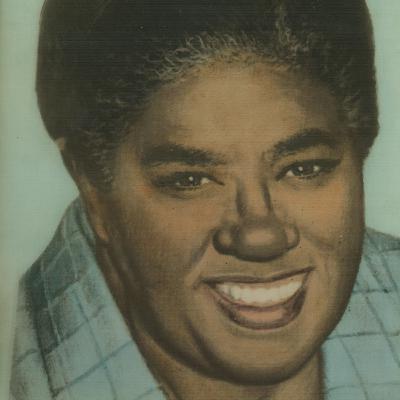
Lena Richard was a chef of Creole cuisine from New Orleans, famous for her shrimp bisque and spicy chicken gumbo. She not only had a cooking school, a cookbook, several restaurants and even a frozen food line (unusual for the 1940s), but she was also one of the first American women to have her own cooking show. Richard "is one of the most profound American women in history," says Zella Parmer of Dillard University in New Orleans, Louisiana. "It's so much we can learn from Lena Richard." This podcast episode explores Richard's early days as a domestic for a wealthy white family, to her turn as a student at the prestigious Fannie Farmer school in Boston, to her eventual reign as New Orleans' star chef. Far from resting on her laurels, Richard established a cooking school in New Orleans designed to give Black chefs like herself the training and the credentialing to command higher wages. Just as she was truly achieving superstardom, Richard's life was tragically cut short. "We don't really know how far Lena would have gone with everything that she had done, but I imagine had she lived longer, more people would know her story," says Ashley Rose Young, a historian at the Smithsonian and Library of Congress. The episode also features Chef Dee Lavigne of the Deelightful Roux School of Cooking, only the second Black woman after Richard to open a cooking school in New Orleans. (Image credit: Hand-tinted portrait of Lena Richards, via Newcomb Archives and Vorhoff Collection, Newcomb Institute, Tulane University. 2018 copyright by Tulane University. All rights reserved.)

Comments

Download from Google Play

Download from App Store
 United States