


 Claim Ownership
scientifica sessions.
Subscribed: 0Played: 0
Subscribe

© 2026 Tabari Baker
Description
Hosted by Tabari Baker, CEO of kronos scientifica, scientifica sessions features unscripted conversations with the executives, innovators, and visionaries shaping the future of biotech, medtech, pharma, and healthtech.
Each episode dives into the realities of leadership in a rapidly evolving industry: scaling medical affairs and commercial teams, building investor confidence, navigating regulatory shifts, unlocking digital health and AI, and driving commercialization strategies that matter. Guests share candid stories from the boardroom to the clinic—what worked, what didn't, and what's next.
If you're a CEO, CMO, commercial leader, investor, or startup founder, scientifica sessions gives you insider access to the lessons, strategies, and perspectives that don't show up in press releases or pitch decks.
Each episode dives into the realities of leadership in a rapidly evolving industry: scaling medical affairs and commercial teams, building investor confidence, navigating regulatory shifts, unlocking digital health and AI, and driving commercialization strategies that matter. Guests share candid stories from the boardroom to the clinic—what worked, what didn't, and what's next.
If you're a CEO, CMO, commercial leader, investor, or startup founder, scientifica sessions gives you insider access to the lessons, strategies, and perspectives that don't show up in press releases or pitch decks.
11 Episodes
Reverse

Episode DescriptionNorth Carolina is often described through the lens of Research Triangle Park—but the real story is bigger than RTP.In this first episode of Season 2 of scientifica sessions, we come home to unpack how North Carolina became one of the most complete life sciences ecosystems in the country: a hub built not on one asset, but on the full continuum from academic discovery to clinical development, CRO execution, biomanufacturing, and global commercialization.Joined by Christian Brown and Mike Carnes of the North Carolina Biotechnology Center, this conversation explores how a state once known for agriculture, tobacco, and textiles intentionally transformed itself into a globally recognized life sciences engine. From the founding of RTP in the late 1950s to the creation of NC Biotech in 1984, North Carolina’s growth has been shaped by long-term state vision, academic strength, federal research anchors, and a convening infrastructure designed to help companies start, scale, and stay.We explore how North Carolina is:Building across the entire biopharma value chain—from university research and biotech R&D to clinical trials, manufacturing, and sales.Leveraging NC Biotech as a statewide convener, investor, and ecosystem catalyst.Supporting early-stage companies through non-dilutive capital, loan funding, SBIR support, and investor syndication.Growing one of the strongest biomanufacturing workforces in the country through community colleges, BioWork, and university partnerships.Turning RTP 3.0 into a denser, more connected live-work-play innovation environment.Expanding life sciences beyond the Triangle into Holly Springs, Sanford, Wilson, Greenville, Winston-Salem, Charlotte, and other statewide clusters.The conversation also dives into one of the most urgent issues facing American innovation: the uncertainty surrounding SBIR funding and foreign-risk reviews. Mike Carnes explains how opaque funding denials could slow early-stage company formation—not just in North Carolina, but across every U.S. innovation hub. Pasted textWhat We Covered:Why North Carolina’s strength comes from diversification across the full life sciences value chain.How RTP grew from an anti–brain drain strategy into a self-sustaining innovation engine.Why NC Biotech’s early-stage funding model has helped companies raise billions in follow-on capital.How cost of doing business gives North Carolina a major advantage over Boston, San Diego, and the Bay Area.Why workforce—not just real estate or capital—is North Carolina’s clearest competitive advantage.How community colleges, universities, veterans programs, and mentorship create multiple pathways into the industry.Takeaway: North Carolina didn’t become a life sciences hub by accident. It built the infrastructure, talent, capital pathways, and statewide connectivity to move science from idea to patient impact—and it is still building.Connect with the guests 🔗 Christian Brown and Mike Carnes, North Carolina Biotechnology Center📩 Connect with the show: [email protected] by Thread and Tensor

Episode Description:Atlanta is often overlooked in the life sciences conversation—but what if that's exactly the point?In this episode of scientifica sessions, we go inside the Atlanta ecosystem to unpack how a city built on public health leadership, world-class institutions, and deep clinical infrastructure is quietly assembling one of the most strategically compelling life sciences hubs in the United States.Atlanta isn't trying to be Boston or San Diego. It's building something distinctly its own: a scale-up hub rooted in the interplay of the CDC, Emory University, Georgia Tech, a massive and diverse patient population, the world's busiest airport, and a collaboration culture that most markets can't manufacture.We explore how Atlanta is:Defining its identity as a scale-up hub through Georgia's first-ever life sciences roadmapAttracting global companies like UCB to site U.S. manufacturing in the SoutheastBuilding bio-literacy through K-12 programs that have reached over 270,000 students statewideDeveloping clinical infrastructure—including Children's Healthcare of Atlanta, home to more pediatric clinical trial beds than any U.S. children's hospital systemNavigating the capital gap through government funding, foundations, and a maturing local venture ecosystemThe conversation also confronts the valley of death head-on—what it actually looks like when a company survives it through disciplined decision-making, capital efficiency, and the courage to move slowly when everything says move fast.What We Covered:Why assets alone don't create a hub—and what the interplay looks like in AtlantaHow Atlanta's distributed micro-hub structure creates both opportunity and challengeThe real estate decisions that kill companies—and the discipline required to avoid themWhy Atlanta's quality of life and cost structure are becoming a structural competitive advantageHow Georgia's first life sciences roadmap is shaping the ecosystem's next decadeTakeaway: Atlanta didn't stumble into this moment. It built toward it for twenty years. The decade of intentionality starts now.Connect with the guests 🔗 LinkedIn: Maria Thacker Goethe; Steven Damon; Justin Burns, Ph.D.; Andy Roberts📩 Connect with the show: [email protected] by Thread and Tensor.

Episode Description:Massachusetts is often viewed as the epicenter of biotech—but what actually makes this ecosystem work?In this episode of scientifica sessions, we go inside the Commonwealth to unpack the deliberate strategy behind one of the most successful life sciences hubs in the world. Joined by leaders from the Massachusetts Life Sciences Center (MLSC) and founders building within the ecosystem, this conversation moves beyond Kendall Square to reveal a statewide model designed for scale, inclusion, and long-term impact.At the center of it all is MLSC—a quasi-public engine deploying capital, building infrastructure, and shaping policy to ensure innovation doesn’t just start in Massachusetts, but stays and grows there.We explore how Massachusetts has:Built a true public-private partnership across government, academia, and industryUsed non-dilutive funding to de-risk early innovation and unlock venture capitalCreated intentional pathways for underrepresented founders through programs like Mass Next GenExpanded beyond Boston to develop thriving clusters across the entire CommonwealthLeveraged density—not just of capital, but of experience, mentorship, and talent—to accelerate company growthThe conversation also dives into one of the most critical challenges in biotech—the “valley of death”—and how Massachusetts is actively building systems to help companies transition from early discovery to viable, revenue-generating businesses.What emerges is a blueprint: an ecosystem that listens, evolves, and invests with purpose—across talent, infrastructure, capital, and community.If you’re building, investing, or thinking about how to scale innovation in life sciences, this episode offers a rare look at what it takes to get it right.What We Covered:The four pillars of a successful life sciences hub.Why non-dilutive funding is more than capital—it’s protection and development.How MLSC designs programs based on real ecosystem gaps.The role of density in mentorship, talent, and commercialization.Why the future of biotech ecosystems is statewide—not city-bound.Takeaway:Massachusetts didn’t become a global leader by chance—it built an intentional system to make innovation inevitable.Connect with the guests🔗 LinkedIn: Tiffany Walther, PhD; Samantha Johnson; Minmin (Mimi) Yen, PhD, MPH; Asmi Chakraborty, PhD; Ryan Mudawar📩 Connect with the show: [email protected] by Thread and Tensor.
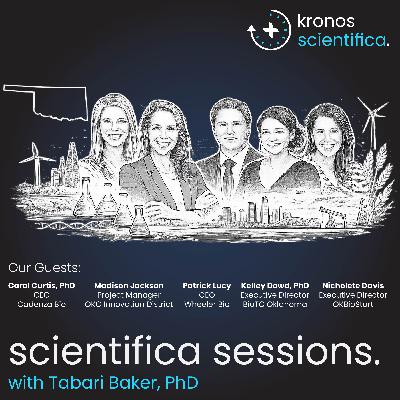
Episode DescriptionWhat if the next great American life sciences hub isn’t on the coasts—but in the heartland?In this episode of scientifica sessions, we look beyond the usual biotech strongholds to explore Oklahoma’s emergence as a new life sciences contender. While Boston and San Francisco dominate the narrative, Oklahoma is quietly building a different model—one that blends energy-sector expertise, agricultural biotechnology, and targeted infrastructure investment to create a distinct innovation advantage.Host Tabari Baker is joined by Oklahoma life sciences leaders:Carol Curtis, PhDNicholete DavisKelley Dowd, PhDMadison JacksonPatrick LucyTogether, they unpack what it really takes to build a life sciences ecosystem from the ground up. This isn’t a generic “emerging hub” story—it’s a candid look at convergent innovation, where energy capital fuels therapeutic development, and regional strengths shape a new path forward.In this episode, you’ll learn:Why Oklahoma’s “late start” may actually be a competitive advantage.How energy-industry capital and operational discipline are being repurposed for biotech.The infrastructure gaps that could accelerate—or constrain—ecosystem growth.What funding models are emerging before traditional venture capital arrives.How Oklahoma is addressing talent development without an established biotech workforce.The unique role of Native American healthcare systems in advancing innovation.Key segments include:The Anatomy of a Hub: Foundational assets and authentic differentiators.Capital and Commercialization: Creative funding approaches and early success stories.Infrastructure and Place: Lab space, cost structure, and quality-of-life advantages.Talent Flywheels: Workforce pipelines and entrepreneurial culture building.Whether you’re an entrepreneur deciding where to launch, an investor searching for untapped opportunity, or a life sciences leader tracking how innovation geography is shifting, this episode offers actionable insight into one of biotechnology’s most compelling frontier markets.Connect with the guests🔗 LinkedIn: Kelley Dowd, Nicholete Davis, Patrick Lucy, Carol Curtis, Madison Jackson📩 Connect with the show: [email protected] by Thread and Tensor.
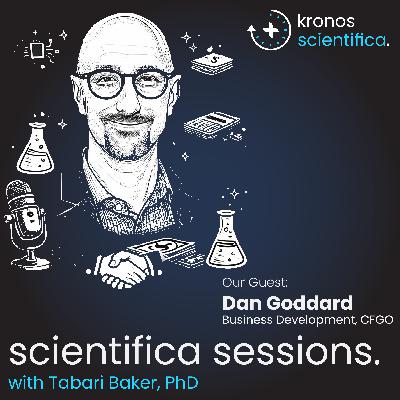
Episode DescriptionIn this episode of scientifica sessions, host Tabari Baker (Founder & CEO, kronos scientifica) sits down with Dan Goddard, Business Development Lead at CFGO, to explore one of the most critical—and misunderstood—journeys in life sciences: moving a company from concept to capital.Early-stage biotech lives at the intersection of breakthrough science, disciplined execution, and financial reality. When those elements align, companies build durable foundations that survive pivots, funding cycles, and market downturns. When they don’t, even exceptional science can stall. This conversation breaks down why that gap exists—and how founders can close it.Dan brings decades of experience across early-stage biotech, venture-backed scaling companies, finance, planning, and investor readiness. Together, Dan and Tabari unpack what investors are actually looking for, why planning matters even when it’s guaranteed to change, and how discipline—not hype—drives long-term success.In this episode, you’ll hear insights on:Why great science is necessary—but not sufficient—for fundraising.How to plan effectively when you know the plan will be wrong.Common budgeting mistakes founders make (and why being “under budget” can be a red flag).The importance of milestones, burn rate, and timing in a constrained funding environment.Why fractional expertise (finance, legal, regulatory) is essential for early-stage companies.Platform vs. asset strategies—and how AI is reshaping both.Lessons from prior biotech downturns and why contractions often produce the strongest companies.How founders should rethink fundraising as a partnership, not a transaction.The conversation also dives into the human side of company building: decision fatigue, leadership vulnerability, early hiring challenges, and knowing when to ask for help. Dan shares hard-won lessons from working with dozens of companies—and why honest dialogue with investors often unlocks more value than a perfect pitch deck.The episode closes with a powerful takeaway for founders navigating investor conversations:If you want advice, ask for money. If you want money, ask for advice.If you’re building, advising, or investing in early-stage biotech—and trying to understand what it really takes to turn innovation into impact—this episode is your playbook.If You Liked This Episode…Share it with your team and subscribe to scientifica sessions for unfiltered conversations with the leaders shaping biotech, pharma, and medtech.Connect with Dan Goddard🔗 LinkedIn: Dan Goddard📩 Connect with the show: [email protected]

Comments

Download from Google Play

Download from App Store
 United States