


 Claim Ownership
EP Edge: Heart Rhythm Talks
Subscribed: 2Played: 19
Subscribe
© 2026 Niraj Sharma MD FACC FHRS: Electrophysiologist & Cardiologist
Description
EP EDGE Heart Talk is a patient-focused cardiology and cardiac electrophysiology podcast created and hosted by Dr. Niraj Sharma, MD, FACC, FHRS: a board-certified cardiologist and cardiac electrophysiologist dedicated to helping patients and caregivers understand their heart rhythm conditions with clarity and confidence. The podcast educated patients and their caregivers about common heart rhythm disturbances and also discussed pacemakers, defibrillators, loop recorders, left atrial appendage closure and other topics.
This podcast breaks down complex heart rhythm issues into simple, practical conversations you can trust. Each episode explores topics such as atrial fibrillation (AFib), palpitations, PVCs, SVT, ventricular arrhythmias, pacemakers, ICDs, heart failure, stroke prevention, and lifestyle factors that improve heart rhythm health. Whether you’re newly diagnosed, supporting a loved one, or trying to understand how heart rhythm disorders affect daily life, EP-EDGE Heart Talk gives you clear explanations, real-world guidance, and evidence-based insights directly from a heart-rhythm specialist.
With a warm, accessible style, Dr. Sharma walks listeners through the why, how, and what next of heart rhythm conditions—covering diagnosis, treatment options, medications, catheter ablation, wearable devices, and the latest advances in electrophysiology. Each episode empowers you to make informed decisions, ask better questions in clinic, and take charge of your heart health.
If you want a trustworthy, easy-to-follow resource on A-fib, arrhythmias, cardiac procedures, and day-to-day heart health, EP-EDGE Heart Talk is here to guide you—one heartbeat at a time.
5 Episodes
Reverse
Passing out can be confusing, especially when you feel better soon afterward. Dr. Sharma explains syncope, the medical term for fainting—and how doctors investigate its cause. Learn about vasovagal fainting, blood pressure drops when standing, and heart rhythm problems that can cause a loss of consciousness. This episode covers the importance of a witness’s account, ECGs, heart monitors, and tilt-table testing. We also discuss what to do when someone feels faint or collapses, ways to reduce repeat episodes, and why driving and other activities may need individual guidance.Find more at EPEdge.org and on the EP Edge Heart Rhythm Compass app. A first or unexplained faint deserves medical review
What is ventricular tachycardia, or VT, and what does it mean for your heart? Dr. Sharma explains how this fast rhythm starts in the heart’s lower chambers and why its significance depends on the health of the heart. Learn the difference between sustained and nonsustained VT, how symptoms can vary, and why VT in an otherwise normal heart may require a different approach from VT linked to heart disease. We cover heart monitors, imaging, medicines, implantable defibrillators, and catheter ablation, along with symptoms that need urgent attention.Learn more at EPEdge.org and on the EP Edge Heart Rhythm Compass app. Discuss your results and treatment options with your healthcare provider.
Smartwatches & AFib: What Your Wrist Can—and Can’t—Tell You About Your HeartSmartwatches are changing the way millions of people discover heart rhythm problems—especially atrial fibrillation (AFib). But how accurate are devices like the Apple Watch, Fitbit, Samsung Galaxy Watch? And what should you actually do if your watch alerts you to an irregular rhythm?In this episode of EP-EDGE Heart Talk, cardiologist and cardiac electrophysiologist Dr. Niraj Sharma breaks down everything patients and caregivers need to know about smartwatch AFib detection, based on real science—not hype.You’ll learn:How accurate smartwatches really are for detecting AFib (hint: very accurate when the signal is clean)Why false positives are common—especially in younger usersWhat it means when your watch shows “Possible AFib” or “Inconclusive”How pacemakers, bundle branch blocks, and extra beats affect smartwatch readingsWhether smartwatches can replace Holter monitors or track AFib after ablationWhen smartwatch alerts matter—and when they’re nothing to worry aboutHow to use your device the right way to monitor heart healthThis episode is designed for anyone who has ever wondered whether their AFib notification, irregular rhythm alert, or ECG recording is real, meaningful, or just an algorithm misfire.EP-EDGE Heart Talk is your trusted voice for patient-friendly, accurate cardiology guidance—helping you understand your heart, your risks, and your options.
A-Fib Rhythm Control Explained: Cardioversion, Medications, and Ablation — What Patients Need to KnowManaging atrial fibrillation (A-Fib) goes far beyond simply slowing the heart rate. In this episode of EP-EDGE Heart Talk, Dr. Niraj Sharma—cardiologist and cardiac electrophysiologist—breaks down everything patients and caregivers need to understand about restoring normal rhythm, improving symptoms, and protecting long-term heart health.Whether you’ve been recently diagnosed with A-Fib, are living with persistent or long-standing persistent A-Fib, or are exploring treatment options for a loved one, this episode guides you step-by-step through the entire rhythm control journey.In This Episode You Will Learn:✔ What Rhythm Control Really MeansHow rhythm control differs in paroxysmal A-Fib vs. persistent A-FibWhy restoring sinus rhythm often improves energy, breathing, and overall well-beingWhen rhythm control is recommended based on symptoms✔ Cardioversion: What to ExpectWhy cardioversion is essential for persistent and long-standing persistent A-FibHow the procedure is done safely in the hospitalWhat patients feel during (and after) the procedureRare but possible complications like mild skin irritation✔ Antiarrhythmic Medications: Pros, Cons, and Required MonitoringAmiodarone: effectiveness, thyroid/lung/liver risks, and need for labs, X-rays, and eye examsSotalol: who it’s for, QT monitoring, kidney checks, and required echocardiogramFlecainide & Propafenone: highly effective—but only for patients with no coronary disease, no blockages, and no stents; echo, stress test, and labs required before startingDofetilide: safe for heart failure patients but requires hospital initiation✔ A-Fib Ablation: The Modern Path to Restoring RhythmWhat to expect during an ablation under general anesthesiaHow 3D mapping and electrical signals guide precision treatmentDifferences between RF ablation, cryoballoon ablation, and the newest technology—Pulse Field Ablation (PFA)Success rates for paroxysmal, persistent, and long-standing persistent A-Fib✔ Post-Ablation Recovery and MonitoringWhat symptoms are normal in the early weeksHow we track recurrence using ECGs, Holters, event monitors, loop recordersWhy smartwatches are now essential tools for long-term rhythm trackingWho This Episode Is ForPatients recently diagnosed with A-FibIndividuals with persistent or long-standing persistent A-FibAnyone considering cardioversion, antiarrhythmic medications, or A-Fib ablationCaregivers supporting family members with atrial fibrillationPatients confused about rhythm control vs. rate controlAnyone seeking clear, simple explanations from a heart rhythm specialistWhy You Should ListenA-Fib can be silent, subtle, or severely symptomatic — and the right rhythm control strategy can dramatically improve quality of life. Dr. Sharma provides a compassionate, comprehensive, and easy-to-understand roadmap that helps patients make informed decisions and take control of their heart health.If you have questions about this episode or want to suggest future topics, email us anytime at [email protected] Heart Talk — Demystifying Your Heart, One Beat at a Time.
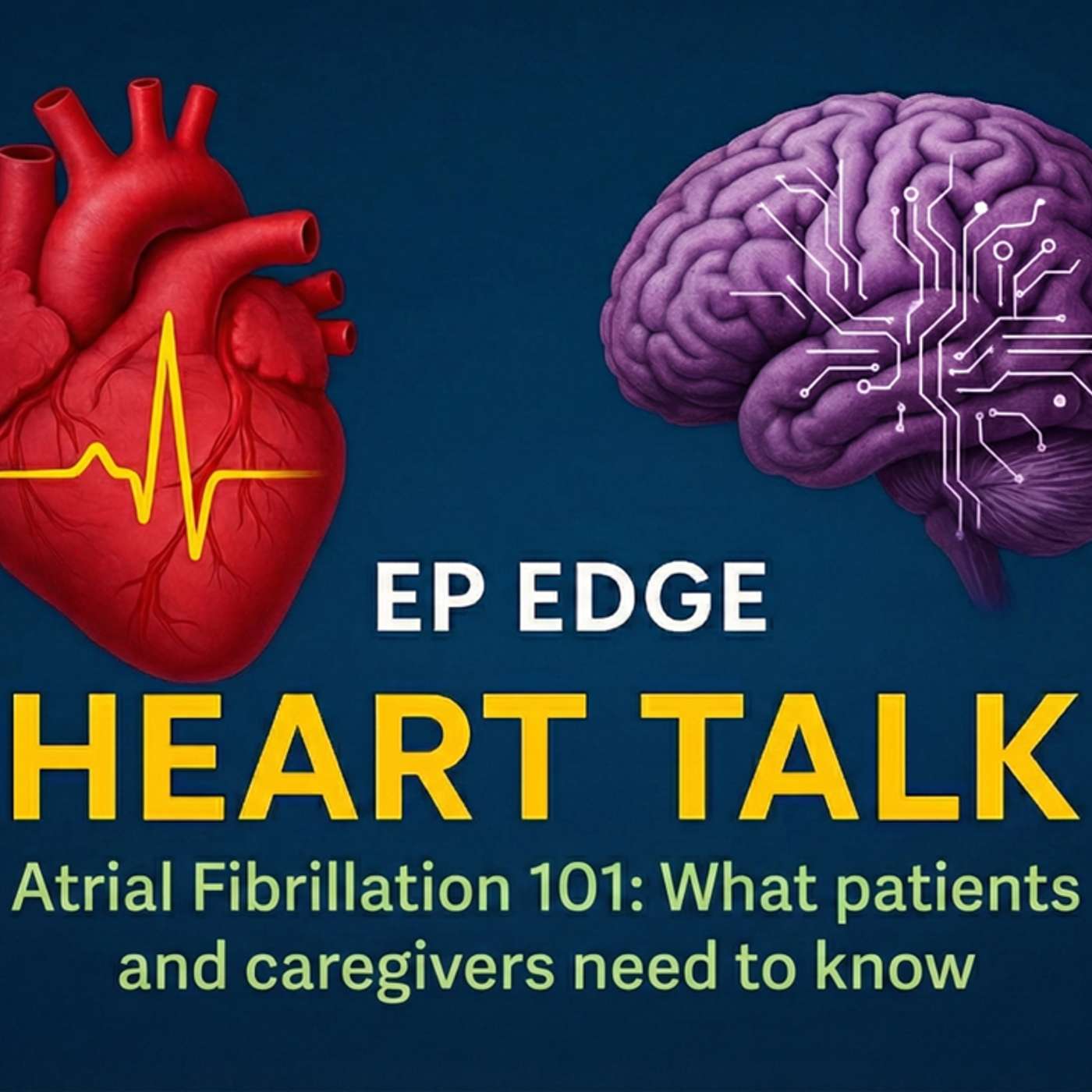
Atrial fibrillation—also known as AFib—is the most common heart rhythm disorder worldwide, and understanding it early can dramatically improve long-term outcomes. In this episode of EP-EDGE Heart Talk, Dr. Niraj Sharma breaks down AFib in a simple, clear, and empowering way designed specifically for patients and caregivers.You’ll learn:What atrial fibrillation is and how it affects the heartThe four types of AFib (paroxysmal, persistent, long-standing persistent, and permanent)Why early diagnosis matters and how AFib progresses over timeCommon symptoms—including subtle and overlooked signsThe three pillars of AFib treatment:Rate control and target resting heart-rate goalsStroke prevention using the CHA₂DS₂-VASc scoreRhythm control through medications and catheter ablationHow blood thinners reduce stroke risk, typical bleeding risks, and who may benefit from left atrial appendage occlusion (LAAO) devices like Watchman or AmuletWhen to consider AFib ablation and how success depends on the AFib typeThis episode gives listeners the knowledge they need to understand AFib, ask informed questions, and take an active role in their care.EP-EDGE Heart Talk — Guiding patients and caregivers, one heartbeat at a time.If you have any questions or concerns, you can email Dr. Sharma at: [email protected]
Comments

Download from Google Play

Download from App Store
 United States