


 Claim Ownership
EP Edge: Heart Rhythm Talks
Subscribed: 2Played: 20
Subscribe
© 2026 Niraj Sharma MD FACC FHRS: Electrophysiologist & Cardiologist
Description
EP EDGE Heart Talk is a patient-focused cardiology and cardiac electrophysiology podcast created and hosted by Dr. Niraj Sharma, MD, FACC, FHRS: a board-certified cardiologist and cardiac electrophysiologist dedicated to helping patients and caregivers understand their heart rhythm conditions with clarity and confidence. The podcast educated patients and their caregivers about common heart rhythm disturbances and also discussed pacemakers, defibrillators, loop recorders, left atrial appendage closure and other topics.
This podcast breaks down complex heart rhythm issues into simple, practical conversations you can trust. Each episode explores topics such as atrial fibrillation (AFib), palpitations, PVCs, SVT, ventricular arrhythmias, pacemakers, ICDs, heart failure, stroke prevention, and lifestyle factors that improve heart rhythm health. Whether you’re newly diagnosed, supporting a loved one, or trying to understand how heart rhythm disorders affect daily life, EP-EDGE Heart Talk gives you clear explanations, real-world guidance, and evidence-based insights directly from a heart-rhythm specialist.
With a warm, accessible style, Dr. Sharma walks listeners through the why, how, and what next of heart rhythm conditions—covering diagnosis, treatment options, medications, catheter ablation, wearable devices, and the latest advances in electrophysiology. Each episode empowers you to make informed decisions, ask better questions in clinic, and take charge of your heart health.
If you want a trustworthy, easy-to-follow resource on A-fib, arrhythmias, cardiac procedures, and day-to-day heart health, EP-EDGE Heart Talk is here to guide you—one heartbeat at a time.
7 Episodes
Reverse
What do PACs and PVCs mean on a heart monitor report? Dr. Sharma explains premature atrial contractions and premature ventricular contractions—early beats that begin in different parts of the heart. Learn why an early beat can feel like a pause or a strong thump, what “PVC burden” means, and why the number of early beats must be considered alongside heart function and symptoms. We discuss common triggers, testing, medicines, catheter ablation, and follow-up. Understand when reassurance may be enough and when more evaluation or treatment may help.Learn more at EPEdge.org and on the EP Edge Heart Rhythm Compass app. Review your individual monitor results with your healthcare provider
A sudden racing heartbeat can raise many questions. In this episode of EP Edge® Heart Rhythm Talks, Dr. Sharma explains supraventricular tachycardia, or SVT, using simple language. Learn about AVNRT, AVRT, Wolff-Parkinson-White syndrome, and atrial tachycardia, including how these rhythms differ. We discuss how SVT is diagnosed and how treatment may include beta blockers, calcium channel blockers, other rhythm medicines, or catheter ablation. This episode introduces ablation, with a fuller discussion planned for a separate podcast, and explains why treatment must match the exact rhythm.Visit EPEdge.org or explore the EP Edge Heart Rhythm Compass app. This episode supports, but does not replace, advice from your healthcare team.
Passing out can be confusing, especially when you feel better soon afterward. Dr. Sharma explains syncope, the medical term for fainting—and how doctors investigate its cause. Learn about vasovagal fainting, blood pressure drops when standing, and heart rhythm problems that can cause a loss of consciousness. This episode covers the importance of a witness’s account, ECGs, heart monitors, and tilt-table testing. We also discuss what to do when someone feels faint or collapses, ways to reduce repeat episodes, and why driving and other activities may need individual guidance.Find more at EPEdge.org and on the EP Edge Heart Rhythm Compass app. A first or unexplained faint deserves medical review
What is ventricular tachycardia, or VT, and what does it mean for your heart? Dr. Sharma explains how this fast rhythm starts in the heart’s lower chambers and why its significance depends on the health of the heart. Learn the difference between sustained and nonsustained VT, how symptoms can vary, and why VT in an otherwise normal heart may require a different approach from VT linked to heart disease. We cover heart monitors, imaging, medicines, implantable defibrillators, and catheter ablation, along with symptoms that need urgent attention.Learn more at EPEdge.org and on the EP Edge Heart Rhythm Compass app. Discuss your results and treatment options with your healthcare provider.
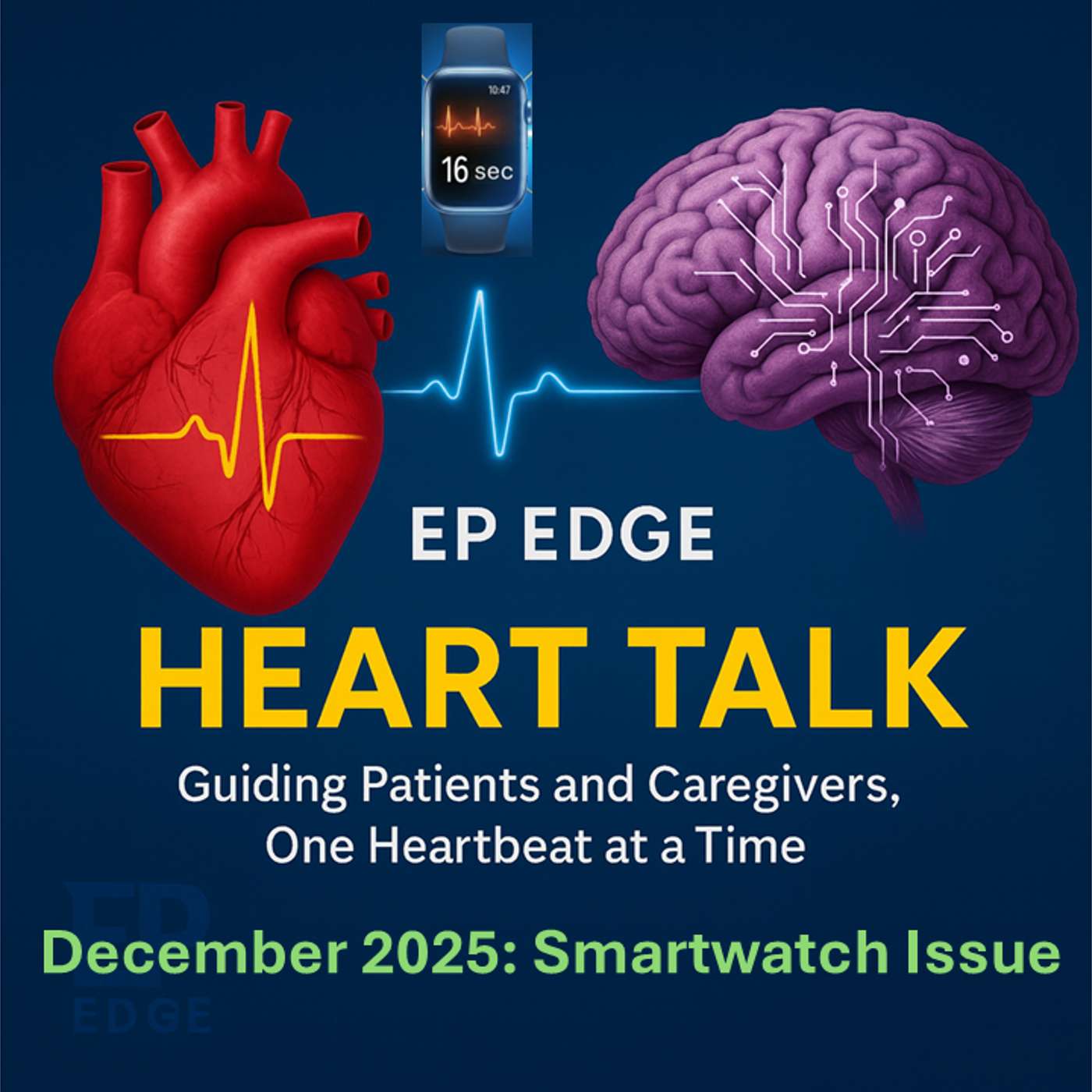
Smartwatches & AFib: What Your Wrist Can—and Can’t—Tell You About Your HeartSmartwatches are changing the way millions of people discover heart rhythm problems—especially atrial fibrillation (AFib). But how accurate are devices like the Apple Watch, Fitbit, Samsung Galaxy Watch? And what should you actually do if your watch alerts you to an irregular rhythm?In this episode of EP-EDGE Heart Talk, cardiologist and cardiac electrophysiologist Dr. Niraj Sharma breaks down everything patients and caregivers need to know about smartwatch AFib detection, based on real science—not hype.You’ll learn:How accurate smartwatches really are for detecting AFib (hint: very accurate when the signal is clean)Why false positives are common—especially in younger usersWhat it means when your watch shows “Possible AFib” or “Inconclusive”How pacemakers, bundle branch blocks, and extra beats affect smartwatch readingsWhether smartwatches can replace Holter monitors or track AFib after ablationWhen smartwatch alerts matter—and when they’re nothing to worry aboutHow to use your device the right way to monitor heart healthThis episode is designed for anyone who has ever wondered whether their AFib notification, irregular rhythm alert, or ECG recording is real, meaningful, or just an algorithm misfire.EP-EDGE Heart Talk is your trusted voice for patient-friendly, accurate cardiology guidance—helping you understand your heart, your risks, and your options.

Comments

Download from Google Play

Download from App Store
 United States