


 Claim Ownership
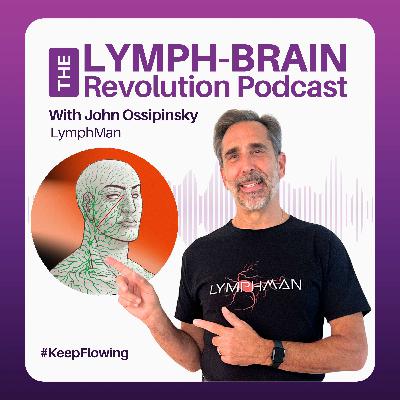
The Lymph-Brain Revolution Podcast
Subscribed: 10Played: 299
Subscribe

© Copyright 2025 All rights reserved.
Description
Most people are never taught that the lymphatic system plays a critical role in mental and physical health. How you prevent disease, overcome illness, and age with an intact mind depends on your lymphatic system. When lymph flow slows, anxiety, brain fog, fatigue, IBS, poor sleep, and chronic symptoms often follow.
The Lymph-Brain Revolution Podcast, hosted by John Ossipinsky (LymphMan), started his career as a Certified Lymphedema Therapist and Diplomate in CranioSacral Therapy. With over 30 years of clinical experience, he explores the missing link between the lymphatic system, mental and physical health, chronic disease, immunity, and long-term wellness.
If you struggle with anxiety, IBS, inflammation, brain fog, or feel like something is "off" but can't find answers — this podcast is for you.
Let your body and brain drain. Keep Flowing!
The Lymph-Brain Revolution Podcast, hosted by John Ossipinsky (LymphMan), started his career as a Certified Lymphedema Therapist and Diplomate in CranioSacral Therapy. With over 30 years of clinical experience, he explores the missing link between the lymphatic system, mental and physical health, chronic disease, immunity, and long-term wellness.
If you struggle with anxiety, IBS, inflammation, brain fog, or feel like something is "off" but can't find answers — this podcast is for you.
Let your body and brain drain. Keep Flowing!
43 Episodes
Reverse
What if one reason you don't feel restored after sleeping isn't simply how many hours you slept—but what was happening inside your brain during those hours? Restorative sleep is about more than time in bed. While you sleep, your brain moves through different stages as electrical activity, blood vessels, breathing, cerebrospinal fluid, metabolism, and clearance pathways work together to help maintain the environment your brain cells need. In Episode 42 of The Lymph-Brain Revolution, John Ossipinsky—LymphMan—explores research showing how slow brain waves, changes in blood volume, and cerebrospinal fluid movement become coordinated during sleep, and why deeper breathing can physically influence the movement of cerebrospinal fluid. John also shares his personal experience with sleep apnea and explores why being asleep isn't necessarily the same as getting restorative sleep. You'll learn how aging, fragmented sleep, insomnia, sleep apnea, alcohol, cannabis, and other factors can interfere with normal sleep architecture—and what emerging research is revealing about disrupted sleep and cellular aging. Restorative sleep isn't just about being asleep. It's about creating the conditions that allow your brain and body to do what they need to do throughout the night. 📘 Episode Resources, Studies & Show Notes 👉 Episode 42: Restorative Sleep: How Sleep Supports a Healthier Brain https://www.johnossipinsky.com/lymph-brain-revolution-podcast-episode-42 ──────────────────────────── ✅ In this episode, you'll learn: • Why eight hours in bed doesn't necessarily mean eight hours of restorative sleep • What happens to NREM, REM, and deep slow-wave sleep throughout the night • How slow brain waves, blood-vessel movement, and cerebrospinal fluid are connected during sleep • How breathing and diaphragm movement can physically influence cerebrospinal fluid movement • Why aging, fragmented sleep, insomnia, and sleep apnea can interfere with restorative sleep • What research suggests about disrupted sleep, cellular aging, alcohol, cannabis, and sleep architecture • How fluid and material leaving the brain connect with lymphatic drainage pathways and cervical lymph nodes • How movement, your circadian rhythm, light exposure, nutrition, magnesium, posture, the LymphMan Shoulder Shuffle, and relaxed DEEP breathing can help create better conditions for restorative sleep ──────────────────────────── 🎧 Listen On Your Favorite Platform Apple Podcasts Spotify Amazon Music iHeartRadio 🌀 What LymphMan Recommends to Improve Sleep & Health https://www.johnossipinsky.com/lymphmanrecommends 🌐 The Lymph-Brain Revolution Podcast Episode Hub Page: https://www.johnossipinsky.com/podcast-episode-hub-page 📘 Free Lymphatic System Health Guide & 7 Day Plan To Improve Lymph Flow https://www.johnossipinsky.com/lymphman-lymphatic-system-health-guide 📱 Follow @LymphMan on Instagram for lymphatic health tips, new research, simple exercises, and new podcast episodes. ──────────────────────────── 🔔 Subscribe for New Episodes Every Wednesday Helping you better understand the lymphatic system and its role in human health. If this episode gives you a new perspective on restorative sleep, brain health, cerebrospinal fluid, glymphatic clearance, aging, and the lymphatic system, please subscribe, leave a review, and share it with someone who struggles with sleep or wants to protect their brain health as they age. Changing World Health... One Lymphatic System at a Time. Keep Flowing! 💦 ⚠️ Educational Disclaimer: This episode is for educational purposes only and is not intended to diagnose, treat, cure, or prevent any disease or sleep disorder. Persistent insomnia, excessive daytime fatigue, loud snoring, pauses in breathing, morning headaches, suspected sleep apnea, or other significant sleep problems should be evaluated by an appropriate qualified healthcare professional.
What if you become so good at handling stress that you barely notice it anymore—but your body is still responding? First responders can spend years exposed to repeated stress, trauma, disrupted sleep, shift work, and high-alert situations. Research suggests these experiences can affect cortisol regulation, immune function, metabolism, cardiovascular health, mental health, and biological processes associated with aging. In episode 41 of The Lymph-Brain Revolution, John Ossipinsky—LymphMan, a former Army medic and New York City firefighter, explores research on chronic stress, PTSD, sleep disruption, cellular aging, brain health, and recovery in firefighters, police officers, EMTs, paramedics, active-duty military personnel, and veterans. John also reflects on the 25th anniversary of 9/11 and what the long-term health of World Trade Center responders can teach us about first-responder health and recovery. You'll also learn how the brain's glymphatic system and meningeal lymphatic vessels connect with lymphatic pathways outside the brain, and why supporting lymphatic health through movement, deep breathing, and the LymphMan Shoulder Shuffle can become part of a simple daily recovery routine. You trained to respond. Now train yourself to recover. 📘 Episode Resources, Studies & Show Notes 👉 Episode 41: First Responders – How Chronic Stress Changes Your Health https://www.johnossipinsky.com/lymph-brain-revolution-podcast-episode-41 ✅ In this episode, you'll learn: Why becoming accustomed to stress doesn't mean your body stops responding to it How chronic stress and disrupted sleep can affect cortisol, metabolism, immune function, and cardiovascular health What research reveals about PTSD and mental health in first responders, military personnel, and veterans How chronic psychological stress overlaps with pathways involved in cellular aging and senescent cells What scientists are discovering about brain pH, glymphatic clearance, meningeal lymphatics, and cervical lymph nodes How sleep, movement, deep breathing, and the LymphMan Shoulder Shuffle can support a daily recovery routine 🎧 Listen On Your Favorite Platform Apple Podcasts Spotify Amazon Music iHeartRadio 🌐 The Lymph-Brain Revolution Podcast Episode Hub Page: https://www.johnossipinsky.com/podcast-episode-hub-page 📘 Free Lymphatic System Health Guide & 7 Day Plan To Improve Lymph Flow https://www.johnossipinsky.com/lymphmans-lymphatic-system-health-guide 📱 Follow @LymphMan on Instagram for lymphatic health tips, new research, simple exercises, and new podcast episodes. 🔔 Subscribe for New Episodes Every Wednesday Helping you better understand the lymphatic system and its role in human health. If this episode gives you a new perspective on first responders, chronic stress, PTSD, brain health, recovery, and the lymphatic system, please subscribe, leave a review, and share it with a firefighter, police officer, EMT, paramedic, active-duty service member, veteran, or someone who loves a first responder. Changing World Health... One Lymphatic System at a Time. Keep Flowing! 💦 ⚠️ Educational Disclaimer: This episode is for educational purposes only and is not intended to diagnose, treat, cure, or prevent PTSD, depression, anxiety, cardiovascular disease, or any other medical or mental health condition. If you are experiencing PTSD, depression, severe anxiety, substance misuse, suicidal thoughts, or another mental or physical health concern, please seek help from an appropriate qualified healthcare or mental health professional.
What if improving lymph flow and circulation didn't require a complicated exercise routine? Rebounding can be an intense workout—but it doesn't have to be. Gentle bouncing creates muscle contraction, tissue movement, changing pressure, and deeper breathing—all forces that can support lymph movement and circulation. In this episode of The Lymph-Brain Revolution, John Ossipinsky—LymphMan explores research on rebounding, lymph flow, breathing, cardiovascular and metabolic health, cognition, balance, and healthy aging. You'll also learn why rebounding hasn't been proven to move lymph better than walking, why more isn't always better, and how John personally uses gentle bouncing to get his body moving and flowing. LymphMan Shoulder Shuffle → DEEP breathing → gentle bouncing → DEEP breathing → Shoulder Shuffle. 📘 Episode Resources, Studies & Show Notes 👉 Episode 40: Rebounding: Can Bouncing Improve Lymph Flow & Health? https://www.johnossipinsky.com/lymph-brain-revolution-podcast-episode-40 ✅ In this episode, you'll learn: How muscle contraction, gravity, pressure, and breathing can influence lymph movement How lymphangions help collecting lymphatic vessels pump lymph What research shows about rebounding, metabolic health, cardiovascular fitness, cognition, and balance Why rebounding has not been proven to move lymph better than walking Why starting gently can be more appropriate than jumping into a long workout How John combines the LymphMan Shoulder Shuffle, deep breathing, and gentle bouncing 🎧 Listen On Your Favorite Platform Apple Podcasts Spotify Amazon Music iHeartRadio 🌐 The Lymph-Brain Revolution Podcast Episode Hub: See all episodes 📘 Free Lymphatic System Health Guide & 7-Day Plan to Improve Lymph Flow See LymphMan's Lymphatic Health Guide 📱 Follow @LymphMan on Instagram for lymphatic health tips, new research, simple exercises, and new podcast episodes. 🔔 Subscribe for New Episodes Every Wednesday Helping you better understand the lymphatic system and its role in human health. If this episode gives you a new perspective on rebounding, lymph flow, circulation, and healthy aging, please subscribe, leave a review, and share it with someone who could benefit. Changing World Health... One Lymphatic System at a Time. Keep Flowing! 💦 ⚠️ Educational Disclaimer: This information is for educational purposes and is not a substitute for professional medical advice, diagnosis, or treatment. If you have significant swelling, lymphedema, balance problems, cardiovascular disease, osteoporosis, a recent injury or surgery, pelvic-floor symptoms, or another medical concern, talk with a qualified healthcare professional before beginning a rebounding program.
What if your back pain isn't only about what your spine looks like on an MRI? Back pain can involve disc degeneration, bulging discs, muscle tension, or nerve compression—but research shows that the biology inside and around spinal tissues can also influence pain. In this episode of The Lymph-Brain Revolution, John Ossipinsky—LymphMan explores why two people can have similar-looking MRIs yet experience very different levels of pain, and why understanding the cells, chemistry, inflammation, nerves, circulation, and lymphatic system can give us a much bigger picture of back pain and healing. You'll also discover what research is revealing about disc acidity, lactate, senescent "zombie" cells, inflammatory signaling, and pain-sensitive nerves that can grow deeper into degenerating discs—and why your spine should be thought of as living tissue rather than simply a mechanical structure. 📘 Episode Resources, Studies & Show Notes 👉 Episode 39: Back Pain: How Your Spine Creates Pain—and Healing https://www.johnossipinsky.com/lymph-brain-revolution-podcast-episode-39 ✅ In this episode, you'll learn: Why MRI findings don't always match the amount of back pain someone experiences How spinal discs are living tissues and why nutrient delivery, metabolic waste, lactate, and pH matter How senescent "zombie" cells and inflammation can change the environment inside degenerating discs Why pain-sensitive nerves can grow deeper into discs and respond to both mechanical and chemical signals How movement, sleep, nutrition, and metabolic health can support healthier conditions for your spine How the lymphatic system, deep breathing, and LymphMan Shoulder Shuffle fit into the larger picture of tissue health and recovery 🎧 Listen On Your Favorite Platform Apple Podcasts Spotify Amazon Music iHeartRadio 🌐 The Lymph-Brain Revolution Podcast Episode Hub: See all episodes 📘 Free Lymphatic System Health Guide & 7-Day Plan to Improve Lymph Flow 📱 Follow John @LymphMan on Instagram for practical lymphatic health tips, simple exercises, new research, and podcast updates. 🔔 Subscribe for New Episodes Every Wednesday Helping you better understand the lymphatic system and its role in human health. If this episode gives you a new perspective on back pain, disc health, inflammation, healing, and the lymphatic system, please subscribe, leave a review, and share it with someone who could benefit. Changing World Health... One Lymphatic System at a Time. Keep Flowing! 💦 ⚠️ Educational Disclaimer: This information is intended to educate and empower you to better understand back pain, the lymphatic system, and your health. It is not a substitute for professional medical advice, diagnosis, or treatment. Seek medical evaluation for persistent back pain, neurological symptoms, injuries, or other concerning symptoms.
What if the ringing in your ears isn't only about your ears? Tinnitus can begin with changes in the inner ear, but research shows that the brain, sensory nerves, neck and jaw, inflammation, stress, and sleep can influence how tinnitus develops and how intensely it is perceived. In this episode of The Lymph-Brain Revolution, John Ossipinsky—LymphMan explores why tinnitus can become so persistent and why moving your jaw, tightening your neck, or even touching your face can change the sound in some people. You'll also discover how neuroinflammation, oxidative stress, cochlear health, and brain processing fit into the tinnitus story—and what emerging research is revealing about glymphatic function and meningeal lymphatic vessels. 📘 Episode Resources, Studies & Show Notes 👉 Episode 38: Tinnitus: The Brain, Inflammation & Lymphatic System https://www.johnossipinsky.com/lymph-brain-revolution-podcast-episode-38 ⚠️ If you're concerned about: • Ringing, buzzing, humming, static, or white noise in your ears • Tinnitus that changes when you move your neck or jaw • Neck, jaw, or shoulder tension • Hearing loss or noise exposure • Stress, anxiety, or sleep problems associated with tinnitus ✅ In this episode, you'll learn: • Why tinnitus can involve both the ear and brain • What somatosensory tinnitus is and why the neck, jaw, face, and sensory nerves can influence what you hear • How neuroinflammation, oxidative stress, and cellular aging can affect the auditory system • Why stress, anxiety, and poor sleep can make tinnitus more intrusive • What scientists are investigating about glymphatic function, meningeal lymphatic vessels, and tinnitus • Simple ways to reduce neck and shoulder tension, support healthy lymph flow, and calm the nervous system • Important tinnitus warning signs that need medical evaluation • Which tinnitus warning signs require prompt medical evaluation 🎧 Listen On Your Favorite Platform Apple Podcasts Spotify Amazon Music iHeartRadio 🌐 The Lymph-Brain Revolution Podcast Episode Hub: HealthyLymphSystem.com 📘 Free Lymphatic System Health Guide & 7-Day Plan to Improve Lymph Flow 📱 Follow John @LymphMan on Instagram for practical lymphatic health tips, simple exercises, new research, and podcast updates. 🔔 Subscribe for New Episodes Every Wednesday Helping you better understand the lymphatic system and its role in human health. If this episode gives you a new perspective on tinnitus, brain health, inflammation, and the lymphatic system, please subscribe, leave a review, and share it with someone who could benefit. Changing World Health... One Lymphatic System at a Time. Keep Flowing! 💦 ⚠️ Educational Disclaimer: This information is intended to educate and empower you to better understand the lymphatic system and your health. It is not a substitute for professional medical advice, diagnosis, or treatment.

Comments

Download from Google Play

Download from App Store
 United States