


 Claim Ownership
-ism | Ideas Meet Power
Subscribed: 8Played: 131
Subscribe

© Matt Payne
Description
-ism is a narrative history of the people and places behind the world's most revolutionary ideas: socialism, anarchism, communism, fascism, and beyond. Each season follows an ideology through the moments when it collides with power, shaping cities, movements, and lives.
Current Season: The Age of Anarchism — Chicago and the American Labor Revolt
Previous Season: The Origins of Socialism — Paris and the Making of Modern Revolution
Written and produced by Matt Payne
Original musical compositions by Ian Payne
ismhistorypodcast.substack.com
21 Episodes
Reverse

In the spring of 1894, Eugene V. Debs was convinced that a new era of harmony between capital and labor was dawning. His newly formed American Railway Union had secured a remarkable victory against one of the country’s most powerful railroad barons, demonstrating the potential of industrial unionism.Just south of Chicago, the railroad magnate George Pullman had constructed a model industrial town that he believed would reconcile the interests of workers and their employers. But in the wake of the Panic of 1893, Pullman’s experiment in industrial harmony began to unravel.As thousands of Pullman workers walked off the job, Debs and his young union were drawn into a confrontation that would test the limits of organized labor in an age of unprecedented corporate power.In the first installment of our miniseries, The Pullman Strike and the Making of Eugene V. Debs, we explore the rise of industrial unionism, the contradictions of the Gilded Age, and the competing visions of American industrial society that culminated in one of the most consequential labor struggles in American history.Next: Chicago 1894: The Pullman Strike pt. II — The Great BoycottWritten and produced by Matt Payne.Support, Subscribe, Read on Substack: https://ismhistorypodcast.substack.com/Original Musical Compositions by Ian Payne: https://www.jamesianpayne.com/Support the Show: PayPalContact: [email protected] This is a public episode. If you would like to discuss this with other subscribers or get access to bonus episodes, visit ismhistorypodcast.substack.com
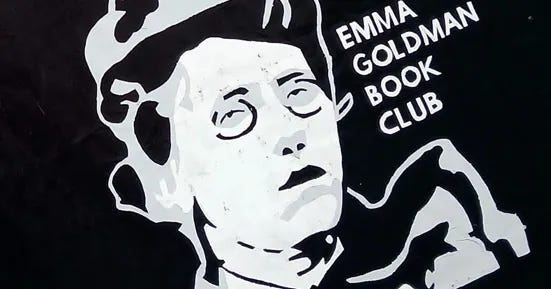
From the Haymarket trial of 1886 to the recent Prairieland case in 2026, American history reveals a recurring pattern whereby radical political ideas become evidence of criminal conspiracy.In this special episode, I read my recent essay tracing that history through the prosecution of anarchists, labor radicals, communists, antifascists, and other political dissidents. Along the way, we encounter Eugene V. Debs, Clarence Darrow, the Palmer Raids, and the enduring question of where the prosecution of political violence ends and the prosecution of political ideas begins. The full essay can be read here: https://ismhistorypodcast.substack.com/p/antifa-cells-and-anarchist-conspiraciesNext: Chicago 1894: The Pullman StrikeWritten and produced by Matt Payne.Support, Subscribe, Read on Substack: https://ismhistorypodcast.substack.com/Support the Show: PayPalContact: [email protected] This is a public episode. If you would like to discuss this with other subscribers or get access to bonus episodes, visit ismhistorypodcast.substack.com

In this finale to Season 2 The Age of Anarchism, we explore the nature of political authority through the ideas of Max Weber, Mikhail Bakunin, Walter Benjamin, and Michel Foucault. From the state’s claim on legitimate violence to the disciplinary institutions of modern society, these thinkers offer radically different ways of understanding how power operates, how it is justified, and how it might be challenged.Returning to Chicago, we follow Lucy Parsons through the Haymarket executions and into the Progressive Era when reformers like Jane Addams and George Schilling increasingly sought to harness political power to improve the lives of working people. But for Parsons, the promise of reform could never resolve the fundamental dangers of concentrated authority.As Season 2 comes to a close, we return to the question that divided anarchists and socialists throughout the nineteenth century. Should state power be reformed, seized, or abolished altogether?Next: Chicago 1894: The Pullman StrikeWritten and produced by Matt Payne.Support, Subscribe, Read on Substack: https://ismhistorypodcast.substack.com/Original Musical Compositions by Ian Payne: https://www.jamesianpayne.com/Support the Show: PayPalContact: [email protected] This is a public episode. If you would like to discuss this with other subscribers or get access to bonus episodes, visit ismhistorypodcast.substack.com

In the summer of 1886, eight anarchists went on trial for a murder the state could not prove they had committed.Unable to identify who threw the bomb at Haymarket, prosecutors built their case around a broader theory of conspiracy, arguing that years of revolutionary speeches, newspaper articles, and political organizing had created the conditions for violence.But as the trial moved toward its conclusion, the defendants turned the courtroom into a political platform. August Spies, Albert Parsons, and their comrades defended anarchism, condemned industrial capitalism, and accused the State of Illinois of carrying out a judicial murder.During the trial, appeals for clemency that first grew within Chicago’s labor movement quickly spread to prominent reformers and public figures around the world. The Haymarket case then became something larger than a murder trial; it became a struggle over revolution, conspiracy, free speech, and the limits of political dissent.Next: What is State Power? The Claim on Legitimate ForceWritten and produced by Matt Payne.Support, Subscribe, Read on Substack: https://ismhistorypodcast.substack.com/Original Musical Compositions by Ian Payne: https://www.jamesianpayne.com/Support the Show: PayPalContact: [email protected] This is a public episode. If you would like to discuss this with other subscribers or get access to bonus episodes, visit ismhistorypodcast.substack.com

History never answered who threw the Haymarket bomb. But it forever changed what Americans believed about labor, radicalism, and political dissent.As tens of thousands of Chicago workers walked off the job in May 1886, hopes for peaceful reform collided with years of mounting class conflict. Following a deadly police shooting at the McCormick Reaper Works, August Spies issued a desperate call to workers, a rally was organized in Haymarket Square, and a single bomb transformed one of the largest labor movements in American history into a national panic.In this episode, we follow the events leading to the Haymarket Affair, from the growing militancy of Chicago’s anarchists to the explosion that changed the labor movement forever. We then examine the wave of repression that followed and the beginning of the trial that would make Haymarket one of the defining political dramas of the nineteenth century.Next: Chicago 1886: Anarchism on TrailWritten and produced by Matt Payne.Support, Subscribe, Read on Substack: https://ismhistorypodcast.substack.com/Original Musical Compositions by Ian Payne: https://www.jamesianpayne.com/Support the Show: PayPalContact: [email protected] This is a public episode. If you would like to discuss this with other subscribers or get access to bonus episodes, visit ismhistorypodcast.substack.com

Comments

Download from Google Play

Download from App Store
 United States