


 Claim Ownership
Exploring the Analects
Subscribed: 1Played: 9
Subscribe

© Elliott Bernstein
Description
Exploring the Analects takes you passage by passage through the collected teachings of Confucius. Host Elliott Bernstein brings each quote to life with fresh translations, historical context, and insights for Chinese learners—all while showing how 2,500-year-old ideas still speak to how we live, communicate, and connect today. Whether you're a philosophy buff, a student of Mandarin, or just curious about one of history's most influential texts, this podcast makes the Analects accessible, engaging, and surprisingly relevant.
27 Episodes
Reverse
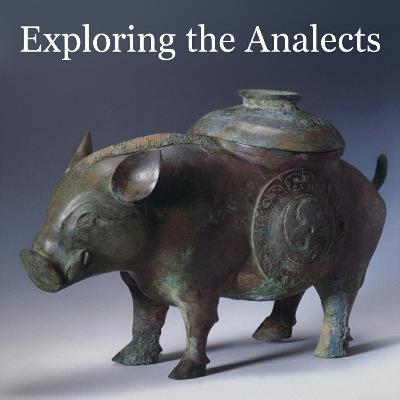
Ever lost a week to a Wikipedia rabbit hole? Loving to learn sounds like an unqualified good: stay curious, never stop. But eagerness to learn can point anywhere, toward growth, toward showing off, toward an edge over the next guy, or toward the next link.In this twenty-seventh episode, host Elliott Bernstein reads passages 8.17 and 5.15: "Study as if you've fallen behind, as if afraid to lose even what you've already gained," and Confucius's answer when Zigong asks why Kong Wenzi, the most powerful minister in Wey, was given the posthumous title 文 (wén), cultured. He loved learning, Confucius says, and was never ashamed to ask those below him. That was the quality the title rewarded, whatever else the man did.And he did plenty. The Zuo Commentary tells how Kong Wenzi pressed a nobleman to divorce his wife and marry his daughter, then planned a private war when the son-in-law kept the ex-wife's sister on the side, and asked Confucius to help. Confucius said he knew about sacrificial vessels, not weapons, ordered his carriage, and went home to Lu after fourteen years on the road.Along the way: how posthumous titles worked and the six grounds the Lost Book of Zhou gives for 文; a bird choosing its tree; the disciple who wanted to learn farming; and a Qing scholar on why the same urgency can belong to a gentleman or a petty man.Follow along with the episode guide at analects.net.
Ever flip a coin to make a decision? When there's no obvious way to judge right from wrong, it's a relief to let something else decide. People have been doing a far more elaborate version of that since the start of the Zhou dynasty, with the 易經 (Yì Jīng), the Book of Changes. And tucked into one of its commentaries is a line that Confucius's disciple Zengzi says almost word for word. It isn't mystical at all. It's career advice: stay in your lane.In this twenty-sixth episode, host Elliott Bernstein reads passages 8.14 and 14.26 — "If you're not in the position, don't direct its policies," and Master Zeng's gloss on it, "The exemplary person's concerns don't go beyond their position." Zengzi's line turns up in the Greater Images commentary on hexagram 52, 艮 (gèn), "being at rest": two mountains side by side, each settled where it is, neither ever taking the other's place.The earliest commentators take the rule hard. Thinking beyond your post is wasted effort, meddling invites disaster, and Mencius calls it a crime to speak of lofty matters from a low position. Then they start making room. 謀 means planning to act, not thinking or talking. You may answer when a ruler asks. And the Jin-dynasty skeptic 王若虛 refuses to draw a rule from the passage at all.Along the way: the 64 hexagrams and the Ten Wings that tradition credited to Confucius; a variant reading of 7.17 that takes the Book of Changes out of the Analects entirely; the advice Confucius gave two dukes without naming a single name; the day the retired Master bathed, went to court and asked for an army anyway; a Qing commentary about starting from right under your own heels; and why "act like you've already been promoted" and "stay in your lane" fit together better than they seem.Follow along with the episode guide at analects.net.
Dig out an old report card. At the top, letter grades: English, history, math. Near the bottom, a stock phrase or two: "Works hard." "A pleasure to have in class." The things most of us would say matter more than diagramming a sentence — showing up, pulling your weight, keeping your word — got the stock phrase, because nobody knows how to test them. Twenty-five hundred years ago, Confucius set out four subjects, and only one of them would get a real grade in a modern school.In this twenty-fifth episode, host Elliott Bernstein reads passage 7.25 — 子以四教:文,行,忠,信, "The Master's four areas of instruction were: culture, conduct, commitment, and credibility." Culture and conduct were a curriculum, taught much the way we'd teach literature or team sports today. Commitment and credibility were something else. Confucius had no grades or codes of conduct for them: he lived them in front of his students, watched each one for years, and then gave his verdict.Two and a half millennia of commentators have argued over those four characters. Did he teach four subjects, or teach *with* them, as his own example? Why does 1.6 put conduct before culture when 7.25 puts culture first? Is it even a list of four, when 忠 and 信 nearly always travel as a pair? The Jin-dynasty critic 王若虛 decided the disciples simply wrote it down wrong. And underneath the whole argument sits an older one, between Mencius and 荀子, about human nature.Along the way: two and a half millena of commentators arguing over the proper order of those characters; 子路 swaggering in to meet Confucius only to be shown real wisdom; 閔子騫 and the winter coat stuffed with reed catkins; the eloquent student Confucius caught napping at midday; why the pine and cypress only show their worth when the year turns cold; and a translation of 忠 coinciding with the one the host's old college professor chose.Follow along with the episode guide at https://www.analects.net/ep/25
In this twenty-fourth episode, host Elliott Bernstein reads two passages about how Confucius carried himself around the bereaved. 7.9: "When with mourners, the Master would never eat his fill." 7.10: "On days he wept, the Master would not sing." Neither opens with the usual 子曰 — these aren't quotations but descriptions of conduct, recorded because his students thought the conduct was the teaching. As the Song commentator 馮椅 put it, in his own day these practices weren't being observed, but the Master observed them.The singing needs explaining more than the weeping does, and the answer is in the character: 樂 is music and 樂 is joy, the same graph read two ways. 荀子 said it flatly — as for the musical, it is joy. You don't bring joy into a room that has none.Along the way: hired professional mourners wailing on schedule, and why that showed sincerity rather than undercutting it; the 禮記 chapters that tell you where to weep for a father's friend versus an acquaintance; the three-hop leaps men performed to bound their grief before it turned to chaos; a minister who kept his mourning dress on to make a point and another who leaned on the gate and sang; and why 孟子 called Confucius the Timely Sage — not the man with all the answers, but the one always looking for the approach the moment called for.Follow along with the episode guide at analects.net.
In 1665, London's Lord Mayor ordered every stray dog and cat in the city killed to stop the plague. Those strays were the very thing hunting the rats whose fleas were spreading it. He was not negligent, and he was not malicious — he was wrong, and countless numbers may have died for it. So how do you judge a man like that?In this twenty-third episode, host Elliott Bernstein reads passages 4.3 and 4.4 — "Only the human-hearted are capable of loving people and capable of hating people," and "If you just set your will on human-heartedness, you will have no bad intentions." Both turn on 仁 (rén), human-heartedness: the first on those who possess it, the second on those merely aiming at it. And both turn on one troublesome character, 惡, read wù ("to hate") in one passage and è ("bad") in the other.Read the same way twice, the two passages flatly contradict each other. Robert Eno shrugs and blames the Analects' messy editorial history. The commentators refuse to: one camp, running from the Han scholar 孔安國 Kong Anguo to 朱熹 Zhu Xi, keeps the two readings and builds a ladder — merely stepping on it clears you of bad intent, but only the climb earns you the right to hate. The other, starting with 蘇轍 Su Zhe in the 11th century, insists it's hatred all the way through, and has to explain how a sage hates without animus.Along the way: a Han-dynasty murder mystery from the 春秋繁露 The Luxuriant Dew of The Spring and Autumn Annals about a duke who gave his throne to his brother and got two states at war for his trouble, the legal maxim 論心定罪 ("assess the heart to determine the crime"), why passage 17.24 lists hateful behaviors and never kinds of people to hate, and a nominalizer that works (until dogs and aliens develop human-heartedness).Follow along with the episode guide at https://www.analects.net/episodes/love-and-hate

Comments

Download from Google Play

Download from App Store
 United States