


 Claim Ownership
Ri Science Podcast
Subscribed: 1,045Played: 20,631
Subscribe

© The Royal Institution
Description
Explore a new area of science every month from the world's sharpest minds. 'From the Theatre' episodes every second Wednesday of the month, bringing you talks from the Ri's world-renowned Theatre. Ri Science Podcast original episodes every last Wednesday of the month, lifting the lid on the science all around us.
Hosted on Acast. See acast.com/privacy for more information.
125 Episodes
Reverse
The standard model of particle physics successfully accounts for all of the matter in the universe, and three out of four fundamental forces. But only 5% of the universe is made of matter. So what about the rest?Particle physicist and science communicator Harry Cliff explains what the standard model doesn't account for, and what research is being done to address this, including his own research on the Large Hadron Collider beauty (LHCb) experiment at CERN. Ri Science Podcast episodes are released on the last Wednesday of every month, and ‘From the Theatre’ episodes are released on the second Wednesday of the month. Subscribe to be notified as soon as the next episode is released! Book tickets to upcoming talks on our website Subscribe to our YouTube channel Follow us: @ri_science on Instagram and TikTok Producer and presenter: Lia HaleMusic: Joseph Sandy Hosted on Acast. See acast.com/privacy for more information.

Microorganisms are constantly adapting to evade human-made interventions such as antibiotics and sanitisers. One of these adaptations is to use their strength in numbers and form a biofilm. One bacteria in particular forms biofilms that we encounter in many situations in our everyday life - salmonella. But what do we know about how salmonella forms this biofilm, so that we know how to eliminate it? In the first episode of the From the PhD Lab miniseries, PhD student Josh Horton discusses his project investigating the genetic mechanisms controlling biofilm regulation in salmonella. From the PhD Lab is a series in which we welcome back PhD interns who previously worked at the Royal Institution, to learn more about their PhD research and experience in science communication. From the PhD Lab episodes will be released on the second Wednesday of every month, and regular episodes on the last Wednesday. Subscribe to be notified as soon as the next episode is released! Book tickets to upcoming talks on our website Subscribe to our YouTube channel Follow us: @ri_science on Instagram and TikTok Producer and presenter: Lia Hale Music: Joseph Sandy Hosted on Acast. See acast.com/privacy for more information.
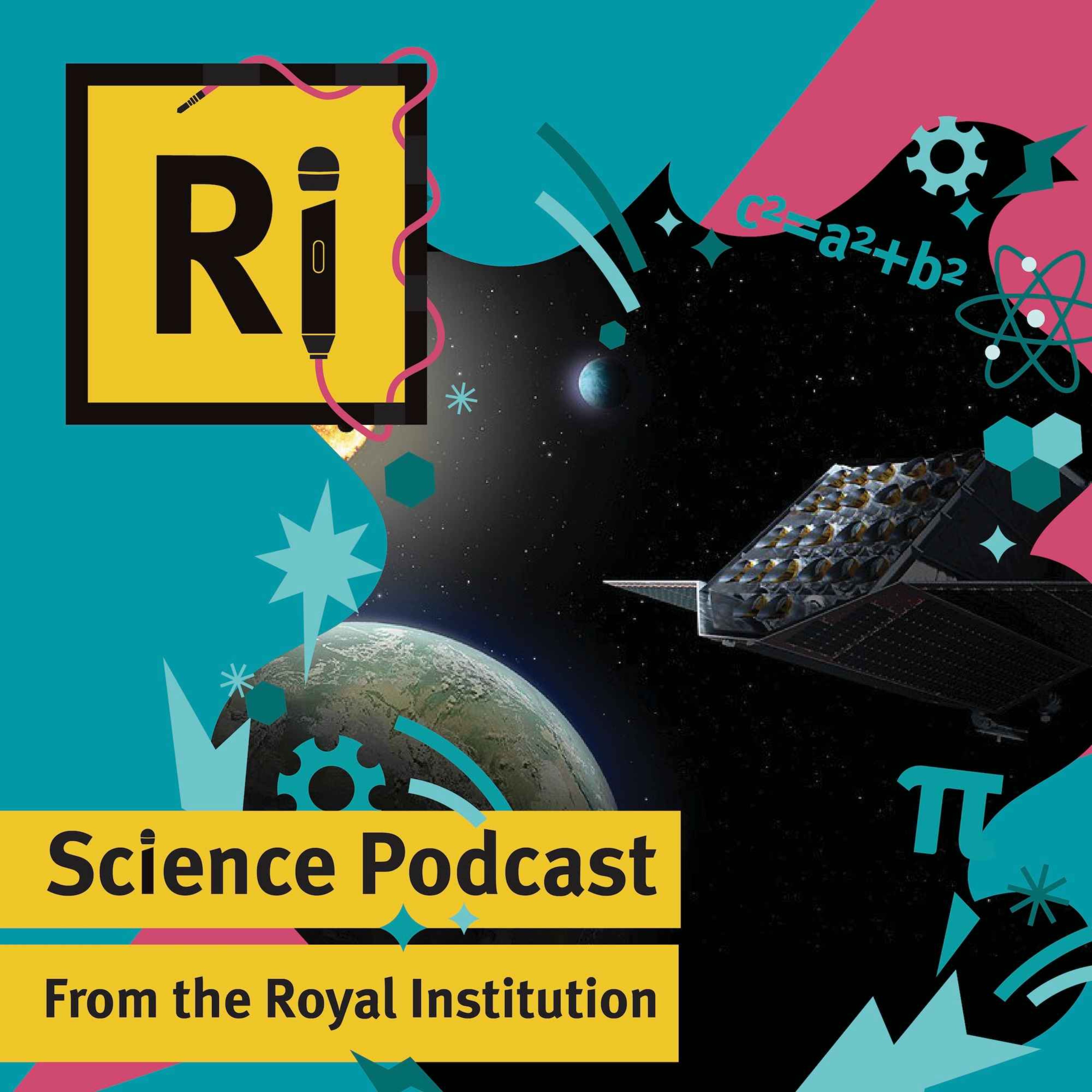
The PLATO mission from the European Space Agency is set to launch next year, and is hoping to identify thousands of exoplanets in our galaxy which could have the right conditions to support life. Lead project scientist for the mission Ana Heras, and engineer Alistair Winton, join the podcast this month to explain the scientific aims of this mission. Discover the different methods that are used by astronomers to discover exoplanets, the role of the 26 cameras onboard the PLATO telescope, and what the data we obtain from PLATO will teach us. Ri Science Podcast episodes are released on the last Wednesday of every month, and our new ‘From the Theatre’ episodes are released on the second Wednesday of the month. Subscribe to be notified as soon as the next episode is released! Book tickets to upcoming talks on our website Subscribe to our YouTube channel Follow us: @ri_science on Instagram and TikTok Producer and presenter: Lia Hale Assistant producer: Teni GomezMusic: Joseph Sandy Hosted on Acast. See acast.com/privacy for more information.
For this month's From the Theatre episode, we explore how AI could actually be a force for good in the world of batteries. In collaboration with the Faraday Institution, we hear from three experts to understand how artificial intelligence could optimise the performance of batteries at every scale.Aaron Walsh (CuspAI / Imperial College London) explains how AI acts as a "digital alchemist" — simulating billions of possible crystal structures to discover battery materials that don't exist yet.Mona Faraji Niri (WMG, University of Warwick) shows how AI acts as a forensic investigator, decoding sensor data to detect hidden faults and predict a battery's remaining lifespan — sometimes before it's even been used.Sam Cooper (Imperial College London) reveals how machine learning is used to reverse-engineer the perfect internal "microstructure" of a battery electrode — the missing link between atoms and real-world performance.This talk was recorded at the Ri on 15 June 2026.Ri Science Podcast episodes are released on the last Wednesday of every month, and our new ‘From the Theatre’ episodes are released on the second Wednesday of the month. Subscribe to be notified as soon as the next episode is released! Book tickets to upcoming talks on our website Subscribe to our YouTube channel Follow us: @ri_science on Instagram and TikTok Producer and presenter: Lia HaleMusic: Joseph Sandy Hosted on Acast. See acast.com/privacy for more information.
Why have so many people died during the heatwaves spread across Europe this summer, and is it a direct result of climate change? And what technology is being developed to help us prevent damage from wildfires as they become more prevalent?Statisticians Clair Barnes and Gary Konstantinoudis, and entrepreneur Alisha Fuller-Armah feature on this month's episode to explore the science behind heatwaves and wildfires, and what can be done about them. Read more about Clair and Gary's research here.Find out more about the World Weather Attribution.Find out more about Draconite™.Producer and presenter: Lia Hale Assistant producers: Emily Sanderson and Teni GomezMusic: Joseph Sandy Ri Science Podcast episodes are released on the last Wednesday of every month, and our new ‘From the Theatre’ episodes are released on the second Wednesday of the month. Subscribe to be notified as soon as the next episode is released! Book tickets to upcoming talks on our website Subscribe to our YouTube channel Follow us: @ri_science on Instagram and TikTok Hosted on Acast. See acast.com/privacy for more information.

Comments

Download from Google Play

Download from App Store
 United States