


 Claim Ownership
Agbioscience
Subscribed: 33Played: 825
Subscribe

© 2026 AgriNovus Indiana
Description
This weekly podcast dives into agbioscience, where agriculture, life sciences and cutting-edge technology converge. Agbioscience is an in-depth conversation with leaders and entrepreneurs across food, animal health, plant science and agtech. This one-of-a-kind podcast offers updates on the latest advancements and future trends from those at the forefront of agbioscience innovation.
455 Episodes
Reverse
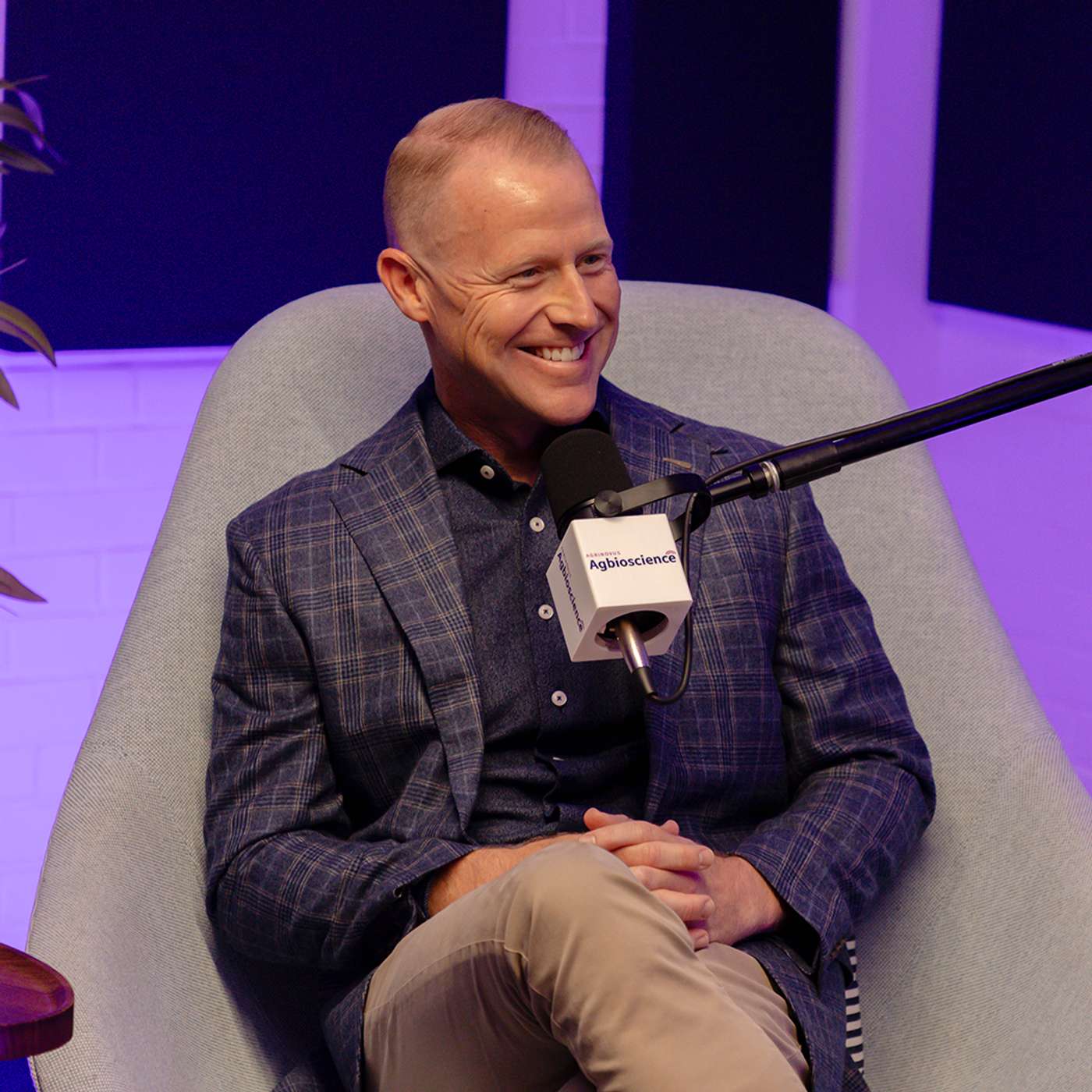
The agbiosciences are being asked to answer harder questions faster than ever — and at the same time, public trust in institutions and expertise is thinning. This week we are joined by Chris Boomsma, CEO of the Council for Agricultural Science and Technology (CAST), for a conversation about what it actually takes to produce science that farmers, researchers, companies and policymakers can all rely on. We dig into how CAST's peer-reviewed, expert-led process works and why that rigor matters when decisions carry real economic, environmental and food-system consequences. Chris also weighs in on the funding and political pressures reshaping academic research, the tension between the industry's need for speed and science's need for care and where misinformation is most likely to take hold. It's a candid look at how credible voices earn trust — and what organizations like CAST will have to do more boldly to keep it. Highlights include: What CAST actually is — the Council for Agricultural Science and Technology's mission and the convening role it plays across the agriculture ecosystem. Where science is needed most — the biggest issues facing ag right now, and where credible, evidence-based information is most urgently missing. Inside the process — what peer-reviewed, expert-led report development really looks like, and why the vetting is the point. Why peer review matters in ag — the economic, environmental, and food-system stakes behind decisions made by farmers, researchers, companies, and policymakers. Trust in a skeptical era — how CAST reaches audiences who don't automatically trust science or formal research bodies. Rigor meets accessibility — balancing accuracy with usefulness for producers, industry leaders, and decision-makers. A research sector in transition — how shifting funding models, political pressures, and new expectations for public impact are changing agricultural science. Speed vs. care — whether a gap is opening between how fast the industry needs answers and how long careful science takes, and how CAST is responding. Misinformation's soft spots — the ag topics most vulnerable to oversimplification, and where trusted scientific voices matter most. The cost of moving too fast — the risk to agribusiness leaders, policymakers, and startups that skip peer-reviewed grounding. What's next — what CAST and similar organizations must do differently — or more boldly — to protect scientific credibility and keep agriculture moving forward.
It started with forty acres of sagebrush in Utah County, bought in 1979 so a father's sons could turn it into a sod farm and earn money for college. Decades later, one of those sons heard a friend was using nanotechnology to improve a dry-cleaning business and wondered whether the same idea could do something for a farm. The trials that followed beat industry standards — and the sod farm became an agtech company. That company is Nano-Yield, and its co-founder and CEO, Clark Bell, joins us this week on Agbioscience. Nano-Yield builds a nanoparticle delivery system that helps plants take up the fertilizer and crop protection already going on the field — more from existing inputs rather than more inputs, and it's earned the company a 2026 Stevie Award for agricultural innovation, an EY Entrepreneur of the Year finalist nod, and a No. 2,539 ranking on the 2026 Inc. 5000 on 127% three-year growth. Highlights include: The core problem Nano-Yield is solving for farmers — and why this is the right moment for the technology Why "more efficiency from existing inputs" is landing now instead of "add another product" Nanotechnology in plain English: what a grower actually needs to understand about how it improves productivity What makes the science genuinely different from traditional fertilizer enhancement and other crop input technologies From a technical standpoint, what's happening inside the plant that allows the approach to improve performance and efficiency What growers have said as they integrated Nano-Yield into their operations The USDA backing tied to innovative domestic fertilizer production and business growth — how that support accelerates expansion and validates the opportunity Scaling without weakening the science or muddying the value proposition for the farmer The measurable results customers are seeing today in yield, nutrient efficiency, crop health and consistency A customer story that captures the impact of the technology Balancing innovation talk with what farmers care about most: return on investment and operational simplicity What the Stevie Award and EY finalist honors mean — and what they say about the company's maturity What will define success for Nano-Yield over the next year: adoption, farmer outcomes, partnerships, or something else
Verility CEO Liane Hart shares how their innovative AI-powered mobile diagnostic platform is increasing efficiency + accuracy, revolutionizing livestock reproduction. She dives into her entrepreneurial journey, innovation at the intersection of human + animal health and how the Verility team is uniquely positioned to advance this bioinnovation.
Picture a kitchen arena where 1,500 cooks from more than 40 countries have all won their way in — no open registrations, no fast track, just Golden Tickets earned at hundreds of qualifiers across the year. They cook in rounds, plate blind, and wait on the score. That's the World Food Championships, and it lands at the Indiana State Fairgrounds in Indianapolis October 15–18 for year two of a three-year run. It's also the event Mike McCloud founded in 2012, and the term he coined for it — Food Sport — has spent fourteen years becoming its own category. This week on Agbioscience, Mike joins us to talk about what happens when a live culinary tournament turns into something brands can test against, and what that means for agriculture on the other end of the plate. Highlights include: What "Food Sport" actually is — and how a live, multi-round tournament differs from a cooking show or a traditional culinary competition How WFC has evolved since 2012, and what has surprised Mike most across fourteen years Why you can't just sign up: inside the qualifying process, the 800+ sanctioned events, and the Golden Tickets that set the level of the field WFC as a product innovation lab — putting a brand's ingredient into the hands of hundreds of accomplished competitors, including required-ingredient final rounds like the Chef Category What a brand actually has to bring to an ingredient integration — and what "we tried it at WFC" gives a product team that a focus group or a test kitchen can't Stories of competitors using an ingredient in ways that changed how a brand thought about its own product Building a faster, more effective feedback loop between producers, manufacturers and innovators and the people who cook for a living What happens after the four days — the chef-brand relationships that outlast the event Indianapolis as home for three years, with 2026 as year two: why this market works and what the first two years have proven How a live culinary event intersects with Indiana's $70B+ agbioscience sector — production agriculture, food processing, animal health, plant science, agtech, food-is-health and bioinnovation — in ways people wouldn't expect Whether WFC can be a catalyst for moving Indiana corn, soy, pork, poultry, dairy and tomatoes downstream into value-added food and nutrition — and what that would take Mike's vision for WFC's next decade
ClearLeaf CSO and Co-Founder Agustin Buchert shares the company's journey from medical products to agricultural innovation focusing on plant health solutions. He also discusses expansion into US markets and the exciting opportunity to join Indiana's thriving agbioscience ecosystem

Comments

Download from Google Play

Download from App Store
 United States