


The Upstarts Podcast
Subscribed: 1Played: 1
Subscribe

Description
On The Upstarts Podcast, you’ll hear from some of the most exciting Upstarts today: emerging technology leaders punching above their weight to achieve real impact.
Veteran tech reporter Alex Konrad profiled leaders from Marc Benioff to Melanie Perkins in a decade-plus at Forbes. Now as the founder and editor of Upstarts Media, he’s sitting down with breakout entrepreneurs taking on the status quo to shake up their fields in AI, design, nuclear energy, space, and more.
You’ll leave each interview with a new understanding of a world-changing technology that’s transforming how we live and work – as well as strategies and tactics any builder can put to use.
27 Episodes
Reverse

The tech industry has an AI scaling problem, and SF Compute CEO Evan Conrad says it all comes down to one thing: credit.
Lenders don’t want to underwrite risky AI labs and startups, forcing them to raise at ever-higher valuations to be able to pay hefty deposits upfront. And when capacity does free up, the little guy often gets cut out, as the industry’s biggest players lock up ever more horsepower.
Conrad’s startup thinks it can change the equation. Founded out of necessity when his first AI lab faced a $400K monthly compute bill it couldn’t cover, SF Compute now operates GPU clusters for their owners, while helping ensure a fair market for their buyers, by running what Conrad calls the only “physically settled compute market.” SF Compute recently signed a deal worth $245 million – a drop in the bucket compared to his vision in a fast-growing, little-understood market behind the AI boom.
On The Upstarts Podcast, Conrad talks about why credit, not land or power, is AI’s true bottleneck; why upfront compute costs are driving eye-popping valuations from VCs; and why data centers could become geopolitical bargaining chips.
Plus, he shares his Upstart Moment: pitching early investors on a new “power grid” for AI they just couldn’t understand.
Chapters:
00:00 Introduction
01:25 Inventing A Market For Supercomputing
04:56 The Stripe For GPU Clusters
07:27 Chicken Coops, Soybeans And Monsoons
11:01 “Anyone Who Competes With Us Is Stupid”
13:47 Arming The Rebels, Not Just The Big Labs
18:00 Getting Into YC As A Therapy Exercise
19:46 Dalton Caldwell’s Advice: “Don’t Die”
23:01 When $245 Million Isn’t A Big Deal
26:10 Upstart Moment: “There Isn’t An Elevator Pitch”
28:42 Why Compute Futures Don’t Work Like Wheat
31:55 No More Massive Deposits: SF Compute’s Vision
34:47 GPU Prices, Geopolitics And A Market Bigger Than Oil
37:39 Where The Most Money Can Be Made In Compute Today
Evan's LinkedIn: https://www.linkedin.com/in/evan-conrad/
SF Compute: https://sfcompute.com/
For more, visit https://www.upstartsmedia.com/
Season 3 of the Upstarts Podcast is presented by Jira by Atlassian: https://www.atlassian.com/software/jira
Produced & edited by Eric Johnson from LightningPod: https://lightningpod.fm/

If you’ve parked a car recently in the U.S. or Canada, there’s a good chance you paid through a startup called Metropolis. Founded in 2017 by CEO Alex Israel and three co-founders in a Santa Monica garage, Metropolis is now the largest parking operator in North America – with 23,000 employees, $5 billion in payments, and 30 million Americans signed up for its ticketless app.
If that sounds unusual for a startup, you’re right. Metropolis got there in unusual fashion, enlisting the help of billionaire Todd Boehly to acquire a legacy player many times its size in a move one banker initially dismissed as “dog catches 747.”
But its CEO doesn’t really see Metropolis as just a parking company. He calls it an applied AI company, one piloting a new “recognition economy” that cuts the wait out of experiences for consumers, from drive-throughs to hotel lobbies.
On The Upstarts Podcast, Israel talks about why merging “ugly, unsexy” businesses with AI has suddenly gained popularity; why Metropolis is all-in on autonomous vehicles, robotaxis, and drones; and why he argues the startup’s opt-in approach avoids the privacy concerns facing surveillance startups.
Plus, he shares his Upstart Moment: Inviting the CEO of his bigger competitor to a seafood buffet to inform him that he planned to take their company private.
Chapters:
00:00 Introduction
01:33 A Parking App, Or Applied AI?
03:42 Why Metropolis Wants You Off Its Own App
05:05 The Drive-Through That Knows Your Order
07:55 Four Founders In A Garage
09:45 In Love With “Ugly, Unsexy” Businesses
13:19 “Dog Catches 747”: Buying Out The Industry’s Giant
18:07 Upstart Moment: Called A Liar Before The Seafood Buffet
21:41 Answering Todd Boehly: The One Non-Negotiable
24:37 Turning 21,000 Skeptics Into Evangelists
27:00 Inside The Wallet-Free “Recognition Economy”
28:52 Security, Consumer Choice, And Metropolis’s Red Line
31:30 Cookies For The Real World
36:13 Metropolis As Your Privacy Passport
40:46 Why Drones And Robotaxis Still Need Parking
Alex's LinkedIn: https://www.linkedin.com/in/alex-israel/?isSelfProfile=false
Metropolis: https://www.metropolis.io/
For more, visit https://www.upstartsmedia.com/
Season 3 of the Upstarts Podcast is presented by Jira by Atlassian: https://www.atlassian.com/software/jira
Produced & edited by Eric Johnson from LightningPod: https://lightningpod.fm/

Neko Health CEO Hjalmar Nilsonne calls it the most valuable hour you can spend on your health. Since opening its first U.S. location in New York last month, more than 50,000 people have joined the waitlist – for one clinic alone.
Co-founded in 2018 with Spotify’s Daniel Ek and valued at $7 billion, Neko offers one-hour scans that map your skin, heart and blood for $499. A clinician then walks you through the results before you leave, complete with a futuristic 3D scan. Already in operation in the U.K. and Sweden, Neko’s now expanding across America, with Miami, Washington, D.C. and San Francisco coming next.
On The Upstarts Podcast, Nilsonne talks about the fateful Twitter DM from Ek that got Neko going; why the doctor visit hasn’t changed much in 100 years; and how to keep a startup team motivated while chasing a long-term “moonshot.”
Plus, he shares his Upstart Moment: a bet-the-company pivot driven by an internal memo he wrote, “Free Is Not Enough.”
Chapters:
00:00 Introduction
01:48 Mapping Your Body In One Hour
03:54 Why The Doctor’s Visit Hasn’t Changed In 100 Years
07:31 Building Four Businesses In One: Devices, Hardware, Software, Clinics
09:22 Breaking Down A Neko Visit First-Hand
12:58 Why Half of Neko’s U.K. Members Never Had A Health Check
16:59 ‘Brutally Efficient With Your Time’: Why Every Second Counts
19:04 Helping Human Doctors, Not Replacing Them
22:40 Delivering Outcomes For the 92% Of Members Not At Risk
26:47 A Climate ‘Crash Landing’ And A DM From Daniel Ek
33:12 Motivating A Team To Chase A Moonshot
37:42 Neko’s Upstart Moment: The ‘Free Is Not Enough’ Memo And Pivot
41:30 Pricing Neko Accessibly For The 99.9%
45:44 What The Tesla Roadster Can Teach Founders About Change
48:33 Space-Age Scan, Old-School Advice: Cut The Coffee
Hjalmar's LinkedIn: https://www.linkedin.com/in/nilsonne?originalSubdomain=se
Neko Health: https://www.nekohealth.com/gb/en
For more, visit https://www.upstartsmedia.com/
Season 3 of the Upstarts Podcast is presented by Jira by Atlassian: https://www.atlassian.com/software/jira
Produced & edited by Eric Johnson from LightningPod: https://lightningpod.fm/
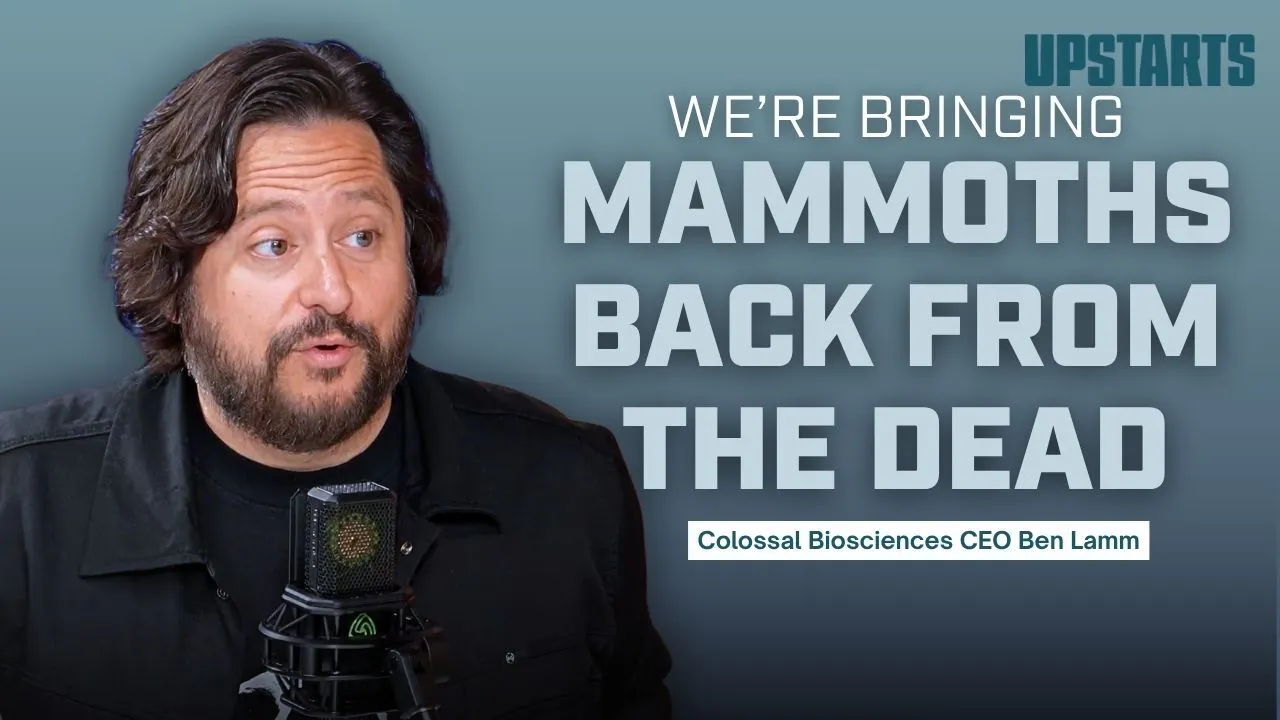
Founder Ben Lamm has found success building startups in gaming, SaaS and AI. But the boldest — and biggest — bet of his career is Colossal Biosciences, a biotech venture working to bring back extinct species like the dire wolf, dodo, Tasmanian tiger and woolly mammoth.
It's a decades-long endeavor so crazy that one investor warned Lamm it would "completely ruin" his career. But so far, it's working. Founded in 2021 by Lamm and famed Harvard geneticist George Church, Colossal has already cloned and raised three dire wolves in a secret location, created woolly mice, and reportedly held talks to raise at a valuation of $23 billion or more.
Still, Lamm faces some basic, persistent questions: Why do all this? And isn't this like Jurassic Park?
On The Upstarts Podcast, Lamm talks about why Colossal made reviving the mammoth its North Star; why building in biology is so different from software; and why he won't consider anything short of reviving every targeted species a success.
Plus: Why Lamm insists Colossal won't bring back the dinosaurs.
Chapters:
00:00 Introduction
01:48 A Dinosaur-Free Future
03:52 George Church And The Mammoth As North Star
06:28 Why Kids Brought In 30% Of Colossal's Investors
9:47 Current-Day Conservation Efforts With Elephants
15:17 "The Most Undervalued Company On The Planet"
17:45 Founder Origins In Gaming And Jurassic Park
22:24 Spending $1 Million Of Personal Cash To Face Early Doubts
25:22 No Splicing: Reading 104 Mammoth Genomes
29:15 Dire Wolves, Woolly Mice And Uninvited Visitors
32:05 Why Mammoths Are More Dangerous Than Dire Wolves
35:55 Government Contracts, Spinouts And Noah's Ark 2.0
41:54 Artificial Wombs And A Slipping Mammoth Deadline
43:54 Why Missing One Species Would Mean Failure
Colossal Biosciences: https://colossal.com/
Ben's LinkedIn: https://www.linkedin.com/in/benlamm/
For more, visit https://www.upstartsmedia.com/
Season 3 of the Upstarts Podcast is presented by Jira by Atlassian: https://www.atlassian.com/software/jira
Produced & edited by Eric Johnson from LightningPod: https://lightningpod.fm/

A crisis is happening in accounting that goes far beyond creative bookkeeping or lost receipts: we don't have enough people.
Enough work exists for 30 million accountants to prepare tax returns and audits, restructure data and improve how companies organize. The U.S. has just 3 million, says Basis co-founder and CEO Matt Harpe. "The number is rapidly declining," he says.
Founded in 2023 by Harpe and co-founder Mitchell Troyanovsky, Basis builds AI agents to help. Operating behind the scenes, Basis agents learn a firm's best practices and then automate much of the process, allowing its staffers to review more work for clients. Basis reached a $1.15 billion valuation in February 2026.
Far from eliminating jobs, Harpe believes his startup will help those human accountants get paid more. "It will increase how valuable accountants are, because they will be able to accomplish so much more," he says.
On the Upstarts Podcast, Harpe talks about why Basis shunned a chatbot approach to go all-in on agents from the start; why outcome-based pricing is preferable, but not easily achieved; and how he pitches top AI talent in New York on building in accounting, of all things.
Plus, he shares his Upstart Moment: turning down short-term revenue by not charging for a product until their outcomes could match what they promised.
Chapters:
00:00 Introduction
01:47 The basis for Basis
07:25 Why no one wants to be an accountant any more
14:37 CEO Matt Harpe's founder journey
19:46 "The home for applied AI talent in New York"
22:58 Winning over skeptical accountants as customers
28:41 A big bet on agents from the start
31:31 Outcome-based pricing and its challenges
35:52 Competing with the big AI labs like OpenAI
41:11 Making human accountants more valuable
Matt's LinkedIn
Basis
For more, visit https://www.upstartsmedia.com/
Season 2 of the Upstarts Podcast is presented by Rippling
Produced & edited by Eric Johnson from LightningPod

Comments

Download from Google Play

Download from App Store
 United States