


 Claim Ownership
The Grit Factor Podcast w/ Karl Jacobi
Subscribed: 7Played: 33
Subscribe

© 2026 Karl Jacobi
Description
The Grit Factor Podcast brings real conversations with founders, entrepreneurs, and builders. No fluff. Just honest stories, hard lessons, and practical takeaways you can apply right now. New interviews plus solo episodes on mindset, leadership, and execution.
55 Episodes
Reverse
Episode SummaryBart Merrell grew up on a pig farm in New Mexico with a father who had his hands in a dairy in Idaho, a mushroom warehouse in Utah, a produce warehouse in Arizona, and the Pork Producers Association, all simultaneously. Nobody sat Bart down and taught him the birds and bees of business. His father showed him by example that you could do many things at one time and that opportunities were everywhere if you trained yourself to see them. That programming never left.His first big dream was the FBI. He studied accounting on an FBI agent friend's advice, hated every minute of it, scraped through a degree, then discovered that corrective eye surgery he had gotten to improve his vision had quietly disqualified him from federal service before he ever applied. Devastated. No plan. A college town in Utah. A friend who jokingly asked if he wanted to go to Japan to help set up a bungee tower. Bart said yes without knowing what he was agreeing to. Three months later he was pushing little Japanese people off an eight-story tower for a living and loving every second of it.What followed was a life built entirely on saying yes to things he did not know how to do, figuring it out, and then asking the same question he asks about everything: how can I monetize this? Bungee towers led to sky coasters led to freefall rides led to building a custom coaster in Japan. A Japanese big rig driver friend led to twenty-nine years of importing camping trailers and Ford diesel trucks into Japan, still running today. Nine hundred and eleven wiped out several hundred thousand dollars, so he bought a truck he could not afford, drove to Indiana, and came home with a contract pulling trailers nationwide. His wife's cancer scare in Japan eight nights of not knowing the results taught him he needed multiple income streams before life needed them. An eight thousand dollar dog training course to handle a ninety-pound Rottweiler turned into almost a hundred thousand dollars in his first year of dog training. Being told his ankle bone was gone and amputation was the only option led within six months to a retainer contract with his prosthetist counseling incoming patients.Today Bart runs Side Hustle Samurai and has written Monetize Your Mindset, a book born from watching a woman at a drug rehab Toastmasters session realize that her abusive childhood was not normal. It hit Bart that if you did not grow up watching someone like his dad see opportunity everywhere, you simply did not have that wiring. His entire mission now is to give people the wiring they were not handed. From zero to cash flow in six months, 90 days as the goal, 180 as the promise, using the skills, the story, and even the worst thing that ever happened to you.This episode is for anyone sitting on something valuable and calling it nothing.In This Episode, You'll Discover:How Bart's father, a pig farmer who was also part owner of a dairy, a mushroom warehouse, a produce warehouse, and president of the Pork Producers Association, quietly installed an opportunity-seeking operating system in Bart before he had any language for what it wasThe eye surgery that disqualified him from the FBI before he ever applied, the college town devastation, and the joke from a friend about Japan that sent him across the world to push strangers off a bungee towerThe specific jump Bart designed on the tower using carabiners as handles to attempt a hands-only freefall from eight stories, what happened when he let go, and what it taught him about educated risk in businessHow nine eleven wiped out several hundred thousand dollars in business deals, how he used his remaining credit score to buy a forty thousand dollar truck he could not afford, drove to Indiana, secured a contract, and saved himself from bankruptcyThe eight nights waiting for his wife's biopsy results after her cancer scare in Japan, the second thought that arrived after the fear of losing her, and how that phone call became the catalyst for building multiple income streams before they were neededThe three question framework Bart uses with every client, what do you like to do, what do you need to do, and what are you already doing, and how a school bus driver used it to wake up at three in the morning furious because she could not stop thinking about an ideaHow losing his lower left leg in 2023 led within six months to a retainer contract counseling incoming amputees for his prosthetist, and why he says his first reaction on being told amputation was his only option was to ask how he could monetize itWhy Bart believes there has never been a better time in history to start something, what AI has done to lower the barrier of entry, and what he tells people whose fear of failure is stopping them from tryingKey Takeaways:The Thing Saving You Is Already in Your Hands. Bart's entire life is proof of this. The skill you dismiss, the story you think is worthless, the worst thing that ever happened to you. Every single one of those is raw material. Most people are sitting on the income they need and calling it ordinary. The only thing missing is the wiring to see it differently.How Can I Monetize This? Bart asks this question about everything. Good things, bad things, embarrassing things, painful things. It is not a mercenary instinct. It is a trained reflex that turns experience into leverage. You do not have to be born with it. You can install it by asking the question consistently until it becomes automatic.Say Yes First. Figure It Out Second. Richard Branson said it. Bart has lived it for forty years. He had never set up a bungee tower when he said yes to Japan. He had never imported trucks when he said yes to his Japanese friend. He had never trained dogs when he enrolled in the course. Every major income stream in his life started with yes, followed by the education required to make it work.Educated Risk Is Not Recklessness. Bart jumped off an eight-story tower using carabiners as handles based on thousands of previous jumps and a working knowledge of the physics involved. He did not jump off a cliff to see what happened. The willingness to take risk without eliminating all downside is what separates people who build from people who wait. Research it. Learn enough. Then go.Build Multiple Streams Before You Need Them. The cancer scare phone call arrived on a Tuesday. Bart's second thought, after the fear of losing his wife, was I cannot afford to drop everything and be with her. That thought told him something was wrong with how he had structured his income. Do not wait for the Tuesday phone call. Build the streams while everything is fine so they are there when everything is not.What Do You Like to Do. What Do You Need to Do. What Are You Already Doing. That is the whole framework. Make three lists. Look at where they overlap. Ask how you can monetize one two or three of those intersections. The answers are almost always already inside your existing life. The question trains your brain to see what was there the whole time.Acknowledge It. Then Move On. Bart's approach to every hard thing is the same. He does not suppress. He does not dwell. He acknowledges the reality of what has happened, the leg, the money lost, the cancer scare, and then he moves forward and focuses on what he can do rather than what he cannot. That is not toxic positivity. It is a daily practiced choice about where to point the brain.Let Your Fears Push You Until Your Dreams Can Pull You. When Bart is in the trenches, this is the quote he goes back to....
Episode SummaryChris McManus graduated high school, skipped college, and put grass in the ground because it was flexible enough to keep racing motocross while he figured out what else to do. He was not building a company. He was buying time. Then one Sunday afternoon in Pennsylvania he worked fifty hours that week and got smoked at the racetrack and cried the whole way home in his van and knew. He sold the bikes, the van, the gear, all of it. And turned back to the little landscaping operation that had been snowballing while he was not paying attention.What followed was seven years of building GC Landscaping from nothing into a multiple seven-figure operation, picking up trade licenses along the way, stacking a real estate company on top, and now chasing a twenty-five million dollar valuation with two or three more locations on the horizon. But the version of that story that does not make the highlight reel includes the acquisition that nearly broke him. He doubled the size of the company overnight buying a competitor doing a million in revenue. Then the bank backed out of the SBA refinancing they had promised.Then he underbid a major project by eighty thousand dollars. Then another project was mismanaged and the customer left a thirty-five to forty thousand dollar balance unpaid. All in the same month, sitting on top of a large debt service from the acquisition that had already wiped out his cash reserves. Then he went to the Caribbean with his wife and came home to find out five of his six managers had walked or been walked out while he was gone.Chris was twenty-three years old. He did not have a plan B. He called a few customers, apologized for the delay, and went back to work.That stubbornness is not recklessness. It is a philosophy that was drilled into him on a dirt bike from the age of eight: you crash, you get back on, you go again. Not because you feel ready. Because there is no other option that makes sense. And every time things have gotten that bad, they have eventually turned. He now has the evidence. The bad months no longer break him the same way. They almost feel familiar.This episode is for the builder who has never once felt like quitting but has wanted to a thousand times and kept going anyway.In This Episode, You'll Discover:How Chris started a landscaping company straight out of high school as a side hustle to fund his motocross racing career, and the specific Sunday afternoon in Pennsylvania when he cried driving home and decided it was time to let the racing dream go and go all in on the businessThe acquisition that nearly ended everything, buying a competitor, the bank backing out of the SBA refinancing, two projects going wrong simultaneously to the tune of a hundred and twenty thousand dollars in losses, a depleted cash reserve, and five of six managers gone within a weekWhat that season actually cost him beyond the finances: the sleep, the strain on his marriage with his high school sweetheart who did not sign up for any of this, and the gray hair that started arriving at twenty-seven and twenty-eight years oldWhy Chris kept going when he had every reason to stop, the faith underneath the stubbornness, and the cheat code he has developed from surviving enough hard stretches to know the next one will also eventually turnThe eighty percent principle Chris uses for delegation, why he shows up for the first ten percent and the last ten percent of every project and trusts his team with the eighty in between, and how that principle freed him from being the one wearing every hatWhat Chris learned from letting problem employees stick around too long, why he always knew who needed to go and always waited, and what changed when he finally decided cancer gets cut immediately with no ifs ands or butsThe foundation year he deliberately took, pulling back on revenue growth to fix the systems, the cash flow management, and the infrastructure that would not have survived the next scaling push without itWhy Chris believes most people are not dreaming big enough, the conference that made him realize he had already blown through every number he had ever set for himself, and where the twenty-five million dollar exit goal actually came fromKey Takeaways:There Is No Plan B. That Is the Plan. Chris never had an exit ramp from the business. Not because he was fearless but because he could not picture what else he would do. When you remove the option to retreat, forward is the only direction. Not every person is built for this and Chris acknowledges that. But for the person who genuinely cannot see themselves working for someone else, that clarity is a competitive advantage in disguise.Get Back on the Bike. Chris raced motocross from age eight. The lesson from that sport is not about pain tolerance. It is about the automatic response to a crash. You do not ask whether to get back on. You get back on. That same nervous system wiring is what kept him showing up after the acquisition nearly broke him. You cannot teach this without the repetition of actually crashing and getting up again.Cut the Cancer Immediately. Chris let problem employees stay too long on multiple occasions because he did not want to deal with the pain of replacing them. Every single time it cost him more to wait than it would have cost to act. He now has a clear rule. If someone is a cancer or a bad fit, they are gone. The short-term pain of the gap is always less than the long-term damage of the presence.Eighty Percent Times Three People Is Better Than One Hundred Percent Once. You are not going to find someone who does it as well as you. You are going to find someone who does it eighty percent as well. Three people doing it at eighty percent in their lane, while you come in at the first and last ten percent, produces a better outcome than you doing it at a hundred percent alone every time. Let go of the hundred. Compound the eighty.Slow Down to Fix the Foundation Before You Scale. Chris pulled back on growth deliberately for over a year because he recognized he was building higher floors on a foundation that could not hold them. Revenue growth feels like winning. Scaling broken systems faster is just a faster route to a bigger crash. Know when to pause and rebuild before you push.The Problems Do Not Go Away. You Get Better at Handling Them. Chris says this directly and from experience. A thirty million dollar company is not easier to run than a three million dollar company. It has harder problems. What changes is the operator's capacity to handle them. The problems you are struggling with today will eventually feel like brushing your teeth. That is not a promise that things get easier. It is a promise that you get better.Your Goals Are Probably Not Big Enough. Chris walked into a conference in his first year in business and set goals he thought were enormous. He obliterated every single one of them. The twenty-five million dollar exit target came from a reset that only happened because someone asked him whether he had dreamed big enough. The number that feels scary enough to intimidate you is probably the right starting point.Giving Back Is the Fuel That Outlasts Every Material Goal. Chris has the nice things he dreamed about as a kid. They delivered less than he expected. What actually gets him out of bed now is the number he is chasing and what it would make possible for his community. The material goals are fine. The mission is what sustains the drive when the material goals stop moving the needle....
Episode SummaryYou hit the goal you chased for years. And you felt nothing.Not disappointment. Not relief. Just a quiet flatness underneath everything you built, and no way to say it out loud without sounding ungrateful. If you have been asking why do I feel empty when everything on paper says I won, this one is for you. Karl Jacobi has been there. He built, scaled, and exited multiple companies totaling over $40 million in career revenue, starting from a dining room table. Then he hit the exact empty he describes in this episode.Here is what it cost him. Sitting in his living room, he asked his 16 year old daughter how she felt about everything he provided. The house. The vehicles. The camps. The vacations. He expected proud. She said abandoned. That one word broke him in a way no business failure ever could. A couple of years later he was in a photography studio going through his youngest daughter's senior pictures, and when they got to the parent photos, the only parent in them was his wife. He had been out chasing while the life he built happened without him.In this Sunday Edition, Karl names the thing nobody tells high achievers. Being successful but unhappy is not proof you failed and it is not a you problem. It is how the brain is wired. Psychologists call it hedonic adaptation, sometimes the arrival fallacy, and your mind turns every win you bled for into a regular Tuesday almost the second you hit it. That is the engine underneath high achiever burnout, and it is why the two fixes everyone hands you both fail. Chase a bigger goal and you are just putting the same fuel in a bigger tank. Force gratitude and shrink your wanting and that is not peace, that is going numb with better branding.The real split is borrowed fuel versus built fuel. Borrowed fuel is approval, proof, comparison, and somebody else's scoreboard. It burns hot and leaves you empty because it was never yours. Built fuel is your own why, your own standard, the person you are actually becoming. Karl walks through the four moves to make the switch, and the one nobody expects: you do not think your way to built fuel, you act your way to it. Clarity is the reward for moving, not the requirement.This is the work of finding purpose after success and redefining success on terms that are actually yours. If you feel stuck in life with everything you were supposed to want, hear this. You are not ungrateful. You just outgrew your old fuel, and that is the start of the next version of you.In This Episode, You'll Discover:Why success feels empty even when you hit every mark, and why the feeling is a signal instead of a failureWhy the two fixes everyone offers you, chase a bigger goal or force more gratitude, both keep you emptyThe psychology of hedonic adaptation and the arrival fallacy, and why your brain is the worst employee you have ever hadWhat high achiever burnout actually looks like when you are still performing at the top of your gameWhat a hospice nurse recorded as the number one regret of the dying, and why it was not a failed business or a lost dealThe living room conversation where Karl's 16 year old daughter used one word he was not prepared forThe senior photo session that showed Karl exactly what his chase had cost himThe difference between borrowed fuel and built fuel, and how to tell which one you are running on right nowThe four moves to rebuild your fuel from the foundation up, including the one most people rush and should notHow to find purpose after success without blowing up the life you already builtWhy clarity comes after you move, not before, and what to do today before you feel readyKey Takeaways:The Empty Feeling Is a Signal, Not a Verdict. Feeling empty inside after you win is not proof you failed or that something is broken in you. It means you outgrew the fuel that got you here. That fuel served its purpose. Now it is done.The Markers Were Never the Fuel. The title, the number, the next level up. None of it was built to fill the hole. You were running on an empty tank the whole time and calling it drive.Your Brain Turns Every Win Into a Regular Tuesday. Hedonic adaptation means the house becomes normal, the income becomes normal, the respect becomes normal. The higher you climb, the faster it resets. Fulfillment was never going to live in the win. That is the arrival fallacy in one sentence.Ambition Is Not the Problem. Ambition Pointed at the Wrong Fuel Is. You do not need to want less. You need to want from a different source.Gratitude Is Seasoning, Not the Meal. Forcing yourself to be thankful and shrinking your wanting until the emptiness fits is not peace. It is going numb with better branding. Gratitude is good. It cannot be your engine.Borrowed Fuel Burns Hot and Leaves You Empty. Approval, proof, comparison, somebody else's scoreboard. It moves you fast like an espresso shot, and it was never yours to begin with.You Act Your Way to Built Fuel. You Do Not Think Your Way There. One small rep at a time, in the same direction. Clarity is the reward for moving. It is not the requirement.The Chase to Prove Your Worth Costs the People You Built It For. Karl started building to teach his kids to control their own destiny. The chase to prove it was costing them the one thing they actually needed. His presence.Outgrowing Your Fuel Is a Graduation, Not a Crisis. This is not a midlife unraveling and it does not require burning down what you built. Redefining success on your own terms is reinvention from the foundation up, and it starts with one aligned action today.The Four Moves to Rebuild Your Fuel:Name the real chase. Under the goal, what were you actually after? Approval? Safety? Proof that you are enough? Say it out loud. Naming it takes its power back.Audit your fuel. Look at everything driving you right now and mark each one borrowed or built. Be honest. Most people are shocked how much of it is borrowed.Rebuild the foundation. Your beliefs, your vision, your real why. This is the deepest of the four and the one most people want to rush. Do not. It holds all the others up.Take one aligned action before you feel ready. Today. Movement is what turns the new fuel on.Who This Episode Is For:The high performer who is successful but unfulfilled. The founder or executive running on high functioning burnout that nobody around them can see. Anyone staring at life after success and quietly asking why am I not happy. If you are feeling stuck in life at the top of what you built, and you are wondering whether midlife reinvention means torching all of it, this episode gives you a different answer. You do not need to reinvent yourself from scratch. You need to switch fuel.Timestamps:[00:04] Average is the enemy of greatness. Cold open.[00:23] Who is talking. Combat vet, entrepreneur, coach, husband, father[00:43] The two by four since age five, and what the highlight reel does not show[01:28] If you have wondered why success feels empty, stay with me[01:39] The two fixes everyone hands you, and why both are wrong[02:22] Who this episode is for. You already built something real[02:45] What getting this wrong costs sharp, driven people for decades[0...
Episode SummaryMatt Smith is a music major who accidentally fell in love with software development when it reminded him of writing songs. Twelve notes, infinite combinations. Same with code. Same with a company. That creative wiring has followed him through every chapter, small startups, consulting work, a co-founded company that he eventually had to blow up to get out of, and the platform he is building now that is genuinely changing how aging people experience the world.But before the current chapter, there was a year that cost him. He was a co-founder of a tech startup where his vision for the company was clear and the team's vision was not the same thing. His idea was to take open source software and make it accessible to small and medium businesses so they could compete with enterprise-level organizations. David versus Goliath with technology as the equalizer. The team had different ideas. Consulting. Offshore development. Cloud migration. None of it was connected to an outcome Matt cared about. The trust eroded. The infighting started. And one day he sat at his keyboard and wrote an email that was going to blow the whole thing up. He remembers the exact moment his cursor hovered over send. He hit it.What followed felt like a death. The stages of grief arrived in full. And somewhere inside all of it, Matt found himself under a microscope he had been avoiding for a long time. Was he as good a person as he thought? Was he manipulative? Was he humble, or just humble enough to maintain the illusion of control? He went to therapy. He sat with the hard questions. He reached out on LinkedIn to people he had wronged along the way and apologized, not because he needed anything from them but because the reconciliation was the only thing that would let him move forward clean. One of those people ended up telling him to come to a game sometime. Matt did not ask for tickets. That was the whole point.The current chapter is Speak2Family, a voice and technology platform that keeps aging people connected to the consumer world as they move into assisted and independent living. Not bingo and a paper schedule. Actual choice. What do you want to eat, what do you want to watch, where do you want to go, what do you want to buy. A ninety-five year old who cannot swipe can still speak. And that agency, the ability to make choices about your own life, is what Matt believes people should not have to lose just because they changed zip codes into a care facility.This episode is for the founder who has been the best player on a bad team and has not yet made peace with why that was never going to work.In This Episode, You'll Discover:How a music major found his way into software development by accident and immediately recognized the same creative principle at work, twelve notes in music, infinite combinations in code, and why that creative foundation gave him a leg up that pure analytical thinkers rarely haveThe startup co-founder situation that collapsed after a year, how trust eroded when the team kept saying one thing and doing another, and the specific moment Matt hit send on the email that blew everything upWhat the mental health cost of that season actually looked like, the highs and lows, the spiral, the way the pain forced him under a microscope he had been avoiding, and why he believes if he had been more successful he would have just repeated the same patternsWhy Matt went back on LinkedIn and apologized to people he had wronged during that period, why he was intentional about not asking for anything in return, and what the feeling of reconciliation gave him that the anger never couldThe realization that grit is not outworking everyone but having the self-awareness to work with people who make you better, the lesson that came through finding his co-founder Jillian, and why he believes Steve Jobs needed Steve Wozniak the same way every founder needs their oppositeThe team versus hero founder question Matt asks other founders by finding the sport or band metaphor that makes the principle self-evident to them, and why he thinks the culture that celebrates the solo founder myth is selling something dangerousWhat Speak2Family actually does for aging people in assisted and independent living facilities, why losing the ability to make consumer choices accelerates cognitive decline, and how the platform follows people from iPhone to tablet to TV remote to voice as they ageThe legacy Matt is actually chasing, not a statue or a movement but kids who feel confident and happy and can spread that confidence aroundKey Takeaways:Purpose Overrides Fear When It Is Real Enough. Matt had every reason to acquiesce and stay in the startup. Fear of loss, anger, the easier path was right there. What overrode it was that he genuinely felt he was supposed to help people and the startup was no longer pointed at that. When the purpose is deep enough and real enough, it becomes its own kind of courage. Fear does not go away. Purpose becomes louder.The Dark Part Exposed What the Wins Would Have Hidden. Matt said it himself. If the startup had been more successful, he would have moved to the next project carrying all the same flaws because nobody would have forced him to address them. The thing that felt like the worst outcome was the thing that produced the most growth. The pain was not a detour. It was the road.Apologize With Nothing in the Ask. Matt reached out to people on LinkedIn he had wronged and apologized. He was deliberate about not asking for anything. One of those people offered him tickets to a game. He did not take them. The reconciliation was the point. Not the access. Not the relationship rebuild. Just the integrity of acknowledging what had happened without using the apology as a vehicle for something else.Find the Metaphor That Makes the Principle Self-Evident. When Matt talks to founders who resist the idea of needing a co-founder or equal partner, he does not argue. He finds the sport they played growing up, the band they were in, the team they loved watching. And then he asks: were you undefeated? Were scouts coming? And when they say no, he says: well, your company is the same. You cannot be the best player on a bad team and expect different results than everyone else on bad teams got.Would You Rather Be the Best Player on a Terrible Team or One of the Players on a Championship Team? This is Matt's question for every founder in love with their own vision. The founder myth, the solo genius who does it all, is what gets sold at conferences and in books. The reality is that every breakthrough company has its Wozniak, its Jillian, its someone who fills the gaps and makes the creator actually usable.Agency Is Not a Luxury. It Is Human Dignity. The insight behind Speak2Family is simple and profound. We are consumers from the moment we are born. The ability to make choices about our own lives, what to eat, what to watch, what to buy, is not trivial. Stripping that away from someone because they moved into a care facility does not protect them. It accelerates their decline. Giving it back gives them something to live in.Grit Is Doing the Difficult Things That Are Beneficial, Not Just the Difficult Things. Matt's definition is precise. There is no virtue in doing hard things that provide no value. The grit that separates people is the willingness to do the things that are difficult and important, the workout, the hard conversation, the phone call to someone you have not spoken to in years. Difficulty alone is not the standard. Difficulty in service of ...
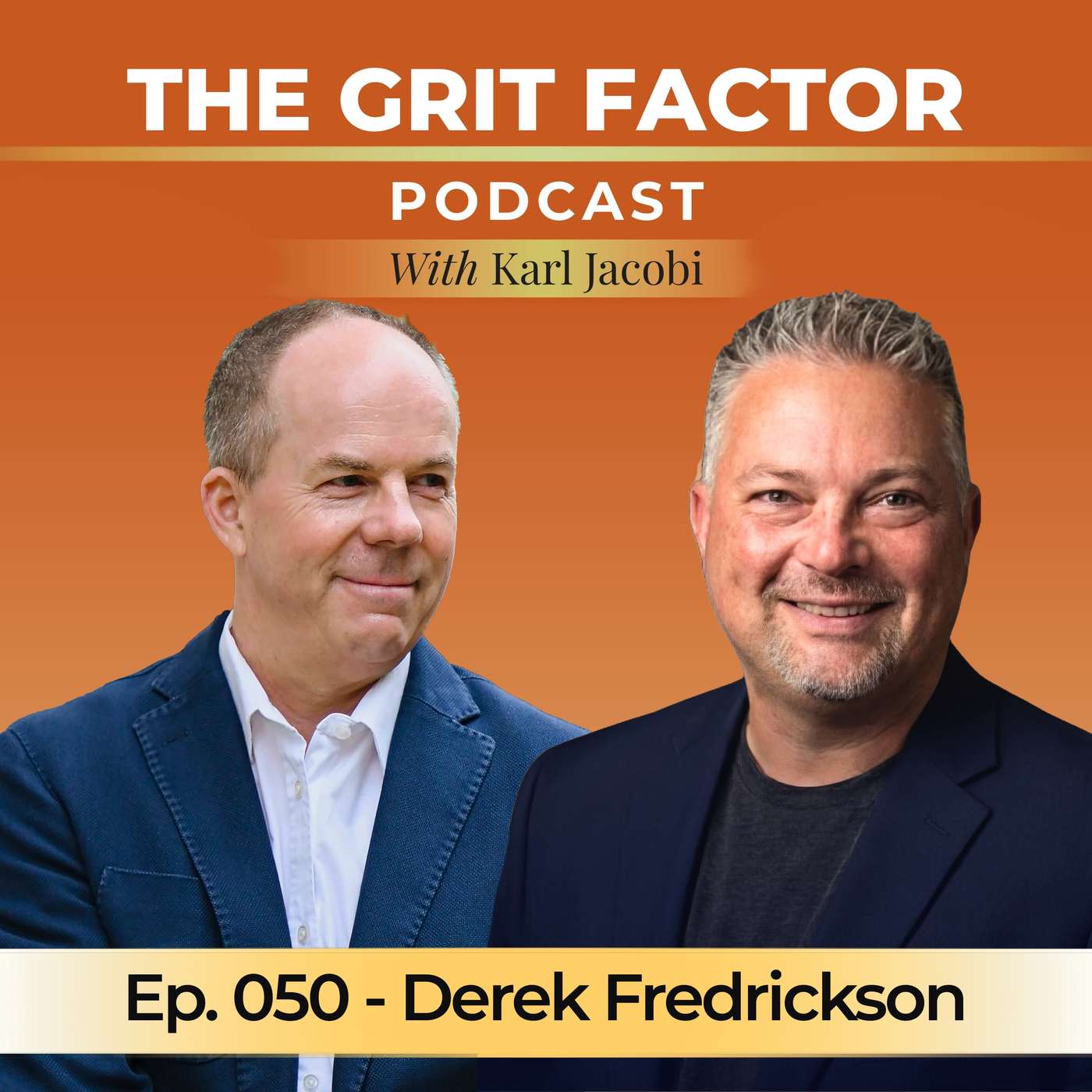
Episode SummaryDerek Fredrickson was very good at making other people win. That was his gift, his lane, and for sixteen years his entire identity. Wall Street first, Deutsche Bank, Lehman, UBS, running project management and doing what analytical, disciplined, systems-minded people do well inside a machine that rewards exactly those traits. Then the train ride that changed everything. He looked across at a man in his mid-seventies on the five forty-one commuter rail from Connecticut to New York, exhausted, and thought: is that who I want to become?He did not run. He made a calculated decision, the only kind he makes, and left Wall Street to join his wife Fabienne's coaching business. He worked his way up from the mailroom. He paid himself the same salary from day one so the ego had no ammunition. He became the string to her kite, the one who landed the plane, who finished what she started, who took a vision and built the execution from A to Z. Then he helped scale it to multiple seven figures. Then he did the same fractionally for other founders. For sixteen years he was the best number two in the room and he was proud of that.What he did not know until he stepped out was how completely he had wired his identity into someone else's vision. In 2024, he made another calculated decision, the kind that take him time and thought and spreadsheets and pros and cons lists, and launched The COO Solution, a fractional COO and second-in-command placement firm operating from Paris, France, where he lives with Fabienne and their three children. Twenty-five people on the team. Multiple seven figures. A ten year vision he looks at constantly. A weekly metrics review he does every single Monday without exception. And a mantra from his wife that has carried him through every low: no small children will be harmed.This is episode fifty of the Grit Factor. It is the right episode for the milestone because Derek's story is not about the founder. It is about the person behind the founder who finally stepped in front of their own vision for the first time. This episode is for every operator, every second in command, every engine behind someone else's dream, who has quietly wondered if there is a dream of their own waiting.In This Episode, You'll Discover:The five forty-one commuter train from Connecticut to New York, the man in his mid-seventies who looked exhausted across the aisle, and the question that moment planted in Derek that sent him from Wall Street into entrepreneurship two years laterWhat it cost his ego to go from being a Wall Street professional to working in his wife's coaching business, why he told friends he worked with her not for her, and how they structured equal pay from day one to protect the power dynamicThe Strengthsfinder and Kolbe assessments Derek uses with every client and why he believes knowing how you are wired to take action is more important than any business strategy you could deployThe four quadrant framework Derek uses with founders, unique brilliance, excellence, competent, and incompetent, and why most entrepreneurs waste the majority of their time in the bottom two quadrants doing work that someone else should ownWhat the mastermind dinner moment taught Derek about not needing to be the big idea generator, how the mastermind owner reframed his role to the table, and why that validation changed how Derek shows up in every room sinceHow Derek made the identity shift from number two to CEO, why it took him years of deliberate thought rather than a spontaneous leap, and what the difference is between a think talker and a talk thinkerThe weekly metrics review Derek runs every Monday without exception, how he structures it across marketing, sales, operations, and finance, and why asking why when things are on track is just as important as asking why when they are offThe ten thirty-one framework Derek uses for himself and every client, ten year vision, three year plan, and one year picture, and why starting with the end in mind and reverse engineering is the only system that has ever worked for himKey Takeaways:The Drunk Monkey Is the Enemy. Derek's wife's phrase for the voice on your shoulder that says who are you, why would you think you can do this, you are not qualified. Every high performer has one. The volume varies. The solution is always the same. Plug back into your why. Look at the ten year vision. Do not let the drunk monkey steer.You Cannot Scale Bob. You Can Scale Structure. If the knowledge of how your business runs lives inside one person's head, you have not built a company. You have built a dependency. Get everything out of Bob's head and into runbooks, playbooks, SOPs, checklists, and project management systems. Then Bob can be in the rainmaker lane. The structure runs everything else.Live in Your Lane. Stop Apologizing for It. Derek is not a born entrepreneur in the classic visionary sense. He knows it. He owned it in a mastermind dinner in front of ten founders. And the response from the room was that without someone wired like Derek, every big idea discussed over dinner dies on the table. Know what your lane is. Be unapologetically in it. That is where you create the most value.Numbers Tell the Story. Feelings Estimate It. Derek's weekly metrics review is not optional. It is every Monday, every week, no exceptions. Because gut checks are necessary but insufficient. The question is not just are we on track or off track. It is why. The why reveals the issue underneath the problem. You do not want to fix problems. You want to solve the issue causing them.One Plus One Equals Three When You Each Know Your Lane. Derek and Fabienne built a multiple seven figure business by being in completely different lanes simultaneously. She created. He executed. She started. He finished. She ideated. He built the framework. The moment they blurred the lines, there was friction. The moment they respected each lane, the business compounded.Wear Two Hats. Never Combine Them. Working with your spouse requires deliberate separation of the professional and personal relationship. Derek learned the hard way that bringing a client email into a quiet evening with a glass of wine is not a small infraction. It blurs the lines and burns both sides. The husband hat and the work hat do not co-exist. Put one away before you pick up the other.Start With the End in Mind. Then Reverse Engineer. Every business Derek has helped scale and every goal he has set for himself started with a clear ten year picture. Not a vague aspiration. A specific, number-driven, impact-defined vision. Then three years. Then one year. The how figures itself out when the what is specific enough and the why is strong enough.No Small Children Will Be Harmed. This is the mantra that carries Derek through the lowest moments. Not a scripture. Not a framework. A perspective check. Nobody is bleeding. There is a roof over the heads. The problem, whatever it is, is solvable. Take a nap. Go for a walk. Get back to a positive state. The world is not ending. It just feels like it is.Timestamps:[00:00] Karl introduces Derek Fredrickson on the milestone episode fifty: Wall Street to Paris, sixteen years as a number two, now building The COO Solution with a team of twenty-five[03:00] The five forty-one train, the exhausted man across the aisle, and the moment Derek asked himself if that was who he wanted to become[07:00] Leaving Wall Street in 2008 to join his wife's coaching business, the...

Comments

Download from Google Play

Download from App Store
 United States