


 Claim Ownership
Neural Interfaces
Subscribed: 3Played: 30
Subscribe

© Davide Valeriani
Description
Your brain is the most complex hardware in the universe. Can we build technology that directly interact with it, or perhaps, even improve it?
Neural Interfaces explores the rapidly evolving world of brain-computer interfaces (BCIs). Each week, with the help of scientists and engineers, we explain how these devices work and how they are built. The podcast is the companion of the Neural Interfaces book published by Elsevier, and co-edited by Davide Valeriani and Theresa Vaughan.
Neural Interfaces explores the rapidly evolving world of brain-computer interfaces (BCIs). Each week, with the help of scientists and engineers, we explain how these devices work and how they are built. The podcast is the companion of the Neural Interfaces book published by Elsevier, and co-edited by Davide Valeriani and Theresa Vaughan.
21 Episodes
Reverse
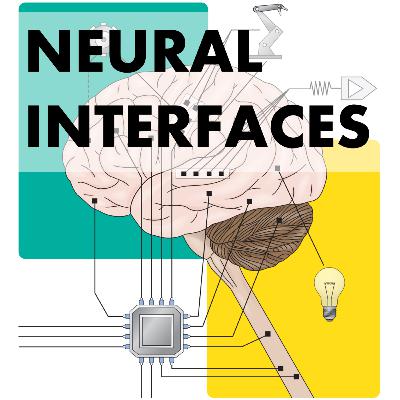
In this episode, Davide Valeriani and Theresa Vaughan summarize the main areas in which they foresee neural interfaces will play a pivotal role in the next decades, affecting what we do in our daily lives.RESOURCESA roadmap for the next decades of neural interface development, by Davide Valeriani and Theresa M. Vaughan.
For decades, Brain-Computer Interfaces were confined to high-tech university labs. But what does it take to turn science into a sleek, everyday consumer product that people can use at home?In this episode, we are diving into the origin story of Neurable with his CEO and Co-Founder, Dr. Ramses Alcaide.Founded in 2016 out of the University of Michigan’s Direct Brain Interface Lab, Neurable set out with a massive, audacious vision: to make technology accessible, intuitive, and empowering through neurotech. Their mission? To build the world’s first everyday BCI.RESOURCESBuilding neurotechnologies for everyday use: the story of Neurable, by Ramses Alcaidehttps://www.neurable.com/
How does a cutting-edge brain implant go from a sketch on a whiteboard to a real-world medical device helping patients? The answer lies in the highly complex, often misunderstood world of medical regulation.In this episode, we pull back the curtain on the regulatory pathways essential for bringing neurological devices to market with Dr. Carlos Peña. We map out the entire lifecycle of a BCI device, translating dense legal requirements into an actionable roadmap for developers, researchers, and tech enthusiasts.RESOURCESPerspectives on the regulatory landscape of brain–computer interfaces, by Carlos Peña
In previous episodes, we have seen how neural interfaces can restore speech, move robotic limbs, and enhance human capabilities. But as neurotechnology rapidly leaps from the lab to the commercial market, it raises a massive wave of ethical questions that traditional guidelines simply are not equipped to handle.In this episode, Drs. Lilyana Levy and Anna Wexler show how neuroethics tackle these and other challenges. We look at real-world dilemmas facing developers, researchers, and consumers.RESOURCESResponsible neural technology development: ethical issues and challenges, by Lilyana Levy, Anna Wexler, and Ashley FeinsingerFixed the movie
Imagine being fully conscious, fully aware, but trapped inside a body that refuses to speak. This is the reality of locked-in syndrome, where the ability to communicate—our most fundamental human connection—is completely severed.But what if we could bypass the damaged nerves entirely?In this episode, Dr. Prashanth Prakash will describe how we can use implanted microelectrodes to read neural signals and translate them directly into text and spoken audio.RESOURCESRestoring communication with speech brain–computer interfaces, by Prashanth Ravi Prakash, Shiyu Luo, Nathan E. Crone, Marc W. Slutzky

Comments

Download from Google Play

Download from App Store
 United States