


 Claim Ownership
The Exchange with Ed Stetzer
Subscribed: 629Played: 19,398
Subscribe

© 2026 Ed Stetzer
Description
Each week Ed Stetzer sits down with pastors, scholars, and leaders to make sense of the technology and culture reshaping the church.
519 Episodes
Reverse
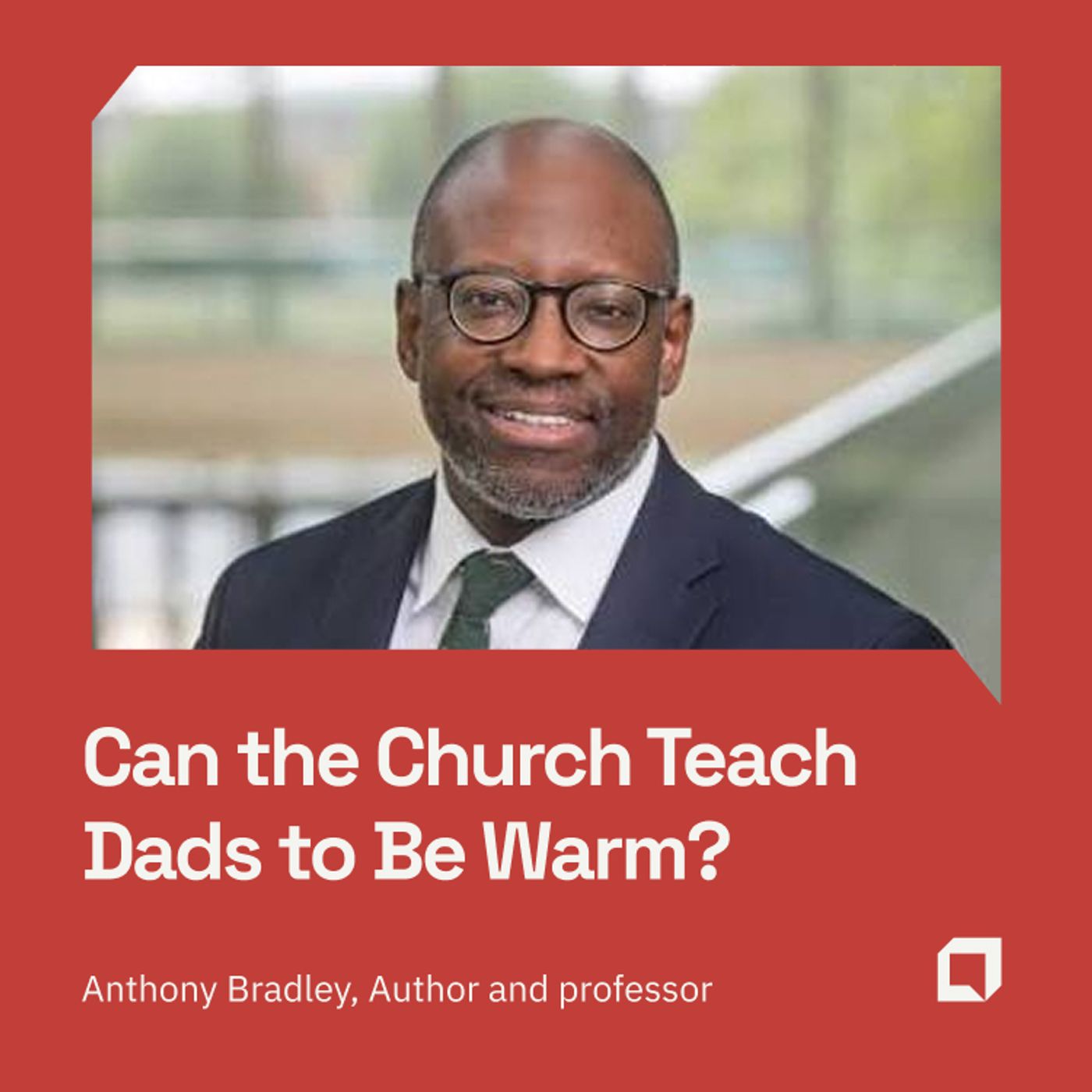
Many leaders have launched fatherhood initiatives, but the problem persists. Anthony Bradley says the missing piece is affection, and that the church holds more of the remedy than public policy does.The conversationWhat is the difference between father absence and dad deprivation?Bradley once framed the issue as fatherlessness, and audiences pictured low-income households. The research changed his language. A father can share a home with his children and give them no attachment, and some mental health outcomes for those children track closely with outcomes for children whose fathers are gone. To be dad deprived is to grow up without a father’s voice telling you that you matter, giving direction, and forming your faith. Ed describes his own childhood in these terms: a father in the house and distant through years of alcoholism.What makes a father effective?Bradley names three practices: presence without phones or screens, warmth that makes a father a refuge, and joy in the children themselves. He cites research tying roughhousing to impulse control and emotional regulation, and to lower rates of porn and video game addiction in boys. He contrasts this with Christian parenting literature from the late 1990s and 2000s, which taught discipline and order and said little about hugs, eye contact, or curiosity about a child’s inner life.Should pastors promote marriage, fatherhood, or both?Bradley describes concentric circles: marriage, then motherhood and fatherhood, then the raising of children. A wife supplies support and insight a father cannot gather alone, and children who see their parents in love feel secure. From the conversation“You can have a dad in the home and that father not be fathering at all.” - Anthony Bradley“You can have the most spiritually vibrant mom on the planet Earth, which is great. But in terms of faith persistence from childhood into adulthood, it’s the father that matters more.” - Anthony Bradley“There is no law, there is no public policy that can generate greater affection between fathers and their children.” - Anthony Bradley“Youth ministry is actually part of the problem. Because a lot of youth ministry wedges children and isolates them from adult relationships and keeps them quarantined with their peers for way too much time.” - Anthony BradleyAbout Anthony BradleyAnthony Bradley is a distinguished research fellow at the Acton Institute and research professor of interdisciplinary and theological studies at Kuyper College. He previously directed the Center for the Study of Human Flourishing at The King’s College and writes on fatherhood, the crisis facing men and boys, criminal justice reform, and race in America. His books include Heroic Fraternities and The Fatherhood Effect.
Presenting sponsor: Gloo, a technology company for the faith and flourishing ecosystem. Hosted by Simplecast, an AdsWizz company. See pcm.adswizz.com for information about our collection and use of personal data for advertising.
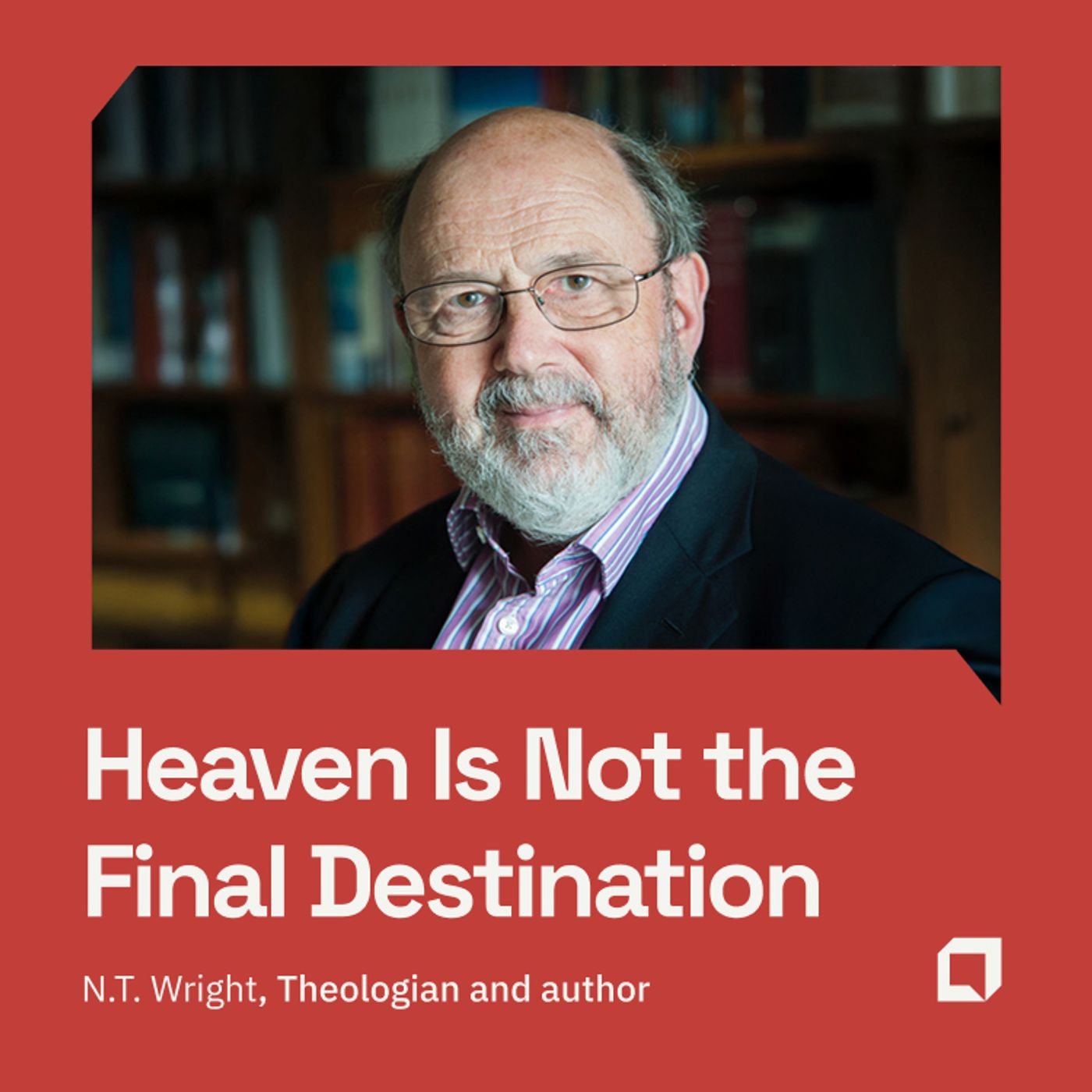
N.T. Wright argues the church has read the Bible through Plato and that heaven was never meant to be the Christian’s final destination.The conversationIs heaven the final destination for Christians?Wright’s case begins in the Old Testament. He traces two strands of promise: that the earth will be filled with the knowledge of the glory of the Lord, and that God will return to dwell with his people after the exile. The Gospels present Jesus as that returning God, and Acts and Ephesians describe the Spirit filling the church as an advance sign of what God will do with all creation. The break between the testaments that many Christians assume came later, Wright says, when the church fathers drew on Neoplatonism and recast the Old Testament as allegory. Ed pressed on the pastoral question every funeral raises. Wright’s answer: the dead are with the Messiah, in a better place, but that place is a stage on the way to resurrection. How does the church care for the world without losing the gospel?The social gospel and the missio Dei movement both recovered the kingdom of God, and both, Ed argues, did not end well. Wright concedes the history and named a cause: those movements outran their exegesis, and Moltmann explored ahead of biblical scholars who gave him little help. His proposal is to try again with the exegesis in place. He reads justification and justice as one project, and the Sermon on the Mount as God’s agenda for how the kingdom comes, carried out through the ordinary, below-the-radar work of the meek and the broken-hearted. He also named the obstacle he lives with: the Pauline picture of the church as one family stands against the divided reality of Western Protestantism.From the conversation“God is going to fill the whole creation with his presence and love. In the present time, he fills individuals and communities, loosely called the church, as an advance sign of what he wants to do with the whole creation.” N.T. Wright“They never challenged the basic assumption, which was that salvation consists of our souls going to heaven. They just had a different route by which that would happen.” N.T. Wright“God’s gonna put the whole world right. He puts us right through the Gospel and the Spirit so that we can be part already of his putting right project for the world.” N.T. Wright“When God wants to sort things out, he doesn’t send in the tanks, he sends in the meek and the broken-hearted and the hungry for justice people.” N.T. WrightAbout N.T. WrightN.T. Wright is a New Testament scholar who teaches at Wycliffe Hall, Oxford, and previously served as dean of Lichfield Cathedral. His books include Surprised by Hope and the new God’s Homecoming.
Presenting sponsor: Gloo, a technology company for the faith and flourishing ecosystem. Hosted by Simplecast, an AdsWizz company. See pcm.adswizz.com for information about our collection and use of personal data for advertising.
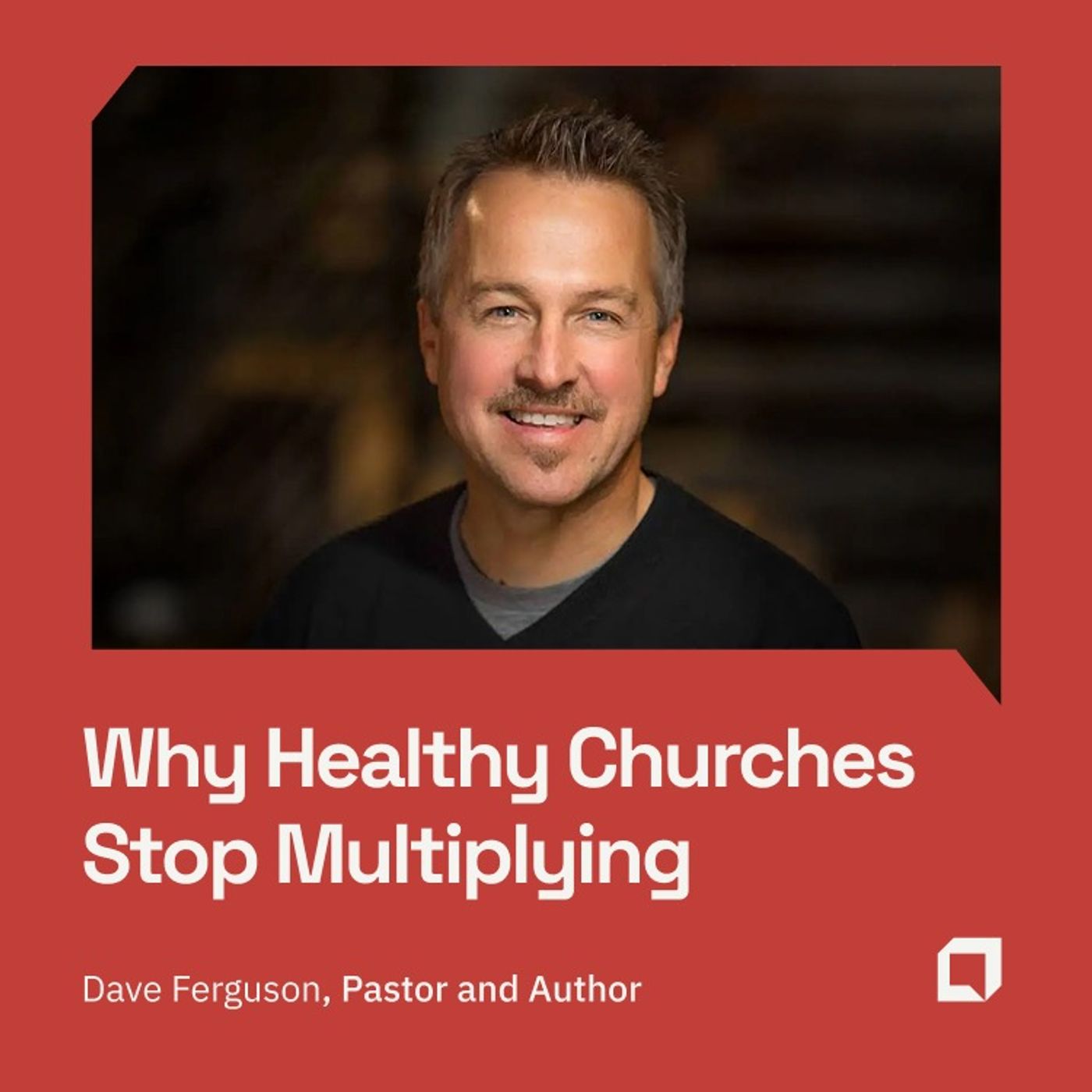
Dave Ferguson planted a church that planted a network, which then became a movement in about 69 countries. He tells Ed Stetzer why growth is often where multiplication stops, and why reproducing disciples begins with the condition of the leader.The conversationWhy do growing churches stop multiplying?Ferguson discusses a five-level scale of church health: declining, plateauing, growing, reproducing, multiplying. He says many churches in the West spend their effort reaching the third level and stay there. A plateaued church spends to get to growth. A growing church faces a second set of costs, buildings and staff, to reproduce. His own church waited nine years before it planted a church, which he calls a regret. He asks every leader to multiply at the smallest scale, in a small group with an apprentice, at any church size. What should a leader check before trying to multiply?Ferguson argues that leaders drift by degrees and reproduce who they are, so the work starts inside. Most mornings he marks four gauges, relational, physical, mental and spiritual, as full or empty. Four practices follow: make disciple makers, establish spiritual communities, mobilize new leaders, and launch church expressions, in forms he says can be micro, macro or meta. Ferguson also argues that the DNA of movement lives in every believer because Christ is in them. From the conversation“I would say that any movement, for great good or great evil, has at its very core some form of apprenticeship.” Dave Ferguson“If Jesus is inside of us, everything that’s needed to forgive our past, to give our present a purpose, to give our future a hope for us exists inside us.” Dave Ferguson“When you’re plateaued or declined, you’re doing everything you can to get money so you can get to growth, to add staff so you can get to growth, add programs to get to growth.” Dave Ferguson“You can’t lead what you won’t live, and as a pastor and leader, for me, when I preach at Mariners, I actually will get up and say, every sermon I try to mention something about my life group.” Dave FergusonAbout Dave FergusonDave Ferguson co-planted Community Christian Church in the Chicago area and is the visionary for NewThing, a church-planting network with a footprint in about 69 countries. He is president of Exponential and the author of Multiplier: How Healthy Leaders Create a Lasting Impact.
Presenting sponsor: Gloo, a technology company for the faith and flourishing ecosystem. Hosted by Simplecast, an AdsWizz company. See pcm.adswizz.com for information about our collection and use of personal data for advertising.
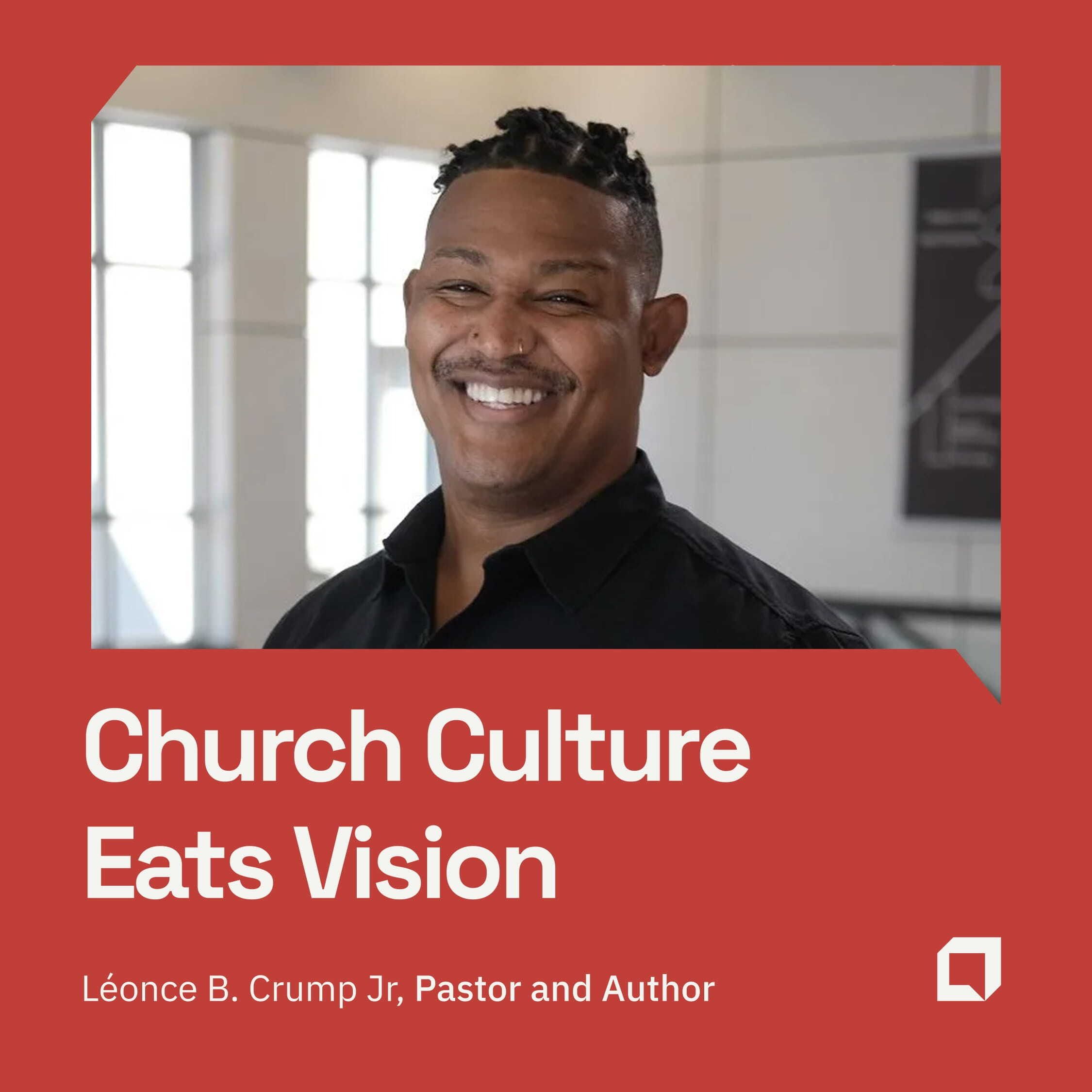
Pastors remain tired, and Léonce B. Crump Jr. agrees with Ed Stetzer that the cultural division that followed COVID has not peaked. The two discuss what a leader needs in reserve, and what a leader has to stop avoiding to stay in the work.The conversationHow do pastors build resilience that lasts?In the face of perpetual exhaustion, Crump names his reservoirs: the vision God gave him, a practiced Sabbath, a local community of pastors, and a coach, a counselor and a pastor. He argues that leaders need a place to say anything without recourse, and that the higher a leader’s profile, the smaller that place becomes. Grit, he says, comes from choosing difficulty, and the first hard thing he names for pastors is rest. How should pastors lead through a divided culture?Crump preached a series from the Book of Daniel with the tagline “Living under leadership you didn’t choose,” arguing that most people in most of history lived under rulers they did not select, and that God’s people have lived through conditions like these before. He says the church, like Western education, tends to be ahistorical, and that a leader who panics will lead a congregation in panic. From the conversation“In order for us, I believe, to function and thrive healthily, we have to have a space where we can say anything and everything without recourse.” – Léonce B. Crump Jr.“The thing that you are avoiding, the thing that you don’t want to do, is probably the doorway to your next level.” – Léonce B. Crump Jr.“We have developed a culture that is averse to suffering. And unless you have purposefully put yourself in athletics or the military or some other form of voluntary suffering, it’s very hard to develop grit in your life.” – Léonce B. Crump Jr.“If God is truly sovereign, then we can’t live in panic. And if we live in panic, then we’re going to lead our people in panic. We have to lead them with a steady hand.” – Léonce B. Crump Jr.About Léonce B. Crump Jr. is co-founder of United Church in Atlanta, which began as Renovation Church in 2008. He is the author of The Resilience Factor and Renovate: Changing Who You Are by Loving Where You Are.
Presenting sponsor: Gloo, a technology company for the faith and flourishing ecosystem. Hosted by Simplecast, an AdsWizz company. See pcm.adswizz.com for information about our collection and use of personal data for advertising.

Ed Stetzer asks JP Pokluda how a church leader tells a cultural problem from a spiritual one, and how the answer changes the way that leader prays. Pokluda says that the enemy goes after faith, and that authenticity is the best protection for a pastor and a congregation.How can a pastor take spiritual warfare seriously without obsessing over it?Stetzer raises C.S. Lewis’s two errors of ignoring the devil and obsessing over him. Pokluda adds a third: believing the enemy exists and letting that belief change nothing about how one lives. Stetzer asks whether a leader should call consumerism and performance idolatry and call for repentance, address them missiologically, or rebuke them as demonic. Pokluda says no one can know exactly where one ends and the other begins. He says the enemy runs many strategies and that the main one is distraction from God, with comparison and discontent as its ordinary means. What protects a pastor and a congregation from spiritual attack?Pokluda’s answer is straightforward: faith. He points to the shield of faith and to Jesus's prayer that Peter's faith would not fail, and he says that studying the subject left him less afraid and more faithful. The weight falls on what a pastor teaches, Pokluda argues. Leaders who train a congregation to look and sound like Christians while living differently in private, he says, are building toward disaster. From the conversation“As with all wars and all battles, there's lots of strategies, there's tributary fights, but the main current of what they're trying to do is distract us from the most high God, the creator of the heavens and the earth.” JP Pokluda“They're really looking for that inauthenticity. They're looking for double lives. They're looking for the pretenders. They have a heyday with that.” JP Pokluda“Be holy because he's holy, but not in an effort to appear holy, but to genuinely live a holy life.” JP PokludaAbout JP PokludaJonathan “JP” Pokluda is Lead Pastor of Harris Creek Baptist Church in Waco, Texas, and the author of Your Story Has a Villain, Welcome to Adulting, and Outdated. He previously led The Porch in Dallas.
Presenting sponsor: Gloo, a technology company for the faith and flourishing ecosystem. Hosted by Simplecast, an AdsWizz company. See pcm.adswizz.com for information about our collection and use of personal data for advertising.

Comments

Download from Google Play

Download from App Store
 United States