


 Claim Ownership
Let's Talk Neurosense: the psychology of neurodiversity
Subscribed: 32Played: 567
Subscribe

© Dr Naomi Fisher and Dr Danielle Drinkwater
Description
31 Episodes
Reverse
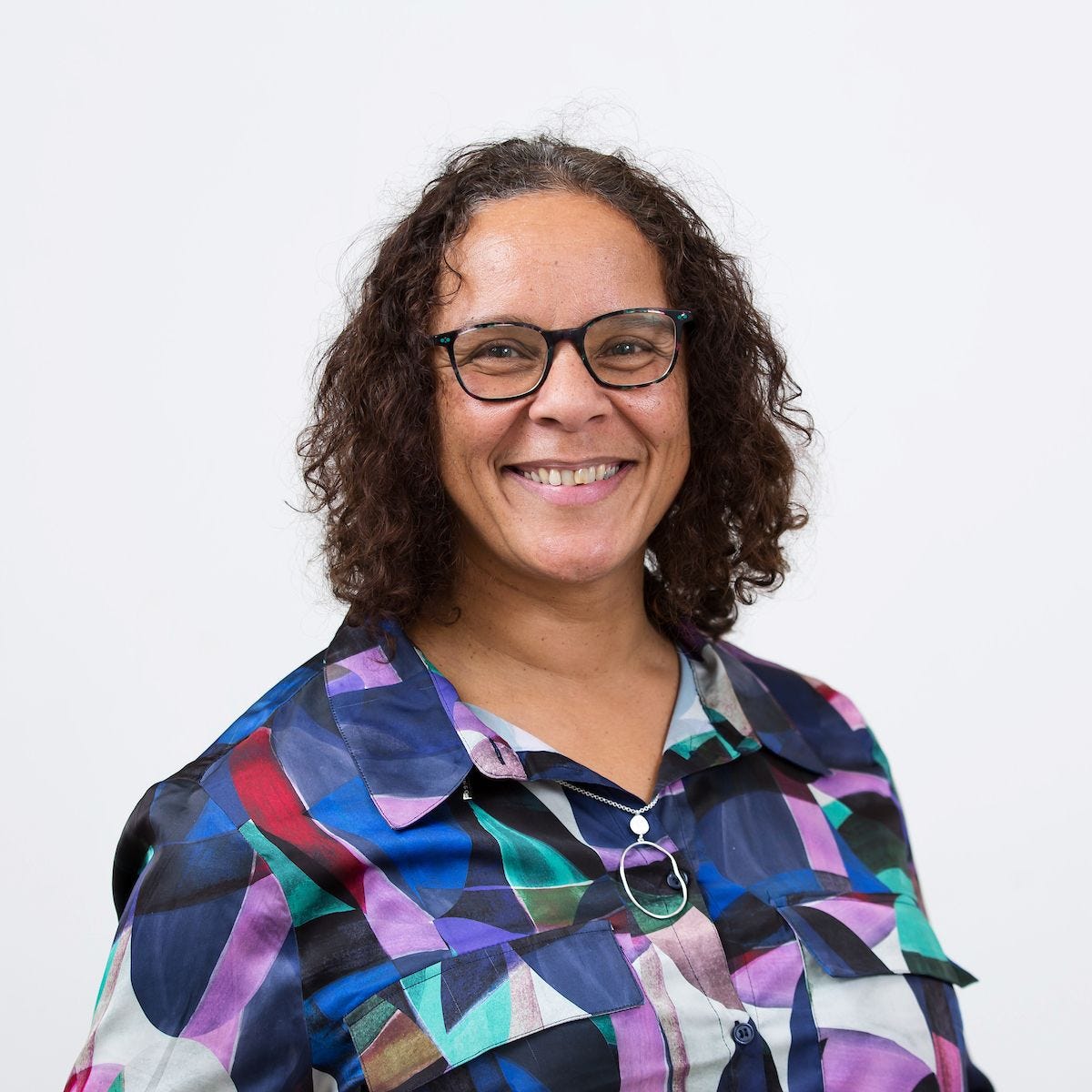
When Helen Minnis was tiny, she was affectionately referred to as ‘a nightmare baby’. As an adult, she has a diagnosis of ADHD. She counts herself lucky, because her parents had each other, they had enough money, they had community support - and so they were well enough resourced to look after her. It could have been very different. All of this is very relevant to what Helen researches now. ‘Double jeopardy’ refers to the interaction between neurodivergence (which Helen defines as those who are at the extreme ends of the normal distribution) and childhood adversity. The combination of temperament and environment, and the complex and bidirectional relationships between the two.In this far-ranging interview, Helen tells us about her research and why she thinks this is such an important area to study. We talk about the children for whom parenting really makes a difference, and how it frequently goes unacknowledged that every child is different and each parent has a different task.This interview goes from the research to the personal and practical. Helen’s empathy for parents and children shines through throughout. We hope you enjoy it. One of Helen’s academic papers on double jeopardy with her colleague Ruchika Gajwani-Gajwani, R., & Minnis, H. (2023). Double jeopardy: implications of neurodevelopmental conditions and adverse childhood experiences for child health. European child & adolescent psychiatry, 32(1), 1–4.Robert Plomin is the behavioural geneticist mentioned in the podcast who uses the phrase ‘parents matter but they don’t make a difference’. This is a public episode. If you would like to discuss this with other subscribers or get access to bonus episodes, visit neurosense.substack.com

Big announcements this week in the UK autism world. The National Autistic Society have declared that they are stating definitively that autism is genetic and that we can all stop looking for answers elsewhere. The question, they say, is resolved. This statement has been very positively received, with many sharing it and heralding it as a great step forward. But is the science really as cut and dried as this would suggest? One thing is clear, they are not making this announcement because of a scientific breakthrough. There has not been a new development in autism research which has finally resolved the issue of what causes autism. They have based this on a review of 83 different research studies, but the outcomes of these studies are nowhere near as straightforward as the statement suggests. In this episode, Naomi and Dani ask some questions about what ‘autism is genetic’ really means - and why the NAS are saying it now. What is meant by autism, in this context, and what is meant by ‘genetic’? It’s an area that is rife with misinformation and misunderstandings - does the NAS statement resolve any of that? Where do we go from here? Thanks for listening to Let's Talk Neurosense: the psychology of neurodiversity! Subscribe for free.Here are a few more links to topics discussed in this episode.* Journal articles about the heritability of vitiligo and the familial recurrence.* A Substack article by Robert Wright explaining the importance of gene/environment interactions * The National Autistic Society News page and their What Causes Autism? page with a tab for Article Sources (found towards the bottom of the page) * Marriage (and divorce) is heritable.* Autism and polygenic risk factors, explained. * The trouble with Twin Studies * Cambridge study autism and genetics * Link to the BPS Understanding Psychosis and Schizophrenia document, which provides a succinct summary of the literature referred to in the episode around inequality, poverty, racism and discrimination (Section 6.3, pg. 44) This is a public episode. If you would like to discuss this with other subscribers or get access to bonus episodes, visit neurosense.substack.com
What does lived experience really mean? Should lived experience be given the same status as scientific studies? Could it sometimes be used as a shield, preventing ideas from being challenged? Have clinicians historically ignored lived experience, and how can we redress the balance? Talking about these questions is difficult, and Paul Hutton knows that directly. When he started posting about the complexities of working with lived experience on LinkedIn, he was surprised by the strength of the response he got. As a result, we invited him on to the pod. In this conversation, Paul told us why he thinks it could be dangerous to use lived experience to form general beliefs about the world, but also thinks it’s essential that lived experience is listened to, and used to generate new hypotheses. He highlights the importance of empirical evidence - and also how evidence-based practice has historically ignored lived experience. We discussed how difficult professionals find it to challenge something framed as lived experience, and how this is sometimes exploited by researchers and those who do not want their ideas to be scrutinised. This episode, like the previous one with Susie Colbert, explores some of the parallels (and differences) between what has been happening in neurodiversity, and what has happened already in the field of psychosis. Paul brings a great depth of research and clinical knowledge. We hope you enjoy the conversation. This is a public episode. If you would like to discuss this with other subscribers or get access to bonus episodes, visit neurosense.substack.com
Susie brings a number of unique and valuable perspectives to the topic of neurodiversity and joins Naomi and I this week to to help us kickstart season 3. As well as working clinically as a psychologist and having her own diagnosis of dyslexia, Susie works as a tutor on one of the UK’s clinical psychology training programmes. She is also part of the British Psychological Society’s working group supporting researchers using the Power Threat Meaning Framework (PTMF), a non-diagnostic alternative to working with emotional distress. Susie reports having found her dyslexia diagnosis incredibly helpful over the years, yet she also believes, as someone committed to evidence-based practice and to interrogating ideas, that dyslexia deserves the same critical eye (or as she might put it- ‘critique-ical’ eye) as any other diagnosis or psychiatric construct.Together we examine the conceptual overlaps between neurodivergent presentations, psychosis and other psychiatric presentations, as well as areas of difference. We talk about what it means that dyslexia now sits under the neurodiversity umbrella and the various implications of understanding things the way we do currently, as well as posing the question- ‘what’s the alternative?’Here is a link to the Understanding Psychosis and Schizophrenia document mentioned in the episode. We’re committed to keeping Let’s Talk Neurosense free, but if you enjoy the podcast and would like to support our work, you can buy us a coffee here- This is a public episode. If you would like to discuss this with other subscribers or get access to bonus episodes, visit neurosense.substack.com
The Channel 4 documentary The Great ADHD Myth? has polarised discussion, with one side saying that it was unbalanced and unscientific, while others say that it is a necessary challenge to the dominant narrative.ADHD UK raised concerns about it from before the programme aired, and in this special episode we sat down with Chris Benson, Education Lead for ADHD UK, to find out what he thought. Chris brings decades of experience in education as well as the lived experience of his own late diagnosis and having a daughter with ADHD and an autistic son.In this episode we talk about the reactions to the documentary, how Chris understands ADHD and his own experience, and the implications of all of this for children who are struggling at school.Here are some more information about the research and researchers referred to in this podcast.Long form NYT article about ADHD and the research.Hypercurious podcast featuring Edmund Sonuga-Barke, Anne-Laure Le Cunff and Eleanor Dommett talking about the neuroscience and controversies in ADHD research.Large-scale studies showing that those with a diagnosis of ADHD have a higher risk of road traffic accidents and that taking ADHD medication reduced the risk of suicidal behaviour, substance misuse and criminality. Recent study (mentioned by Dani in the podcast) which indicates that stimulant medication may not actually be working on attention, but may instead increase vigilance and make tasks more rewarding.Longitudinal study following up children who took ADHD medication which showed that childhood treatment did not improve longer term outcomes in adolescence such as grades, arrests or psychiatric hospitalisations. Large-scale study which found that taking ADHD medication in childhood was associated with shorter adult height and higher BMI. This is a public episode. If you would like to discuss this with other subscribers or get access to bonus episodes, visit neurosense.substack.com

Comments

Download from Google Play

Download from App Store
 United States