


 Claim Ownership
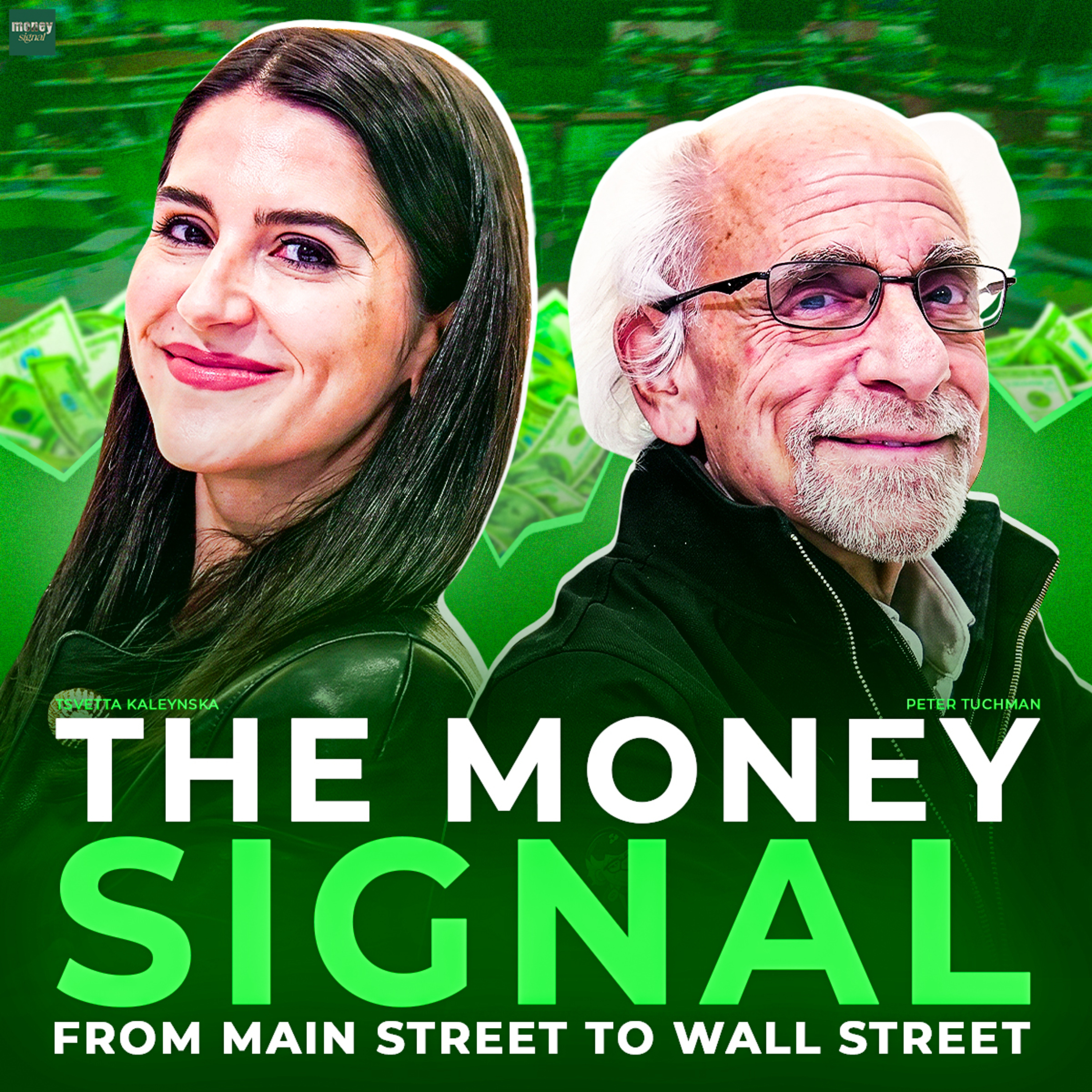
The Money Signal: From Main Street to Wall Street
Subscribed: 4Played: 28
Subscribe

© GLORION MEDIA
Description
“The Money Signal: From Main Street to Wall Street” is a weekly podcast exploring how consumers and culture drive business outcomes, economic shifts, and market reaction. Hosted by Tsvetta Kaleynska and NYSE floor veteran Peter Tuchman (the “Einstein of Wall Street”), we unpack the stories behind spending, sentiment, and demand, and what they signal for brands, operators, and investors. Expect a mix of guest conversations and host-only episodes with grounded insights you can actually use.
38 Episodes
Reverse

Gas prices jumped after the Iran war shut the Strait of Hormuz, and interest in electric vehicles followed. What does it actually cost to build an EV charging station, and who makes money from one?In this episode of The Money Signal: From Main Street to Wall Street, Alex Urist, co-founder of XCharge North America, explains why one DC fast charger can cost $30,000 to more than $200,000. He describes how his first hotel install came in at $10,000 to $15,000 by tapping existing 208-volt power, and why some site owners earned back their investment within a year to a year and a half in states with low EV adoption.Alex also explains why EVs charge fastest between 20% and 80%, why a 350 kW Electrify America charger rarely delivers 350 kW, and how $2 million to $5 million charging hubs could work as depots for Waymo and Zoox robotaxis.Tsvetta and Alex also discuss:NEVI, the $5 billion federal EV charging programWhether wars cause battery and lithium shortagesXCharge vs ABB, Kempower, Tritium, and AlpitronicWhy Alex says strip malls are the future of gas stationsWhat Alex would pitch Elon MuskHow a Mandarin major ended up building EV chargersIf you’re interested in EV charging, electric vehicles, gas prices, Tesla, Waymo, energy storage, clean energy investing, or building a hardware startup, this episode is for you. Subscribe for weekly conversations with Wall Street professionals, entrepreneurs, investors, and industry leaders.
Why do people buy, and what do customers really want? Hootology founder Stefanie Francis says 60% of Americans are status quo buyers who want what they’ve always had, and much of advertising misses them.In this episode of The Money Signal: From Main Street to Wall Street, Stefanie Francis, founder and CEO of the New York consumer insights firm Hootology, explains the consumer psychology behind brand loyalty. She describes the two planes people use to make buying decisions, status quo versus growth and thinking versus feeling, and why only 11% of the US is both emotional and growth-oriented. She also explains why survey data shows what customers do but not why they do it.Stefanie also explains why a U.S. Bank demo at the POSSIBLE conference in Miami worried her. In the demo, an AI agent generated the reasoning of a small business owner persona from purchase and click data that contains no why. She shares how Hootology showed an NFL team that residents fighting its renovation funding were closer to 1% of the local market than 50%.Stefanie and Tsvetta also discuss:Why price is only one reason customers stay loyalNostalgia versus function in brand messagingCan AI understand why customers buy?Why social listening cannot measure a local marketHow getting fired led her to start HootologyIf you’re interested in consumer psychology, why people buy, brand loyalty, marketing strategy, customer insights, AI in marketing, market research, or advertising, this episode is for you.🎙 Host: Tsvetta Kaleynska — Consumer Data & Social Listening Expert📡 About The Money Signal: From Main Street to Wall Street — where real stories meet market intelligence.Produced by GLORION MEDIA🔗 Follow & Listen:🌐 Website: https://moneysignalpodcast.com📸 Instagram: https://instagram.com/moneysignal.podcastDisclaimerThe content presented on The Money Signal: From Main Street to Wall Street is for informational and entertainment purposes only and does not constitute financial, investment, legal, tax, or other professional advice.The views expressed by hosts and guests are their own and do not necessarily reflect the views of GLORION Media or its affiliates. Any discussion of companies, securities, markets, or investment strategies is intended solely as commentary and should not be interpreted as a recommendation to buy, sell, or hold any financial instrument. Listeners and viewers should conduct their own research and consult with qualified financial or professional advisers before making any investment or business decisions.Past performance is not indicative of future results.GLORION Media, its hosts, producers, and affiliates may have business relationships with companies discussed on the program, including advertising or promotional partnerships.© GLORION Media LLC. All rights reserved. No part of this content may be reproduced, re-uploaded, or distributed without prior written consent.
70-90% of daily stock market volume is now algorithmic. Peter Tuchman explains why the New York Stock Exchange remains the last human market.In this talk, NYSE floor broker Peter Tuchman, known as the Einstein of Wall Street, explains how a trade moved in 1985, from a wall of 100 telephones to open outcry to ticker tape. He describes what he still reads in order flow at the opening and closing bells and why he will not let a robot take control of his money.Peter also explains how he won the corridor outside the NYSE boardroom for the Big Board Art Hall, a gallery of money-themed pop art that every opening bell guest walks through. He compares the 2008 financial crisis with the COVID crash, when he says the Federal Reserve put $3 trillion into the market in three months, and argues that every sell-off he has traded was a better buying opportunity than a selling one.The Einstein of Wall Street also talks about:Black Monday 1987, the dot-com bust, 2008, and COVIDThe 1,366 seats that gave traders access to the NYSE floorA 1978 record store with an espresso bar and art galleryWorking the door at Studio 54Growing up as the son of Holocaust survivorsIf you're interested in the New York Stock Exchange, Wall Street, algorithmic trading, stock market crashes, art collecting, or Peter Tuchman, this episode is for you.📡 About The Money Signal: From Main Street to Wall Street — where real stories meet market intelligence.Produced by GLORION MEDIA🌐 Website: https://moneysignalpodcast.com📸 Instagram: https://instagram.com/moneysignal.podcastDisclaimerThe content presented on The Money Signal: From Main Street to Wall Street is for informational and entertainment purposes only and does not constitute financial, investment, legal, tax, or other professional advice.The views expressed by hosts and guests are their own and do not necessarily reflect the views of GLORION Media or its affiliates. Any discussion of companies, securities, markets, or investment strategies is intended solely as commentary and should not be interpreted as a recommendation to buy, sell, or hold any financial instrument. Listeners and viewers should conduct their own research and consult with qualified financial or professional advisers before making any investment or business decisions.Past performance is not indicative of future results.GLORION Media, its hosts, producers, and affiliates may have business relationships with companies discussed on the program, including advertising or promotional partnerships.© GLORION Media LLC. All rights reserved. No part of this content may be reproduced, re-uploaded, or distributed without prior written consent.
How do Snapchat creators actually get paid? Vlad Litinetsky of Snapchat's creator partnerships team explains the ad revenue share program that lets everyday creators earn without a private jet or a trip to the Amalfi Coast.In this episode of The Money Signal: From Main Street to Wall Street, Vlad explains how Snapchat places ads inside creator Stories, why the new Creator Subscriptions feature lets creators put premium content behind a paywall, and how he separates long-term creators from the pump and dump accounts that rushed in once monetization opened.Vlad also explains how he made comedy the second most engaged category on Snapchat, what he filmed behind the scenes with Sebastian Maniscalco at Barclays Center, and how comedian Morgan Jay uses Snapchat AR lenses on the Jumbotron to roast his crowd. He describes hosting a dinner inside the Siegelman Stable pop up in Soho and building a partnership with streetwear brand KidSuper.Vlad and Tsvetta also discuss:Why consistency beats clout on SnapchatUsing AI to build a content posting scheduleRaw, unedited content versus highly produced videosHow Hulu promotes comedy specials to Gen ZPeter Tuchman and the Snapchat creator programIf you're interested in Snapchat, making money on social media, the creator economy, influencer marketing, Gen Z, stand up comedy, streetwear, or building a personal brand, this episode is for you. Subscribe for weekly conversations with Wall Street professionals, entrepreneurs, investors, and industry leaders.🎙 Host: Tsvetta Kaleynska — Consumer Data & Social Listening Expert📡 About The Money Signal: From Main Street to Wall Street — where real stories meet market intelligence.Produced by GLORION MEDIA🔗 Follow & ListenDisclaimerThe content presented on The Money Signal: From Main Street to Wall Street is for informational and entertainment purposes only and does not constitute financial, investment, legal, tax, or other professional advice.The views expressed by hosts and guests are their own and do not necessarily reflect the views of GLORION Media or its affiliates. Any discussion of companies, securities, markets, or investment strategies is intended solely as commentary and should not be interpreted as a recommendation to buy, sell, or hold any financial instrument. Listeners and viewers should conduct their own research and consult with qualified financial or professional advisers before making any investment or business decisions.Past performance is not indicative of future results.GLORION Media, its hosts, producers, and affiliates may have business relationships with companies discussed on the program, including advertising or promotional partnerships.© GLORION Media LLC. All rights reserved. No part of this content may be reproduced, re-uploaded, or distributed without prior written consent.
Frances Newton predicted the 2008 financial crisis and sold out of stocks near the market top. Now she is challenging some of the biggest assumptions investors make about Bitcoin, the U.S. dollar, the Federal Reserve and how money actually works.In this episode of The Money Signal: From Main Street to Wall Street, Tsvetta Kaleynska sits down with Frances Newton, Chief Investment Officer at Tuttle Wealth Partners, for a conversation about Bitcoin, monetary policy, market crashes, investing and the changing structure of financial markets.Can Bitcoin replace the U.S. dollar? Newton argues no. With Bitcoin's hard supply ceiling, its supply cannot expand and contract in response to economic conditions, a lever she argues remains fundamental to the role of the Federal Reserve and the monetary system.But the conversation goes much deeper into a question most people rarely ask:Where does money actually come from?Frances explains how money in circulation is connected to credit, how banks create loans through bookkeeping entries rather than simply lending out existing customer deposits, and why paying down debt can extinguish money from the system.Then the conversation turns to markets.Frances explains what she saw in historical charts leading up to the 1929 stock market crash, what helped her anticipate the 2008 financial crisis, and why today's market structure may be changing the way crashes and bear markets unfold.Frances and Tsvetta discuss:• How Frances Newton anticipated the 2008 financial crisis• Whether Bitcoin could ever replace the U.S. dollar• Why Bitcoin's fixed supply matters for its potential role as money• What the Federal Reserve actually does within the monetary system• How banks create money when they make loans• Why paying off debt can reduce the money supply• What she learned at the 75th anniversary of Bretton Woods• What historical market charts from 1929 can teach today's investors• How zero-days-to-expiration, or 0DTE, options are changing market behavior• How dealer gamma may be compressing bear markets that once unfolded over many months• Why the traditional 60/40 stock-and-bond portfolio may no longer provide the protection investors expect• Ray Dalio's framework of an economy divided between the top 40% and bottom 60%• Why private markets have created an investment-access divide• Why prediction markets are becoming increasingly attractive to traders• How artificial intelligence is changing traditional information advantages in financial markets• What the professor behind the VIX told Frances about volatility and marketsThe conversation ultimately raises a much larger question: Are the financial rules investors have relied on for decades still working in today's market?🎙 Guest: Frances Newton - Chief Investment Officer, Tuttle Wealth Partners🎙 Host: Tsvetta Kaleynska - Consumer Data & Social Listening Expert📡 The Money Signal: From Main Street to Wall StreetWhere real stories meet market intelligence.Produced by GLORION MEDIAFollow & Listen:🌐 Website: https://moneysignalpodcast.com📸 Instagram: https://www.instagram.com/moneysignal.podcast/DisclaimerThe content presented on The Money Signal: From Main Street to Wall Street is for informational and entertainment purposes only and does not constitute financial, investment, legal, tax, or other professional advice.The views expressed by hosts and guests are their own and do not necessarily reflect the views of GLORION Media or its affiliates. Any discussion of companies, securities, markets, or investment strategies is intended solely as commentary and should not be interpreted as a recommendation to buy, sell, or hold any financial instrument. © GLORION Media LLC. All rights reserved. No part of this content may be reproduced, re-uploaded, or distributed without prior written consent.

Comments

Download from Google Play

Download from App Store
 United States