


 Claim Ownership
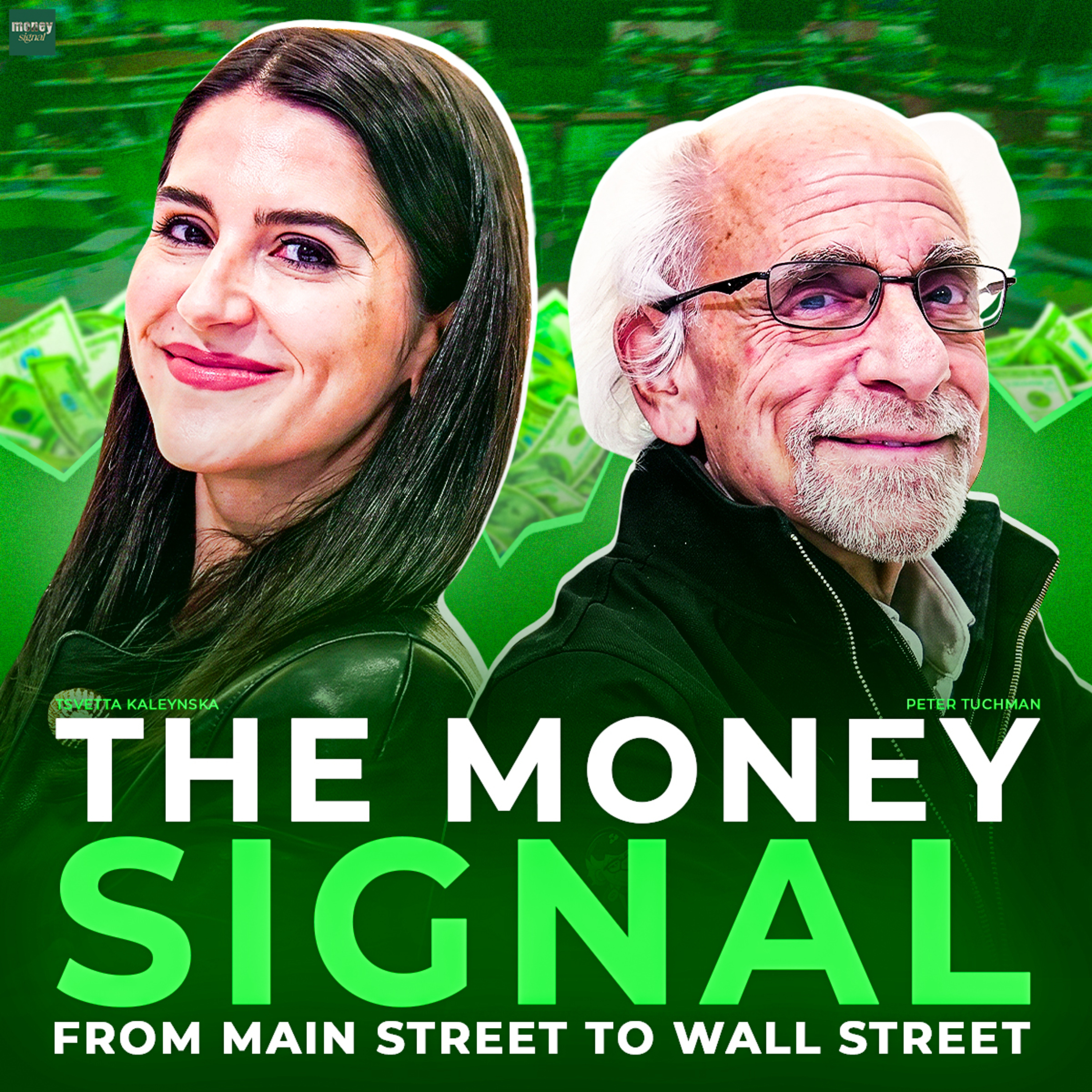
The Money Signal: From Main Street to Wall Street
Subscribed: 4Played: 28
Subscribe

© GLORION MEDIA
Description
“The Money Signal: From Main Street to Wall Street” is a weekly podcast exploring how consumers and culture drive business outcomes, economic shifts, and market reaction. Hosted by Tsvetta Kaleynska and NYSE floor veteran Peter Tuchman (the “Einstein of Wall Street”), we unpack the stories behind spending, sentiment, and demand, and what they signal for brands, operators, and investors. Expect a mix of guest conversations and host-only episodes with grounded insights you can actually use.
41 Episodes
Reverse

What do 25 women who spent their careers on Wall Street tell their own friends and family about where to start investing? Their answers became a new book: "Investment Wisdom for Our Friends and Loved Ones."In this episode of The Money Signal: From Main Street to Wall Street, Council on Foreign Relations senior fellow Rebecca Patterson and Gilman Hill Asset Management CEO Jenny Van Leeuwen Harrington explain how a friend, suddenly widowed at 48, found no single resource to start with, why investment bankers often cannot manage their own money, and why so many adults feel they missed a class that never existed.Jenny describes opening a Roth IRA for her 17-year-old son and showing him how $2,000 invested today can grow to roughly a quarter of a million dollars by age 67. Rebecca, who chairs the Council for Economic Education, explains why millions of students graduate without knowing the difference between a savings account and investing, and why two portfolios with the same 5% average return can finish a decade far apart.Jenny, Rebecca and Tsvetta also discuss:Prediction markets, zero-day options, and gamified investing appsWhy Warren Buffett's fortune is a story about compounding timeHow to check a financial advisor for FINRA violationsFiduciary vs non-fiduciary advisorsThe compounding quote Albert Einstein never saidBook picks from The Psychology of Money to Moby DickIf you're interested in how to start investing, compound interest, Roth IRAs, financial literacy, financial advisors, women in finance, or Warren Buffett, this episode is for you.🎙 Host: Tsvetta Kaleynska — Consumer Data & Social Listening Expert📡 About The Money Signal: From Main Street to Wall Street — where real stories meet market intelligence.Produced by GLORION MEDIA🔗 Follow & Listen:🌐 Money Signal Podcast: moneysignalpodcast.com📸 Instagram: @moneysignal.podcast🎧 Spotify: The Money Signal: From Main Street to Wall StreetDisclaimerThe content presented on The Money Signal: From Main Street to Wall Street is for informational and entertainment purposes only and does not constitute financial, investment, legal, tax, or other professional advice.The views expressed by hosts and guests are their own and do not necessarily reflect the views of GLORION Media or its affiliates. Any discussion of companies, securities, markets, or investment strategies is intended solely as commentary and should not be interpreted as a recommendation to buy, sell, or hold any financial instrument. Listeners and viewers should conduct their own research and consult with qualified financial or professional advisers before making any investment or business decisions.Past performance is not indicative of future results.GLORION Media, its hosts, producers, and affiliates may have business relationships with companies discussed on the program, including advertising or promotional partnerships.© GLORION Media LLC. All rights reserved. No part of this content may be reproduced, re-uploaded, or distributed without prior written consent.
KIND founder Daniel Lubetzky just made the largest investment in Camino Partners history: $62 million into Intake Breathing, a magnetic nasal strip company he says reminds him most of KIND.In this episode of The Money Signal: From Main Street to Wall Street, Shark Tank investor Daniel Lubetzky explains why his team’s data convinced him to back Intake, why instant results set it apart from longevity “snake oil,” and fits the strips on Peter Tuchman and Tsvetta Kaleynska live on camera. He also shares how his father, Roman, survived the Kovno ghetto and three years in Dachau, and why humor kept him alive.Daniel also explains why KIND was named in his father’s honor, why every full-time KIND employee received stock, and why he paid himself $24,000 a year for 10 years while PeaceWorks struggled. Peter Tuchman, the NYSE floor broker known as the Einstein of Wall Street, shares how a Wish-Bone trademark lawsuit shut down his first hot sauce brand.We also discuss:Why Daniel hires for values over skillsThe four Cs of a builderWhy humans still beat AI at creativityHow social media feeds fuel polarizationWhat Daniel looks for before investing in a founderIf you’re interested in KIND Snacks, Shark Tank, Intake Breathing, nasal strips, entrepreneurship, investing, or Holocaust survivor stories, this episode is for you. Subscribe for weekly conversations with Wall Street professionals, entrepreneurs, investors, and industry leaders.🎙 Host: Tsvetta Kaleynska — Consumer Data & Social Listening ExpertPeter Tuchman -- Einstein of Wall Street, NYSE trader📡 About The Money Signal: From Main Street to Wall Street — where real stories meet market intelligence.Produced by GLORION MEDIA🔗 Follow & Listen:🌐 Website: moneysignalpodcast.com📸 Instagram: instagram.com/moneysignal.podcastDisclaimerThe content presented on The Money Signal: From Main Street to Wall Street is for informational and entertainment purposes only and does not constitute financial, investment, legal, tax, or other professional advice.The views expressed by hosts and guests are their own and do not necessarily reflect the views of GLORION Media or its affiliates. Any discussion of companies, securities, markets, or investment strategies is intended solely as commentary and should not be interpreted as a recommendation to buy, sell, or hold any financial instrument. Listeners and viewers should conduct their own research and consult with qualified financial or professional advisers before making any investment or business decisions.Past performance is not indicative of future results.GLORION Media, its hosts, producers, and affiliates may have business relationships with companies discussed on the program, including advertising or promotional partnerships.© GLORION Media LLC. All rights reserved. No part of this content may be reproduced, re-uploaded, or distributed without prior written consent.
Around 3 billion people still have no internet access. Micky Watkins, founder and CEO of World Mobile, says a people-owned mobile network can reach them faster and cheaper than legacy telecom operators.In this episode of The Money Signal: From Main Street to Wall Street, Micky explains how two solar-powered Wi-Fi poles helped a Zanzibar fishing village grow from 150 to as many as 300 people in seven and a half months. He also describes how World Mobile says it covered 70-80% of Reno, Nevada for under $5 million, and what it costs to host a rooftop radio: $7,500 to $9,000, with a payback of two to two and a half years.Micky also explains the hydrogen-powered stratospheric aircraft World Mobile is building in the Mojave Desert, designed to fly at 60,000 feet for nine days and connect around 500,000 people at a time. He compares it with Starlink satellites and Google Loon, and explains why he believes carriers should not own your data.Micky and Tsvetta also discuss:Why most unlimited plans throttle after 20 or 25 gigsThe $50 unlimited plan with free calls to over 20 countriesHow an Uber-style sharing economy works for a mobile networkWhy liquid hydrogen beats solar power for high-altitude connectivityThe BT test flight and data sovereignty from the skyIf you’re interested in World Mobile, Starlink, passive income, the sharing economy, DePIN, data privacy, or the future of telecom, this episode is for you.Download the World Mobile app: worldmobile.io/Moneysignal🎙 Host: Tsvetta Kaleynska — Consumer Data & Social Listening Expert📡 About The Money Signal: From Main Street to Wall Street — where real stories meet market intelligence.Produced by GLORION MEDIA🔗 Follow & Listen: 🌐 Website: moneysignalpodcast.com📸 Instagram: instagram.com/moneysignal.podcastDisclaimerThe content presented on The Money Signal: From Main Street to Wall Street is for informational and entertainment purposes only and does not constitute financial, investment, legal, tax, or other professional advice.The views expressed by hosts and guests are their own and do not necessarily reflect the views of GLORION Media or its affiliates. Any discussion of companies, securities, markets, or investment strategies is intended solely as commentary and should not be interpreted as a recommendation to buy, sell, or hold any financial instrument. Listeners and viewers should conduct their own research and consult with qualified financial or professional advisers before making any investment or business decisions.Past performance is not indicative of future results.GLORION Media, its hosts, producers, and affiliates may have business relationships with companies discussed on the program, including advertising or promotional partnerships.© GLORION Media LLC. All rights reserved. No part of this content may be reproduced, re-uploaded, or distributed without prior written consent.
Every comment, click, and Wi-Fi connection tells a brand something about what you will buy next. Tsvetta Kaleynska built RILA Global Consulting to turn billions of those data points into strategy for global brands.In this episode of The Money Signal: From Main Street to Wall Street, host Tsvetta Kaleynska takes the guest seat across from Peter Tuchman, the NYSE floor broker known as the Einstein of Wall Street. She explains how she earned $600 at age 12 from tourist photos in a traditional costume, how MySpace led her to St. Francis College in Brooklyn, and why 250 job applications after graduating in 2012 produced exactly one response. That employer sponsored her H-1B visa, which she won on the second lottery attempt, and he is now her business partner.Tsvetta also explains how consumer behavior modeling helps brands predict reactions to a new product or logo, how Wi-Fi connections and "I consent" checkboxes feed marketing analytics, and why the Shark Tank lesson that every company is selling its data applies to any business. She walks through what McDonald's would ask a data consultant if Smashburger started taking its market share.Peter and Tsvetta also discuss:• Why she framed the cease and desist sent before her company launched• What a 30-second Super Bowl ad costs• The New Coke marketing disaster• Blindspot and the Airbnb of billboards• Picking stocks by watching what teenagers buyIf you're interested in social listening, consumer data, consumer behavior, marketing analytics, entrepreneurship, immigrant founders, the H-1B visa, Shark Tank, or the NYSE, this episode is for you.🎙 Host: Tsvetta Kaleynska — Consumer Data & Social Listening Expert📡 About The Money Signal: From Main Street to Wall Street — where real stories meet market intelligence.Produced by GLORION MEDIA🔗 Follow & Listen:🌐 Website: moneysignalpodcast.com📸 Instagram: instagram.com/moneysignal.podcastDisclaimerThe content presented on The Money Signal: From Main Street to Wall Street is for informational and entertainment purposes only and does not constitute financial, investment, legal, tax, or other professional advice.The views expressed by hosts and guests are their own and do not necessarily reflect the views of GLORION Media or its affiliates. Any discussion of companies, securities, markets, or investment strategies is intended solely as commentary and should not be interpreted as a recommendation to buy, sell, or hold any financial instrument. Listeners and viewers should conduct their own research and consult with qualified financial or professional advisers before making any investment or business decisions.Past performance is not indicative of future results.GLORION Media, its hosts, producers, and affiliates may have business relationships with companies discussed on the program, including advertising or promotional partnerships.© GLORION Media LLC. All rights reserved. No part of this content may be reproduced, re-uploaded, or distributed without prior written consent.
Gas prices jumped after the Iran war shut the Strait of Hormuz, and interest in electric vehicles followed. What does it actually cost to build an EV charging station, and who makes money from one?In this episode of The Money Signal: From Main Street to Wall Street, Alex Urist, co-founder of XCharge North America, explains why one DC fast charger can cost $30,000 to more than $200,000. He describes how his first hotel install came in at $10,000 to $15,000 by tapping existing 208-volt power, and why some site owners earned back their investment within a year to a year and a half in states with low EV adoption.Alex also explains why EVs charge fastest between 20% and 80%, why a 350 kW Electrify America charger rarely delivers 350 kW, and how $2 million to $5 million charging hubs could work as depots for Waymo and Zoox robotaxis.Tsvetta and Alex also discuss:NEVI, the $5 billion federal EV charging programWhether wars cause battery and lithium shortagesXCharge vs ABB, Kempower, Tritium, and AlpitronicWhy Alex says strip malls are the future of gas stationsWhat Alex would pitch Elon MuskHow a Mandarin major ended up building EV chargersIf you’re interested in EV charging, electric vehicles, gas prices, Tesla, Waymo, energy storage, clean energy investing, or building a hardware startup, this episode is for you. Subscribe for weekly conversations with Wall Street professionals, entrepreneurs, investors, and industry leaders.

Comments

Download from Google Play

Download from App Store
 United States