


 Claim Ownership
ADAPT Insider
Subscribed: 0Played: 0
Subscribe

© ADAPT
Description
This is ADAPT Insider. Proudly A/NZ first. For more than 15 years, ADAPT has empowered Australia and New Zealand’s executive community with trusted data, insights, and connections so leaders can make better decisions with confidence. Because this region is different. Our markets are unique. And the challenges facing enterprise leaders from legacy technology to transformation are only getting bigger. Each year, through in-depth research, benchmarking and executive-only events, ADAPT engages with over 2,000 senior leaders across the region’s most influential enterprise and government organisations. ADAPT Insider brings you inside those conversations. Real perspectives from technology and business leaders. Independent research grounded in local data. And practical intelligence you can actually use. This is not theory. It is insight for leaders driving modernisation. Welcome to ADAPT Insider. Built for A/NZ leaders. Backed by data. Designed to help you move with confidence.
28 Episodes
Reverse
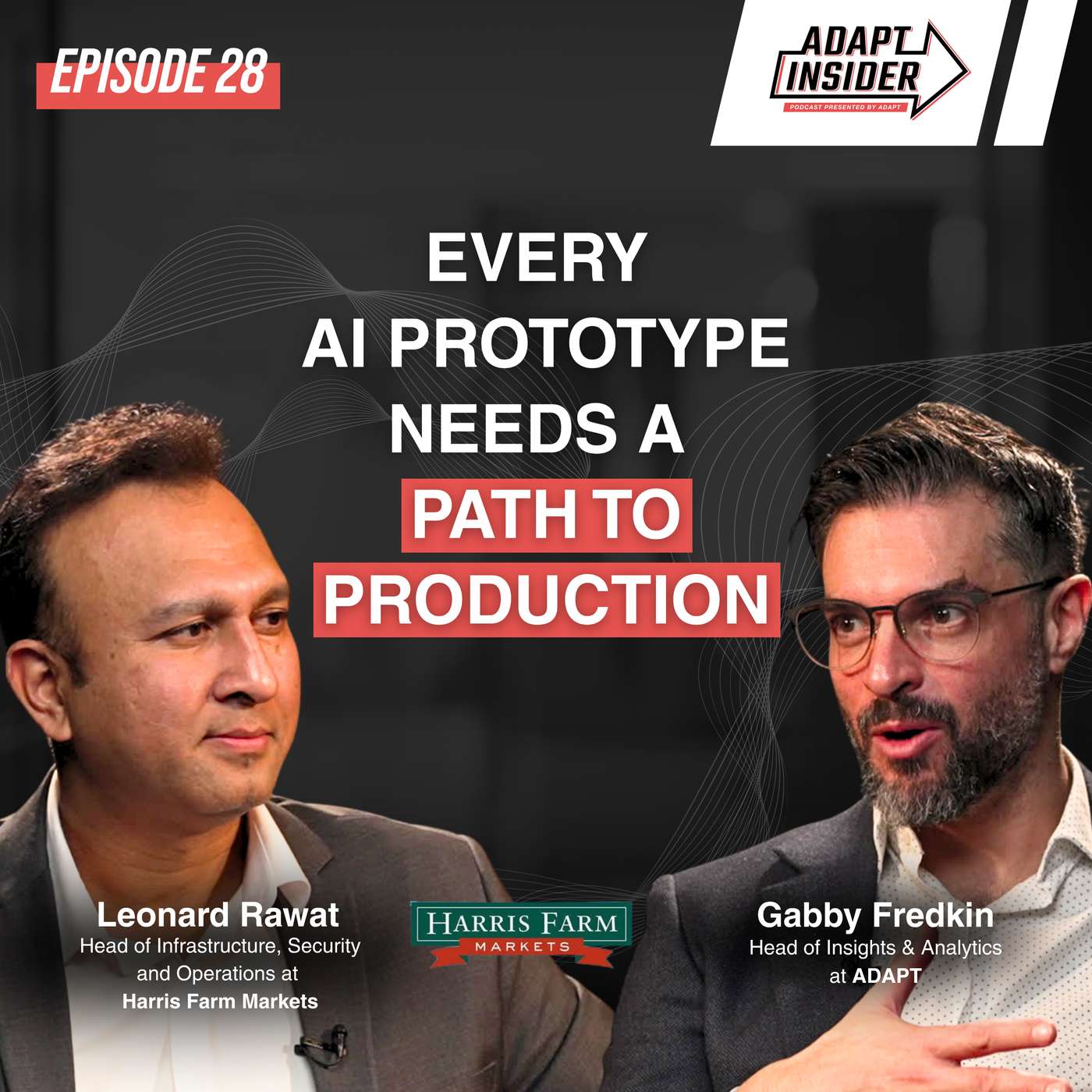
AI pilots can create false confidence.Controlled data, prompts and supervision often make early results look stronger than the systems that eventually reach production.Leonard Rawat, Head of Infrastructure, Security and Operations at Harris Farm Markets, explains why infrastructure choices must start with the use case.He examines what changes as token demand grows, why guardrails belong in the architecture and how internal capability turns experimentation into practical value.Key takeaways:The use case must determine the infrastructure. Organisations should define the business problem before selecting a platform, model or deployment approach.Production readiness starts during the pilot. Security guardrails, cost controls and token optimisation must be designed before workloads scale.Business context has to be built internally. Training and sandboxed experimentation help employees turn operational knowledge into useful AI solutions.Production exposes the weaknesses pilots concealMany AI projects perform well in pilots because the data is clean, prompts are controlled and users receive close supervision.Those conditions disappear when systems enter day-to-day operations.Leonard says organisations should plan for scale from the outset.Token consumption can rise quickly as experimentation develops into agentic workflows or automation, increasing pressure on the platform and its operating cost.The AI platform must align with data location, expected demand and the original business case.Infrastructure choices determine whether a promising pilot can deliver reliable value in production.Guardrails have to be part of the architectureAI infrastructure extends beyond keeping systems available.It must account for cloud spend, token usage, security exposure and the wider ecosystem surrounding each model.Leonard argues that clear controls are needed at the infrastructure layer before deployment expands.Sandboxed environments give teams room to test ideas without exposing production systems, while token optimisation helps contain costs as usage increases.Embedding these controls into the architecture supports confident scaling.Without them, risk and expenditure can grow faster than the value created by the technology.Internal capability turns business context into valueAt Harris Farm Markets, employees across marketing, finance, procurement and warehouse functions can use sandboxed environments, training and accessible development tools to build prototypes safely.Leonard points to practical applications ranging from Shopify workflows to security vendor mapping.People closest to an operational problem can test a solution in a controlled environment, shortening the distance between an idea and a useful outcome.Organisations cannot buy their own business context.They need people who understand the work, supported by the tools and governance required to apply that knowledge.

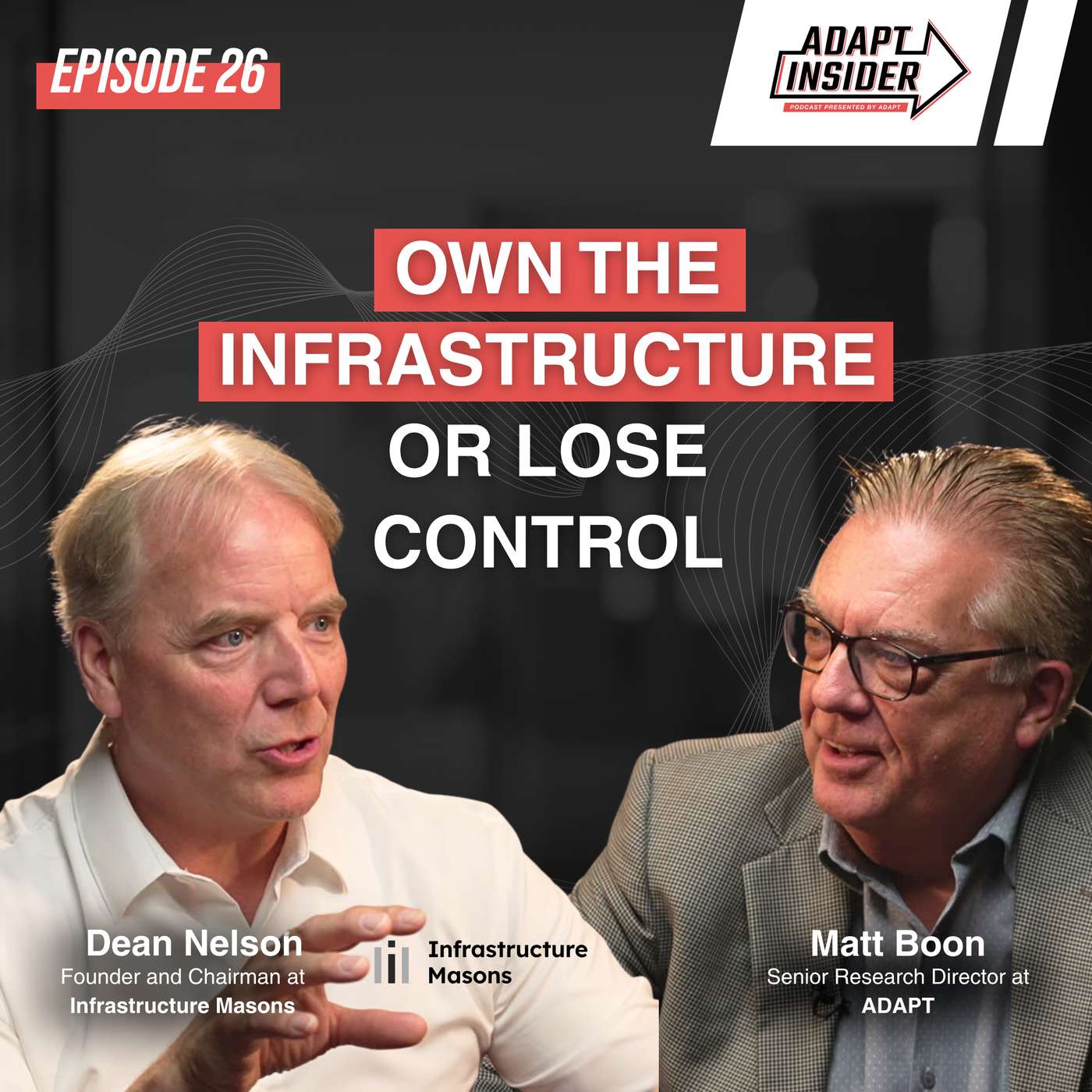
Most AI initiatives stall when ambition outruns clarity.Dean Nelson outlines how leaders can reduce that risk by applying first principles, proving value through targeted use cases, then using each result to guide the next investment.His perspective links practical AI adoption to the infrastructure choices required for sovereignty, sustainability and public trust.Key takeaways:Define the outcome before choosing the technology: A narrow operational problem gives teams a shared target, makes progress measurable and creates a credible path to scale.Design for control from the outset: Private models, secure data environments and locally hosted infrastructure allow organisations to pursue AI without surrendering sovereignty.Earn confidence through visible proof: Clear evidence of efficiency, sustainability and community value helps digital infrastructure retain public trust.Start with one business problemThe strongest AI programs begin with a specific operational constraint rather than a broad transformation mandate.Dean says many pilots fail because teams select the technology before agreeing on the result the organisation needs.A first-principles approach brings business, technology and security leaders around one measurable objective.It also creates a practical sequence: solve the immediate problem, validate the outcome, then expand from evidence.Dean points to an organisation in Mexico that built a secure private AI environment for field teams.By focusing on one defined need, it achieved meaningful productivity gains without making enterprise-wide transformation the starting condition. Build infrastructure that keeps AI under controlAI workloads are changing the physical design of data centres.GPU-dense environments require new cooling methods, with liquid cooling and closed-loop water systems supporting greater computing density while reducing water use.The same infrastructure decisions shape sovereignty.Dean argues that governments and enterprises need locally hosted capacity, private models and Australian-controlled digital capabilities so critical data and services remain within national control.Sustainable AI therefore depends on architecture that can support intensive workloads without weakening security, operational resilience or accountability.Public trust determines whether AI can scaleTechnical progress alone will not secure the future of AI infrastructure.Communities increasingly scrutinise the environmental impact of data centres, yet the industry often struggles to explain improvements in renewable energy, efficient cooling and resource use.Dean calls for open engagement backed by tangible local benefits.A stronger public narrative must show how infrastructure supports economic activity, improves efficiency and responds to legitimate community concerns.Inside the organisation, that trust starts with disciplined governance.Leaders should manage workloads deliberately, use AI to strengthen oversight where appropriate, then measure progress against business outcomes rather than market hype.

For the first time, organisations can measure and buy certain kinds of cognitive work at scale.Once thinking becomes measurable through tokens, the economics underneath a business start to shift.Work that once sat inside roles, teams, and service models can now be broken apart, reassessed, and redistributed across people and agents.In this ADAPT Insider conversation, Mark Pesce, ADAPT Executive Advisor and Co-Founder at Wisely AI, argues that this is why the current moment is bigger than another wave of software.Businesses are not simply adopting a new tool. They are being pushed to rethink the cost of work, the design of processes, and the basis of competitive advantage. Key takeaways:AI is becoming infrastructure, which means the real shift is organisational design, not tool selection.Cognition can now be priced more directly, forcing businesses to rethink where cost sits and where value is created.The biggest gains will go to organisations that redesign workflows around agents and feedback loops instead of optimising old processes.AI is becoming part of the infrastructureMark’s view is that AI will disappear into the background in the same way electricity did.It will stop being treated as a standalone capability and become embedded across products, workflows, and decisions.That is why he uses electrification as the comparison.Businesses that once bolted electricity onto old factory designs were eventually overtaken by those that rebuilt around distributed power.He sees the same pattern emerging with AI.The larger gains will go to organisations that redesign around agents rather than leaving AI in a central team or treating it as a side feature.The real pressure is economicMark is less interested in AI as a novelty than in what it does to the economics of cognition.Once organisations can buy certain kinds of thinking directly, they have to revisit where expensive human effort is still essential, where agents can take on part of that load, and how that changes their margins and operating model.That is where he sees the real disruption.Many businesses are still running on assumptions formed before this shift began.The bigger risk is discovering too late that the business is still priced and organised for a world that no longer exists.Redesign will matter more than optimisationMark is clear that the biggest gains will not come from adding AI to existing workflows and hoping for incremental improvement.The larger opportunity comes from redesigning those workflows around agents and feedback loops.He points to software engineering as an example, where agents are already being used to detect issues, fix code, test changes, and redeploy continuously.In that kind of setup, the work does not disappear, but it changes.Humans move up a level, from executing repetitive tasks into designing, guiding, and improving the loop itself.
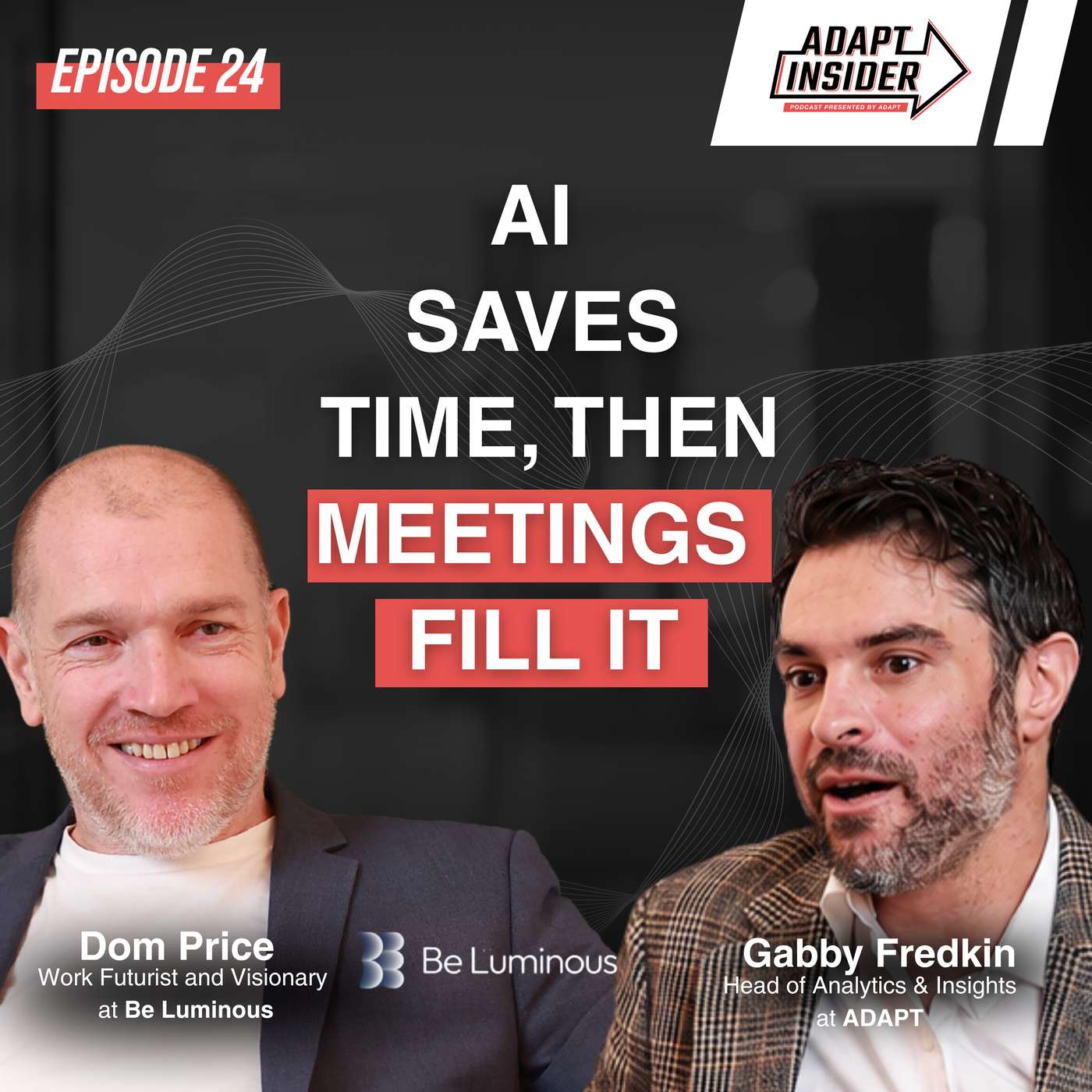
Saving time creates little value when organisations have no deliberate use for the capacity released.In this ADAPT Insider episode, Dom Price, Work Futurist and Visionary at Be Luminous, examines why conventional productivity metrics reveal too little about the conditions that sustain performance.He considers how organisations can redirect saved time, protect long-term workforce capability and build the confidence to experiment amid constant change.Key takeaways:Productivity gains create value when organisations direct released capacity towards meaningful, higher-value work.Workforce decisions should account for the experience, context and institutional knowledge that employees develop over time.Small, safe experiments help teams act on new information, adjust direction and share useful lessons across the organisation.Saved time requires a deliberate destinationProductivity, sales and GDP remain common measures of performance.These lagging indicators reveal little about whether people have the environment, tools, trust and space to produce meaningful work.Dom points to organisations that achieved significant productivity gains, then filled the released capacity with more meetings.Without a clear next-best use for that time, greater efficiency changed the volume of activity without improving its value.Leaders can assess the conditions behind performance alongside the final output.Discretionary effort, curiosity and human connection reveal whether people feel engaged enough to contribute beyond the minimum expected of them.Automation decisions shape future capabilityAI can improve work by augmenting employees and redirecting their attention towards higher-value contributions.Removing roles without considering the talent pipeline risks leaving organisations without the experience required for future leadership and specialist positions.Graduate roles illustrate the long-term value at stake.Early-career employees may initially cost more than they contribute, yet those roles build context, experience and institutional knowledge over time.Dom points to IKEA’s decision to redeploy employees affected by automation into new roles.Their existing expertise remained inside the organisation and supported a different source of value.Workforce planning should account for the capabilities an organisation will require in the future, including the pathways through which employees develop them.Learning velocity helps organisations adaptMany organisations were designed around stability, efficiency and five-year planning.Constant disruption has reduced the value of waiting for certainty before acting.Dom describes learning velocity as the ability to absorb new information, adjust direction and test ideas without punishing people for changing course.Leaders can select one manageable opportunity each quarter, test it at low cost and share the result.A small experiment gives teams evidence they can act on while limiting the consequences of failure.Leading by example gives employees permission to try, learn and adapt.Repeated experimentation builds practical knowledge faster than waiting for a perfect business case.

Comments

Download from Google Play

Download from App Store
 United States