


 Claim Ownership
Approved
Subscribed: 14Played: 88
Subscribe

© Approved Podcast
Description
Life sciences, under the hood. Deep dives into the patent filings, regulatory gauntlets, and capital-risks that shape the business of biology.
6 Episodes
Reverse
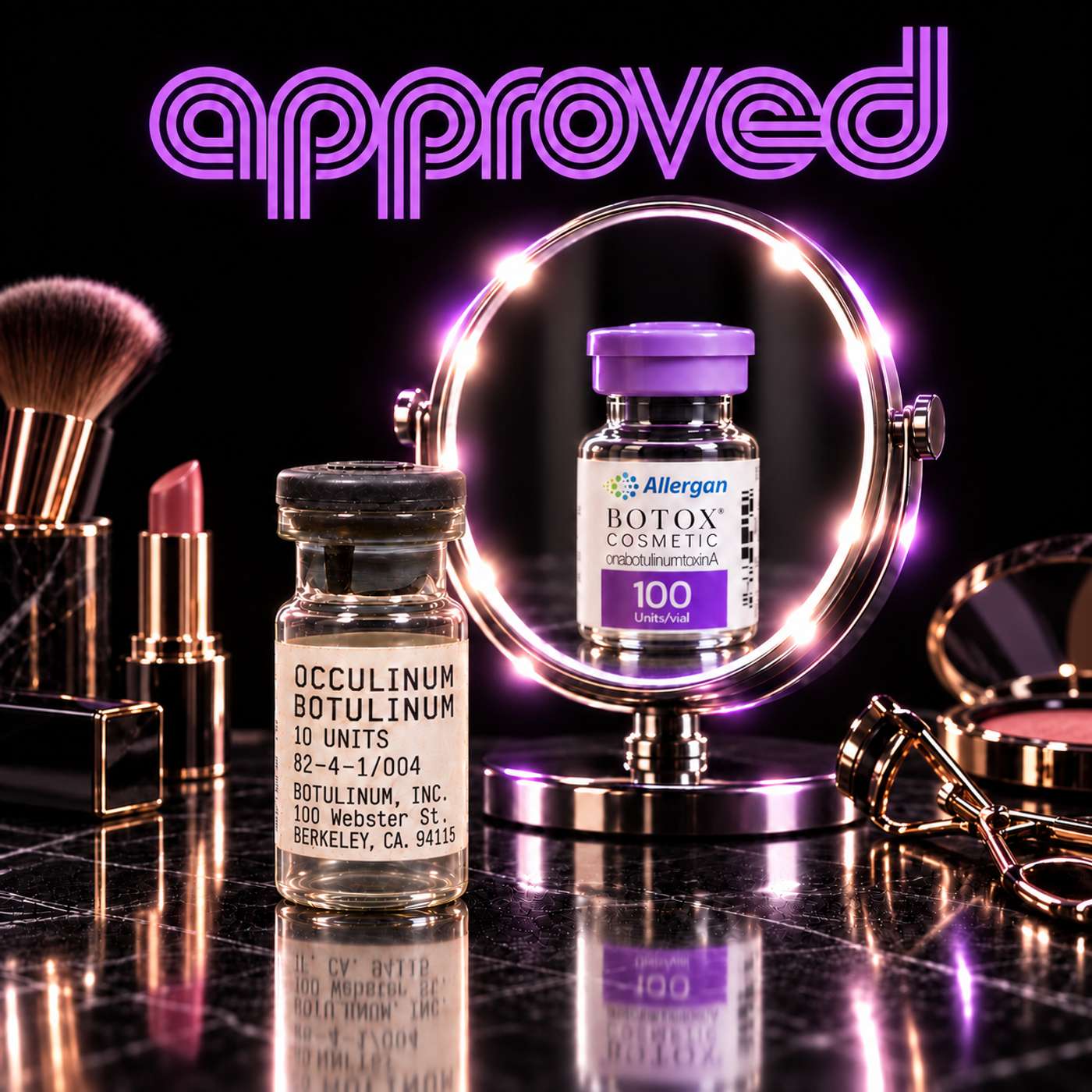
The wild story of how a Cold War bioweapon became Botox — and how Allergan turned a sleepy ophthalmology drug into an enduring aesthetic franchise.Every part of this story looks nothing like your normal blockbuster drug. Botox started its development storyas a Cold War bioweapon so lethal the CIA was thinking of using it on Castro. Decades later, an eye surgeon in San Francisco mortgaged his house and managed to bootstrap his way to a BLA– no venture capital needed! After a contentious sale to a sleepy eye-drop company called Allergan, it turned Botox into one of the most durable, recurring-revenue franchises in the history of medicine. That cash cow provoked all sorts of financial battles– a hostile takeover attempt involving Bill Ackman, a tax-inversion scheme with Pfizer that united Bernie Sanders and Donald Trump in opposition, and a far-fetched plan to rent a Native American tribe's sovereign immunity to protect a different drug's patents.In this episode, we trace Botox from a 19th-century German sausage poisoning, through a Cold War weapons lab, an eye surgeon's garage-scale manufacturing operation, and into Allergan's decades-long reign — covering the science of why the drug still has no biosimilar, the "aesthetics stack" that turned it into a subscription business for faces, and the corporate finance drama (Valeant, Actavis, Pfizer and AbbVie) that followed. Along the way: exclusive interviews with Allergan's 95-year-old founding CEO, the scientist who helped manufacture the original drug substance in an academic lab, and the dermatologist who tried to repurpose Botox to treat depression.In this episode:How a Clostridium botulinum strain donated for free by a Harvard professor became the physical basis of a multi-billion-dollar drugWhy the FDA's insistence on unique nonproprietary names (onabotulinumtoxinA vs. abobotulinumtoxinA) created an accidental, unbreakable competitive moatHow Allergan built the "surround the ophthalmologist" sales playbook — and later applied the same tactics to the aesthetic space. The 2014 Valeant/Ackman hostile takeover attempt, and how Allergan fought backHow nearly every foundational piece of IP in the Botox story was given away for free by the academics who created itIs there a new aesthetic bundle to build around incretin-based weight loss products? Featuring quotes from: Gavin Herbert Jr. (Allergan founder and former chairman/CEO), Eric Johnson, PhD (Ed Schantz's research partner, University of Wisconsin), Eric Finzi, MD PHD (dermatologist and Botox-for-depression researcher), Brent Saunders (former CEO, Allergan/Actavis), and Amy Ingle, APRN (owner, Sweet Spot Medispo). BibliographySelected sources. Compiled September 2026.BooksHelveston, Eugene M. Death to Beauty: The Transformative History of Botox. Bloomington: Indiana University Press, 2023. iupress.orgBerkowitz, Dana. Botox Nation: Changing the Face of America. New York: New York University Press, 2017. nyupress.orgFinzi, Eric. The Face of Emotion: How Botox Affects Our Mood and Relationships. New York: Palgrave Macmillan, 2013. publishersweekly.comEssays and criticismShaywitz, David. “Botox: A Luminous Example of Field Discovery.” Timmerman Report, February 9, 2024. timmermanreport.comShaywitz, David. “‘Death to Beauty’ Review: The Birth of Botox.” The Wall Street Journal, February 12, 2024. aei.orgBusiness school case studiesPaine, Lynn S., Suraj Srinivasan, John C. Coates, and David Lane. “The Allergan Board Under Fire (A).” Harvard Business School Case 316-010. Boston: Harvard Business School, 2016 (rev. January 7, 2019). hbsp.harvard.eduPaine, Lynn S., Suraj Srinivasan, John C. Coates, and David Lane. “The Allergan Board Under Fire (B).” Harvard Business School Case 316-029. Boston: Harvard Business School, 2016 (rev. January 7, 2019). hbsp.harvard.eduPeterson, Randall S., and Lisa Duke. “David Pyott: The Battle for Allergan (A).” London Business School Case CS-16-001. London: London Business School, September 2018. Distributed by Harvard Business Publishing, no. LBS305. hbsp.harvard.eduForoughi, Jaclyn, and Rebecca Lester. “The Pfizer-Allergan Tax Inversion.” Stanford Graduate School of Business Case A-230. Stanford, CA: Stanford GSB, 2017. Distributed by Harvard Business Publishing. hbsp.harvard.eduPrimary scientific literaturevan Ermengem, Emile. “A New Anaerobic Bacillus and Its Relation to Botulism.” Reviews of Infectious Diseases 1, no. 4 (1979): 701–19. Translation of “Ueber einen neuen anaëroben Bacillus und seine Beziehungen zum Botulismus,” Zeitschrift für Hygiene und Infektionskrankheiten 26 (1897): 1–56. PMID 399378Erbguth, Frank J., and Markus Naumann. “Historical Aspects of Botulinum Toxin: Justinus Kerner (1786–1862) and the ‘Sausage Poison.’” Neurology 53, no. 8 (1999): 1850–53. PMID 10563638Schantz, Edward J., and Eric A. Johnson. “Properties and Use of Botulinum Toxin and Other Microbial Neurotoxins in Medicine.” Microbiological Reviews 56, no. 1 (1992): 80–99. PMID 1579114Scott, Alan B. “Botulinum Toxin Injection into Extraocular Muscles as an Alternative to Strabismus Surgery.” Ophthalmology 87, no. 10 (1980): 1044–49. PMID 7243198Carruthers, Jean D., and J. Alastair Carruthers. “Treatment of Glabellar Frown Lines with C. botulinum-A Exotoxin.” Journal of Dermatologic Surgery and Oncology 18, no. 1 (1992): 17–21. PMID 1740562Dodick, David W., et al. “OnabotulinumtoxinA for Treatment of Chronic Migraine: Pooled Results from the Double-Blind, Randomized, Placebo-Controlled Phases of the PREEMPT Clinical Program.” Headache 50, no. 6 (2010): 921–36. PMID 20487038Finzi, Eric, and Norman E. Rosenthal. “Treatment of Depression with OnabotulinumtoxinA: A Randomized, Double-Blind, Placebo Controlled Trial.” Journal of Psychiatric Research 52 (2014): 1–6. PMID 24345483Brin, Mitchell F., et al. “OnabotulinumtoxinA for the Treatment of Major Depressive Disorder: A Phase 2 Randomized, Double-Blind, Placebo-Controlled Trial in Adult Females.” International Clinical Psychopharmacology 35, no. 1 (2020): 19–28. PMID 31609787The depression program after AllerganHealis Therapeutics. “Healis Therapeutics Acquires Ownership of Key Botulinum Toxin Patent.” PR Newswire, January...
Approved tells the definitive stories behind the world's most interesting biotech ventures. Most people learn about the industry in a fragmented, ad hoc way-- an industry article here, a clinical trial readout there, some science twitter. In contrast, The Approved podcast tells comprehensive, definitive stories of how drugs are discovered, developed and sold. Whether we're tracking a single blockbuster drug's remarkable rise, or following a single startup’s decade-long path to approval, every episode we put out is an unvarnished look at how the biotech industry works. We break down what worked, what failed, and distill insights that you can apply to your own life science business. Every episode is accessible and entertaining, but ultimately designed for the life science professional. Hosted by Matthew Pech, PhD (cancer biologist and drug hunter) and Alex Kesin (biotech writer), every episode draws on hundreds of hours of research -- including Nature papers, corporate decks, SEC filings, and legal records. All that is supplemented with original interviews with the actual scientists, operators, and clinicians who brought the drugs to life. Season 1 HighlightsKeytruda: Featuring conversations with Roy Baynes and Greg Carven.Blueprint Medicines: Featuring Christoph Lengauer and Alexis Borisy.Botox: Featuring Gavin Herbert Jr. and Brent Saunders.Season 1 is wrapping up soon, with our upcoming episode on a drug worth 285 million times its weight in gold (guesses are welcome). Research for Season 2 is already underway...Subscribe on Apple Podcasts and Spotify, or visit approved.fm.
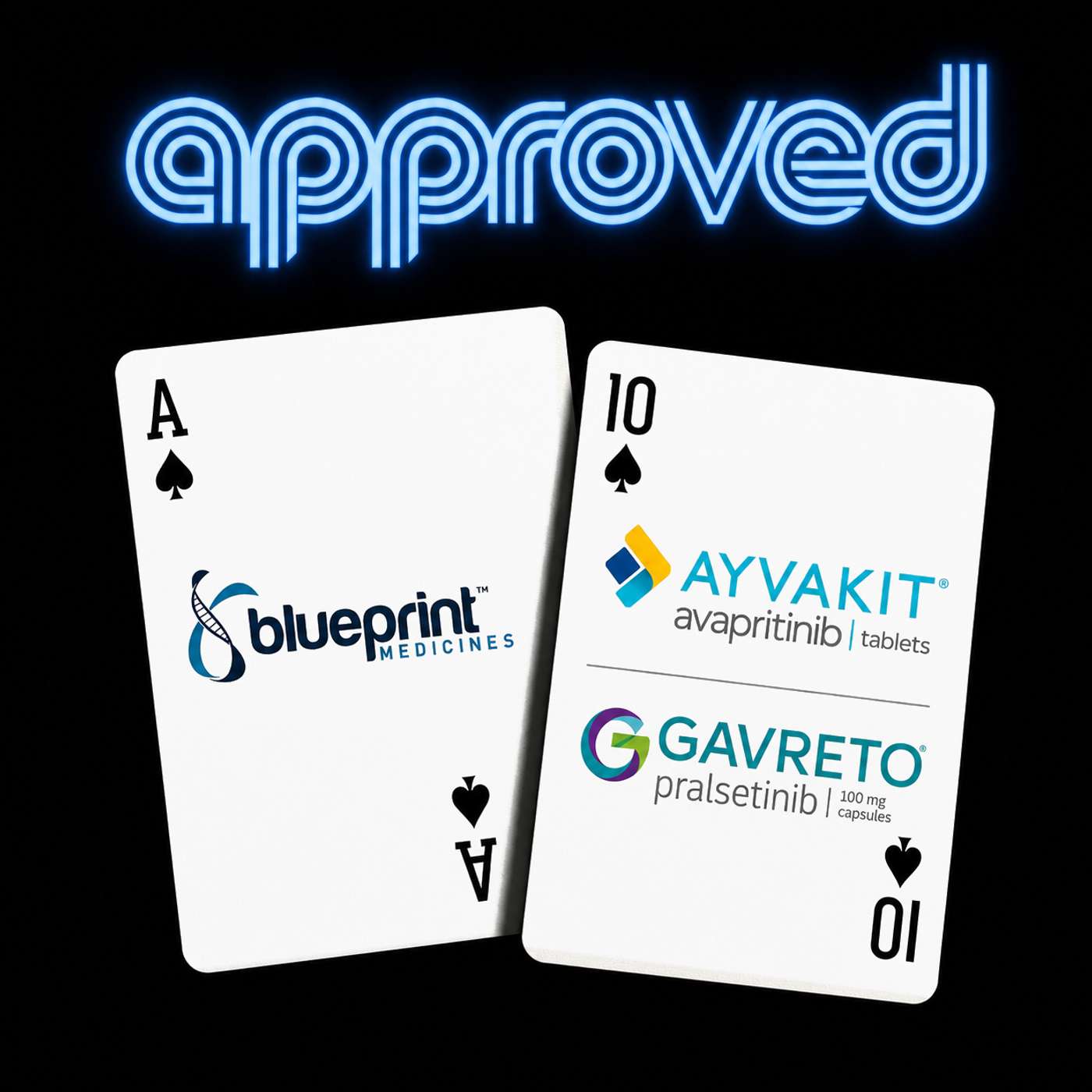
Blueprint Medicines was built to find the next Gleevec-style cancer drug. It ended up pivoting to allergic disease instead, and selling to Sanofi for $9B. This is the platform, the pivot, and who got paid.Blueprint Medicines set out to be the natural sequel to Gleevec: a company founded by two of the scientists behind that landmark cancer drug, built to order by Third Rock Ventures' "venture creation" model, with a proprietary kinase-inhibitor library designed to drug the 517 other broken molecular switches Gleevec couldn't touch.A decade later, Sanofi paid roughly $9 billion for the company... just not for a cancer drug. Blueprint's blockbuster asset, avapritinib (AYVAKIT), found its real market almost by accident: indolent systemic mastocytosis, a debilitating, often-undiagnosed mast-cell disease that took patients years to get diagnosed and had no approved treatment.In this episode, we trace two threads at once: the science of designing truly selective kinase inhibitors, and the venture capital philosophy -- company creation, not just company funding -- that built Blueprint from a whiteboard sketch into a platform biotech. We cover the near-death Series B, the accidental discovery that opened up mastocytosis, the GAVRETO partnership that fell apart against a faster competitor, the Sanofi negotiation (CVRs and all), and the wide gap between what the venture firm and hired executives made versus what the founding scientists -- like Gleevec's co-inventor Nick Lydon -- walked away with. We end covering the efforts of Blueprint diaspora to create a new model of seed investing: Curie Bio. Featuring interviews with:Alexis Borisy: Former Blueprint CEO/Chairman; founding chairman, Curie.BioChristoph Lengauer: Founding CSO, Blueprint Medicines; Chief Drug Hunter, Curie.BioErica Evans: Former VP Biology, Blueprint Medicines; SVP, Curie.BioTim Guzi: Former Head of Medicinal Chemistry, Blueprint MedicinesDr. Charles Sawyers, M.D. — Academic co-founder, Blueprint MedicinesDr. Mariana Castells, M.D., Ph.D — Director, Mastocytosis Center, Brigham and Women's HospitalCREDITSCo-hosted by Alex Kesin and Matthew PechWritten, edited, and produced by Alex KesinMusic: “Food” by nerowski* Special thanks to the team at NFX for the use of their recording studio.* This episode is presented by JLL. Featuring Grant Dettmer on biotech real estate strategy.Sources1. Books and case studiesVasella, Daniel, with Robert Slater. Magic Cancer Bullet: How a Tiny Orange Pill Is Rewriting Medical History. HarperBusiness, New York, 2003. ISBN 9780060010300 · OCLC 50859163.Hamermesh, Richard G., Kathy Giusti, and Susie L. Ma. "Breakthroughs at Blueprint Medicines." Harvard Business School Case 820-001, June 29, 2020.Levin, Mark. "Mastering the Value Chain: An Interview with Mark Levin of Millennium Pharmaceuticals." Harvard Business Review, June 2001.2. SEC filingsBlueprint Medicines (CIK 1597264)Form S-1, March 23, 2015.Stockholders Agreement (Ex. 4.5), November 7, 2014.Investors' Rights Agreement (Ex. 4.4), November 7, 2014.Schedule 14D-9, June 17, 2025.Schedule 14D-9 Amendment No. 1, July 10, 2025.Schedule 14D-9 Amendment No. 3, July 18, 2025.Form 8-K — Roche immunokinase collaboration press release, March 18, 2016.Form 8-K — VOYAGER Phase 3 topline, April 28, 2020.Form 8-K — Roche pralsetinib collaboration press release, July 14, 2020.Roche Collaboration Agreement (Ex. 10.1 to Q2 2020 10-Q).Form 8-K — Royalty Pharma + Sixth Street financing, June 30, 2022.Form 10-K, FY2022.Form 8-K — Roche termination of Gavreto collaboration, February 23, 2023.Form 8-K — EGFR program discontinuation, January 8, 2024.Form 8-K — Gavreto handoff to Rigel, February 22, 2024.Form 8-K — BLU-222 deprioritization, January 13, 2025.CORRESP — response to SEC accounting comments, 2021.DEF 14A, 2018.DEF 14A, 2019.DEF 14A, 2021.DEF 14A, June 18, 2025.SanofiSchedule TO-T (Offer to Purchase), June 17, 2025.Schedule TO-C — Hudson deal-call transcript, June 3, 2025.Schedule TO-T/A, July 17, 2025.Form 6-K, June 2, 2025.
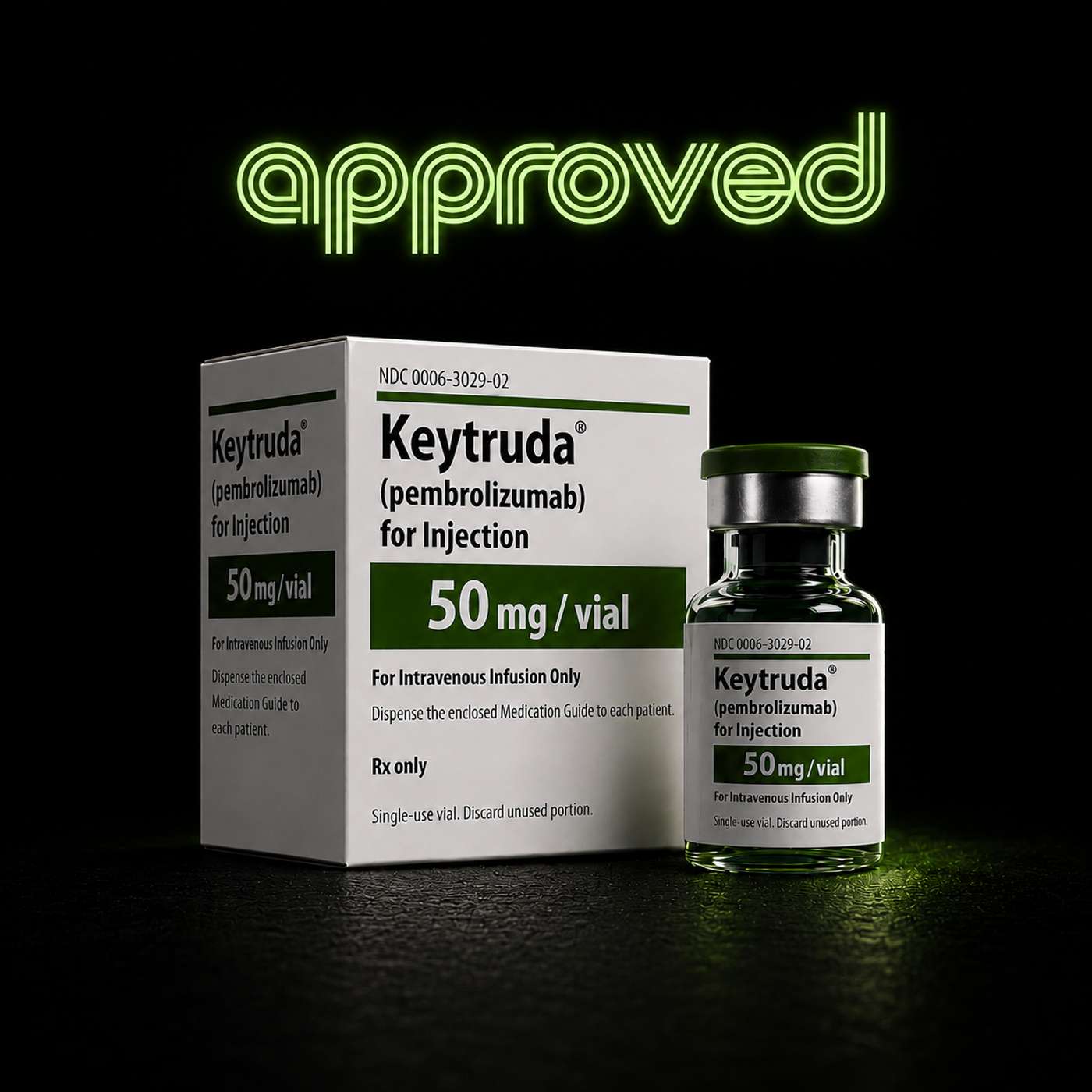
Keytruda is Merck's $31 billion a year PD-1 inhibitor and the best-selling cancer drug of all time. In Episode 3 of Approved, Alex Kesin and Matthew Pech trace the development of pembrolizumab , featuring interviews the scientists who drove the program forward : co-inventors Gregory Carven and Michel Streuli, and former Merck oncology CMO Roy Baynes.Topics include preclinical PD1 / CTLA-4 checkpoint biology that brought industry attention to the target (Jim Allison's CTLA-4 work and Tasuku Honjo's PD-1 discovery); how pembro started as a failed rheumatoid arthritis antibody program at a Dutch subsidiary of a paint company; the two mega-mergers that nearly killed the program; the biomarker enrichment trial design behind KEYNOTE-024 that let Merck break BMS's lead in lung cancer; the 41-patient Johns Hopkins MSI-H trial behind the first tissue-agnostic FDA approval, and the Jimmy Carter melanoma case that brought pembrolizumab to the public conscious. The episode closes on what comes next for Merck: the 2028 patent cliff, the Keytruda QLEX subcutaneous launch, and efforts to find the next blockbuster checkpoint inhibitor, including Summit/Akeso's PD-1 / VEGF bispecific ivonescimab.This episode is presented by JLL. Featuring Grant Dettmer on biotech real estate strategy.CHAPTERS 00:00:00 — Introduction: The Best-Selling Cancer Drug of All Time 00:02:15 — Part One — A Century of Failed Cancer Immunotherapy 00:04:17 — T Cells, CD28, and the Two-Signal Model of Immune Activation 00:06:25 — Jim Allison's CTLA-4 Discovery and the Path to Yervoy 00:12:03 — Tasuku Honjo Discovers PD-1: A Better Brake on T Cells 00:14:26 — Lieping Chen and the PD-L1 Tumor Evasion Hypothesis 00:16:26 — Part Two — Organon: The Dutch Paint-Company Subsidiary Behind Keytruda 00:19:48 — How Michel Streuli Caught the Solid-Phase Screening Artifact 00:22:09 — The Accidental Antagonist: From Rheumatoid Arthritis Drug to Cancer Drug 00:26:34 — Sponsor: Grant Detmer (JLL) on Biotech Real Estate Strategy 00:30:01 — Russian Nesting-Doll M&A: Schering-Plough Acquires Organon (2007) 00:31:43 — The $41 Billion Merck–Schering-Plough Mega-Merger of 2009 00:34:58 — Corporate Guerrilla Warfare: Four Scrappy Stunts That Saved Pembrolizumab 00:39:32 — BioNovion's Spite-Company Bid to Buy Pembro Back 00:42:10 — BMS at ASCO 2010: The Data Print That Revived Merck's PD-1 Program 00:45:55 — Part Three — Roger Perlmutter Joins a Bleeding Merck (April 2013) 00:50:48 — "Let Me Manage the Tigers": Ken Frazier Backs the All-In Bet on Pembrolizumab 00:55:22 — Breakthrough Therapy Designation and Eric Rubin's Adaptive Trial Design 00:58:25 — Keytruda's 2014 FDA Approval Erases BMS's Four-Year Lead 01:00:24 — The Lung Cancer Battlefield and the PD-L1 Biomarker Bet 01:02:19 — BMS vs. Merck: All-Comers vs. Biomarker-Enriched Trial Strategy 01:08:18 — KEYNOTE-024 vs. CheckMate-026: The Trial That Decided the Category 01:12:03 — Luis Diaz, MSI-H, and the Failed BMS Trial That Made Keytruda Tissue-Agnostic 01:17:18 — KEYNOTE-189: Perlmutter's Bet on Combining Keytruda with Chemotherapy 01:19:21 — Merck's Clinical Development Playbook: Basket Trials, Backwards March, External Collabs 01:25:29 — Part Four — The IO Graveyard: TIGIT, CD47, IDO1, LAG-3 and Tens of Billions Incinerated 01:30:23 — Why PD-1 Was the Only Checkpoint That Worked (Lieping Chen Revisited) 01:33:32 — Part Five — Inside the Best-Selling Drug of All Time 01:37:03 — "Build a Wall, High and Wide": Merck’s Commercial Strategy for Keytruda 01:43:44 — Part Six — The Patent Cliff and Loss of Exclusivity in Pharma 01:45:35 — Keytruda QLEX (Subcutaneous) and the Lifecycle Management Playbook 01:50:23 — PD-1/VEGF Bispecifics: Ivonescimab, Summit Therapeutics, and the Next Threat 01:55:31 — The Scorecard: Patient, Academic, and Financial Impact 02:01:19 — Who Actually Profited: Merck vs. Organon vs. the Scientists Who Built the Drug 02:05:54 — Epilogue: The Jimmy Carter DrugSourcesLast updated: May 2026Essential readingShaywitz, David. "The Startling History Behind Merck's New Cancer Blockbuster." Forbes, Jul 26, 2017. The definitive Organon-era origin story.Loftus, Peter. "Why Merck Is Betting Big on One Cancer Drug." WSJ, Apr 15, 2018. Source for Perlmutter's "whatever other projects you're working on, you can stop now."Lowe, Derek. "The Keytruda Story." In the Pipeline.Graeber, Charles. The Breakthrough. Twelve, 2018.Primary interviewsGreg Carven, Michel Streuli, Roy Baynes — Approved podcast interviews (2026). Quotes attributed to these speakers come from these conversations unless otherwise noted.Foundational scienceStutman. "Tumor development in athymic-nude mice." Science (1974). The flawed experiment that killed tumor immunology for two decades.Shankaran et al. "IFNγ and lymphocytes prevent primary tumour development." Nature (2001). Schreiber's cancer immunoediting paper.Leach, Krummel & Allison. "Antitumor immunity by CTLA-4 blockade." Science (1996). Allison's '100-to-zero' experiment.Ishida, Agata, Shibahara & Honjo. "Induced expression of PD-1." EMBO J (1992). Honjo discovers PD-1.Dong, Strome et al. "B7-H1 promotes T-cell apoptosis." Nat Med (2002). Lieping Chen's PD-L1 immune-evasion paper.Pivotal trialsTopalian et al. "Anti-PD-1 ...
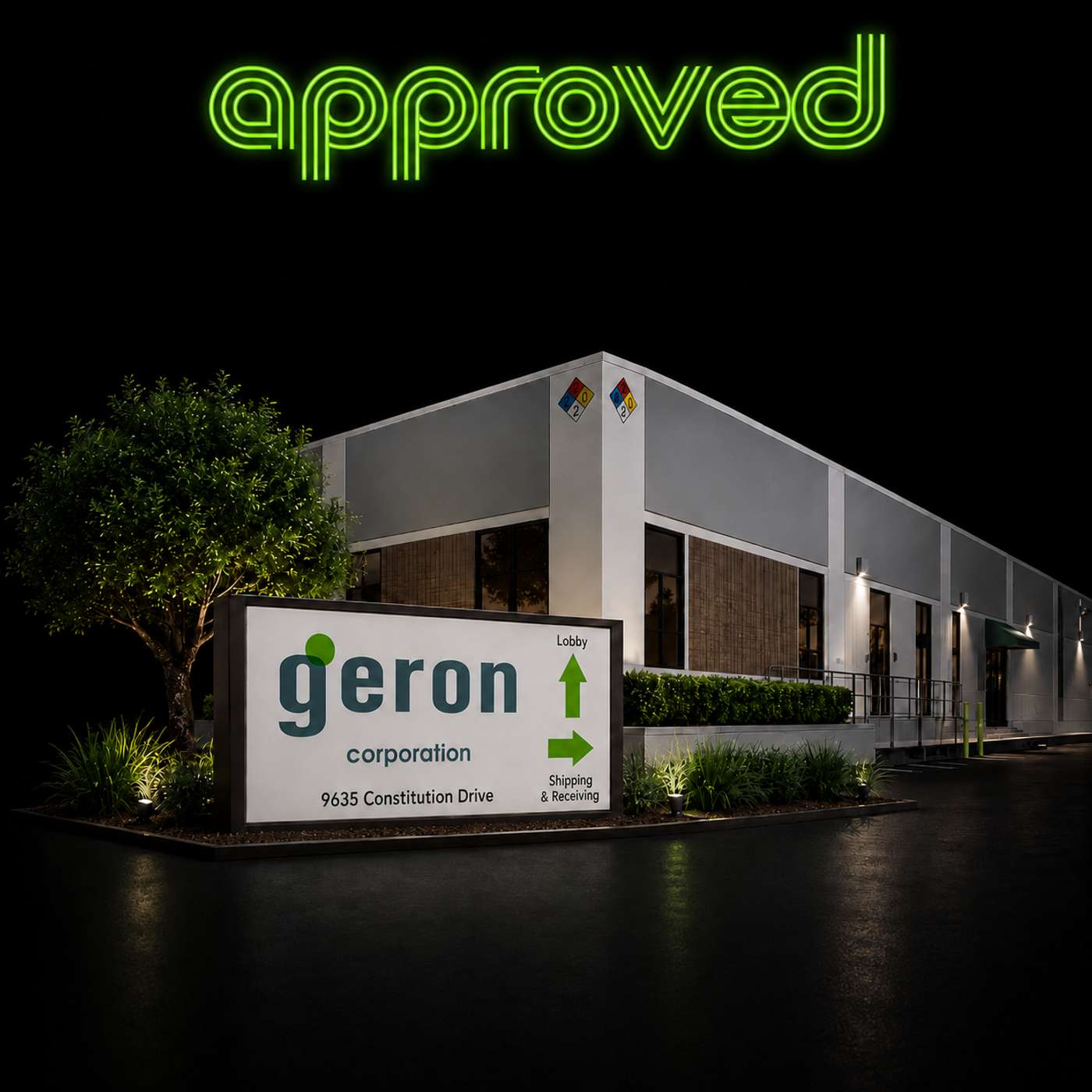
Listen on SpotifyListen on Apple PodcastsListen on YouTubeTABLE OF CONTENTS(00:00:00) - Introduction (00:01:19) - Hayflick Limit (00:08:30) - Michael West & Founding of Geron (00:15:16) - Early Science & IP Strategy (00:27:25) - Cloning the Telomerase Gene (00:29:30) - Embryonic Stem Cells & Political Context (00:44:21) - Okarma, West’s Departure & Corporate Turmoil (01:05:08) - Spinal Cord Injury Trial (01:30:45) - Pivot to Blood Cancer (01:43:08) - Clinical & Commercial Drama(02:01:45) - Legacy & LessonsCREDITSCo-hosted by Alex Kesin and Matthew PechWritten, edited, and produced by Alex KesinMusic: “Food” by nerowski* Special thanks to the team at NFX for the use of their recording studio.SOURCESLast updated: March 2026I. BOOKSHall, Stephen S. Merchants of Immortality: Chasing the Dream of Human Life Extension. Houghton Mifflin, 2003.Williams, Tory. Inevitable Collision: The Inspiring Story That Brought Stem Cell Research to Conservative America.Mary Ann Liebert, Inc., 2014.II. KEY SCIENTIFIC PUBLICATIONSHayflick, L. & Moorhead, P.S. “The serial cultivation of human diploid cell strains.” Experimental Cell Research 25 (1961): 585–621.Kim, N.W. et al. “Specific association of human telomerase activity with immortal cells and cancer.” Science 266, no. 5193 (1994): 2011–2015.Feng, J. et al. “The RNA component of human telomerase.” Science 269, no. 5228 (1995): 1236–1241.Nakamura, T.M. et al. “Telomerase catalytic subunit homologs from fission yeast and human.” Science 277, no. 5328 (1997): 955–959.Meyerson, M. et al. “hEST2, the putative human telomerase catalytic subunit gene, is up-regulated in tumor cells and during immortalization.” Cell 90, no. 4 (1997): 785–795.Bodnar, A.G. et al. “Extension of life-span by introduction of telomerase into normal human cells.” Science 279, no. 5349 (1998): 349–352.Thomson, J.A. et al. “Embryonic stem cell lines derived from human blastocysts.” Science 282, no. 5391 (1998): 1145–1147.Asai, A. et al. “A novel telomerase template antagonist (GRN163) as a potential anticancer agent.” Cancer Research 63, no. 14 (2003): 3931–3939. Herbert, B-S et al. “Effect of the lipid modification of GRN163.” Nature: Oncogene 24 (2005): 5765–5772. Baerlochr, G. et al. “A pilot study of the telomerase inhibitor imetelstat for myelofibrosis.” New England Journal of Medicine 373 (2015): 908–919. Platzbecker, U. et al. “Imetelstat in patients with lower-risk myelodysplastic syndromes who have relapsed or are refractory to erythropoiesis-stimulating agents (IMerge).” The Lancet (2024).Lennox, A.L et al. “Imetelstat, a novel, first-in-class telomerase inhibitor: Mechanism of action, clinical, and translational science.” Clinical and Translational Science 17, no. 11 (2024).Scott, C. & Magnus, D. “Wrongful Termination: Lessons From the Geron Clinical Trial” Stem Cell Reports 3, no. 5 (2014): 721–723. III. REGULATORY & CLINICALPrescribing Information (Label) U.S. Food and Drug Administration. “RYTELO (imetelstat) for injection: Highlights of Prescribing Information.” NDA 217779. June 2024. NDA Approval Letter U.S. Food and Drug Administration. “NDA Approval Letter: RYTELO (imetelstat) for injection.” NDA 217779. June 6, 2024. Multi-Discipline Review & Evaluation U.S. Food and Drug Administration. “NDA Multi-Disciplinary Review and Evaluation: RYTELO (imetelstat).” NDA 217779Orig1s000. 2024. ODAC Briefing Document U.S. Food and Drug Administration. “FDA Briefing Document: Oncologic Drugs Advisory Committee Meeting, NDA 217779, Imetelstat.” March 14, 2024. REMS/Risk Assessment Review U.S. Food and Drug Administration. “Risk Assessment and Risk Mitigation Review: RYTELO (imetelstat).” NDA 217779Orig1s000. 2024. Kim, N. et al. “US Food and Drug Administration Approval Summary: Imetelstat for Selected Patients With Low- to Intermediate-1 Risk Myelodysplastic Syndromes With Transfusion-Dependent Anemia.” The Oncologist (2025). PMID: 41135032.FDA. “FDA Approves Imetelstat for Low- to Intermediate-1-Risk Myelodysplastic Syndromes with Transfusion-Dependent Anemia.” June 2024.ICER. “Evidence Report: Treatment for Anemia in Myelodysplastic Syndrome.” August 2024. ICER. Press Release on Imetelstat Evidence Assessment. ClinicalTrials.gov. GRNOPC1 Phase I Trial. NCT01217008. Myelodysplastic Syndrome Epidemiology. PMC4553145.MDS Risk and AML Progression. Blood (2023). IV. CORPORATE FILINGS & PRESENTATIONS

Comments

Download from Google Play

Download from App Store
 United States