


 Claim Ownership
Fit Happens: The Executive Search Podcast
Subscribed: 2Played: 18
Subscribe
© 2026 Jason Baumgarten
Description
Fit Happens asks the question most leadership conversations avoid: why do talented people fail in the wrong roles — and thrive in the right ones? Hosted by Jason Baumgarten, an executive search specialist with decades of experience placing CEOs and building boards, each episode blends cutting-edge research with candid conversations with the leaders who've lived it. Because fit isn't luck. It's a science.
25 Episodes
Reverse
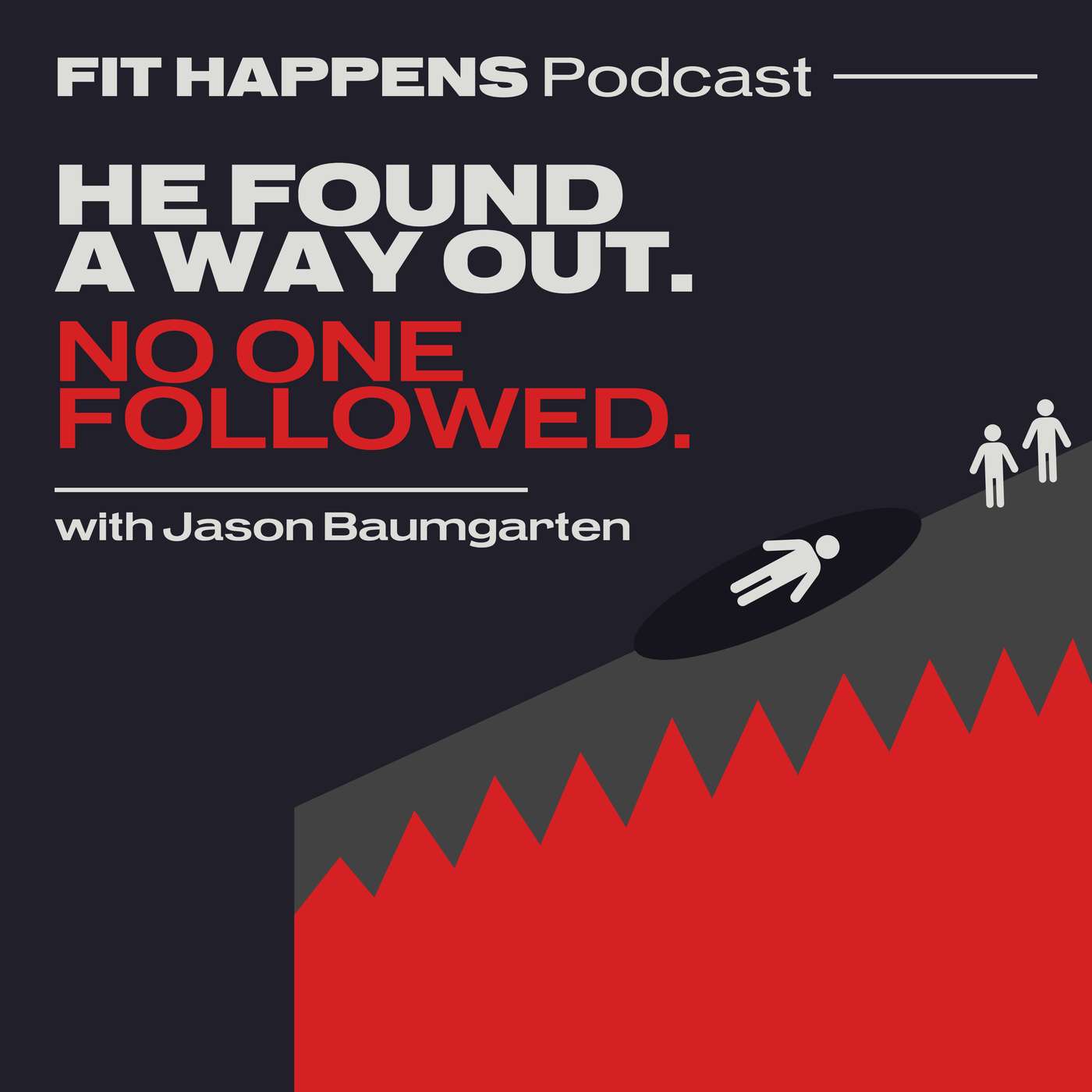
Why does experience in one crisis so often fail a leader in the next one? I open this episode with the story of the 1949 Mann Gulch wildfire, where foreman Wagner Dodge lit an escape fire to save his crew and nobody followed him. Thirteen men died. Forty five years later, at South Canyon, fourteen more firefighters died in strikingly similar circumstances, and I use both disasters to ask a question that matters far beyond wildland fire: why is it so hard to drop the tool that once made you successful?This episode is about what boards, investors, and leaders actually mean when they call someone crisis tested, and why that label hides more than it reveals. Executive search firms and boards often reach for that phrase as shorthand for readiness, but tested by what? A cash crisis, a collapse in employee trust, a global epidemic, these are not the same leadership assignment, even though they get filed under the same word. I walk through research on extreme context, threat rigidity, and the "romance of leadership" to show why a leader's past crisis performance may not transfer to the next one, and why executive search consultant work in this area demands more than a good war story.I also get into the identity problem underneath all of this. Wagner Dodge's crew held onto their tools because those tools were part of who they were as firefighters. The same thing happens in the boardroom. The operator who cuts costs, the founder who ships fast, the consensus builder who brings everyone along, each of them can get trapped by the very strength that made them valuable, right when the situation calls for something else entirely. I share a hypothetical example of a CFO who saves one company with a small, tightly controlled decision team, then reaches for that same tool at her next company when the actual problem is a trust crisis, and it makes things worse.Toward the end, I give you a practical framework for interviewing crisis leaders (and for auditing your own current decisions): ask not just what they did, but what they misunderstood at first, what evidence changed their mind, and whether they built resilience into the people around them or just personally carried the whole thing. I close with a 24 hour challenge you can run on a decision you're committed to right now.Key takeaways:The label "crisis tested" is meaningless without specifying which crisis, since different threats require entirely different leadership skillsSean Hanna's extreme context framework and Boris Groisberg's research on star analysts both suggest that past performance under pressure does not automatically transfer to a new context or teamWildland firefighting research from Michelle Barton and Kathleen Sutcliffe found that noticing a warning sign isn't enough, voicing concerns and seeking other perspectives is what actually helps people change courseThreat rigidity, first described by Barry Staw and colleagues, shows how pressure narrows information processing and concentrates control, often at the exact moment more perspectives are neededA leader's greatest strength can become the tool they can't put down, whether that's speed, consensus building, or a tightly controlled decision processThe best interview question for a candidate who claims crisis experience is not about the win, it's about what they misunderstood at first and how they changed courseBoards can unintentionally teach leaders to conceal uncertainty by demanding total confidence instead of candorConnect with Jason: https://www.linkedin.com/in/jasonbaumgarten/Email the show here: [email protected]:00 The Mann Gulch fire and the escape fire nobody followed02:16 What does crisis tested actually mean03:38 Sean Hanna's framework for extreme context04:01 Boris Groisberg's research on star analysts changing firms05:41 The difference between a problem getting worse and a problem changing entirely07:08 What happens when people can no longer agree on what is happening08:26 Making your explanation impossible to challenge08:53 When intuitive expertise deserves your trust10:06 Why firefighters cling to their tools as identity11:30 Threat rigidity and narrowing information under pressure12:16 Ranjay Gulati's research on companies that flourished after recessions14:02 Separating who decides from who contributes information16:00 The board's responsibility in rewarding candor16:19 The romance of leadership and how we rate charismatic leaders18:05 A hypothetical CFO and the tool that stopped working21:00 What to actually ask a candidate about their crisis experience22:36 Your 24 hour drop test challenge
A leader who looks safe on paper might be the riskiest hire you make in the AI era. That's the paradox at the center of this conversation.I sit down with Liat Ben-Zur, a longtime technology executive who has led through four major shifts, the internet, mobile, IoT, and now generative AI, at companies including Qualcomm, Philips, and Microsoft. Liat is also the author of a new book on leadership and bias, and we get into why the very experience that used to make someone a safe executive hire can now be the thing holding them back.We talk about why AI is not just a tool but something that rewires org design and leadership itself, why some highly accomplished executives freeze when their old playbooks stop working, and why leaders who have had to operate without a map, often because they never quite fit the traditional mold, are proving to be the ones adapting best. Liat gets candid about her own career, including hiding a core part of her identity for years to survive in rooms where she was often the only woman, and what she learned about leadership once she stopped hiding.We also cover why bias hidden inside an algorithm is more dangerous than bias spoken out loud, what boards get wrong about succession planning during AI transformation, and why asking better questions matters more than having the right answer.Key takeaways:Experience can become a liability in the AI era if it means applying yesterday's playbook to a fundamentally different problemAI is not a single tool, it is rewiring how every function works, from marketing to legal to supply chainLeaders who struggle most with AI tend to have built their authority on hierarchy, control, and being the expert in the roomBias embedded in an algorithm sounds objective and confident, which makes it harder to challenge than a human opinionUnconventional leaders who have had to navigate systems not built for them often develop sharper instincts for spotting bias and blind spots earlySystems thinking, not narrow function expertise, is becoming the key differentiator for executivesCommon succession planning failures include handing AI ownership to a tech team instead of the business functions that actually need to changeBoards should spend far more time on fewer, higher stakes questions instead of spreading attention thin across an agendaLearning agility matters more than relevant experience, because the next generation of decisions will involve technologies that do not exist yetHiding parts of yourself as a leader costs you the deeper connections that make you more effective, not lessConnect with Jason: https://www.linkedin.com/in/jasonbaumgarten/Email the show here: [email protected]:00 Cold open: the safe hire paradox01:12 Welcome, Liat Ben-Zur01:26 Is AI hype real or overblown04:00 Why AI changes every function, not just tech05:19 Boards pulling back on AI spend08:25 Why she wrote The Bias Advantage09:55 Leaders who adapt well vs freeze12:47 How AI changes who rises to leadership14:54 Defining the unconventional leader15:59 Why algorithmic bias is harder to challenge22:07 Qualcomm, Philips, Microsoft and never fitting in23:39 Hiding her identity to survive in the room25:43 The fish that cannot see their own water26:53 The new differentiator: systems thinking32:02 Mistakes in AI era succession planning40:11 Speed round begins40:41 Worst leadership advice she has received42:05 Best career advice she has received43:11 Advice to her 25 year old self48:24 What a good career really means
MIT built a job title from scratch because Paul Cheek didn't fit any that existed. Now he's ranking the S&P 500 on AI maturity, and the results may surprise you. We get into why AI literacy has to come before AI strategy, why the best managers may not be the ones who make you feel good, and why human fit still matters in a world full of capable agents. Paul also breaks down the four types of AI adopters he found in corporate America and why some of the loudest companies about AI are doing the least.Key takeaways:Why "no one works here" doesn't mean nobody has a job, it means the nature of work has changedThe four characteristics Paul uses to evaluate any AI opportunityWhy AI literacy has to come before AI strategy, governance, or data cleanupThe real difference between a personal AI swarm and shared agency across a teamWhy good middle management may be the most underrated skill in an AI-native organizationWhat Paul's S&P 500 AI maturity research revealed about the gap between what leaders say and what their companies actually doWhy human fit and self-awareness still matter even as AI absorbs more of the workWhy the biggest competitive risk isn't AI replacing workers, it's AI-native companies replacing entire organizationsConnect with Jason: https://www.linkedin.com/in/jasonbaumgarten/Email the show here: [email protected]:00 Cold open: the MIT job that didn't exist01:11 Introducing Paul Cheek and the book's premise02:16 Paul's early years and entrepreneurial roots04:50 Becoming MIT's first hacker in residence07:04 The real success rate of startups10:43 Why the unemployed are learning AI fastest13:42 What Paul brings to the classroom that a PhD doesn't16:40 Boards, risk, and the risk of not using AI19:32 Reinventing work instead of automating the cow paths20:22 Why AI actors demand organizational redesign22:13 Adjusting the bar for AI agents versus humans23:13 The $225 million simulation and the phishing twist25:24 From doing the toil to designing the intent27:05 The four characteristics for spotting real AI opportunities29:48 Why AI literacy must come before AI strategy33:13 Automation versus real transformation34:08 The real threat: AI-native firms replacing others in the market36:07 Personal swarm versus shared agency39:22 Why human fit still matters in an AI economy43:40 Governance as the number one human role46:35 Managing a fleet of agents versus managing people47:36 Why good middle management is the most underrated skill55:09 Where friction should disappear, and where it shouldn't62:00 Rating the S&P 500 on AI maturity69:23 What boards get wrong about AI literacy73:35 Short-term ROI thinking versus scalable intelligence78:11 Speed round with Paul Cheek
Seventy-three seconds after launch, the warning that could have stopped the Challenger disaster had already been softened beyond recognition. In this solo episode, I break down why hierarchy filters truth out of organizations long before anyone lies, drawing on research into organizational silence, psychological safety, and the Nokia collapse. I share five specific practices, what I call the architecture of candor, for building a system that actually surfaces bad news before it's too late.Key takeaways:Organizational silence is structural, not a character flawVoice and silence are distinct behaviors, not oppositesFear and futility both suppress speaking upImplicit voice theories shape what people think is safe to sayThe Nokia decline was driven by a fear cycle, not one bad decisionPsychological safety predicts learning behavior more than team competenceSilence has a measurable link to employee burnoutBoards often inherit a picture that's been filtered twiceFive concrete practices build candor into decision-makingPre-mortems surface risk before launch, not after failureConnect with Jason: https://www.linkedin.com/in/jasonbaumgarten/Email the show here: [email protected]:00 Intro to Fit Happens00:18 The Challenger disaster and the filtered warning01:01 The question before we get into it01:13 What happened the night before launch02:17 Watching the launch as a kid03:19 A Stanford case study on decision making04:13 The architecture of silence, not a character flaw05:21 Organizational silence, Morrison and Milliken06:21 A leader's story from this weekend06:50 Psychological safety and its research base07:48 Voice and silence are not opposites08:41 What reference checks really reveal09:10 Mechanism one, fear10:07 Mechanism two, futility11:18 Mechanism three, implicit voice theories12:41 Mechanism four, pressure flowing the wrong way13:49 Mechanism five, group-level normalization14:29 What this actually costs15:52 The board's blindspot problem17:22 Building the architecture of candor18:21 Move two, build dissent into decisions18:50 Move three, run a pre-mortem20:11 Move four, change the speaking order21:08 Move five, ask sharper skip-level questions22:11 The board question to ask next meeting22:22 A challenge for the next 24 hours23:10 Silence is the system, not the absence of one
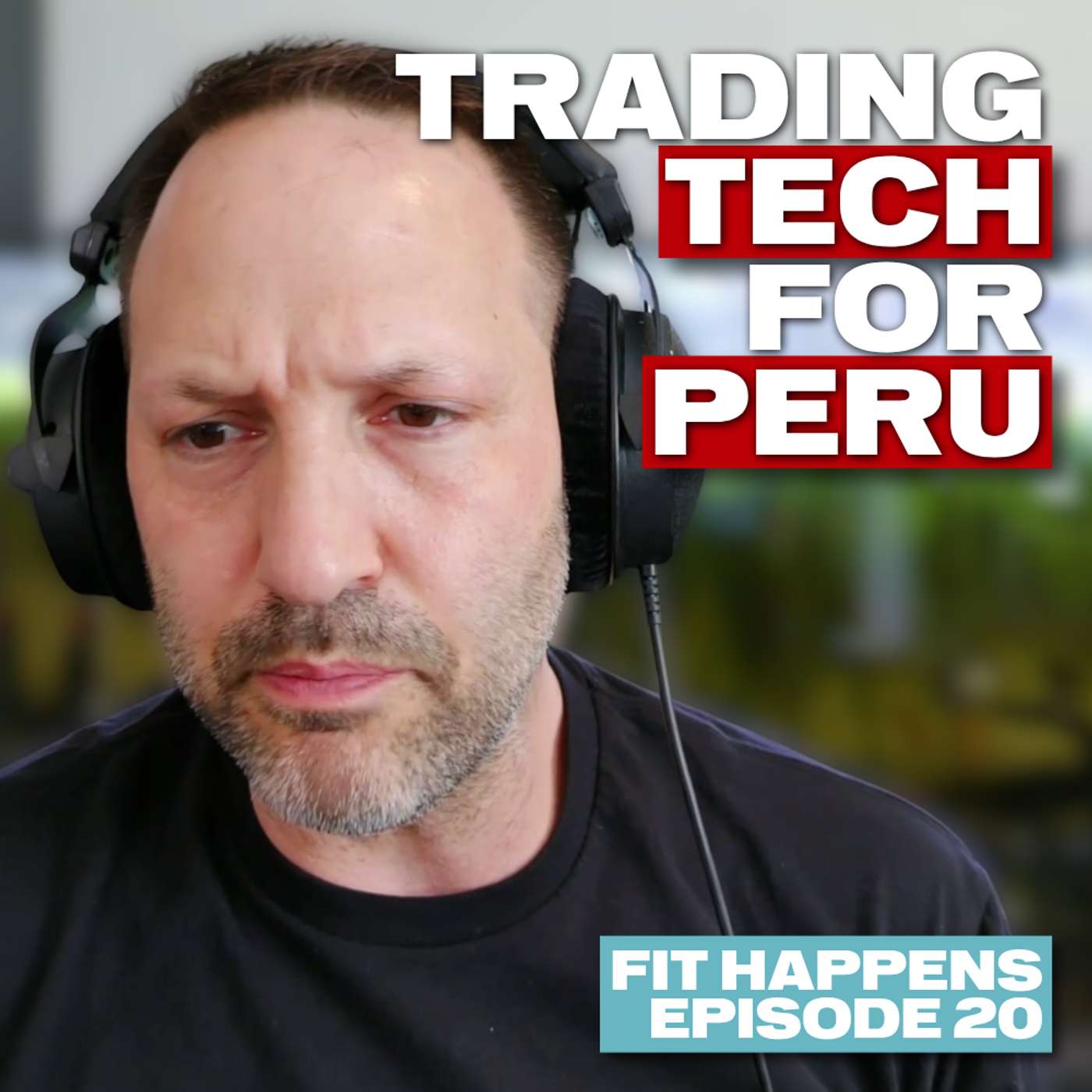
He traded Silicon Valley for the Andes and built a life around a completely different definition of leadership. In this episode, I talk with Terry Cumes, CEO of Wilkatika Resorts in Peru's Sacred Valley and author of the new book Special Guests which explores leaving a career in education technology to run his family's wellness retreat full time. We dig into cross-cultural leadership, building community far from home, and why executive coaching and hospitality have more in common than people think.Key takeaways:Why Terry unlearned much of his business school training to lead a Quechua-speaking teamWhat actually motivates loyalty in a multi-generational family businessHow a strong sense of place supports deep personal workThe difference between clarity, authenticity, and vulnerability in leadershipWhy "less efforting" can be a more powerful leadership tool than problem-solvingHow intuition and analysis work together in high-stakes decisionsWhat it takes to build community after a major relocationConnect with Jason: https://www.linkedin.com/in/jasonbaumgarten/Email the show here: [email protected]:00 Intro to Fit Happens00:18 Meet Terry Cumes, CEO of Wilkatika00:46 Leaving Silicon Valley for Peru02:32 Discovering his hospitality superpower03:39 Leading a very different workforce04:22 Unlearning business school lessons05:13 What translated universally: loyalty06:49 Building community far from home09:17 Isolation and practical fixes10:39 Using travel as an external stimulus12:23 Why the Sacred Valley was chosen14:10 What makes a guest transform quickly15:34 Hospitality and the limits of delegation17:57 Boundaries in an always-on culture18:28 His yoga journey and its evolution21:08 Yoga and mindfulness going mainstream22:18 Blending intuition with analysis23:29 How ceremony supports decision-making25:04 Advice for skeptics of ritual27:09 Taking the leap without overthinking32:28 Building a legacy, not opting out37:32 Bringing wellness retreats to business leaders40:17 The value of showing up authentically41:16 Clarity, authenticity, and vulnerability48:38 Leadership advice that sounds right but isn't50:23 Unlearning systems and embracing teamwork52:02 Closing thoughts and where to find Terry

Comments

Download from Google Play

Download from App Store
 United States