


 Claim Ownership
Lead the People
Subscribed: 14Played: 129
Subscribe

© 2025 Lead the People
Description
Lead The People is your guide to unlocking your true potential as an authentic leader. Hosted by Dr. Matt Poepsel—The Godfather of Talent Optimization—this podcast dives deep into the art and science of what it takes to lead at the next level. With insightful conversations and practical strategies, each episode equips executives, strategic HR pros, and aspiring leaders with the tools it takes to boost performance, inspire teams, and drive meaningful impact. Whether exploring the latest workplace trends or tackling real-world leadership challenges, Lead The People offers an enlightened approach to leadership. Embark on a rewarding journey to become the leader your people deserve—the leader you were meant to be.
196 Episodes
Reverse
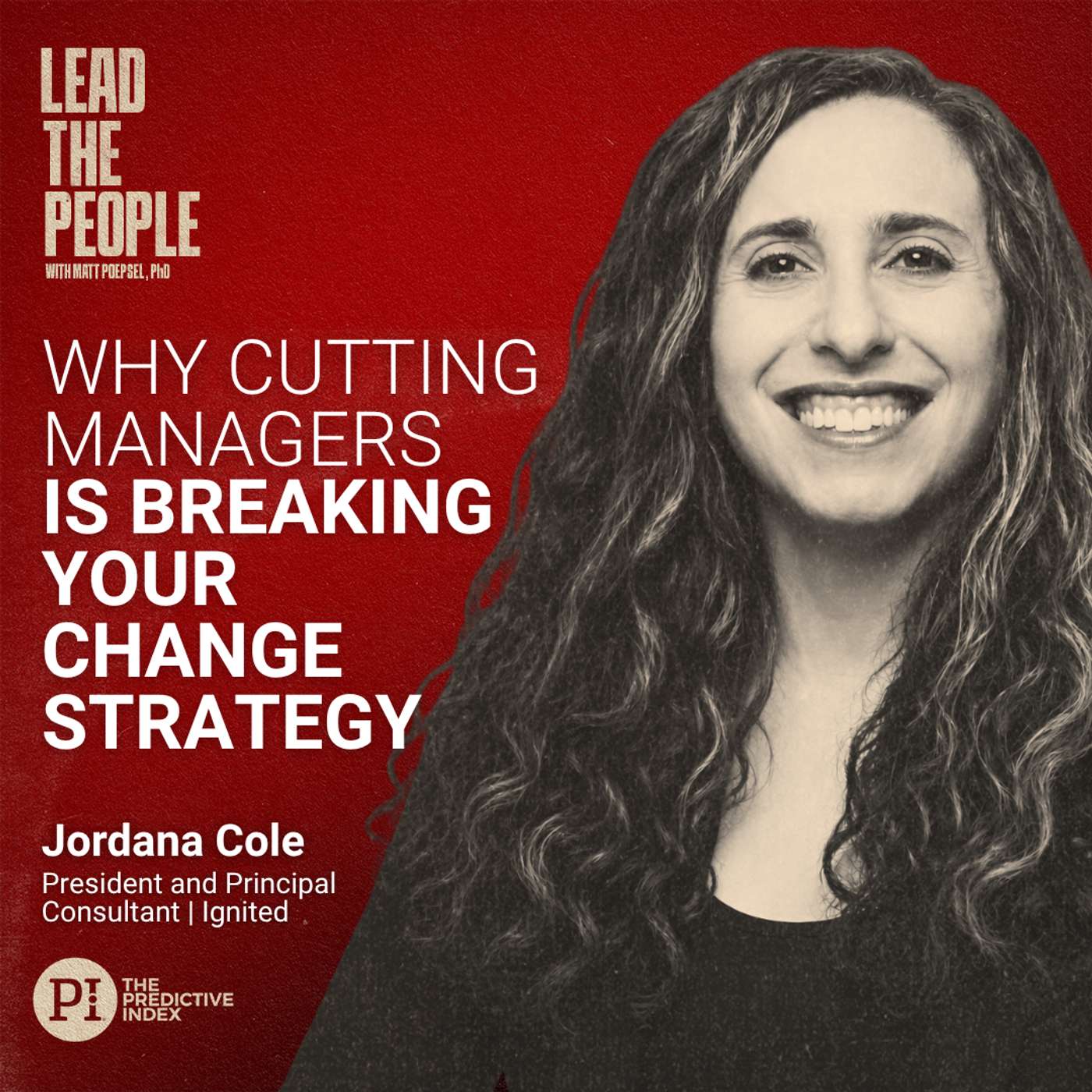
Start with our free behavioral assessment. Go to trypi.com/ltp .Cutting middle managers to save money is the trend everyone's calling unbossing. Jordana Cole calls it a mistake dressed up as a strategy. As President and Principal Consultant at Ignited, she's watched organizations de-layer their way into a leadership gap, then wonder why their change initiatives quietly die.Matt Poepsel presses her on the real cost: spans of control jumping from seven direct reports to twelve, managers burning out with less support and less job security, and change efforts stalling because nobody's left to walk them the "last mile." Jordana argues change is a habit built one conversation at a time, not a rollout you check off a list. She also shares her "supermarket rule" for catching vague engagement survey questions before they waste a team's time, and argues that AI should amplify a leader's instincts instead of replacing the hard parts of the job. Oh, and she owns 14 ukuleles, which becomes relevant later.What you'll learn:Why Unbossing Backfires: Span of control has jumped from seven direct reports to twelve in some organizations, and that math quietly kills development time.Change Is a Habit: Sustainable change doesn't happen at rollout. It's built through the small, repeated conversations leaders have after the announcement.The Supermarket Rule: If two people could read the same engagement survey question and answer it differently, the question hasn't done its job yet.AI as Amplifier, Not Replacement: Jordana trains her own AI on what energizes her and what drains her, turning it into a pattern-spotter instead of a task-taker.Highlights:(00:00) Meet Jordana Cole(02:48) What convinced Jordana leadership can be taught(05:24) Why change is a habit, not a single launch(09:45) The burnout hiding inside middle management(12:34) The real math behind unbossing(16:42) Turning engagement survey scores into action(17:53) The supermarket rule for vague survey questions(22:05) Leadership as a facilitator of momentum(25:26) Moving AI from replacement to amplification(33:21) Trivia: are we smarter than AIResources:Follow Jordana on LinkedIn: https://www.linkedin.com/in/jordana-cole-mapp-pcc-a8445a8/Visit Jordana's website: https://ignitedbyjordana.comWatch Jordana's TEDx talk, "What to Do When You Don't Know What's Next," on YouTubeFollow Matt on LinkedIn: https://www.linkedin.com/in/mattpoepsel/Subscribe to The Predictive Index on YouTube: https://www.youtube.com/c/ThePredictiveIndexCreated in partnership with Share Your Genius: shareyourgenius.com
Experience it for yourself at trypi.com/ltp .
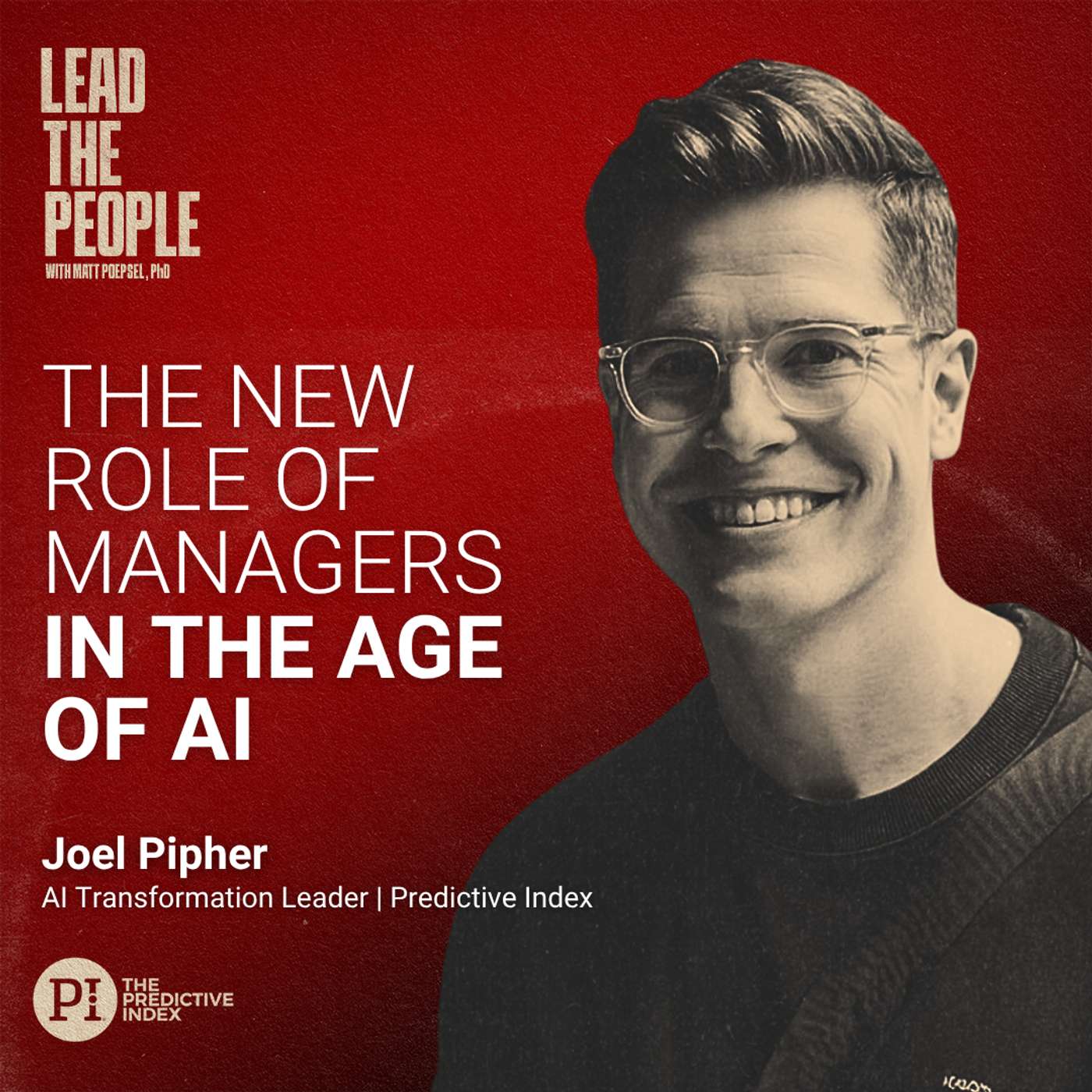
Start with our free behavioral assessment. Go to trypi.com/ltp .AI transformation isn’t just a technology problem; it’s a management problem. Executives want faster adoption, employees are wondering what AI means for their jobs, and managers are stuck in the middle trying to turn all that uncertainty into something their teams can actually work with.Matt Poepsel sits down with Joel Pipher, who leads AI transformation at The Predictive Index, to unpack what it takes to grow with AI without losing the human side of work. Drawing from his experience building AI programs inside large enterprises and startups, Joel breaks down why AI adoption needs a clear North Star, why experimentation has to become part of how teams work, and why managers can’t afford to sit on the sidelines.Together, they explore what happens when managers start leading both people and AI agents, and why the leaders who learn to translate, experiment, and role-model the change will be the ones best equipped for what comes next.What you'll learn:Managers Aren’t Just Messengers: The middle manager becomes the translation layer between executive AI ambition and what the team actually needs day to dayAI Adoption Needs a North Star: AI works best when it is tied to a clear business direction instead of becoming adoption for adoption’s sakeCreate Space to Experiment: Protect time, budget, and knowledge-sharing so AI experimentation becomes part of the work, not extra workManagers Will Lead Humans and AI Agents: The next challenge is figuring out how people and agents work together without losing the human side of managementHighlights:(00:00) Meet Joel Pipher(01:45) AI transformation puts managers in the middle(02:42) Early lessons from AI transformation(07:34) AI in a startup environment(10:01) Why AI adoption needs a clear North Star(13:29) The manager’s role as the translation layer(15:13) Creating space for teams to experiment with AI(17:07) How AI can help managers lead better(18:07) Why managers need to role-model AI adoption(21:48) Practical ways to build an experimentation culture(26:15) What’s next for AI and managersResources:Follow Joel on LinkedIn: https://www.linkedin.com/in/joelpipher/ Learn more about The Predictive Index: https://www.predictiveindex.com/Follow Matt on LinkedIn: https://www.linkedin.com/in/mattpoepsel/Subscribe to The Predictive Index on YouTube: https://www.youtube.com/c/ThePredictiveIndexCreated in partnership with Share Your Genius: shareyourgenius.com
Experience it for yourself at trypi.com/ltp .
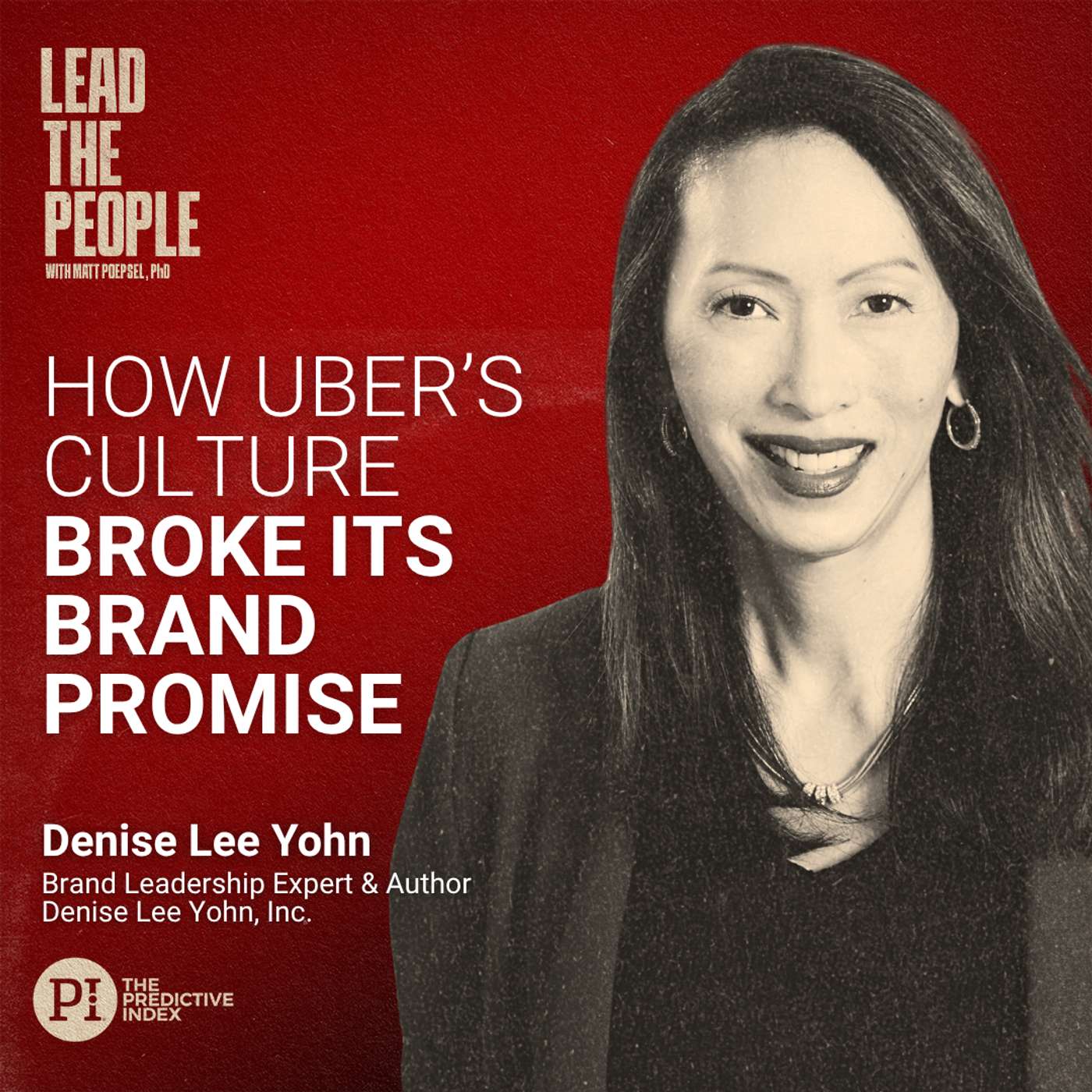
Start with our free behavioral assessment. Go to trypi.com/ltp .Travis Kalanick built Uber on a promise of democratic freedom, everyone gets to feel like a rockstar, not just people who can afford a limo. Denise Lee Yohn tells Matt Poepsel what came next: a tech-bro internal culture so far removed from that promise that customers eventually deleted the app in protest. "We're not going to believe what you say about yourself," she says. "We're actually going to act on what we know and experience about your brand."That gap between the brand a company claims and the culture it actually runs on is the subject of this conversation. Denise, founder of Denise Lee Yohn, Inc. and author of Fusion: How Integrating Brand and Culture Powers the World's Greatest Companies, walks Matt through what she learned as Sony Electronics' first brand manager, why category values like integrity and teamwork are table stakes rather than differentiators, and why she treats customer experience and employee experience as manifestations of the same underlying culture rather than two separate budget lines. She also makes the case, using an analogy about parents who only listen to one of two kids, for why employee feedback deserves the same weight leaders give customer feedback.You'll learn:Brand Starts Inside: Internal alignment and clarity have to come before any outward campaign, or the brand promise rings hollow.Category Values Aren't Core Values: Integrity, teamwork, and respect are table stakes, distinctive values are what actually drive differentiation.CX and EX Are One System: Employees can't deliver an experience they don't personally have; treating customer and employee experience separately costs you both.Culture Needs Deliberate Energy: Values on a poster don't do anything, they need to show up in meetings, recognition, and daily operations.Highlights:(00:00) Meet Denise Lee Yohn(02:39) Why brand building needs to start inside a company(06:01) When Uber's brand promise and internal culture didn't match(08:02) Operationalizing values instead of just aspiring to them(09:10) Category values versus core values(13:18) Treating customer experience and employee experience as one system(16:26) The parent who only listens to one of two kids(17:15) Why employee expertise is a competitive advantage(20:20) Everyone contributes to culture, not just leadership(26:06) Reinforcing values through recognition in daily meetings(28:53) Are you smarter than AI?Resources:Learn more about Denise Lee Yohn: https://deniseleeyohn.comFollow Denise on LinkedIn: https://www.linkedin.com/in/deniseleeyohnFollow Matt on LinkedIn: https://www.linkedin.com/in/mattpoepsel/Subscribe to The Predictive Index on YouTube: https://www.youtube.com/c/ThePredictiveIndexCreated in partnership with Share Your Genius: shareyourgenius.com
Experience it for yourself at trypi.com/ltp .
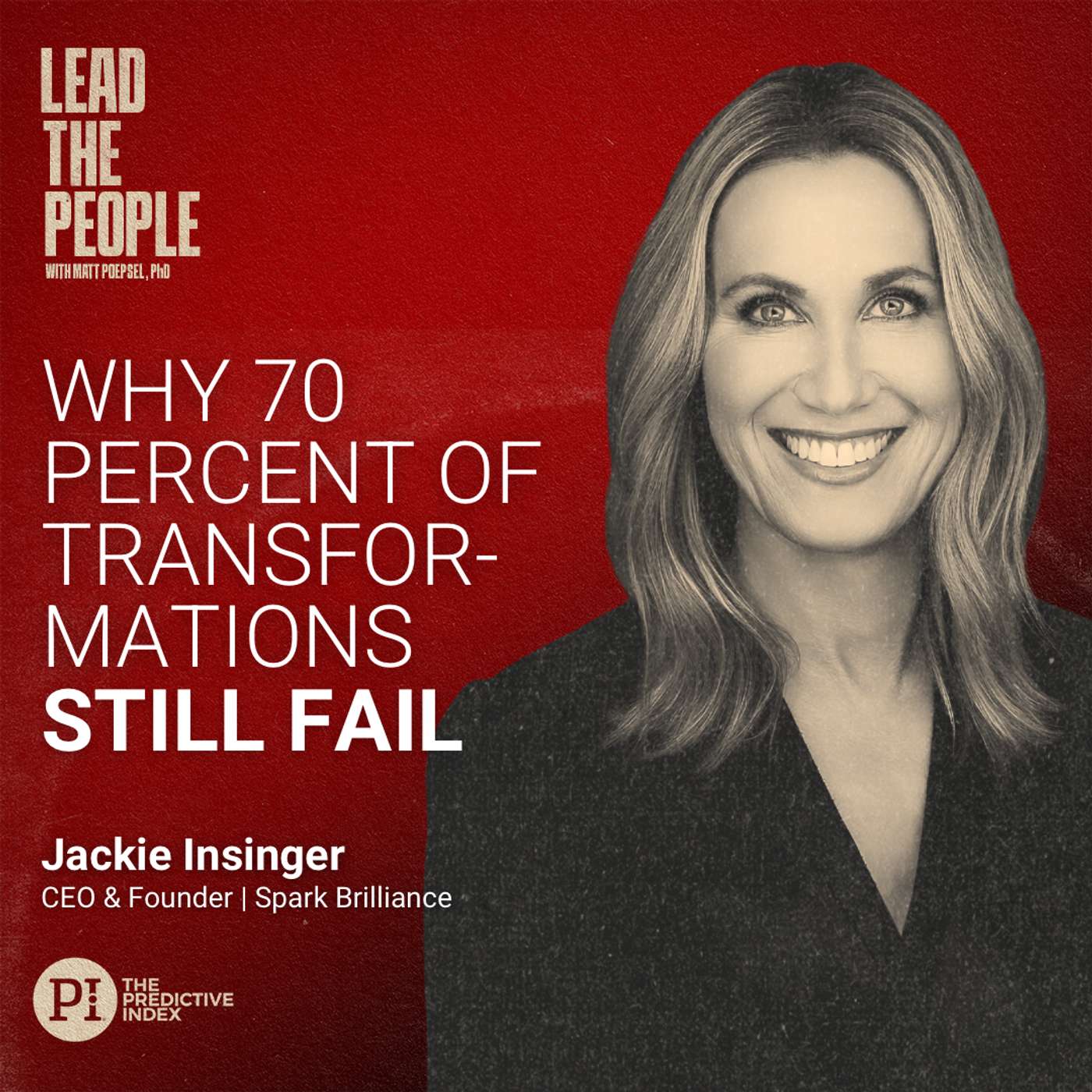
Start with our free behavioral assessment. Go to trypi.com/ltp .Most leadership models still treat change like a project: a start, an end, and a return to normal in between. Jackie Insinger, CEO and Founder of Spark Brilliance, argues that premise is exactly what's breaking down. There's no dry land left to land on, which means the old idea of "managing" change through to completion isn't just outdated; it's the thing quietly wearing leaders and teams down.Matt Poepsel sits down with Jackie Insinger, CEO and Founder of Spark Brilliance, to unpack her new framework, the Four Drivers of Change: signal, safety, agency, and purpose. Jackie makes the case that a single leadership style can't hold up once things get this unpredictable; leaders need to read what a team actually needs moment to moment, the same instinct behind PI's behavioral data. She and Matt dig past the framework's language into what each driver actually looks like in practice: what a leader says in the first five minutes of a hard conversation, how they respond when someone brings them a mistake, and why purpose, the thing everyone's told to lead with, only works once trust, safety, and ownership are already in place.What you'll learn:Change Management Is a Dying Model: With no beginning or end to disruption anymore, leaders need durable capacity to navigate change continuously, not a sequence of steps to manage through it.One Leadership Style Doesn't Survive Pressure: Reading what a team needs in the moment, not defaulting to a fixed style, is what separates leaders who keep their people moving from those who lose them.Signal Becomes Culture in 33 Milliseconds: Teams absorb a leader's emotional state almost instantly. The signal a leader sends, intentional or not, becomes the echo across the whole organization.Purpose Is the Last Driver, Not the First: People need signal, safety, and agency in place before purpose can activate anything: skip the order, and even a great "why" falls flat.Highlights:(00:00) Meet Jackie Insinger(03:24) The forces driving change all at once(06:18) Why change management hasn't worked in 30 years(08:08) Introducing the Four Drivers of Change(15:28) Signal: the echo every leader sends(19:06) Safety: building a culture where mistakes surface early(22:02) Agency: the difference between compliance and commitment(24:50) Purpose: why "start with why" comes last(29:28) Building self-care into the change model(33:25) Where to find Jackie's free leadership diagnosticsResources:Follow Jackie on LinkedIn: https://www.linkedin.com/in/jackieinsinger/Learn more about Spark Brilliance: https://www.sparkbrilliance.comFollow Matt on LinkedIn: https://www.linkedin.com/in/mattpoepsel/Subscribe to The Predictive Index on YouTube: https://www.youtube.com/c/ThePredictiveIndexCreated in partnership with Share Your Genius: shareyourgenius.com
Experience it for yourself at trypi.com/ltp .
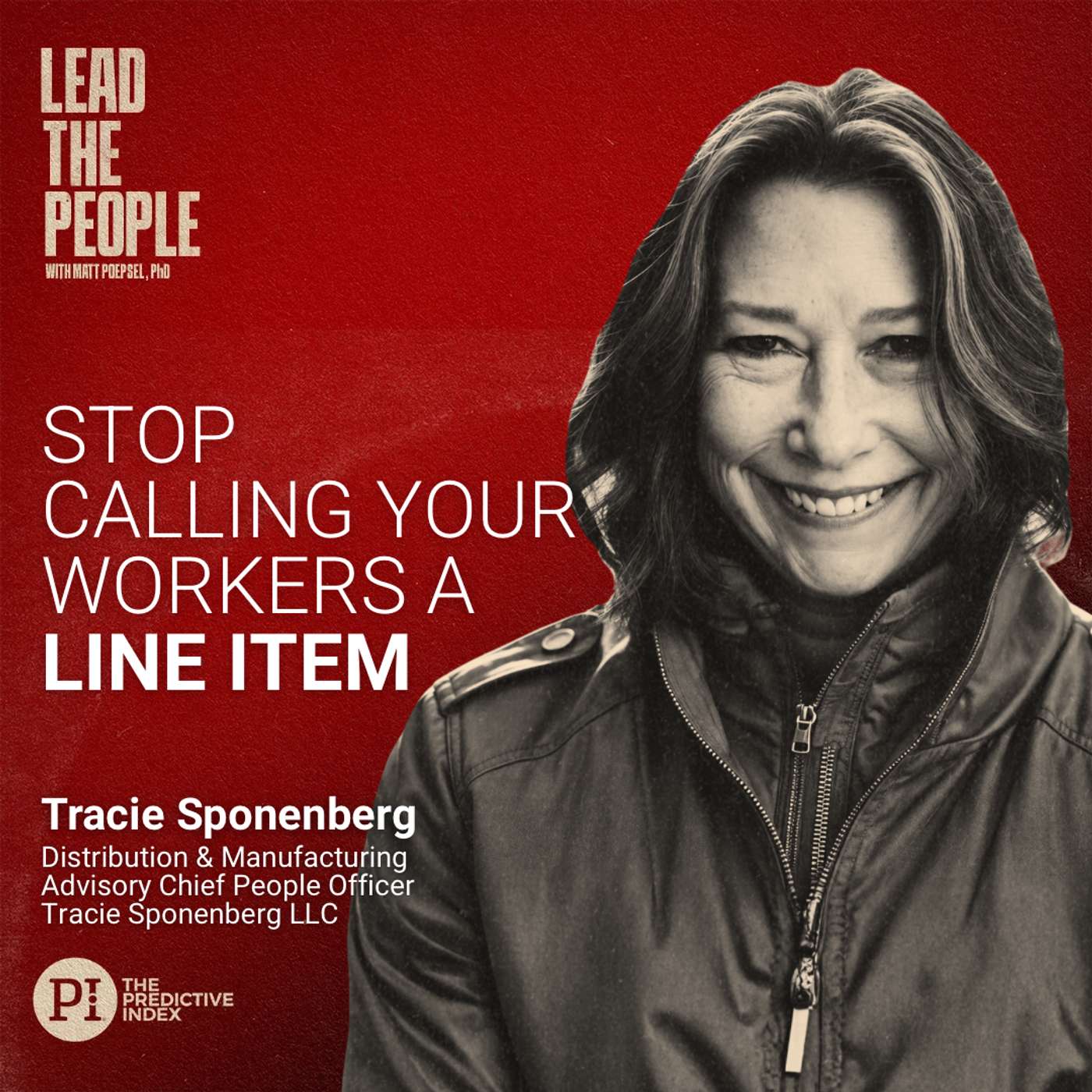
Start with our free behavioral assessment. Go to trypi.com/ltp .Most leaders can point to their P&L and show you exactly where the money moves. Ask them to point to their people on that same page, and the room goes quiet. For Tracie Sponenberg, who spent nine years as Chief People Officer at The Granite Group, a wholesale distributor with 700+ employees across six states, that silence is the whole problem. Her new book, The Frontline People Strategy, makes the case that distribution and manufacturing leaders have been treating their workforce as a line item instead of the asset that actually drives revenue, and that the fix starts with a mindset most executives have never been taught.Matt Poepsel sits down with Tracie Sponenberg, consultant and author of The Frontline People Strategy, to dig into why "that's just the way it is" is never a real answer for high turnover, why promoting your best forklift operator can quietly wreck your org chart, and why engagement is something you earn, not something you demand. Tracie draws on nearly a decade leading HR through four acquisitions and a pandemic to explain what it actually takes to build a culture for a deskless workforce, and why curiosity, not charisma, is the leadership skill that moves the needle.What you'll learn:The Turnover You're Not Counting: High turnover isn't just "how the industry is", it's a cost with a real number attached, and leaders who accept it as normal are leaving money on the table.Experience Before Engagement: Engagement is a byproduct of a good employee experience, not something you can push onto people directly.The Promotion Trap: Rewarding your best frontline worker with a management role they're not trained for is a systemic failure, not an individual one.Curiosity as a Leadership Skill: Getting to know frontline workers as people, not job functions, is simple to describe and hard to practice, but it works.Highlights:(00:00) Meet Tracie Sponenberg(03:13) A first job that taught her about bias(04:34) Why "show me your people" exposed a blind spot(06:00) The best ideas live on your front line(09:02) Leading through four acquisitions and a pandemic(10:41) Culture is built location by location, not by memo(12:24) The hidden cost of promoting your best worker(15:37) Engagement is a byproduct, not a goal(18:01) Getting curious is a leadership skill(22:22) The real cost of "that's just the way it is"(25:06) Are You Smarter than AI?Resources:Follow Tracie on LinkedIn: https://www.linkedin.com/in/traciesponenberg/Learn more about Tracie and her new book, "The Frontline People Strategy"Follow Matt on LinkedIn: https://www.linkedin.com/in/mattpoepsel/Subscribe to The Predictive Index on YouTube: https://www.youtube.com/c/ThePredictiveIndexCreated in partnership with Share Your Genius: shareyourgenius.com
Experience it for yourself at trypi.com/ltp .

Comments

Download from Google Play

Download from App Store
 United States