


 Claim Ownership
Privacy Podcast
Subscribed: 0Played: 0
Subscribe

© 2026 Musso Media
Description
The Privacy Podcast by Miden explores the future of privacy, identity, and trust in a digital world being reshaped by blockchain and AI.
Hosted by Ben Schiller, The Privacy Podcast dives into one of the most critical questions facing technology today: How do we build a more private, secure, and trustworthy internet?
A former journalist with over a decade of experience covering crypto and emerging technologies, including six years at CoinDesk, Schiller brings a sharp editorial lens to conversations at the intersection of privacy, blockchain, and digital rights.
At its core, this podcast is driven by a simple idea: privacy is not optional. It is foundational to the next phase of the internet.
As blockchain technology moves from experimentation to real-world adoption, privacy becomes essential for onboarding institutions, enabling enterprise use cases, and unlocking the full potential of decentralized systems. At the same time, it addresses a deeper, long-standing issue. The modern internet was built without effective privacy infrastructure, giving rise to what is often described as a surveillance-based economy, where personal data is exchanged for access to services.
This show explores how that model is changing.
Produced by Musso Media, The Privacy Podcast features conversations with leading builders, researchers, policymakers, and thinkers shaping what comes next.
19 Episodes
Reverse
What happened to the original promise of a free, decentralized internet? And can the cypherpunk movement help reclaim it?On this episode of The Privacy Podcast, host Ben Schiller sits down with Mykola Siusko, founder of Web3 Privacy Now and organizer of Cypherpunk Congress, to explore the future of digital privacy, decentralization, and the growing movement to put freedom back at the center of technology.From blockchain's early ideals to today's surveillance economy, Mykola discusses why the privacy movement needs more than technological innovation. It needs collaboration, accessible tools, and a shared vision that extends beyond crypto communities.The conversation also looks ahead to Cypherpunk Congress in Mumbai on November 2, bringing together privacy advocates, developers, cryptographers, and digital rights leaders to challenge conventional thinking about the future of the internet.In this episode:The origins and evolution of Cypherpunk CongressWhy the privacy community needs to move beyond competing blockchain ecosystemsThe growing divide between institutional privacy and cypherpunk idealsNeo-cypherpunk thinking and the next generation of digital freedomSurveillance capitalism, decentralization, and the global technology divideHow the war in Ukraine shaped Mykola's commitment to privacyBuilding practical privacy tools through Web3 Privacy NowChapters00:00 Introduction to Mykola and Cypherpunk Congress03:00 Reclaiming blockchain's original ideals04:30 Uniting the privacy movement06:20 Cypherpunk Congress comes to Mumbai09:59 Can institutions and cypherpunks work together?13:44 The rise of neo-cypherpunk thinking16:18 Mykola's journey into privacy19:00 Why privacy became a personal mission21:21 Building and evaluating privacy technology22:49 Final thoughts and what's next🔗 About the 👤 Guest Mykola on X: @nicksvyaznoy LinkedIn: Web3Privacy NowWebsite: web3privacy.infoInstagram: @web3privacy_nowWeb3Privacy Now on X: @web3privacyCypherpunk Congress: Official event websiteAbout The Privacy PodcastHosted by journalist Ben Schiller, The Privacy Podcast explores the people, technologies, and ideas shaping the future of privacy. Through conversations with founders, innovators, researchers, and industry leaders, the show examines the intersection of digital rights, technology, and personal freedom.Subscribe for more conversations about privacy, emerging technology, and the future of digital freedom.Executive Producer Michele MussoEdited by the Musso Media Team Music: licensed.All rights reserved. ©2026 Musso Media
Financial privacy and regulatory compliance have long been treated as competing priorities. But what if regulators could trace suspicious transactions without creating a system of permanent financial surveillance?In this episode of The Privacy Podcast, host Ben Schiller welcomes François-Xavier Wicht, known as FX, a PhD researcher at the University of Bern in Switzerland, to explore a new cryptographic approach called ephemeral coin tracing.The concept tackles one of the biggest challenges facing digital finance: how to give authorities the tools to investigate money laundering, terrorist financing, and tax evasion while protecting the financial privacy of law-abiding individuals.Their discussion centers on the research paper, "Track Me If You Can: Ephemeral Coin Tracing," co-authored by Wicht and fellow researchers. The paper introduces a cryptographic mechanism designed to reconcile financial privacy with regulatory oversight by placing limits on how far transaction tracing can extend.Unlike conventional tracing mechanisms, which can potentially expose entire transaction networks, ephemeral coin tracing introduces encrypted identifiers that gradually lose their traceability as transactions progress. The result is a proposed system designed to limit the reach of surveillance while preserving targeted investigative capabilities.Ben and FX examine how the technology works, the role of zero-knowledge proofs, the risks associated with centralized oversight, and what this research could mean for central bank digital currencies (CBDCs), stablecoins, and blockchain-based payment systems.They also discuss the practical challenges of implementing privacy-preserving financial infrastructure and why cryptographic innovation may offer a path toward balancing accountability with individual rights.Can we build financial systems that are both compliant and genuinely private?Tune in for a fascinating conversation about the future of digital money, financial surveillance, and the next generation of privacy technology.🔗 About the 👤 Guest François-Xavier Wicht (FX)PhD Researcher | University of Bern, SwitzerlandPersonal Website:https://wichtfx.github.io/University of Bern Research Profile:https://crypto.unibe.ch/fxw/University Faculty Directory:https://www.inf.unibe.ch/about_us/research_groups/cryptology_and_data_security_crypto/wicht_franois_xavier/index_eng.htmlResearch Publications (DBLP):https://dblp.org/pid/365/0447.htmlORCID:https://orcid.org/0009-0005-6090-7901IC3 Research Network:https://ic3research.org/people/Professional Contact:[email protected] RESEARCH PAPER Track Me If You Can: Ephemeral Coin TracingAuthors: Ignacio Amores-Sesar, Christian Cachin, Rohit Chatterjee, Luiza Soezima, François-Xavier Wicht, and Michelle Yeo.Research Paper:https://arxiv.org/abs/2608.09249Full PDF:https://arxiv.org/pdf/2608.09249Listen to the latest episode of The Privacy Podcast.About the ShowThe Privacy Podcast by Miden explores the intersection of privacy, identity, and emerging technologies. Hosted by Ben Schiller, the show brings together builders, regulators, and thinkers shaping what comes next in a world where data is power.Executive Producer Michele MussoEdited by the Musso Media Team Music: licensed.All rights reserved. ©2026 Musso Media
Zcash has become one of crypto’s standout assets, putting privacy back at the center of the market conversation. What’s driving all the interest in Zcash, a project that looked to be fading into obscurity two years ago? On this episode of The Privacy Podcast, host Ben Schiller sits down with Ashton Addison, founder and host of Crypto Coin Show, to unpack what’s behind Zcash’s remarkable run and what it says about the future of privacy in crypto.They examine why Zcash has broken away from other privacy assets, the growing institutional interest surrounding the asset, and the fundamental tension between Zcash’s optional privacy model and Monero’s privacy-by-default approach.The conversation also tackles the harder questions: How much of Zcash’s momentum is actually about privacy? How much is market hype? And as crypto markets move higher, can Zcash sustain its extraordinary rise?Ben and Ashton discuss Zcash, Monero, NEAR, institutional adoption, regulation, market speculation and what the next phase of the privacy economy could look like.🔗 About the 👤 Guest Ashton is the founder, CEO and host of Crypto Coin Show and founder/CEO of BlockWest. He has worked in blockchain since 2014 and has conducted more than 1,500 interviews with founders, executives and investors across crypto and digital assets. His official site describes Crypto Coin Show as reaching 150K+ YouTube subscribers, with distribution that includes Refinitiv TV/London Stock Exchange audiences and major podcast platforms. Connect with Ashton Addison:Website: ashtonaddison.com Crypto Coin Show: cryptocoinshow.com LinkedIn: https://www.linkedin.com/in/ashtonaddison/ X: @Ashton_Addison_ YouTube: Crypto Coin Show https://linktr.ee/cryptocoinshow About the ShowThe Privacy Podcast by Miden explores the intersection of privacy, identity, and emerging technologies. Hosted by Ben Schiller, the show brings together builders, regulators, and thinkers shaping what comes next in a world where data is power.Executive Producer Michele MussoEdited by the Musso Media Team Music: licensed.All rights reserved. ©2026 Musso Media
Privacy on the blockchain is one thing. But what about everything that happens before and after a transaction?On this episode of The Privacy Podcast, host Ben Schiller sits down with Dr.Corey Petty, Chief Evangelist at Logos, to explore why true digital privacy may require protecting far more than the contents of an individual transaction.Logos grew out of the Ethereum ecosystem with an ambitious goal: build a decentralized, privacy-focused technology stack that addresses the entire transaction lifecycle, from communication and coordination to settlement and beyond.Corey explains why he believes privacy cannot simply be added to existing systems after the fact, and why metadata such as IP addresses, network activity, timing and communications can potentially reveal just as much as the transaction itself.Ben and Corey also dig into the growing institutional demand for blockchain privacy, the difference between transaction-level privacy and deeper infrastructure-level privacy, and how increasingly sophisticated AI tools could make seemingly disconnected pieces of metadata even more revealing over time.They also discuss the economic case for privacy. Could better privacy infrastructure do more than protect users? Could it actually make transactions and coordination more efficient, opening the door to business activity that companies may be reluctant to conduct on fully transparent networks today?The conversation then turns to the idea of the network state, where communities organize around shared rules, technologies and economies, with the ability to opt in...and importantly, the ability to exit.Finally, Corey shares what’s ahead for Logos as its teams work toward mainnet, expand the ecosystem around the network and develop a token designed to help secure its decentralized infrastructure.In this episode:• Why Logos is building privacy across the entire transaction lifecycle• The privacy risks hidden in metadata• Institutional blockchain privacy and its limitations• How AI could make leaked metadata even more revealing• The economic argument for privacy infrastructure• What “network states” could look like in practice• Why the ability to exit matters in decentralized systems• Logos’ roadmap toward mainnet• Why the network is expected to have its own tokenCan blockchain infrastructure ever be truly private if the transaction is protected but everything surrounding it is still visible?🔗 About the 👤 Guest Dr. Corey Petty is a longtime blockchain researcher, technologist and evangelist for Logos, a privacy-focused technology stack being developed to support digital sovereignty, decentralized infrastructure and resilient digital communities.Corey has been involved in the Ethereum and decentralized technology ecosystem for years, with work spanning blockchain, messaging, privacy, security and decentralized infrastructure. Today, his work focuses on explaining the vision behind Logos and why privacy needs to be built into technology from the ground up rather than added as an afterthought.Through his writing, public talks and podcast appearances, Corey explores topics including full-stack privacy, blockchain infrastructure, digital sovereignty, network states and the development of alternative digital institutions.Corey Petty on LinkedIn:https://www.linkedin.com/in/corey-pettyCorey Petty’s Website / Writing:https://bayesianpersuasion.comLogos:https://logos.coIf you enjoyed this conversation, be sure to Like, Subscribe, and turn on notifications so you never miss future episodes of The Privacy Podcast.About the ShowThe Privacy Podcast by Miden explores the intersection of privacy, identity, and emerging technologies. Hosted by Ben Schiller, the show brings together builders, regulators, and thinkers shaping what comes next in a world where data is power.Executive Producer Michele MussoEdited by the Musso Media Team Music: licensed.All rights reserved. ©2026 Musso Media
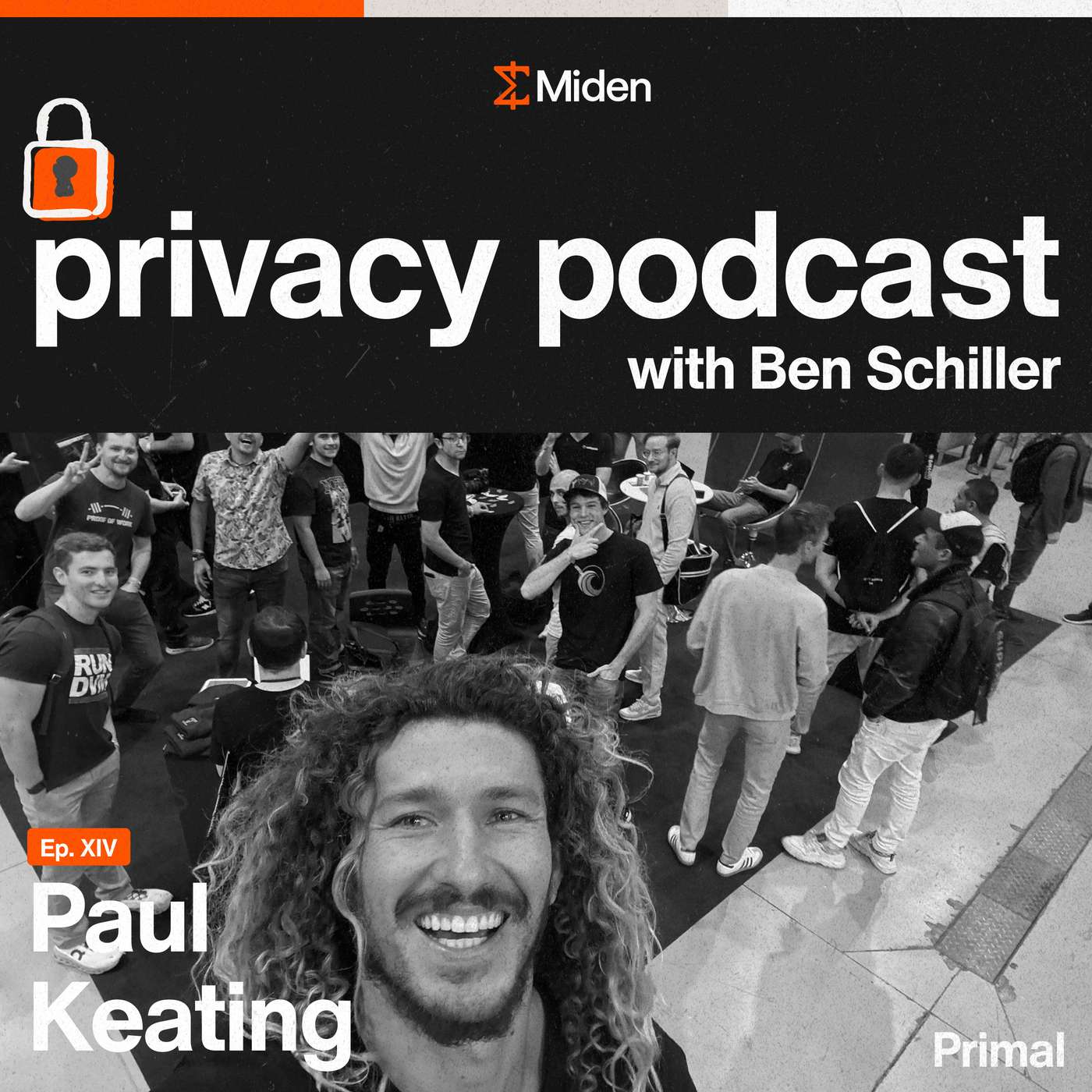
Hummingbird: The Bitcoin Jungle Story shows a community coming together around new monetary ideas.It began as a five-minute film about bitcoin in Costa Rica. It became a full-length documentary called Hummingbird: The Bitcoin Jungle Story. In this week’s episode of of Privacy Podcast, host Ben Schiller speaks with Paul Keating, one of the creators of the documentary about the people and ideas behind a growing Bitcoin community in Costa Rica and what happens when the principles of Bitcoin move from the internet into the real world.Keating’s own story is part of that experiment. After leaving California for Costa Rica near the end of the COVID era, he found a community of Bitcoiners and eventually began living almost entirely on Bitcoin, converting his paychecks and later being paid directly in Bitcoin.Hummingbird draws its title from the prophecy of the eagle and the condor, representing different cultures and ways of understanding the world coming together. The film asks whether Bitcoin can provide common ground between communities that might otherwise appear very different.Merchants in Costa Rica can accept Bitcoin, how users can move between Bitcoin and local currency when necessary, and why adoption doesn’t require people to first understand every aspect of monetary theory.The conversation then expands beyond money into another form of sovereignty: social media.Paul discusses his work with Primal and his belief in Nostr, an open social protocol designed to give users greater control over their identity, content and connections.Instead of rebuilding a social network every time someone joins a new platform, Nostr makes that identity and social graph portable across compatible applications. For Paul, the philosophy behind it closely parallels Bitcoin: users own their data and maintain sovereignty over their stack.In This EpisodeBen and Paul discuss:Paul’s decision to leave California and build a life in Costa RicaWhat it’s actually like to live primarily on BitcoinHow Bitcoin Jungle developed in Costa RicaHow a five-minute video became Hummingbird: The Bitcoin Jungle StoryThe meaning behind the film’s hummingbird metaphorWhy Bitcoin adoption can look different outside the United StatesUsing Bitcoin for everyday purchasesStreaming Bitcoin payments directly to filmmakersWhy Paul believes Nostr could provide a better foundation for social mediaTaking ownership of your identity, followers and content onlinePrimal and the emerging Nostr ecosystemWhy decentralization still faces a major mainstream adoption challengeWhat living in Costa Rica taught Paul that “Bitcoin Twitter” couldn’tWatch HummingbirdSearch for Hummingbird: The Bitcoin Jungle Story on YouTube or visit hummingbirdfilm.com.🔗 About the 👤 Guest Paul Keating | https://www.hiimpaulk.com/ Paul Keating can also be found on Nostr/Primal as Paul in the Jungle. | https://primal.net/paul X: @thepaulosophyInstagram: @paulinthejungleNOSTR| Join Nostr / beginner siteNostr protocol overviewOfficial Nostr protocol GitHubPrimal — a social media app built on the decentralized Nostr protocol.https://apps.apple.com/us/app/primal/id1673134518If you enjoyed this conversation, be sure to Like, Subscribe, and turn on notifications so you never miss future episodes of The Privacy Podcast.About the ShowThe Privacy Podcast by Miden explores the intersection of privacy, identity, and emerging technologies. Hosted by Ben Schiller, the show brings together builders, regulators, and thinkers shaping what comes next in a world where data is power.Executive Producer Michele MussoEdited by the Musso Media Team Music: licensed.All rights reserved. ©2026 Musso Media

Comments

Download from Google Play

Download from App Store
 United States