DiscoverThe Culture of Cloth
The Culture of Cloth
Claim Ownership

The Culture of Cloth

Author: Veronica Tucker

Subscribed: 33Played: 330
Share

Description

Clothing is never just clothing.


Every fibre, every colour, every silhouette is telling you something about power, politics and whose story got told and whose didn’t.

The Culture of Cloth is a podcast about learning to read that story.

Most fashion history looks at the outside but this show looks at the inside. The construction, the decisions, the invisible hands that made it, and the world those hands were living in.

The women who encoded military intelligence into knitting. The weavers whose binary logic built the first computer. The dyers, the spinners, the pattern cutters whose names were never written down.

Cloth tells the truth even when the official record doesn’t.

For makers and thinkers. For everyone who has ever looked at a garment and felt there was more to it than they were being told.

Hosted by Veronica Tucker.
13 Episodes
Reverse
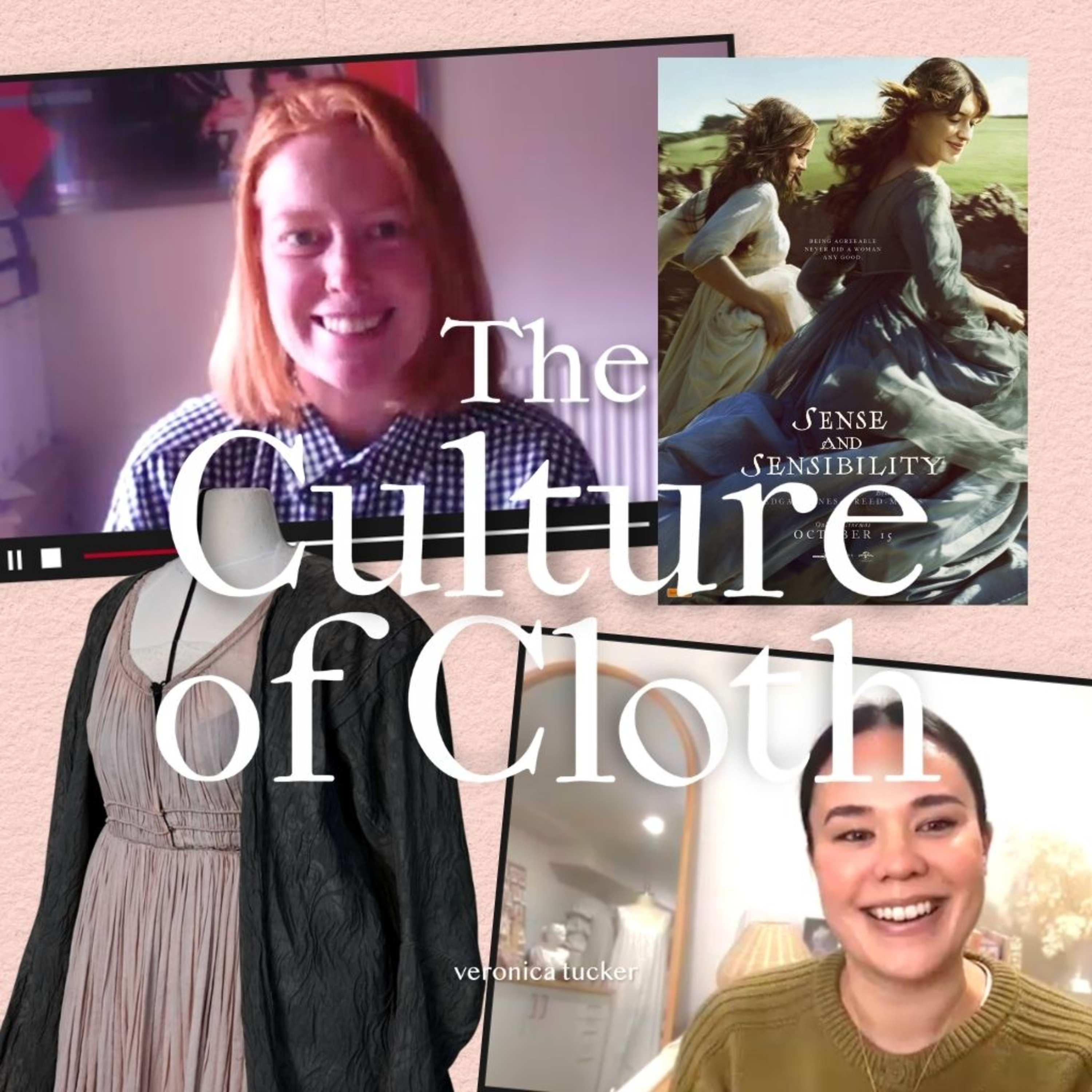
I had the wonderful opportunity to interview Grace Snell (https://www.instagram.com/graceesnell/) who created the costumes for the 2026 Sense and Sensibility.There's been a lot of online dialogue about this film, as there is anytime a new adaptation enters the Austen-verse, yet it was so fantastic to watch Grace's work online in the lead up to the film. Then I got invited to see the film myself and then was finally being able to ask Grace all the nitty-gritty questions that had been bubbling away in my brain for weeks. Grace and I talk about:- How it felt to be part of the Austen-verse and her connection to Austen's work.- The huge role natural dyeing played in not the costume design but how it spoke to the different characters.- How hers and Georgia Oakley's (director) creative approach to costume design and filmmaking is very much about intuition and collaboration.- How she collaborated with the WONDERFUL John Bright (who was actually the co-costume designer on the 1995 version of Sense and Sensibility) on one of Fanny Dashwood's costumesLet me know what you thought of my first ever big interview with a costume designer and whether you'd love more of these :) Link to YouTube video: https://youtu.be/MrklArVNQAEFollow me here:https://www.instagram.com/veronicatuckerthelabel/Shop my sewing patterns here:https://www.veronicatuckerthelabel.com/Shop my phone case designs here:https://thedairy.com/collections/veronica-tucker-phone-cases
Madeleine Vionnet started as a lacemaker’s apprentice at twelve and ended up popularising the bias cut. The single technique that changed how clothing relates to the female body forever. She freed women from the corset before Poiret ever did yet history gave him the credit anyway.This episode traces her full arc: the under-financed 1912 house that lasted barely two years before the war shut it down, the rebuild at “les trois coquettes” on rue de Rivoli, her obsessive study of Greek vases at the Louvre, and the mathematical precision (golden ratios, dynamic symmetry, geometric pattern pieces) that she insisted was dressmaking. We get into why she resented Poiret’s fame, why she called herself a technician rather than a designer, and how a nearly-forgotten couturier ended up shaping Miyake, Kawakubo, Alaïa, and half of modern fashion’s relationship to the body.
Garment technicians rarely get interviewed. But buyers, designers, textile experts? Everyone talks about them. But the person who actually decides whether a garment fits, closes properly, and survives being worn? Almost invisible.In this episode, I sit down with my friend and fellow industry veteran Debbie, a garment technician who’s spent her career being the bridge between a designer’s sketch and the customer trying it on in a change room. We get into what a tech pack actually is, why a 0.3cm measurement can cause a genuine crisis, and the emotional cost of watching manufacturing relationships get shifted offshore chasing cheaper margins.We also talk honestly about the parts of the industry nobody glamorises: sizing and grading gaps for larger bodies, the blame that lands on garment techs when something goes wrong in store, and why working retail first is still the best advice either of us can give anyone wanting into fashion.It’s a conversation about the unsexy, unseen decisions that decide whether a piece of clothing actually works and why that work deserves more credit than it gets.
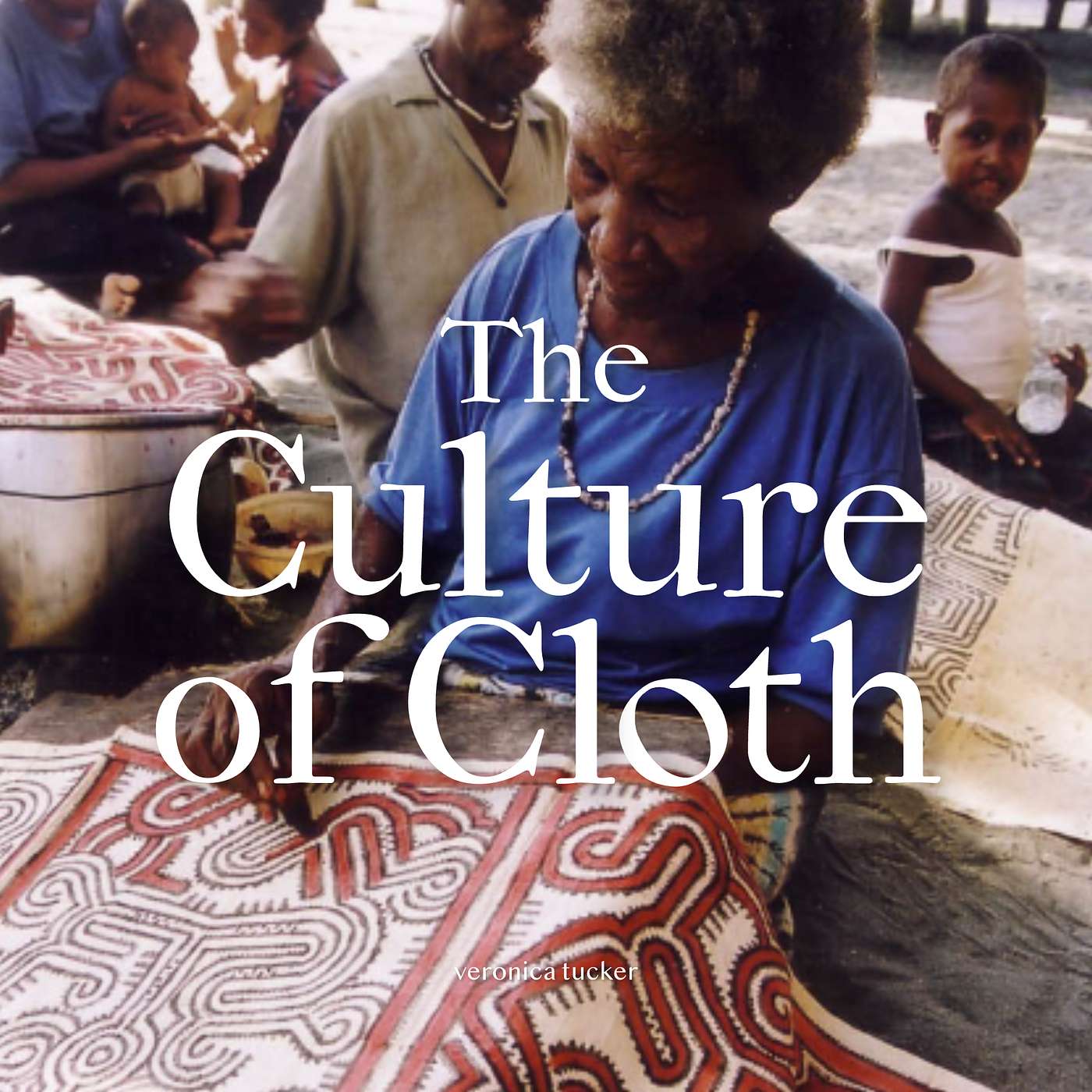
It’s the final episode of The First Makers series. In this episode we speak about the Polynesian goddess Hina and how she is seen across many different islands and known by many different names, but her message is the same. We also touch on the important of the possum cloak in the culture of Indigenous Australians and how that knowledge was almost lost but is fortunately alive and thriving today. Cover image is of Mildred Taniova colouring in the tapa designs with red pigment. Arara village, Collingwood Bay, Oro Province PNG, 2001. Photograph by A. Hermkens.
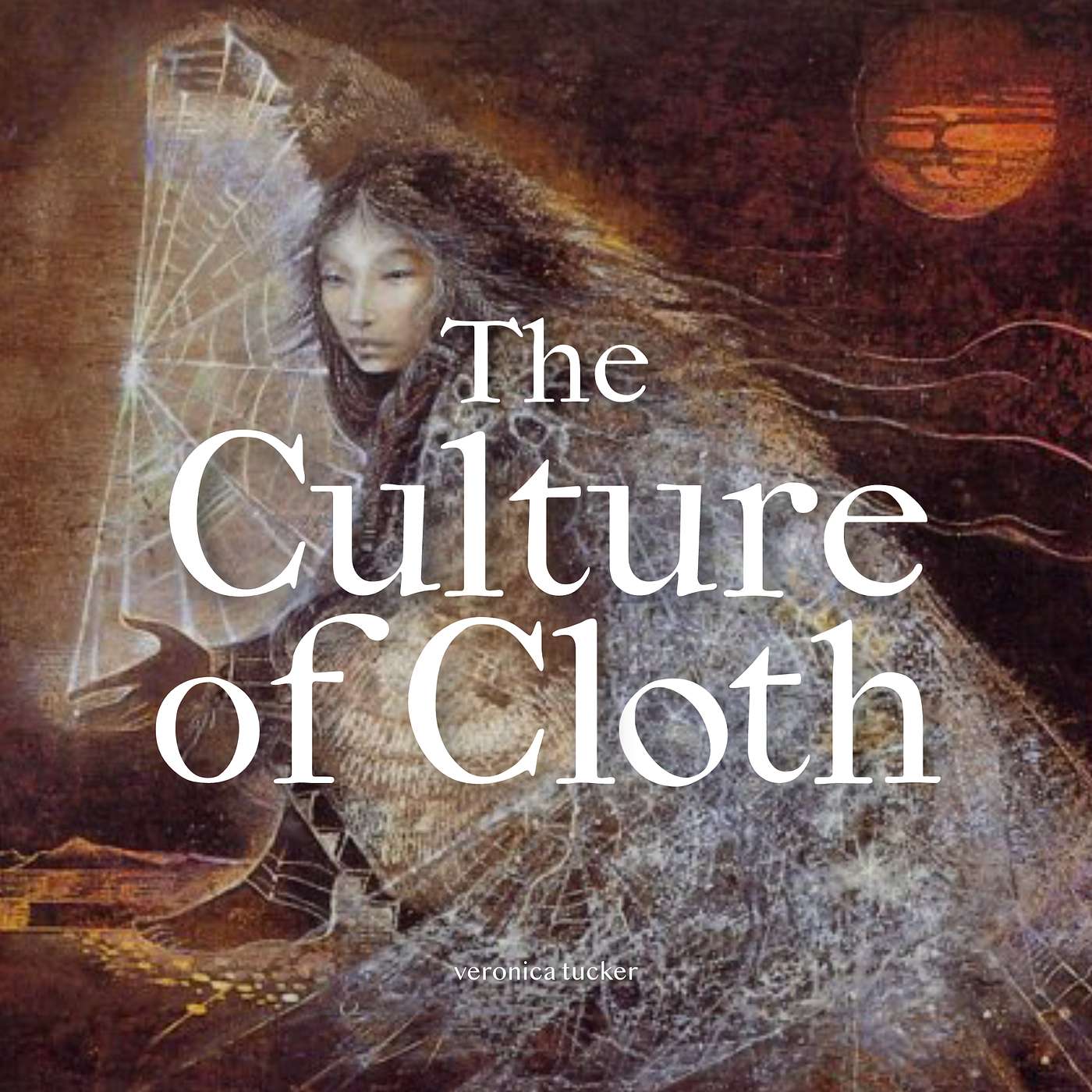
Before there was a world, there was a thread.In this episode of First Makers, I’m looking at two very different models of the same idea. Divinity and thread as the origin of everything that matters. First, Mama Ocllo, sent by the Inca sun god Inti to teach the first women to spin and weave. She is a culture-hero, not a weaver herself, whose myth explains where an entire craft tradition came from. Then Spider Grandmother, who in Navajo and Hopi tradition isn’t a teacher at all, but the maker of the world itself. She spun existence out of clay and attached every living thing to her by a single thread of her own silk.Part of The Goddess Project, my ongoing series on ancient goddesses, the history of draped cloth, and why what women make has always mattered more than it’s been given credit for.Cover art by Susan Seddon Boulet
loading
Comments