


 Claim Ownership
Root Cause
Subscribed: 0Played: 0
Subscribe

© 2026 Nune
Description
Everyone talks about the future of tech. Few talk about the consequences.
ROOT CAUSE brings together senior operators. Engineers, DevOps leaders, founders, former CTOs. To dissect the real stories behind big technical decisions.
What happens after the migration? After the pivot? After the AI integration?
Our show is dedicated to answering what nobody tells you about scaling systems, what nobody tells you about leadership or the vicious hype cycles.
If you’ve built, broken, fixed, and rebuilt systems at scale, this show is for you.
Let’s root cause this.
10 Episodes
Reverse
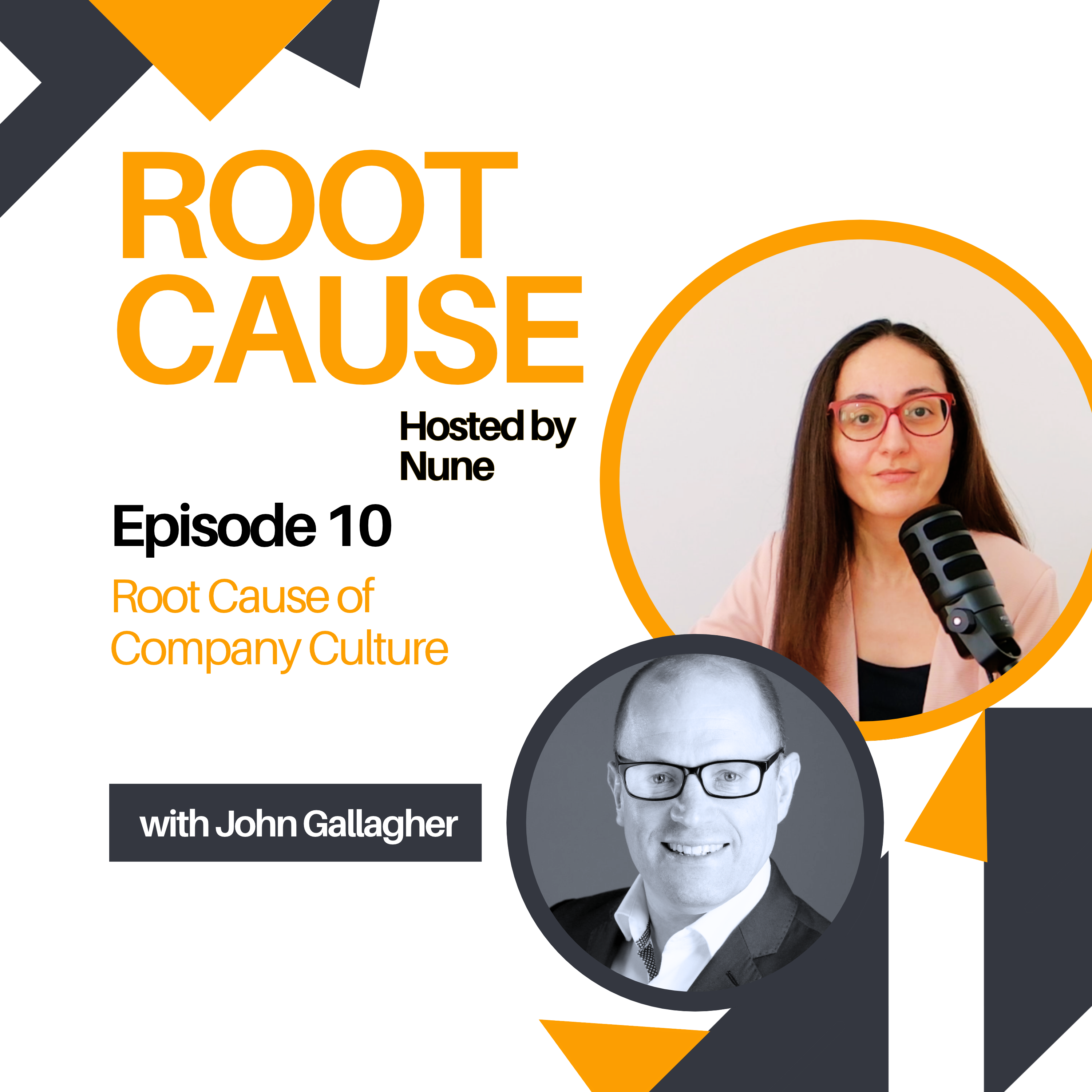
If everyone can build software now, what actually decides who survives? John Gallagher, Principal Engineer at Dynatrace and author of Software Design Simplified, says culture. In this episode of Root Cause we get to the root cause of what that word actually means, and why AI just made it ten times more important.John has spent over 20 years in software, from assembly on microcontrollers to a decade of Ruby on Rails in production, and he lived through the incident we have all had: the app is down, the people who could help are asleep in another time zone, and the logs tell you nothing. He spent the next 18 months changing how his team saw its own system. Downtime dropped 98%. Then he cut the observability bill the new enthusiasm had created.We dig into why 2,000 engineers with AI still move like 2,000 engineers (Conway's law did not get repealed), the anti-pattern that refuses to die ("we know what the customer wants, we built it"), and the paradox of founders: selfish enough to start a company, humble enough to remember you are solving somebody else's problem. John makes the case that a software company is not a factory stamping out features, and that if you deleted 80% of the features in most products, the software would get better. We get nostalgic about a 2 MB Amiga game on a 1.5 MB machine and what that obsession taught him about debugging, why group think starts with an emotion, and his three ingredients for learning critical thinking if nobody taught you as a kid: obsession, a small feedback loop, and for goodness sake, don't read a book. Plus the book recommendation he refused to tell me before we hit record.00:00 Introduction of the Episode and the Guest02:49 Is the AI SRE Market Flooded Because of AI or Because of OpenTelemetry?07:46 Big Vendors Move Fast Now Too: Can Startups Still Compete?13:46 Bureaucracy Is Not Good or Bad, It Is the Nature of the Beast17:48 The Anti-Pattern That Never Dies: "We Know What the Customer Wants"21:34 Founder Ego: Selfish Enough to Start, Humble Enough to Listen25:14 Culture Is Now 10x More Important (and the Best Product Does Not Win)29:11 A Software Company Is Not a Feature Factory31:36 Rework: Just Let Me Use the Software36:37 From Floppy Disks to AI: Is This the Same Kind of Revolution?38:16 Hired Guns on a 1.5 MB Amiga: One Book, No Internet, Pure obsession47:24 Neither Skeptic Nor Enthusiast: Subsidized Tokens and the Coming Shock49:53 All Priors Are Gone: Relearning Everything After 20 Years53:07 Did We Waste a Year Tinkering With AI Tools?57:31 Invest in Things That Don't Change: Feedback Loops All the Way Down01:01:51 "It's Definitely a Race Condition in Redis": How Engineers Handle Being Wrong01:04:36 How to Learn Critical Thinking: Obsession, a Small Feedback Loop, and Don't Read a Book01:07:57 The Painting Class and the Tennis Court: Emotions as a Feedback Loop01:10:18 Group Think Starts With an Emotion, and Many More Much Smaller Steps01:14:30 Book Recommendation: The Psychology of Software Teams01:19:22 Question from Tamanna Haque and Question for the Next Guest01:26:24 ClosingFind John at:Joyful Programming: https://www.joyfulprogramming.comLinkedIn: https://linkedin.com/in/synapticmishapFind me (Nune) at:LinkedIn: https://www.linkedin.com/in/nisabek/ Substack: https://www.thoughtfultechnologist.com/

What is Generative Engine Optimization (GEO), and does it replace SEO? In this episode of Root Cause we get to the root cause of what happens to being findable when people stop Googling and start asking ChatGPT, Gemini or Perplexity. With search engines, a human picks from a list of results. With AI search, the model gives one answer and one recommendation, and if you are not in it, you are not in the consideration set. That shift is what GEO (also called AI search optimization or AI visibility) is trying to address.We cover GEO vs SEO and why good SEO is only a subset of AI visibility; the what, where and how of AI-readable content (which topics, which sites like Reddit, G2 and Capterra AI trusts, which formats); whether GEO feeds the AI slop machine (AI-generated content is no more readable to LLMs than human writing, and three purposeful articles beat ten); how fast-changing models affect what you optimize; why millennials using ChatGPT as a search engine and Gen Z using it as a companion are two different problems for a brand; B2B vs B2C vs creator use cases; and the fairness question of manufacturing a persona that ranks above the better product. Then the technical part: how you get a deterministic, credit-score-style AI visibility score out of non-deterministic LLMs, why the LLM should be a data extractor and never a grader, and practical GEO advice for content creators (know your proposition, get cited where AI trusts, transcribe your videos, and yes, bring back the blog).My guest is Tamanna Haque, mathematician, lead data scientist with a decade of production AI on real customer data, and co-founder of GenSight.AI, a GEO platform she built in her personal time with her husband Jonas. This is her first public conversation about it, and I came in openly skeptical.00:00 Introduction of the Episode and the Guest02:56 Why Build a GEO Product in the Evenings: Eating Your Own Dog Food06:08 What Is Generative Engine Optimization?07:21 GEO vs SEO: Being an Option vs Being the Answer10:48 The What, the Where and the How of Being Visible to AI11:51 Does GEO Feed the AI Slop Machine?15:05 Models Change Fast: Optimize Once or Forever?17:02 Millennials Search, Gen Z Chats: Two Different Problems20:46 B2B vs B2C vs Creators: Who Benefits Most?22:35 Manufacturing a Persona: Who Deserves the Top Spot?26:58 Deterministic Scores from Non-Deterministic Models29:39 The LLM as Data Extractor, Never a Grader31:44 Free Advice for Creators: Know Your Proposition, Bring Back the Blog36:09 Book Recommendation: Harry Potter38:05 Question from Fraser Merrifield: Top Movies39:46 Question for the Next Guest: Which Pet Would You Have?40:38 ClosingFind Tamanna at:GenSight.AI - https://gensight.aiFind me (Nune) at:LinkedIn: https://www.linkedin.com/in/nisabek/ Substack: https://www.thoughtfultechnologist.com/

In this episode of Root Cause we sit down with Fraser Merrifield, founder of FORM Careers in Glasgow and the self-described craft brewer of digital recruitment, to get to the root cause of the gap between what the hiring market says it wants and what it actually rewards. Fraser spent over a decade placing engineers in oil and gas, then bet on software in his late 30s, went fully solo, and now runs deliberately small on what he calls bullshit-free recruitment. He barely reads CVs anymore, and he'll tell you why a perfect one makes him suspicious.We dig into why AI has made both hiring and getting hired harder while most of the horror stories stay myths: his clients average two interview stages, and the CV-rejecting AI mostly doesn't exist. Fraser explains the 12-month window on the "AI-native engineer" hype, what happens when an engineer burns through more in tokens than their salary, and why leaning on senior hires is the same mistake that left oil and gas with a talent shortage. And the story that sums up the whole market: 200 applications for one graduate role, one candidate picked up the phone, and he got the job, as the only person interviewed. Three years later he is still there.00:00 Cold Open: Six Yes/No Claims About the Job Market00:41 Introduction of the Episode and the Guest03:35 Writing Like a Human: Pop Culture and Starting in Lockdown05:56 Five Views or Five Million: How to Read Your LinkedIn Visibility07:45 Everyone's CV Is Perfect Now, So What Stands Out?09:23 The Online Mood Hoover: Positivity vs Ranting12:22 The Blitz Round: Yes or No13:06 Why AI Made Both Hiring and Getting Hired Harder14:48 Just Another Hype Cycle? The 12-Month Window16:11 When Engineers Burn More in Tokens Than Their Salary17:53 Eight-Stage Interviews: Would You Even Want That Job?20:36 Can Bullshit-Free Recruitment Scale?22:06 CVs After AI: Rejecting the Quick-Appliers, Rewarding the Extra Mile25:25 One of 200 Applicants Picked Up the Phone. He Got the Job27:06 Glasgow AI and the Return of Offline Networking29:10 The Undercurrent of Real People on LinkedIn31:18 How Fraser Actually Uses AI (and How It Argued Back)37:38 Fraser Flips the Script: The Most In-Demand Skill in Five Years43:21 Juniors vs Seniors: The Oil and Gas Warning46:11 Asking About Training Without Entitlement47:17 Question from Evan Marshall: When Are We Getting Robots?52:14 Question for the Next Guest: Top Five Movies52:45 Movie Recommendations: Her, Ex Machina, Transcendence54:24 ClosingFind Fraser at: • LinkedIn - https://www.linkedin.com/in/fraser-merrifield-7b54524/ • Form Careers - https://weformcareers.com/ • Glasgow AI Meetup - https://www.meetup.com/meetup-group-xnqxwqzu/Find me (Nune) at:LinkedIn: https://www.linkedin.com/in/nisabek/ Substack: https://www.thoughtfultechnologist.com/Envimate: https://envimate.com/

In this episode of Root Cause we sit down with Evan Marshall, co-founder and CTO of Ito.ai, to get to the root cause of where the honest answer sits on the AI adoption spectrum, somewhere between the teams that won't let AI near their codebase and the ones that let it ship with barely a human in the loop. Most of us are somewhere in the middle, moving around and quietly wondering if we've got it right. This conversation is meant to help you gauge where you actually are, and where you want to be. Evan studied computer science at MIT and spent four years building privacy infrastructure for zero-knowledge blockchains, where a slipped bug is a disaster. That experience pushed him toward quality: he now builds a QA agent that actually runs your application and checks the code before it merges.We dig into the pressure on Bay Area companies to claim a "software factory" while their engineers might still be shipping like everyone else, why free code generation can at most double you if coding was half your job (and it never was), and the plastic age of coding, where code is generated to be thrown away. Evan shares what a sane monthly AI spend actually looks like and his advice for integrating AI into your software development lifecycle: treat the SDLC as an optimization problem, because once generation is free, the bottleneck moves to verification and quality control. And when someone says "I can just do that with Claude Code", the work that follows is environments that have to heal themselves, caching that breaks on the next migration, and memory layers. As Evan puts it: we spent the tokens so you don't have to.00:00 Pre-show Banter and the Cats00:59 Introduction of the Episode and the Guest03:00 Is the Bay Area Really an AI Echo Chamber?05:45 The Pressure to Claim a Software Factory07:36 How Much Does AI Actually Speed You Up?10:23 How Ito Uses AI in Its Own Engineering14:13 The Plastic Age of Coding15:53 Can the Software Factory Be Productized?18:39 Subscriptions vs API: The Real Cost of Tokens20:19 Open Models and Switching Between Them21:25 Are the Models Plateauing?22:59 "I Can Just Use Claude Code": Where the Hard Parts Hide26:19 The Bottlenecks You Don't See: Environments, Caching, Memory28:55 Will QA Engineers Be Replaced?31:39 Replicators, Waymos, and 3D Printers: Why Change Takes Time36:49 Why SaaS Isn't Dead and How Much You Should Spend39:23 Advice for Integrating AI into Your SDLC42:50 Question from Barry O'Reilly: Building a Computer in 182244:31 Shared Reality, Social Media, and Cooperation50:25 Book Recommendations53:54 Question for the Next Guest and ClosingFind Evan at: • LinkedId: https://www.linkedin.com/in/evan--marshall/ • his startup - https://www.ito.ai/Find me (Nune) at:LinkedIn: https://www.linkedin.com/in/nisabek/ Substack: https://www.thoughtfultechnologist.com/

In this episode of Root Cause we sit down with Barry O'Reilly, 25 years in software architecture, former chief architect at Microsoft, startup CTO, and the creator of Residuality Theory, to get to the root cause of what senior architects actually do when they say they run on gut feeling. When Microsoft asked Barry to teach junior architects how he did his job, he discovered he couldn't describe his own methods, and neither could any of the senior architects he asked. That frustration turned into two books and a PhD in complexity science. We dig into why a random simulation of stress produces architectures that survive events nobody predicted, why equirements and risk management quietly limit the very thinking they were supposed to support, why our industry spreads ideas through charisma instead of scientific proof, and whether an LLM can ever produce an architecture. If you've ever been told "that's just experience," this episode puts words on it.00:00 Cold Open: The Architect vs the Implementer02:06 Guest Introduction: Structuring the Magic03:00 Pure Mathematics: Help or Trap?06:20 Think Less, Do More? The Industry's Thinking Problem09:09 Why Software Isn't Developing as a Science12:26 Pop Culture, Gurus, and the Hype Machine15:09 "My Industry Is Low Stakes": Why Quality Still Pays17:54 Two Books That Decide If You're an Architect22:09 Creativity vs Craft: Naming the Magic25:39 Residuality Theory: The Marbles Analogy31:59 How to Start: The Naive Architecture and Random Stress36:35 Attractor States: Why Stressing Works39:30 All Architecture Is Stress44:14 The Trouble with Non-Functional Requirements48:49 Should Architects Become Domain Experts?52:02 Does This Apply to Small Systems and Startups?57:36 Answering the Critics: "We've Always Done This"01:01:28 Stressor Analysis: Architecture Never Stops01:04:57 Shared Language and Reflective Practice01:07:04 Has AI Made Code Cheaper?01:12:54 Can LLM Agents Do Residuality?01:18:43 The Walk Around the Problem Is the Point01:20:40 First Steps into Residuality01:25:18 Book Recommendations01:29:39 A Benign Pride: Fly Fishing at 34 Meters01:32:01 Question for the Next Guest and ClosingFind Barry at: • LinkedIn: https://www.linkedin.com/in/barry-o-reilly-b924657/ • Barry’s first book: https://leanpub.com/residuality • Barry’s second book: https://leanpub.com/architectsparadox • The intro talk you should watch: https://www.youtube.com/watch?v=_MPUoiG6w_UFind me (Nune) at:* LinkedIn: https://www.linkedin.com/in/nisabek/ * Substack: https://www.thoughtfultechnologist.com/

Comments

Download from Google Play

Download from App Store
 United States