


 Claim Ownership
RedeCast
Subscribed: 2Played: 16
Subscribe

© Copyright 2026 Rede Partners
Description
What does it take to build a world-class private markets firm? Hosted by Scott Church, founder and Senior Partner at Rede Partners, RedeCast brings you candid conversations with the heavyweights who have shaped our industry and the changemakers forging its future. Each episode explores how our guests built their businesses, the defining challenges they faced along the way, and how they’re navigating today’s rapidly changing investment environment.
7 Episodes
Reverse

In the final episode of season one, Scott Church is joined by Phil Fretwell, Managing Partner of AshGrove Capital, for a conversation about building an independent credit manager in Europe and lending into software businesses at a moment when the technology underneath them is changing fast.Phil began his career in leveraged finance at Barclays before helping to establish the European operations of two large US asset managers. In 2019, he set up AshGrove from scratch alongside two partners, and closed the debut fund during the first year of the pandemic. He is candid about how hard that was, and why an independent firm focused on credit is something of an oxymoron: you need entrepreneurs, and you need people who think relentlessly about the downside.The conversation works through the two pillars of the AshGrove strategy. First, deliberately operating in a less competitive segment of the market, where supply and demand dynamics allow for stronger documentation, better covenants and lower detachment points. Second, the conviction that business model is a better barometer of risk than business size, which is what drives the firm's focus on B2B software and tech services.Phil is direct on where he thinks the consensus on AI and software is wrong, why the discount applied to solid but unspectacular software businesses looks overdone, and why the revenue opportunity from AI gets far less attention than the cost one. He also explains why AshGrove chose Copenhagen rather than the more obvious Nordic option, what a shareholder buyout says about a firm being honest with itself, and the two career lessons he keeps coming back to.In this episode:Why there was a gap for an independent, founder-led lender in the European lower mid-marketWhat it actually takes to raise a debut credit fund, and what COVID taught them about foundationsWhy DPI became the question in the second raise, and how a high-velocity strategy answers itBusiness model over business size, and what makes a good software borrowerUnderwriting when the tech stack could look materially different in eighteen monthsWhere the market is mispricing software assets, and the revenue case for AIVertical software, defined niches and why disintermediation is harder than it looksCulture in a firm where nobody is paid enough to make a marginal decisionChoosing Copenhagen over Stockholm, and keeping one investment standard across officesListening to your gut, and why nobody ever says they acted too earlyRede DisclaimerThe information discussed in this podcast is for general information purposes only and does not constitute financial advice, investment recommendation, invitation or inducement to engage in investment activity or an offer to buy or sell any financial product. The views expressed are those of the speakers as at the time of the recording and do not necessarily reflect those of Rede Partners or the firm employing the guest speaker (Guest) or any of their respective affiliates. The information discussed, including any forward-looking statements, should not be relied upon for any purpose and listeners should seek independent professional advice before making any investment decisions. References to specific companies or products are for illustrative purposes only and do not constitute an endorsement or recommendation. None of the content should be copied, distributed or reproduced.Past performance, where indicated, is not a guarantee or reliable indicator of future results. Any references to past performance, track records, or investment returns are for illustrative purposes only. Actual results may differ materially from any projections, estimates, or implied performance discussed.Rede Partners is engaged by its clients to market their funds and the firm employing the Guest and/or its affiliates is or has been a client of Rede. In the U.S. Rede Partners operates through its wholly owned subsidiary, Rede Partners Americas LLC, which is a registered broker dealer with the Securities and Exchange Commission and a member of the Financial Industry Regulatory Authority, Inc. Rede is not a current advisory client or fund investor of its client funds, although its partners and employees themselves invest in client funds via a pooled vehicle established for such purpose which may have negotiated beneficial economic terms in connection therewith (e.g., reduced or no management fees and/or carried interest). For providing its services, Rede is entitled to cash compensation paid by the client rather than the client fund. Rede has a significant economic incentive to solicit investors to commit capital to their clients' funds, resulting in a material conflict of interest on its part.No compensation has been received by Rede Partners in connection with the Guest's participation in this recording and the views discussed herein do not constitute an endorsement or testimonial of Guest, its employer or its private funds.The information contained in the Podcast is believed to be accurate as of the date of publication and will not be updated or supplemented to reflect subsequent events.
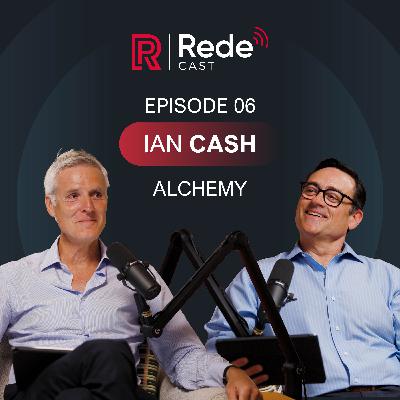
Scott Church is joined by Ian Cash of Alchemy Partners for a conversation about special situations investing in Europe, and why a strategy built on buying what others are selling requires as much temperament as it does analysis.Ian established Alchemy's Special Opportunities business in 2006, two years before the global financial crisis, and has spent his career in European distressed debt and special situations since the early 1990s. He explains the two premises the business was founded on, why he considers the strategy all-terrain rather than cyclical, and why the hardest and most important work is answering a deceptively simple question: is this a good business?The conversation moves through why Europe remains structurally attractive despite being harder to navigate than the US, how theme-based sourcing has shaped two decades of activity in sectors like UK house-building and telecoms, and Ian's candid assessment of private credit's growth, the pressure now showing in public windows into that market, and what a pullback in dry powder could mean for credit pricing.Ian also reflects on moving from a bank trading desk to a closed-end fund, why alignment changes completely when profit share sits years out rather than at the end of each calendar year, and why a partner-owned firm with no interest in building enterprise value ends up making different decisions.In this episode:The fund structure and credit cycle premises behind Alchemy Special OpportunitiesWhy special situations returns are driven by regulatory, capital, market and technology cycles rather than the economic cycleThe characteristics of a bad business, and why avoiding them is the primary defence against lossesWhy Europe's fragmentation is a feature rather than a flawTheme-based sourcing and the durability of certain sector ideasIan's view on private credit growth, gated retail structures and where default rates sit todayThe contrarian temperament, diversification in time, and why you can never buy at the bottomTrust, meritocracy and what a stable partnership actually does for a firmRedeCast Legal DisclaimerThe information discussed in this podcast is for general information purposes only and does not constitute financial advice, investment recommendation, invitation or inducement to engage in investment activity or an offer to buy or sell any financial product. The views expressed are those of the speakers as at the time of the recording and do not necessarily reflect those of Rede Partners or the firm employing the guest speaker (Guest) or any of their respective affiliates. The information discussed, including any forward-looking statements, should not be relied upon for any purpose and listeners should seek independent professional advice before making any investment decisions. References to specific companies or products are for illustrative purposes only and do not constitute an endorsement or recommendation. None of the content should be copied, distributed or reproduced.Past performance, where indicated, is not a guarantee or reliable indicator of future results. Any references to past performance, track records, or investment returns are for illustrative purposes only. Actual results may differ materially from any projections, estimates, or implied performance discussed.Rede Partners is engaged by its clients to market their funds and the firm employing the Guest and/or its affiliates is or has been a client of Rede. In the U.S. Rede Partners operates through its wholly owned subsidiary, Rede Partners Americas LLC, which is a registered broker-dealer with the Securities and Exchange Commission and a member of the Financial Industry Regulatory Authority, Inc. Rede is not a current advisory client or fund investor of its client funds, although its partners and employees themselves invest in client funds via a pooled vehicle established for such purpose which may have negotiated beneficial economic terms in connection therewith (e.g., reduced or no management fees and/or carried interest). For providing its services, Rede is entitled to cash compensation paid by the client rather than the client fund. Rede has a significant economic incentive to solicit investors to commit capital to their clients' funds, resulting in a material conflict of interest on its part.No compensation has been received by Rede Partners in connection with the Guest's participation in this recording and the views discussed herein do not constitute an endorsement or testimonial of Guest, its employer or its private funds.The information contained in the Podcast is believed to be accurate as of the date of publication and will not be updated or supplemented to reflect subsequent events.

Reynir Indahl is the Founder and Managing Partner of Summa Equity, a thematic private equity firm investing in businesses that solve structural global challenges across its four focus themes: circularity, energy transition, sustainable food and tech-enabled resilience. Founded in 2016, Summa has raised around €4 billion across three funds and made over 30 platform investments with 16 exits. The firm operates from offices across Northern Europe and is one of the few firms in European private equity to have built a differentiated platform that has invested in these themes from day one.In this episode, Reynir shares the founding story of Summa, the contrarian conviction that companies solving global challenges would outperform their peers and why the data is now proving that thesis. We explore how Summa navigated the political headwinds around ESG, why Reynir deliberately avoided the impact label early on and what it really takes to build a purpose-driven firm that attracts the right people whilst retaining strong commercial discipline.Key themes from this conversation:Why solving global challenges and generating strong returns are not in conflictThe aha moment when Summa proved the win-win thesis with Soterra, Sweden's leading recycling businessNavigating the ESG political backlash and why Reynir sees the green boom and bust as ultimately healthy for the industryWhy Summa narrowed from three broad megatrends to four specific themes and dropped healthcare entirelyHow geopolitical uncertainty around energy, food and materials has become a net tailwind for Summa's portfolioThe pandemic test — why every Summa portfolio company outperformed expectations when employees were genuinely connected to the missionBuilding an organisation where deep domain experts and great investors work as one rather than two separate teamsThe decision to go it alone rather than launch under an existing platformWhat Reynir would tell his 2016 self about what was going to be harder than expectedRedeCast Legal DisclaimerThe information discussed in this podcast is for general information purposes only and does not constitute financial advice, investment recommendation, invitation or inducement to engage in investment activity or an offer to buy or sell any financial product. The views expressed are those of the speakers as at the time of the recording and do not necessarily reflect those of Rede Partners or the firm employing the guest speaker (Guest) or any of their respective affiliates. The information discussed, including any forward-looking statements, should not be relied upon for any purpose and listeners should seek independent professional advice before making any investment decisions. References to specific companies or products are for illustrative purposes only and do not constitute an endorsement or recommendation. None of the content should be copied, distributed or reproduced.Past performance, where indicated, is not a guarantee or reliable indicator of future results. Any references to past performance, track records, or investment returns are for illustrative purposes only. Actual results may differ materially from any projections, estimates, or implied performance discussed.Rede Partners is engaged by its clients to market their funds and the firm employing the Guest and/or its affiliates is or has been a client of Rede. In the U.S. Rede Partners operates through its wholly owned subsidiary, Rede Partners Americas LLC, which is a registered broker-dealer with the Securities and Exchange Commission and a member of the Financial Industry Regulatory Authority, Inc. Rede is not a current advisory client or fund investor of its client funds, although its partners and employees themselves invest in client funds via a pooled vehicle established for such purpose which may have negotiated beneficial economic terms in connection therewith (e.g., reduced or no management fees and/or carried interest). For providing its services, Rede is entitled to cash compensation paid by the client rather than the client fund. Rede has a significant economic incentive to solicit investors to commit capital to their clients' funds, resulting in a material conflict of interest on its part.No compensation has been received by Rede Partners in connection with the Guest's participation in this recording and the views discussed herein do not constitute an endorsement or testimonial of Guest, its employer or its private funds.The information contained in the Podcast is believed to be accurate as of the date of publication and will not be updated or supplemented to reflect subsequent events.

Nic Humphries is Senior Partner and Executive Chairman of Hg, Europe's largest software investor managing assets across nearly 60 businesses. Over 25 years Nic has helped transform Hg from a small division of Mercury Asset Management into a hyper-specialised, institutional-grade platform that has consistently delivered strong returns with the vast majority of realised investments returning multiples of invested capital. Few people in European private equity have seen more technology cycles, made more consequential bets or thought more carefully about what it actually means to build a firm that compounds over decades.In this episode Nic traces the pivotal decision to go sector-specialist in technology at a time when most of his partners thought it was career suicide. He gives a remarkably candid account of blowing up his first two investments in the early 1990s and what that taught him about the circle of competence, why he walked away from being CEO because he had passed the threshold of managerial incompetence, and how Hg's engineering mindset has shaped everything from deal execution to succession planning. He also gives the most direct and considered take on AI we have heard across this series, framing it as a once-in-20-year platform shift and an execution game pure and simple.Key themes from this conversation:The founding decision to go sector specialist and why it took two years of internal debate to get thereWhy most private equity is extractive and why product innovation is the only true path to long term compounding returnsHg's Catalyst program, 100 AI engineers on the balance sheet loaned directly into portfolio companiesHow blowing up two investments in 1993 led directly to the inch wide mile deep philosophySuccession done right, servant leadership and why nobody at Hg actually wants to be CEOThe AI platform shift, why Hg sees it as an execution game and what the portfolio is doing about it todayBuilding a firm that treats investors, founders and counterparties with equal respect over 25 yearsRedeCast Legal DisclaimerThe information discussed in this podcast is for general information purposes only and does not constitute financial advice, investment recommendation, invitation or inducement to engage in investment activity or an offer to buy or sell any financial product. The views expressed are those of the speakers as at the time of the recording and do not necessarily reflect those of Rede Partners or the firm employing the guest speaker (Guest) or any of their respective affiliates. The information discussed, including any forward-looking statements, should not be relied upon for any purpose and listeners should seek independent professional advice before making any investment decisions. References to specific companies or products are for illustrative purposes only and do not constitute an endorsement or recommendation. None of the content should be copied, distributed or reproduced.Past performance, where indicated, is not a guarantee or reliable indicator of future results. Any references to past performance, track records, or investment returns are for illustrative purposes only. Actual results may differ materially from any projections, estimates, or implied performance discussed.Rede Partners is engaged by its clients to market their funds and the firm employing the Guest and/or its affiliates is or has been a client of Rede. In the U.S. Rede Partners operates through its wholly owned subsidiary, Rede Partners Americas LLC, which is a registered broker-dealer with the Securities and Exchange Commission and a member of the Financial Industry Regulatory Authority, Inc. Rede is not a current advisory client or fund investor of its client funds, although its partners and employees themselves invest in client funds via a pooled vehicle established for such purpose which may have negotiated beneficial economic terms in connection therewith (e.g., reduced or no management fees and/or carried interest). For providing its services, Rede is entitled to cash compensation paid by the client rather than the client fund. Rede has a significant economic incentive to solicit investors to commit capital to their clients’ funds, resulting in a material conflict of interest on its part.No compensation has been received by Rede Partners in connection with the Guest’s participation in this recording and the views discussed herein do not constitute an endorsement or testimonial of Guest, its employer or its private funds.The information contained in the Podcast is believed to be accurate as of the date of publication and will not be updated or supplemented to reflect subsequent events.
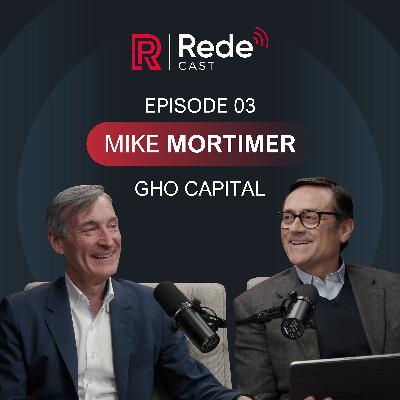
Mike Mortimer is Co-Founder and Managing Partner of GHO Capital, Europe's leading specialist investor in healthcare. Founded in 2014 with partners Alan MacKay and Andrea Ponti, GHO has grown from a first time fund of €660 million to a fourth fund of €2.5 billion, with €9 billion in AUM and a team of 75+ professionals spanning biopharma, medtech, health tech and life science tools. Scott and Mike go back to GHO's debut fundraise, making this a particularly candid conversation about what it really takes to build a specialist firm that endures.In this episode, Mike traces the founding vision behind GHO, built on the conviction that healthcare was a global endeavour being served by firms thinking locally. We explore how GHO navigated a global pandemic, the current wave of regulatory and geopolitical uncertainty, and why Mike believes sustained profitable growth is the only strategy that holds up regardless of what the market throws at you. Mike also shares a remarkably honest take on people decisions, succession planning and what he would tell his fund one self today.Key themes from this conversation:Why GHO saw a global opportunity others were missing in 2014How the pandemic tested and ultimately validated their investment philosophyThe role of technical expertise and deep networks in winning founder trustBuilding a we culture not a me culture across 18 nationalitiesWhy GHO deliberately stays in the mid market and sells to the big guys rather than competing with themSuccession planning done right, transparency with LPs and building a firm that outlives its foundersThe people decision Mike wishes he had made fasterRedeCast Legal DisclaimerThe information discussed in this podcast is for general information purposes only and does not constitute financial advice, investment recommendation, invitation or inducement to engage in investment activity or an offer to buy or sell any financial product. The views expressed are those of the speakers as at the time of the recording and do not necessarily reflect those of Rede Partners or the firm employing the guest speaker (Guest) or any of their respective affiliates. The information discussed, including any forward-looking statements, should not be relied upon for any purpose and listeners should seek independent professional advice before making any investment decisions. References to specific companies or products are for illustrative purposes only and do not constitute an endorsement or recommendation. None of the content should be copied, distributed or reproduced.Past performance, where indicated, is not a guarantee or reliable indicator of future results. Any references to past performance, track records, or investment returns are for illustrative purposes only. Actual results may differ materially from any projections, estimates, or implied performance discussed.Rede Partners is engaged by its clients to market their funds and the firm employing the Guest and/or its affiliates is or has been a client of Rede. In the U.S. Rede Partners operates through its wholly owned subsidiary, Rede Partners Americas LLC, which is a registered broker-dealer with the Securities and Exchange Commission and a member of the Financial Industry Regulatory Authority, Inc. Rede is not a current advisory client or fund investor of its client funds, although its partners and employees themselves invest in client funds via a pooled vehicle established for such purpose which may have negotiated beneficial economic terms in connection therewith (e.g., reduced or no management fees and/or carried interest). For providing its services, Rede is entitled to cash compensation paid by the client rather than the client fund. Rede has a significant economic incentive to solicit investors to commit capital to their clients’ funds, resulting in a material conflict of interest on its part.No compensation has been received by Rede Partners in connection with the Guest’s participation in this recording and the views discussed herein do not constitute an endorsement or testimonial of Guest, its employer or its private funds.The information contained in the Podcast is believed to be accurate as of the date of publication and will not be updated or supplemented to reflect subsequent events.

Comments

Download from Google Play

Download from App Store
 United States