


 Claim Ownership
India Tech Report
Subscribed: 0Played: 0
Subscribe

© Hari Arakali
Description
This is a podcast dedicated to chronicling and supporting the rise of India's deep tech and climate tech startup ecosystems. One conversation at a time.
indiatechreport.substack.com
indiatechreport.substack.com
0 Episodes
Reverse
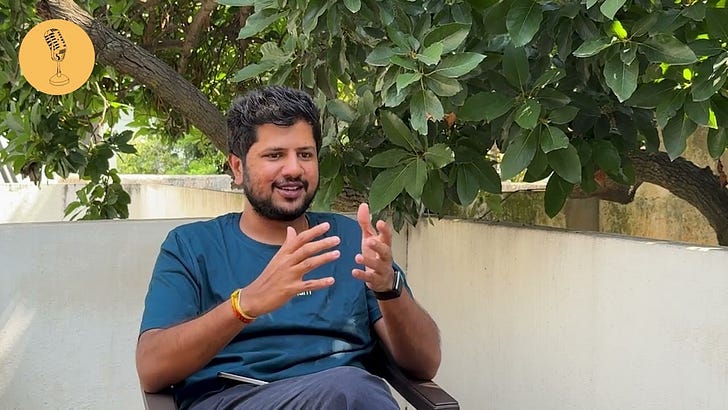
In this episode, Siddhanth Jayaram, founder and CEO of Equilibrium, unpacks how the venture will scale to a full-stack carbon removal platform provider to millions of farmers in India.After five years in venture capital at Kalaari Capital, Siddhanth set out to channel technology and finance into climate action with a startup called Climes, and Equilibrium was spun off in 2024 to focus on the voluntary carbon markets, building a transparent monitoring, reporting, and verification platform.Today, Equilibrium bridges Fortune 500 net-zero budgets with high-integrity projects across India, Siddhanth says. Its portfolio pairs nature-based initiatives — including regenerative agriculture, agroforestry, and mangroves — with engineered biochar created from agricultural residues and feedstocks comprising invasive species of plants.Backed by a proprietary digital MRV platform that takes in satellite data and taps the power of artificial intelligence, Equilibrium verifies every ton removed while passing as much as 70 percent of credit revenue directly to smallholder farmers.In this conversation, Siddhanth unpacks carbon credit pricing, explains how soil amendments improve crop yields, and shares why digital tracking is critical for market trust. He also outlines Equilibrium's roadmap to reach millions of farmers in the Global South.Chapters(02:45) What Equilibrium does and its core mission (03:39) From venture investing at Kalaari Capital to climate tech (09:40) Why Equilibrium evolved into a full-stack platform(14:05) Building a portfolio across nature-based and engineered removals(20:21) Turning agricultural residues into biochar and soil amendments (25:06) Solving the market integrity crisis with digital MRV (28:30) Project implementation, registry verification, and farmer payouts (41:51) Explaining carbon credit pricing through a consumer brand pyramid(47:57) Scaling to millions of farmers across India and the Global South(55:53) Envisioning the open carbon stack as a digital public goodRelated post This is a public episode. If you would like to discuss this with other subscribers or get access to bonus episodes, visit indiatechreport.substack.com
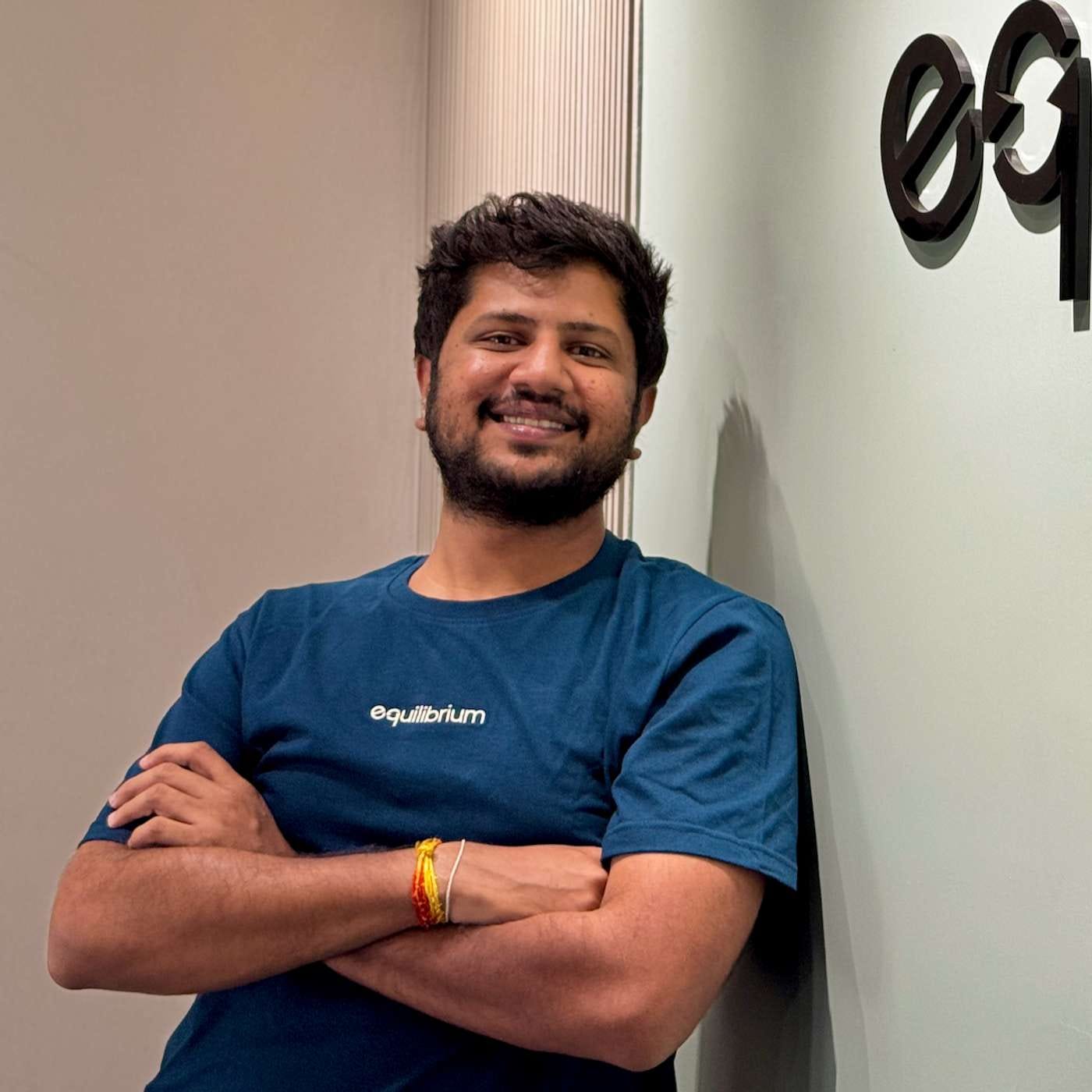
In the next episode of Conversations at India Tech Report, catch an interview with Siddhanth Jayaram, founder and CEO of Equilibrium, a “full-stack” carbon credits company that specialises in biochar-based carbon removal and ecological restoration, focusing on India’s farmers and agro-forestry efforts. Siddhanth, who started out with a degree in industrial engineering, and spent several years in venture investing switched to climate tech entrepreneurship himself. Equilibrium, which is in its fourth year, is backed by investors such as Kalaari Capital, Avaana Capital, and Peak XV Partners. The company has also developed a proprietary digital monitoring, reporting, and verification (DMRV) software that enterprises such as FMCG companies can use to support their decarbonisation efforts. In the coming years, Siddhanth aspires to go from the 30,000 or so farmers Equilibrium has touched thus far to millions of growers, helping them adopt solutions that will make their lands more climate-change resilient, improve yield and raise their earnings through the sale of carbon credits resulting from their sustainable agricultural efforts. Catch the full conversation on Thursday, Oct. 15, right here or wherever you get your podcasts. Here’s a 2-minute preview, with Siddhanth offering a consumer-brands analogy to describe the carbon credits hierarchy. This is a public episode. If you would like to discuss this with other subscribers or get access to bonus episodes, visit indiatechreport.substack.com

In this episode, I’m joined by Amir Khan, Managing General Partner at MARL 5G Accelerator and founder of StudioK. Amir shares his personal journey from growing up in a lower-middle-class family in Agra, with dreams of becoming a pilot, but discovering his true aptitude lay in finance, which he studied at San Francisco State University, and went on to co-founding LendTech, which eventually led to his becoming a noted early stage tech investor.He talks about why long-term societal transformation relies on deep tech backed by science and engineering, rather than chasing quick software profits. That latter path is increasingly fraught with risks, something that all VCs are afraid of, Amir points out, with the widespread availability of AI tools such as Claude Code, making the task of picking a software founder more difficult.Amir breaks down the original core verticals behind MARL — Mobility, Autonomy, Robotics, and Logistics — and unpacks his views on the opportunity for Indian entrepreneurs in the transition from 2D text models to 3D physical AI and robotics. He favours a 75/25 capital strategy for India’s tech ecosystem, where investments in long-term strategic deep tech areas must compete with the imperative of creating immediate jobs for our millions of youth.We also talk about StudioK, an all-expenses-paid founder residency in Bengaluru for very early stage startups that Amir has recently opened, where some of the first startups are working on areas including space tech, physical AI and even AI-led hedge funds focused on the Indian capital markets.The world is beginning to take notice of India’s deep tech startups, and our funding bottlenecks will ease, he says, while recommending that entrepreneurs are best served by embracing the Indian culture of frugality. Tune in for an insightful conversation on bridging Silicon Valley and India’s emerging deep tech landscape. #vc #deeptech #startup #india Amir Khanhttps://amirkhan.me/Chapters(03:39) From Agra to San Francisco: Amir's journey into finance and entrepreneurship.(06:40) Beyond software hype: Founding MARL 5G Accelerator for deep tech.(14:55) The democratisation of software and the return of hardware.(19:17) Moving to physical AI and a 75/25 strategy for ecosystem capital.(24:21) Launching StudioK: An all-expenses-paid founder residency in Bengaluru.(40:27) Overcoming Series A funding bottlenecks with a frugal mentality.(49:59) Lessons from the Verifone founder on impact and life philosophy.(58:10) Scaling StudioK globally across emerging markets. This is a public episode. If you would like to discuss this with other subscribers or get access to bonus episodes, visit indiatechreport.substack.com

How can entrepreneurs in India tap opportunities in the next generation of physical AI and robotics? Amir Khan, early-stage VC investor and founder of the MARL 5G Accelerator points to why moving beyond 2D text models to 3D physical AI requires specialised vision training and data labelling infrastructure.From India’s perspective, tackling the challenge of creating large numbers of jobs for our youth while also investing in deep tech, Amir is in favour of a 75/25 capital allocation approach. Put 75 percent of resources into avenues such labelling services, generating immediate capital and employment and invest 25 percent to fund long-term breakthroughs in deep engineering, science, and robotics, he says.Amir recently opened StudioK, a residential all-expenses-paid space for tech entrepreneurs, in Bengaluru. Catch our full conversation on Friday, Sep. 18 right here or wherever you get your podcast. Here’s a 2-minute preview. #preview #startup #vc #deeptech Amir Khanhttps://amirkhan.me/ This is a public episode. If you would like to discuss this with other subscribers or get access to bonus episodes, visit indiatechreport.substack.com
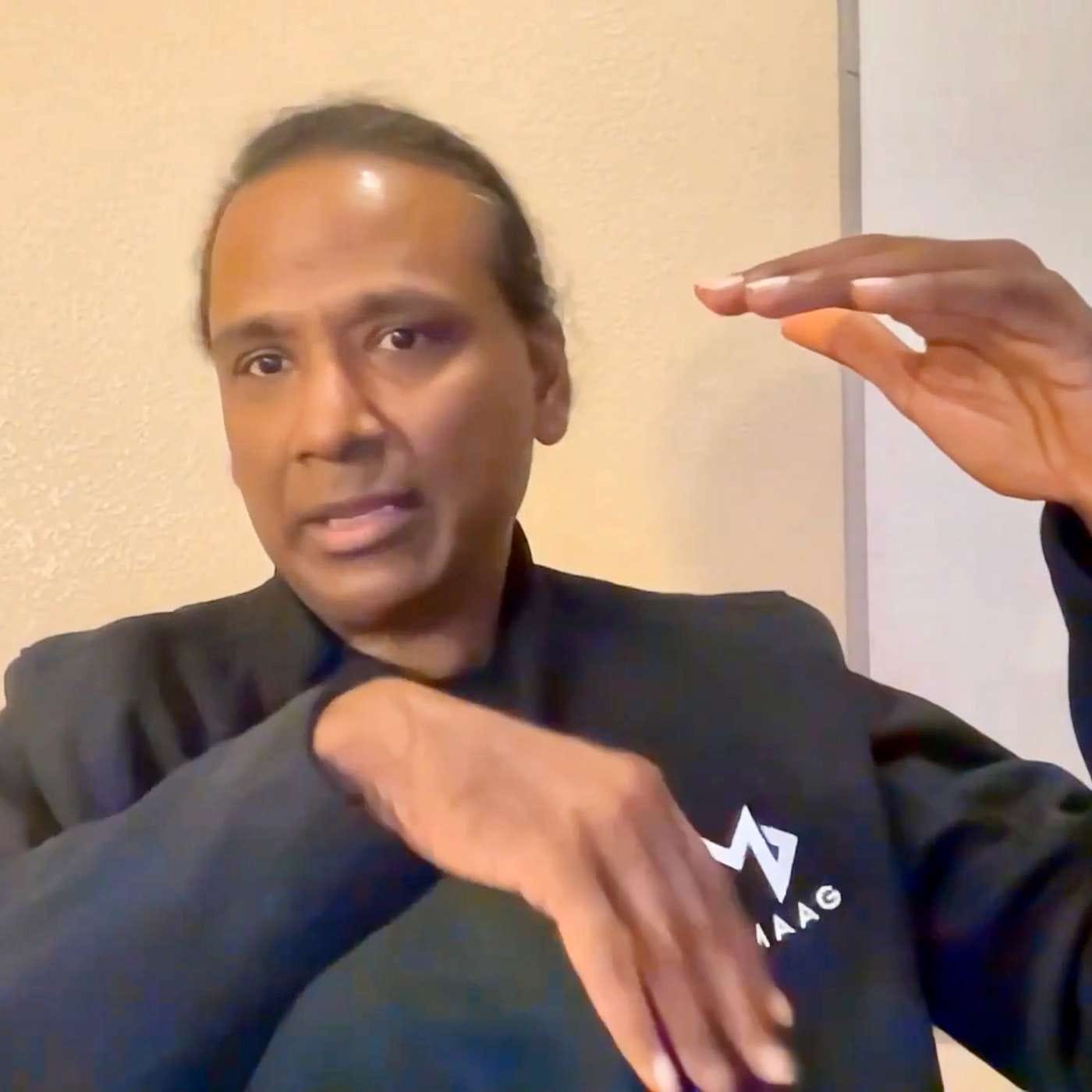
In this episode, Satish Padmanabhan, co-founder and CEO of DIMAAG, unpacks his company’s innovations for the critical power infrastructure shift needed to sustain the AI revolution.Satish is a genuine serial entrepreneur, with DIMAAG being his seventh venture and also his “longest job” as he jokes. The company’s evolution goes from a smart factory quality control platform that verified 220 million disk actuators monthly to designing electric tractors to heavy-duty electrification.Satish teamed up with Tesla veteran Ian Wright to start DIMAAG and they have notched up deep intellectual property in the areas including thermal management.Today, DIMAAG is tapping its expertise to offer solutions such as ZettaWatt, an innovative 800V DC platform, that reduces disruptions as AI data centres connected to power grids become increasingly power hungry, driven by surging AI chip power density.We also dive into Satish’s views on the physical scalability limits of Large Language Models (LLMs) with current solutions, why hard, unglamorous engineering is making a massive comeback, and his insights into how global investors have begun to take notice of India’s deep tech opportunities. #ConversationsChapters(02:33) The accidental transition from quality control to electric tractors(07:53) Leveraging high-voltage EV technology for the data center power bottleneck(12:56) How immersion cooling prevents battery thermal runaway in continuous operations(17:04) Why gigawatt-scale data centers are causing severe grid oscillations(22:25) Solving power oscillations on the DC side for 99.7 percent efficiency(35:12) The physical limits of scaling large language models(44:02) Building a vertical stack hardware ecosystem between Silicon Valley and India(57:34) The entrepreneurial drive to build products that stand the test of time This is a public episode. If you would like to discuss this with other subscribers or get access to bonus episodes, visit indiatechreport.substack.com
Comments

Download from Google Play

Download from App Store
 United States