


 Claim Ownership
AI Thoughtmakers
Subscribed: 0Played: 0
Subscribe

© 2026 GeekyAnts
Description
AI ThoughtMakers is a leadership-driven podcast featuring conversations with CTOs, founders, engineering leaders, and AI experts discussing real-world AI adoption, scalable engineering, product innovation, and the future of technology.
31 Episodes
Reverse
A single line of code change shouldn’t take three meetings and two weeks. When it does, your architecture has an expiry problem.In this episode of AI Thoughtmakers, we sit down with Janardan, Principal Software Engineer at Oracle and formerly at Gojek, for one of the most practically useful conversations we’ve had about software architecture — not the theoretical kind, but the kind that either lets your company grow or quietly holds it back.From the warning signs that your architecture is about to become a bottleneck, to the hidden costs nobody puts on a balance sheet, to the one thing every CTO should do this quarter if they think their system is already struggling — this is the conversation for anyone building something that needs to last.Key topics covered:The two warning signs that your architecture has expired — before it breaksWhy a technically excellent architecture can still be wrong for your businessWhy early-stage startups shouldn’t think about scale before their first screen works reliablyDecisions that are hard to reverse, and why the data model is a key exampleWhat happens when a team of 5 becomes 100 — and the hidden growth tax of coordinationThree questions to ask before entering a new marketThe biggest architectural mistake companies make as they grow — and the one thing CTOs should do this quarterIf you’re a founder, CTO, or engineering leader trying to figure out whether your current architecture will hold up or whether it’s quietly becoming the thing that slows you down, this episode is the one to watch.Subscribe for more conversations on AI, engineering, product development, and the future of software.Connect with Janardhan: / janardhany Connect with Prem: / premgoswami
What does it take for an AI agent to complete a task, recover from failure, and know when to ask for human approval?In this episode of AI Thoughtmakers, we sit down with Madhumitha, Senior Machine Learning Engineer at SolarWinds. She spends her days testing whether AI systems are safe and reliable, and she explains what it takes to build AI that can think, take action, and handle problems.Using simple stories, from a student with a laptop to a refund on a food delivery app, she shows why a good-sounding answer is not the same as a finished task, and why leaders should test before they trust.Key topics covered:How LLMs, AI agents, and guardrails fit togetherHow agents use feedback to adjust their next attemptHandling failed refunds and preventing duplicate paymentsDeciding which actions need human approvalEvaluating tool calls, task outcomes, and missing informationTesting vendor claims beyond a prepared demoMeasuring failures and accounting for human review costsThe story behind Index Zero, her app for learning data structures and algorithmsFor founders and engineering leaders evaluating AI agents, this conversation offers practical questions about reliability, oversight, and production readiness.Subscribe for more conversations on AI, engineering, product development, and the future of software.Connect with Madhumitha:LinkedIn - / madhumithakolkar Connect with Prem: LinkedIn - / premgoswami
Your engineers are busy. AI is helping them move faster. So why isn't the product reaching customers on time?In this episode of AI Thoughtmakers, we sit down with Santhosh, Tech Lead at Nagarro, for a practical conversation about the 90-day engineering reset. It's a short, focused period where a team keeps delivering what it has committed to, finds out where the time is really going, and fixes it.Santhosh shares how his team discovered a critical problem. Every dashboard was green and every sprint looked successful. Then leadership asked what customers would actually get by the end of the quarter, and nobody could answer. That one question started the reset.His big finding is simple. AI made writing code much faster, but code reviews and unclear release dates became the new slowdown.Key topics covered:What a 90-day engineering reset is, and why it isn't a way of blaming the teamThe car service idea: keep driving while you find the problemsThe one question to ask every engineer: what wastes your time every week?Why code reviews can become the next engineering bottleneck as AI-generated code increases.How to identify hidden blockers that traditional sprint metrics and green dashboards fail to reveal.Whether you can still ship during a reset: keep customer commitments and pause lower-priority workWhy the first thing to stop is saying yes to new workWhy changing priorities every few weeks hurts team focusWhat a decision log is and why it prevents the same debate twiceSimple habits to keep after the reset: fewer meetings and a weekly priority checkIf you lead an engineering team, run a startup, or feel your team is busy but not delivering, this episode gives you simple steps to start this week.Subscribe to GeekyAnts for more conversations on AI, software engineering, engineering leadership, product development, and the future of software.Connect with Santhosh:LinkedIn - / santhosh-murthy-bk Connect with Prem:LinkedIn - / premgoswami
Your dashboard is green. Your team is shipping. But is anyone actually better off?In this episode of AI Thoughtmakers, we sit down with Yasuhiro, co-founder of a Japanese AI startup based in Osaka, for an honest conversation about how to tell whether an engineering team is truly healthy. AI can now produce code faster than ever, but more code doesn't mean better software.Yasuhiro builds products for large Japanese companies, where quality expectations are extremely high. His team is spread across Japan and India, and he shares the simple habits that keep them focused on results instead of just staying busy.Key topics covered:• How a healthy team differs from one that only looks busy• The one question he asks any engineering team: what is 100% quality, and what are your acceptance criteria?• Why every task needs clear, measurable acceptance criteria before work starts• How his team uses an AI agent to check that every task has them• Why a green dashboard can still hide real problems• What to do when everything is urgent, and why changing priorities without explaining them frustrates teams• AI is great at doing the work. Deciding what the goal should be is a leadership job• How to spot when too much knowledge sits with just one or two leaders• Why his team meets in person every quarter in Bangalore or Tokyo• How to build a team around people's strengths• Two kinds of team goals: effort (how much was done) and outcome (what changed for the customer), reviewed together every quarter• Why numbers are only a signal, and why you should always ask the person behind themIf you lead an engineering team, run a startup, or want a clearer way to judge whether your team is doing well, this episode gives you simple things you can try this week.Subscribe for more conversations on AI, engineering, product development, and the future of software.Connect with Yasuhiro: / yasuhiro-nose-63845369 Connect with Prem: / premgoswami
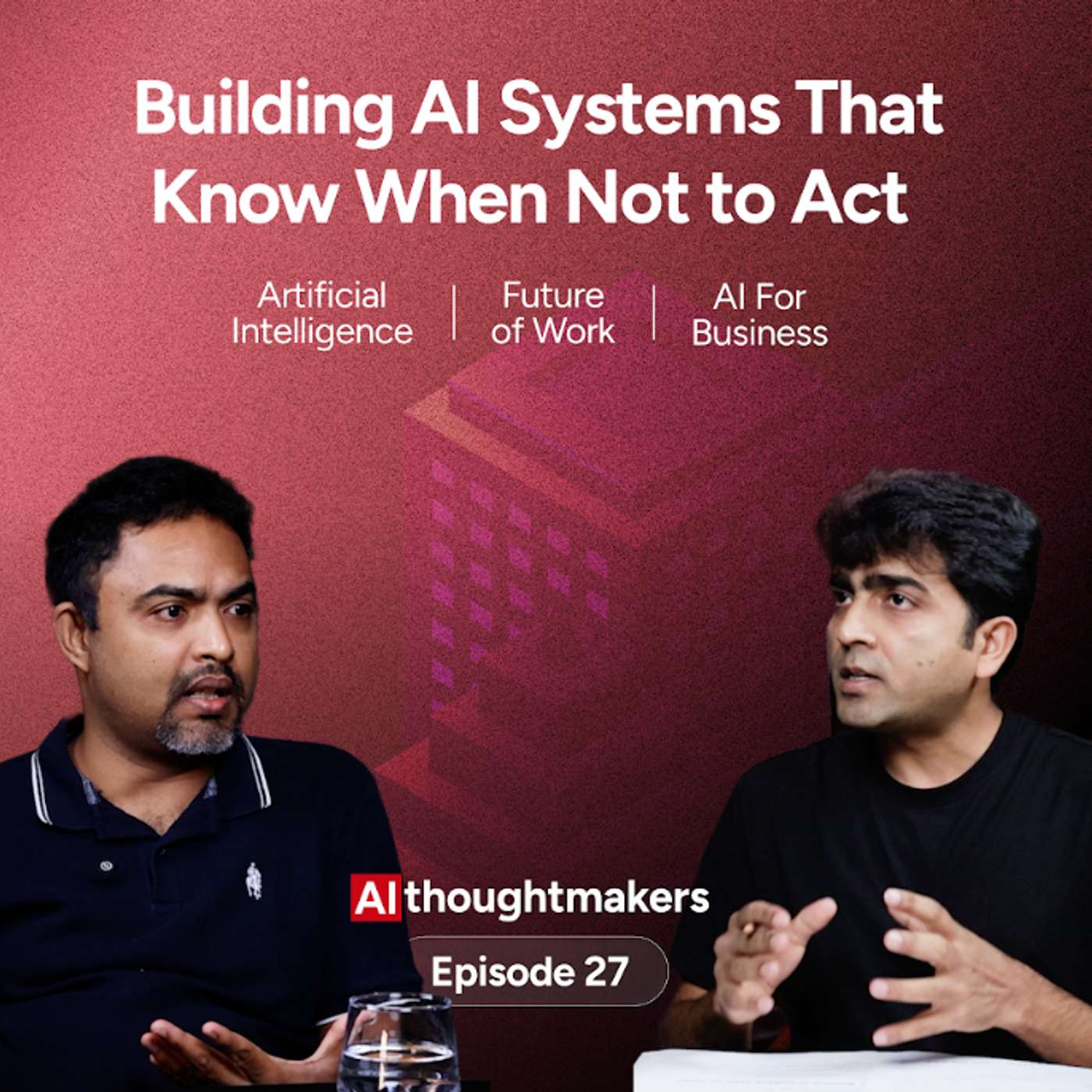
We spend a lot of time teaching AI agents how to act: when to send the email, when to fix the pipeline, when to write the code. But what if the smartest thing an agent can do is stop?In this episode of AI Thoughtmakers, we sit down with Manu Muraleedharan, Solution Architect at ServerlessGuru, for a practical conversation on building AI systems that know when not to act. With 20+ years in software and the last two focused on AI, Manu shares what his team learned after putting agents into DevOps and data pipelines.From the three questions that decide whether an agent should act, to why loan approvals and hiring decisions need a human in the loop, this is the episode for engineers, founders, and leaders who are giving AI agents more responsibility every month.Key topics covered:Why knowing when not to act is critical for AI agentsWhy AI is trained to finish tasks, and why that makes "stop" hard to learnWhen an AI agent should ask a human for helpHow AI confidence scores can influence autonomous decisionsThe three checks an AI agent should make before taking action: risk, reversibility, and confidenceHow to limit risk by giving agents only the access they need, with a checking layer in betweenWhy AI could do 90% of the work while humans own the final 10%Should AI approve loans? Why the answer is "it depends"Why "more decisions made" is a bad way to measure an AI agentThe one kind of decision AI should never makeWhy you should welcome an agent that says noWhere AI agents are heading over the next five yearsIf you're building with AI agents, managing a team that relies on them, or deciding how much freedom to give them, this episode gives you a clear way to think about it.Subscribe for more conversations on AI, engineering, product development, and the future of software.Connect with Manu:LinkedIn - / manumuraleedharan Connect with Prem:LinkedIn - / premgoswami

Comments

Download from Google Play

Download from App Store
 United States