


The Dov Baron Show
Subscribed: 7,413Played: 68,357
Subscribe


© Dov Baron International
Description
The Dov Baron Show: Unmasking Hidden Truths for High-Profile Deep Thinkers
This isn't just another leadership podcast. It's a high-stakes exploration into the minds of those shaping the world... minus the usual talking points.
Every episode is a raw, unscripted collaboration between my guest and me, Dov Baron, as we dive into the truths no one else dares to ask about. My guests? Often unknown to the general public but absolute titans in their fields—the kind of people high-profile leaders turn to when they need an edge.
Here, generous curiosity meets bold conversation. Expect a mix of playful irreverence and deep intellectual firepower that forces you to rethink what you thought you knew.
If you're the kind of leader who craves depth over soundbites and insight over ego-stroking, hit subscribe—because this is where real thinkers come to sharpen their edge.
1198 Episodes
Reverse
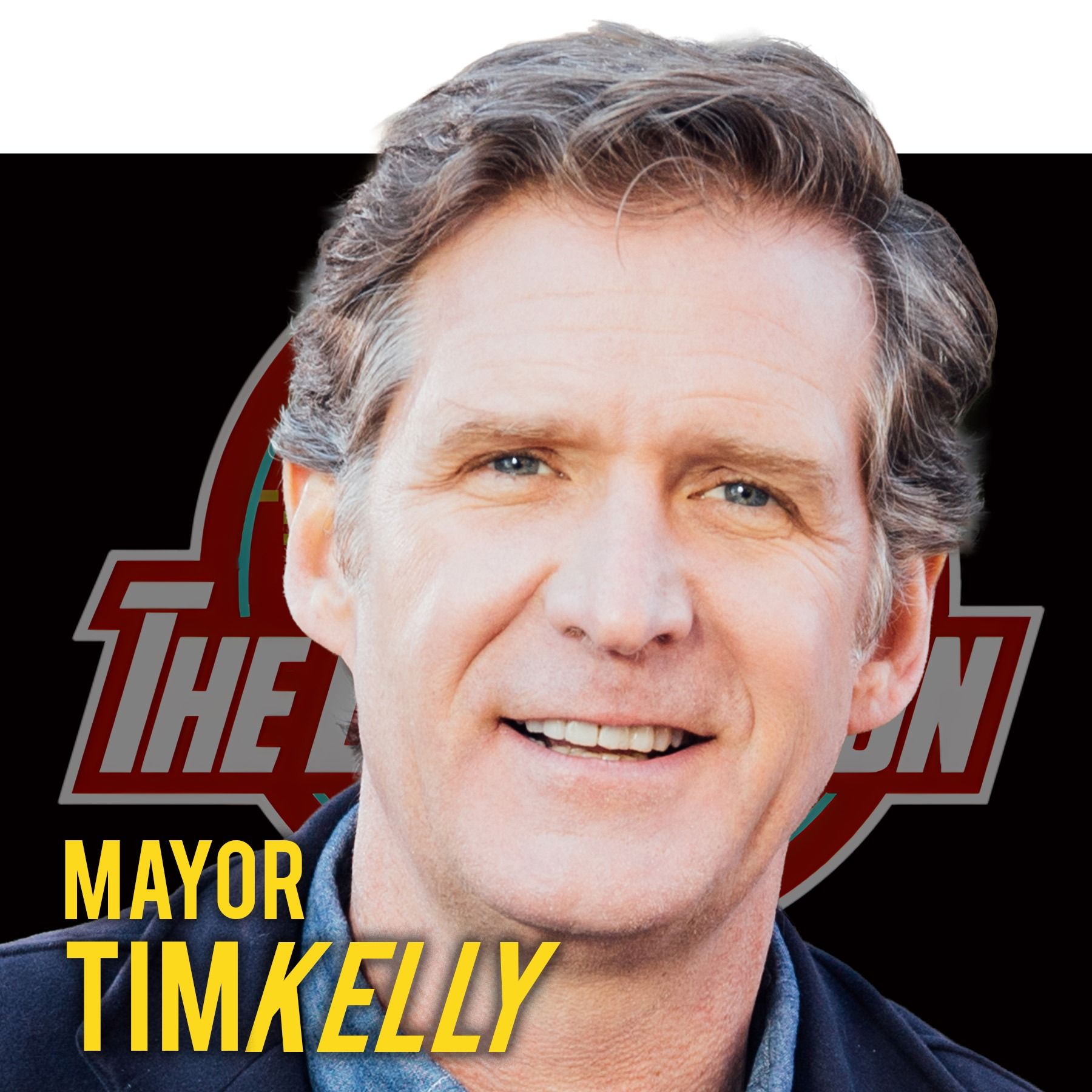
Tim Kelly never ran for student council. He never ran for anything. By any measure, he had a full life: expanded his family's business, co-founded Chattanooga's professional soccer team, served on boards, taught as an adjunct professor, and chaired his city's community foundation.Then he read a book. The book made an argument he could not refute. The argument pointed to a place. The place was his own city. He ran for mayor of Chattanooga in 2021. He won. He was re-elected in 2025 with eighty-five percent of the vote. In this conversation, Mayor Kelly names on record something that will land hard with any high performer who has quietly talked themselves out of the bigger role: that self-deprecation taken too far is just another form of vanity. That hiding your light is not humility; it is avoidance dressed up to look more virtuous than the people who want the spotlight.He also names the specific book that stopped him cold, the Columbia therapy couch that reshaped how he leads, the father whose military-era desk sign read "the beatings will continue until morale improves," the marriage that dissolved during the job, the AI pilot that moved 79% of residents toward renewed belief in democratic dialogue, and the question he is still carrying about compassion fatigue and the people he drives past on the way to work.CONNECT WITH TIM KELLYWebsite: https://chattanooga.govMayor newsletter: mayor.chattanooga.govSocial: @MayorTimKellyWORK WITH DOVWebsite: https://DovBaron.comApply to work with Dov. Email: [email protected] Please rate, review, and subscribe wherever you listen.
Connect with Dov Baron:https://[email protected], review, and send this episode to the most thoughtful builder you know. That is how the algorithm finds the people who still ask why. Hosted by Simplecast, an AdsWizz company. See pcm.adswizz.com for information about our collection and use of personal data for advertising.

Dov opens this one with a confession. Years ago, broke and working a gas line in Western Australia, he knocked on a friend's door and was met by Kate, a woman he'd quietly written off as "not much there." He dreaded the conversation. Four hours later, having discovered she was a painter of genuine brilliance, he understood he hadn't been stupid about her. He'd been something worse. He'd been incurious.That small, uncomfortable story is the doorway into the practice Dov believes is worth crossing toward, the thing he promised at the open gate of Episode 3. He calls it generous curiosity: not the everyday, self-serving kind that fires on its own to scratch an itch, but the courage to ask, to listen, and to love. Giving and receiving in the same breath.The episode moves across four scales of the same move. The neuroscience, where curiosity switches on the brain's reward circuit and, as Matthias Gruber's work shows, measurably improves how we learn. The diagnosis, where binary thinking is cheap, outrage is profitable, and we've been trained to crave the fast-food hit of a quick judgment over the slow meal of understanding. The Architecture of Meaning, where a judgment becomes an emotion, becomes a behavior, becomes a culture, and curiosity is the one tool that intervenes upstream, at the meaning itself. And history, where Nelson Mandela walked out of twenty-seven years in a cell curious about the people who had caged him, and built a Truth and Reconciliation Commission instead of a bonfire.Dov is clear about what generous curiosity is not: not agreement, not niceness, not tolerating the intolerable. It asks only that you give up the comfort of being certain before you've looked. Simple, as he says, but not easy.The gate is still open. This is what's worth crossing toward.Episode highlights (curiosity gaps)- The four-second judgment Dov made about Kate, and the four hours that demolished it- Why your brain treats a good question like a treat, and a quick judgment like a drug- The fast food of outrage versus the slow meal of understanding- How a judgment hardens into an emotion, a behavior, and finally a culture- Why Mandela learned the language of his jailers- What generous curiosity is NOT, so you can't dismiss it as being niceTopics covered (keyword paragraph, indexed by Apple search)Topics in this episode include generous curiosity, the neuroscience of curiosity and the brain's reward system, Matthias Gruber's curiosity and learning research, snap judgment and cognitive bias, confirmation bias, binary thinking and political polarization, the attention economy and outrage, Emotional Meaning Architecture, how meaning drives emotion and behavior, Nelson Mandela and the Truth and Reconciliation Commission, the Parents Circle-Families Forum, reconciliation and forgiveness, psychological safety, and love as a form of intelligence.About the showThe Polymathic Perspective is a documentary-style solo podcast where Dov Baron examines the emotional logic beneath power, culture, identity, and meaning, drawing on psychology, neuroscience, history, and philosophy. Each episode holds rigorous science and honest interpretation in the same frame, and tells you which is which. If your curiosity has been called a liability, this is the show that proves it is your greatest asset.About Dov BaronDov Baron is the creator of two proprietary frameworks, the Emotional Meaning Architecture and the Emotional Source Code, which underpin his advisory work with founders and senior executives. He is a Vancouver-based leadership speaker, executive advisor, and author. He’s the author of The Art of Belonging: Why Conformity Silences Genius and How to Unleash It, and he hosts The Dov Baron Show, a guest-interview program on leadership and meaning, alongside The Polymathic Perspective.Connect with DovWebsite: https://DovBaron.com The Dov Baron Show (interview podcast): https://DovBaron.com/podcastsBook, The Art of Belonging: [link]Thank you for subscribing. Please rate, review, and share If this one made you look twice at someone you'd filed away, the most useful thing you can do is send it to one person who needs to hear it. Word of mouth is how documentary podcasts grow. Follow the show so Episode 5, the last of the season, finds you as it drops. Further reading citationsGruber, M. J., Gelman, B. D., & Ranganath, C. (2014). States of Curiosity Modulate Hippocampus-Dependent Learning via the Dopaminergic Circuit. Neuron, 84(2), 486-496. https://doi.org/10.1016/j.neuron.2014.08.060de Berker, A. O., et al. (2016). Computations of uncertainty mediate acute stress responses in humans. Nature Communications, 7, 10996. https://doi.org/10.1038/ncomms10996The Parents Circle-Families Forum. https://en.wikipedia.org/wiki/The_Parents_Circle-Families_ForumNelson Mandela Foundation. https://www.nelsonmandela.orgBaron, D. (2024). A Manifesto for World Peace: Generous Curiosity. [dovbaron.com link]On "love as intelligence": the psychological-safety research of Amy Edmondson (Harvard) is the closest evidence base; note it frames safety as freedom to take interpersonal risk, which is adjacent to, not identical with, "feeling cared for." [see checklist]
Connect with Dov Baron:https://[email protected], review, and send this episode to the most thoughtful builder you know. That is how the algorithm finds the people who still ask why. Hosted by Simplecast, an AdsWizz company. See pcm.adswizz.com for information about our collection and use of personal data for advertising.

For people in agency collapse, he argues, returning to the wound can deepen it. The move that saved his life was not processing the past. It was one small act of agency in the present. He dragged himself to the ocean and caught a wave. That single decision began reversing what medicine had written off.Kotler is the author of seventeen books, twelve of them bestsellers, with three Pulitzer Prize nominations. He is the executive director of the Flow Research Collective, a nonprofit democratizing access to peak performance states. He is a Distinguished Research Fellow at Florida Atlantic University. His latest book, We Are As Gods, was released in April 2026.In this conversation, he reveals what AI is quietly erasing from the human brain, nine to twelve cognitive capacities already degrading in heavy users, including the capacity to enter flow at all. He makes the case that ADHD is not a disorder but an evolutionary adaptation. He argues that if you survived a difficult childhood and have ADHD, you are not broken. You are built for exactly the world we are entering.Topics include: why revisiting trauma can reinforce agency collapse; the single agentic decision that reverses the spiral; ADHD as evolutionary advantage; the Paradise Paradox and why abundance creates misery; what AI is erasing from your brain right now; Flow for the Many and why peak performance can no longer belong only to elite athletes; the 90-day protocol most people abandon too early; and the moment on a surfboard that changed everything.Connect with Steven Kotler: https://stevenkotler.com Instagram: @stevenkotler https://flowresearchcollective.comAbout Dov BaronDov Baron is the creator of two proprietary frameworks, the Emotional Meaning Architecture and the Emotional Source Code, which underpin his advisory work with founders and senior executives. He is a Vancouver-based leadership speaker, executive advisor, and author. He’s the author of The Art of Belonging: Why Conformity Silences Genius and How to Unleash It, and he hosts The Dov Baron Show, a guest-interview program on leadership and meaning, alongside The Polymathic Perspective.LinksWebsite: https://DovBaron.comThe Dov Baron Show (interviews): https://DovBaron.com/podcastsApply to Work with Dov: [email protected]: The Art of BelongingPlease rate, review, and subscribe wherever you listen.#FlowState #PerformanceNeuroscience #DovBaronShow #EmotionalSourceCode #StevenKotler
Connect with Dov Baron:https://[email protected], review, and send this episode to the most thoughtful builder you know. That is how the algorithm finds the people who still ask why. Hosted by Simplecast, an AdsWizz company. See pcm.adswizz.com for information about our collection and use of personal data for advertising.

If something bad were coming your way, would you rather be told or not know? Your honest answer reveals the force now shaping entire nations- and you, more than you think.This is the historical heart of Season 4. The claim: everything shifts when the old meaning collapses. That is the gate. But the gate opening guarantees nothing. What comes through is whatever is coherent and ready, crossed to only by those brave enough to sit in the uncertainty long enough to reach it. Sometimes that is hope. Sometimes it is a monster. Same gate, opposite outcomes.The science is the hinge. The brain is a prediction machine, and the one thing it cannot bear is not knowing what comes next. A 2016 study found that uncertainty is more stressful than a known bad outcome. So when the ground goes, the frightened brain grabs any certainty to stop the fear, a scapegoat, a strongman, or a mythic golden age (the real engine behind every "make it great again," and the question nobody asks: great, when exactly?).Then the proof, across scales: the Berlin Wall, where hope came through because something coherent was ready; the Arab Spring, where the gate slammed shut because nothing better was; the internet, which promised a global town square and delivered outrage and loneliness; and the hopeful alternative that was ready in the sixties, embodied in Kennedy and King, and was shot.And then us, right now, standing at a very big gate, with democracy wobbling, AI arriving, and the old meanings crumbling under our feet.The gate is open. It will not stay open forever. The question is what we cross toward.Episode highlights - The lab finding: why not knowing is more stressful than knowing it will hurt- The nostalgia trap behind every "make it great again," and the question nobody asks- Why the Berlin Wall and the Arab Spring looked identical and ended opposite- The internet's broken promise, and the hopeful alternative that got shot- The three certainties a frightened brain grabs instead of crossing the voidAbout the showThe Polymathic Perspective is a documentary-style solo podcast where Dov Baron examines the emotional logic beneath power, culture, identity, and meaning, drawing on psychology, neuroscience, history, and philosophy. Each episode holds rigorous science and honest interpretation in the same frame, and tells you which is which. If your curiosity has been called a liability, this is the show that proves it is your greatest asset.About Dov BaronDov Baron is a Vancouver-based leadership speaker, executive advisor, and author. He is the author of The Art of Belonging: How Conformity Silences Genius and How to Unleash It, and the creator of two proprietary frameworks, the Emotional Source Code and Emotional Meaning Architecture, which underpin his advisory work with founders and senior executives. Alongside The Polymathic Perspective, he hosts The Dov Baron Show, a guest-interview program on leadership and meaning.Connect with DovLinksWebsite: https://DovBaron.comThe Dov Baron Show (interviews): https://DovBaron.com/podcastsBook, The Art of Belonging: Subscribe, and Episode 4 walks through the open gate.===============================================================Subscribe, rate, share (soft CTA)If this one made you think, the most useful thing you can do is send it to one person who's standing at a gate of their own. Word of mouth is how documentary podcasts grow. Follow the show so Episode 4, where Dov names the thing worth crossing toward, finds you as it drops.Citations:de Berker, A. O., et al. (2016). Computations of uncertainty mediate acute stress responses in humans. Nature Communications, 7, 10996. https://doi.org/10.1038/ncomms10996Boym, S. (2001). The Future of Nostalgia. New York: Basic Books. (On restorative vs reflective nostalgia.)Sedikides, C., & Wildschut, T. (University of Southampton). Research program on nostalgia as a meaning and existential resource under threat.
Connect with Dov Baron:https://[email protected], review, and send this episode to the most thoughtful builder you know. That is how the algorithm finds the people who still ask why. Hosted by Simplecast, an AdsWizz company. See pcm.adswizz.com for information about our collection and use of personal data for advertising.
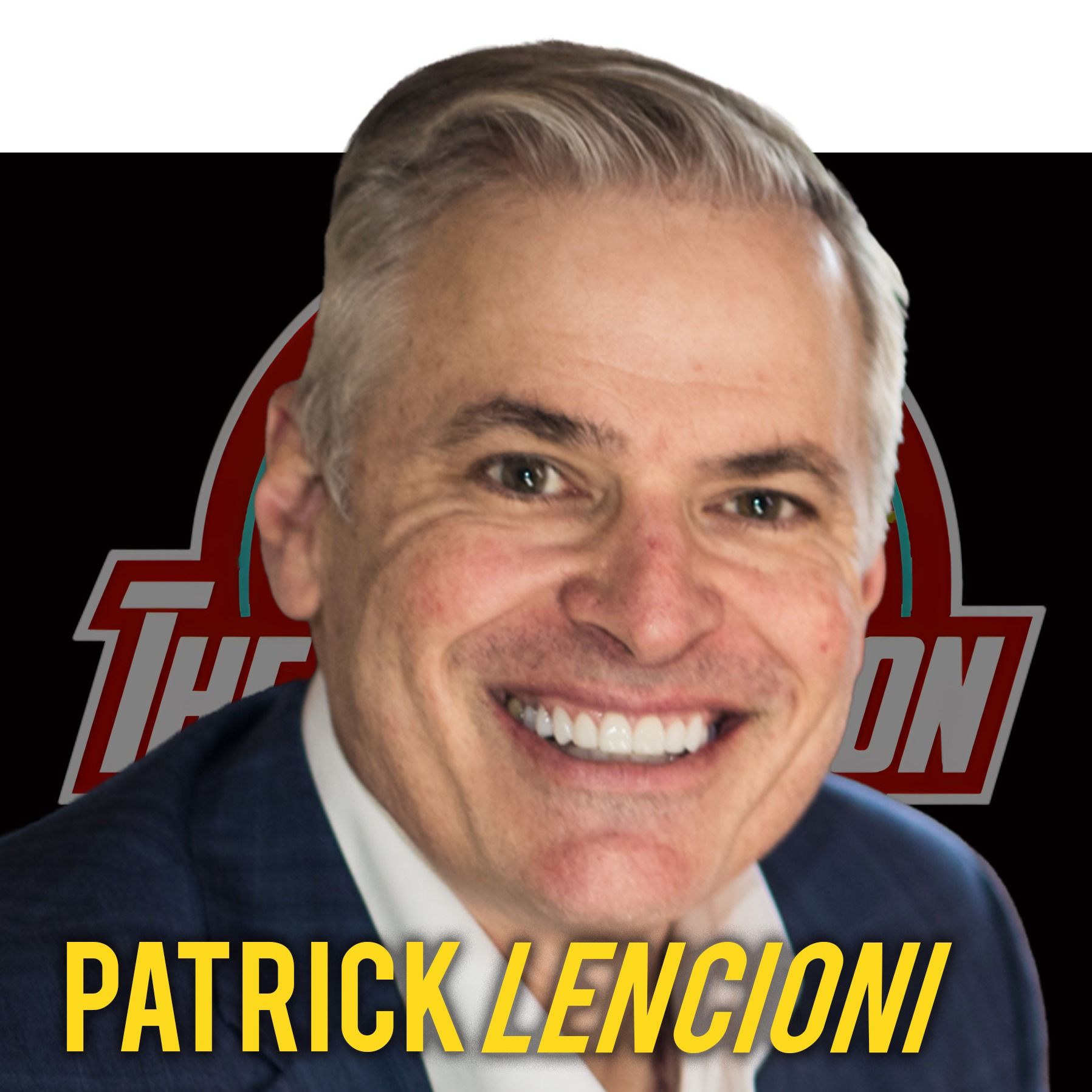
Patrick Lencioni is the founder of The Table Group and the author of fourteen books, including The Five Dysfunctions of a Team, which has never left print since 2002 and sits in the library of virtually every serious leadership program in the world. The Wall Street Journal has called him one of the most sought-after business speakers in America.He has also publicly said that worldly achievement is no different than addiction. That you can get addicted to it in the same way people get addicted to anything else that promises fulfillment and delivers only the need for more. He said it because he has felt it himself.In this conversation, Patrick names on record the fear of failing that drove him for forty-five years, the wound most high achievers mistake for their superpower, the dimension of his life most business hosts consistently ignore, the specific therapy work that finally let him set down what he had been carrying since Bakersfield, and the framework that emerged from his own discovery that he had spent decades doing things that were draining the joy out of his life. Topics include: Why the wound that made you successful will never make you fulfilled; Tiger Woods and the peace success cannot buy; the identity you built at age eight to survive; the Working Genius framework and the job that set Patrick up to fail out of college; and what Patrick himself still finds hardest to say out loud.Connect with Patrick: https://tablegroup.com | https://workinggenius.com (use code DOV for 20% off the assessment)Work with Dov: https://dovbaron.com | [email protected] Please rate, review, and subscribe wherever you listen.
Connect with Dov Baron:https://[email protected], review, and send this episode to the most thoughtful builder you know. That is how the algorithm finds the people who still ask why. Hosted by Simplecast, an AdsWizz company. See pcm.adswizz.com for information about our collection and use of personal data for advertising.

Comments

Download from Google Play

Download from App Store
 United States