


 Claim Ownership
Vertical
Subscribed: 0Played: 0
Subscribe

© Matt Knight
Description
"Fundings, VCs, News, Podcasts, Data, and (brief) analysis on the technology changing our built world"
verticaltech.substack.com
35 Episodes
Reverse
Series: Into the FIRE.Show NotesSummary: Into the FIRE with Stephanie Gubiotti, Advisor - Foundation for Innovation in Real Estate (FIRE). Matt and Stephanie reflect on a fall of campus visits and discuss what’s next for their foundation’s academic efforts. They describe an “arms race” for AI in real estate, arguing students need basic AI fluency to be employable, while many real estate programs still lag in teaching it.Special mentions* Company: Claude Code, Gemini, Copilot.* People: Steve Weikal, Larry Liu. * Universities: MIT, Notre Dame, Columbia, Stanford, Georgia Tech, CU Boulder.Transcript(Disclaimer: Please be advised that this transcript may contain unintentionally confusing, inaccurate, and/or amusing transcription errors.)[00:00:00]Matt Knight: Hey, everyone. Thanks for tuning in again. This is an episode of Into the Fire, where Steph and I talk a little bit about fall reflections and a lot of our academic stuff, and maybe it’s a little more insight into why we do it, how we do it, where it’s going, whatnot. But I won’t g- I won’t spoil it before you hear it.So listen to this last, probably, maybe one more episode of Into the Fire before we shut it down. Hope you enjoy itMatt Knight: All right, Steph. Now that it’s behind us, a fun fall full of things in schools and academia, I think it makes sense for us to reflect and talk back about what’s happened and what’s coming up in our minds that we see on the foundation side.Stephanie Gubiotti: Let’s do it. [00:01:00]Matt Knight: You wanna go first or am I up first?Stephanie Gubiotti: Go ahead.Matt Knight: Yeah, my take is going to all these schools and meeting with all these students and professors and faculty and all that I think there’s an arms race for AI in real estate, people trying to have academic programs around technology. Because my theory is these students have recognized that if they’re not at least AI conversant, they’re essentially unemployable.I don’t know anybody hiring young people that don’t know basics of AI unless you view it differently with the people you talk toStephanie Gubiotti: I agree. I think that there’s definitely a lot of thought put into AI in the real estate space in the industry. We’re, I think working towards developing that further with campuses because, something you and I have talked about this that we’ve discovered is a lot of the real estate schools aren’t actually teaching AI to these students.So us coming in and having to have some of those conversations [00:02:00] and connect some of those dots ultimately helps these students immenselyMatt Knight: And shout out to Steve Weikel who helped us kick this off a few years ago with MIT who I know you and I both think very highly of. But he was out in front of this with him and, his partner James over there at MIT thinking about curriculum, and they have things in the Center for Real Estate there, and they have a class, and I was at that class.And, there are schools that have it, and maybe that’s worth mentioning is I know of classes at MIT, Notre Dame, Columbia, and Stanford that are existing real estate technology and innovation classes. Georgia Tech is building one. And so to your point on curriculum, there’s, there are people building things, but that’s not the same as being world leading, being forward-thinking, being robust, having depth.Because one of the things I’ve heard is if you have real estate professors that have been tenured for 20 years, they may not be the right people to teach about AI, right? Which is not good or bad. [00:03:00] That’s not a slight on anybody in particular. It’s just more of a how would they know the day-to-day machinations of what Cloud code can do versus Gemini versus Copilot or whatever.And so there’s this seeming scramble i- in my friends in academia around how do we build this given that our current infrastructure might not be well supported to create curriculum around AI. Does that make sense?Stephanie Gubiotti: It does. And absolutely shout out Steve. He is fantastic. I wish that more schools were doing that.I think as we have had conversations and looked to grow our academia program is we’re having conversations with potential schools. That’s definitely something that a lot of campuses have identified as a skill gap that they’re looking to, you know, try to revamp some of their AI and education, specifically in the real estate space.There’s some in some finance classes, but it’s, a little bit [00:04:00] outside of the standard real estate programming. So I think that’s been really interesting for me having these conversations and seeing what they do at MIT specifically and, how others can utilize something like that at other universities ‘cause, real estate’s gonna continue to grow and scale over time.Matt Knight: And one of the ones I forgot to mention, but I remembered while you were talking, is CU Boulder. I know Julietta over there has been building a program with them. And I just, as we rattle off five schools and you and I could talk about 10 more, like it just seems universal that anybody that has a real estate program wants to have a real estate AI program.And I think that’s what’s interesting for- the foundation going forward is how do we help with that? Because I view us as a neutral third party that’s I don’t have a venture portfolio to pitch you, and I’m not recruiting you for a company. I just want more brilliant young people in my industry. And that’s what they want.They want students to get jobs. And we glossed over it, but if you would hire a student [00:05:00] right now, if you were back in ownership and management, you, would you hire a student that didn’t know Claude Code and hadn’t built anything with AI? I, that seems like a stretch to me.Stephanie Gubiotti: No, I wouldn’t.I think that it’s important to have those skills. It’s also really important to have appropriate context and that demands some experience, right? There’s so many things in the AI real estate space specifically that are custom-built. So in order to custom-build something, you need to deeply understand not only the problem, but solutions and how your solution is the thing that’s going to solve something.Operators are really tired of... speak specifically about the multifamily and the SFR space, is, they’re tired of having to really train these technology companies about what it is that they do in order for the technology company to develop the software. So students, they’re new to the [00:06:00] workforce.They need to have a lot of context and information in order to develop these platforms and that, demands leaders like yourself and myself to support them so that we can have technology that is ready for market and is ready to be deployed.Matt Knight: Yeah, I don’t know that I’d call myself a leader, but I’m definitely loud.And, and- ... what’s interesting about that is there’s nuance you’re getting into where, to your point, what does a 19-year-old know about commercial property, right? Pro- probably unless they come from a real estate family, the answer’s probably nothing, right? And so you end up bifurcating sort of the undergrad versus the grad curriculum here, which is another nuance we’ve been digging into.But a- again I don’t wanna self-promote what we do, but I just, I don’t see a lot of people who are neutral third parties that are like, “Yeah, if you need speakers, if you need resources, if you want help with a hackathon, if you wanna meet startups, this is what we do.” I j- it just seems like tailor-made for a foundation,Stephanie Gubiotti: I agree, and I think that kinda leads me into [00:07:00] the hackathon concept that we’ve been having some conversations about with multiple campuses trying to develop some use cases and scenarios in which there can be technology applied to for these students to come up with some different ideas. So there’s lots of different ways that we could do it, and we’re still trying to shape all of that.But I think it’s really important for stu… This is a public episode. If you'd like to discuss this with other subscribers or get access to bonus episodes, visit verticaltech.substack.com/subscribe
Series: Vertical + The Real Estate HaystackShow NotesSummaryDan Cohen - The Real Estate HaystackDan and Matt return to the concept of “Emperor for a day”. Wishes for CoStar, the ultimate furniture/ fit-out apps for Resi and Multifamily, December planning, how high rates have made transactions and refinancing difficult, aaaand are we seeing early signs of multifamily distress?Special mentions* Company: CoStar, ClaudeAI, Replit, Cursor, Havenly, Appfolio, Facebook, FDIC, Transcript(Disclaimer: Please be advised that this transcript may contain unintentionally confusing, inaccurate, and/or amusing transcription errors.)[00:00:00]Matt Knight: Hey guys, one more episode here with Dan before we end the year. We did our fun jaunt down the Emperor for a Day thread, which is fun, and talked about a few other things on the economy. So enjoy this time with Dan Cohen for one last time in 2026.All right, Dan. Welcome back, brother. Glad to have you here. And, GreatDan Cohen: to be here.Matt Knight: I think maybe what we do to transition from our last two is let’s add a couple of logs on the fire of the emperor for a day thing, and then maybe we can transition to a couple other things. Does that sound all right?Dan Cohen: Yeah, it sounds great. I’m coming in hot today, Matt. I prepared.Matt Knight: Bring it. Yeah. Let’s do it.Dan Cohen: Okay. So one emperor for a day. I have a new role, I’ve been in about a year, where I’m the CIO for a family office that’s based in LA, and we do a ton of research on all kinds of acquisition opportunities, partnership opportunities.And so we make a lot of use of CoStar. [00:01:00] And as I’m also processing our AI strategies and understanding what other family offices do for it I really... I... If I were emperor for a day, I would wave the wand, and I would get CoStar into wherever we are, the 21st century. Because I land on CoStar’s page, and I see no fewer than 25 different opportunities to click on a word that takes me into a whole domain in their website.And then there’s another drop-down menu, and then there’s all kinds of search bars and other things. And what I need is for CoStar to respond to a prompt, now that we’re all getting good at that, to give me the information packaged in the way that I want. I wanna know, we have properties in Commerce here in California.I wanna know what’s happening in that sub-market, what’s happened recently, and I want good comps for our specific properties in Commerce. And then I’d like to know, hey, if we knocked this thing down today and built a new one, what kind of rents would we get? And these [00:02:00] are all research-related questions that CoStar is eminently capable of answering, but it would take a very long time, even for the skilled CoStar researchers, to put together the package that is the answers to the questions that I want.And so I just, I w- I would wave the wand and have CoStar become really AI, much more AI native if possible. I... Is that... How does that land with you? Have you-- Are you a CoStar user?Matt Knight: Oh, I have been, and I’ve been cold called by them asking me my lease comps and I’ve, I’m maybe the only person in America that told them the truth, but I, I...Yeah, actionable, high quality, AI native data. Would you want CoStar to do it? Or would you rather a startup come in and live in their blind spot?Dan Cohen: I just think CoStar has so much existing great data. I’m saying this because I like CoStar a lot. And when, y- they’re-- they combine not just the market level data related to [00:03:00] lease comps, but...and sale comps, but so much good economic analysis, and they do forecasting, which, say what you will it takes some courage to do forecasting, and you have to have economists and other, f- finance people to stand behind that in some way. And so it’s just got such a wealth of data in one place that it seems s- like such a natural use for AI, and you have such a natural customer base to make use of it instead of these, these unending number of menus and click-throughs and, i’m kinda s- I’m kinda-- I look at it and, it’s funny how overnight your perspective on something that you’ve been using for a while can change pretty radically, and I looked at it late last week and I was like, “God, this feels so antiquated all of a sudden.” And that, that’s a testament to the, how fast AI’s come on.But now it just looks old when it didn’t, a year agoMatt Knight: Amen. I actually, I have one for AI if you want me to sprinkle one in here.Dan Cohen: Yeah. Oh my God, Emperor, go ahead.Matt Knight: I wish [00:04:00] everybody in real estate would have a proactive December. Don’t pretend like you’re busy between Thanksgiving and New Year’s, ‘cause you’re not.You can let your FP&A team go do year-end reportings and maybe let your acquisitions team go close out whatever deals, right? But like December is time for planning. Take the month of December and go plan what you should and should not build internally with AI. It will save you and your vendors and your team thousands of hours, right?Understand what you are capable of building, what you should building, what you should be building, and what you absolutely should not ever build. Because I think half the problems I have with I can just build this with Claude over the weekend.” And I’m like, “Great. Building it is one-eighth of the problem.”Updating it and debugging it and making it integrated and putting it in with people’s financial and selling it and, getting a u- an intuitive user interface. That’s technology, right? So to me, having people be proactive about a list. Ma-make a list. “Here’s things I can and should build in-house with [00:05:00] Replit and Cursor and Claude and whatever, and here’s the things that we will never build and we need 30 part- third-party vendors for.”That, that would be my... That’s my Christmas wish. How about that?Dan Cohen: Yeah. I like it, and I really feel like I can understand why it doesn’t exist. My lens is obviously from the ownership perspective. But y- when you said that, it made me think back to this restaurant owner that I know who always says when she’s opening a new restaurant, the, the plan is simple.Plan the work and work the plan. And this idea of planning the work, which is that’s what you do in an operationally, not necessarily intensive, but a sort of normal operating company. Real estate owner, ownership is not really an operating company, and so you don’t easily fold into “Hey, we gotta make, we gotta think about this strategically and roll things out in an orderly way.And we’re gonna be better off at the end of the year if we do that.” So I can kinda understand the cultural divide that keeps what you’re saying, like why you have to wish for it instead of it being a [00:06:00] natural- That’s right. That’s right ... part of the process. I’m emperor. You gotta do it.Report back- You can just every- ... to me at that point. Get in line, everybody. Yep. Everyone. So I like it. All right, I got one more that I like. This is a very real to Dan, w-wish that I have. I’m fifty-two, and we’ve had, my wife and I and our family, we’ve lived in Denver in a home that we owned for many years.But my kids are newly out of the house, and my wife and I are moving to Los Angeles. And so we actually are going back into the renter pool, and we just rented an apartment here. And so I’m experiencing, as a consumer, all this prop tech that this management company for this apartment building has.And a lot of it’s great, and it’s just... It works very well. They’ve got the processes down. But one thing that I wish for, and maybe, Matt, this exists and you’ll tell me and I will have squandered a wish. But, we have furniture in our house. Everybody has some furniture that they have.I wanna be able to take my phone and basically walk through my house and take a movie a video of all the furniture and [00:07:00] have a piece of software log each piece of furniture and its rough dimensions… This is a public episode. If you'd like to discuss this with other subscribers or get access to bonus episodes, visit verticaltech.substack.com/subscribe
Series: How I Am Building ThisShow NotesSummary: Hosted by Matt Knight, this series is back by popular demand - How I Am Building This. Episode #2 features Andrea Taylor, Founder & CEO - Livsee. Andrea opens up about her path from innovation roles at Morgan Properties, Waterton Residential, and Village Green to launching Livsee in 2025, to address rising rents, soft occupancy, and leasing labor challenges.Check out Episode #1 with Dana Dunford here.Special mentions* Company: Livsee, Morgan Properties, Waterton Residential, Village Green, RealPage, Claude, Astro.Transcript(Disclaimer: Please be advised that this transcript may contain unintentionally confusing, inaccurate, and/or amusing transcription errors.)[00:00:00]Matt Knight: Hey guys, this is a new episode to share with you with Andrea Taylor. I really like her perspective coming from Morgan Properties and now to her own startup. She’s in AI, she’s fundraising. So just thought it would be a unique perspective, especially if you’re a founder out there, a female founder.She’s really got good insights on making the transition from the owner to the startup side. So hope you enjoy this time with Andrea, and, let me know how you like it.Matt Knight: All right. Thanks for being here, friend. I appreciate you taking the time. Glad to have you with us, and I try to do intros, but I’m so bad at them, that I would love for you, if you don’t mind, do yours, and I’ll and then we’ll dig into what you’re building and how it’s going. I’d love to start with either Morgan [00:01:00] or before Morgan, but kinda walk us through kinda how you got to where you are, if you don’t mind.Andrea Taylor: Sounds good. First, thanks for having me, Matt. Excited to be on the pod. My name is Andrea Taylor. I am the founder and CEO of Livsi. We are an agentic AI platform that follows up with prospects and renters, but then we operationalize the chat data into pricing and OPEX, CapEx recommendations, operational recommendations for our multifamily partners which yields more leases, right?Actually listening to what’s happening on the ground. Prior to starting this company, I was with Morgan Properties for several years doing innovation, ancillary services. Prior to that, I was with a group called Waterton Residential out of Chicago. And prior to that, I was with a company called Village Green.And all three roles were similar in the sense that we were doing innovation, figuring out how do we roll out complicated technology into these and fairly risk-averse environments, right? How do you get 100,000 smart locks on these [00:02:00] doors without making sure they don’t all open at the same time, or that the batteries don’t you know, all melt or whatever it is, right?You’re always planning for for the, for risk. And I think that’s really fair because people live in these buildings, and you wanna make sure that they’re well taken care of, which is why I think the industry is so great and I wanted to stay because there’s something really civic about it. So that’s my background, my story, and then in 2025, I launched Livsi because I saw a problem, which is occupancy was down, rents were up, and how could we solve that using the AI that we now all have at our fingertips?Matt Knight: I didn’t know you were at Waterton. That’s, I forgot that.Andrea Taylor: I am.Matt Knight: Tell me about what spurred the move. Before we get into, I kinda wanna get into how the company works and what Livesey is specifically. But tell me what, you’re at Morgan, everybody everywhere is pitching you on all this tech, and, “My smart locks are better than that guy’s smart locks.”Tell us what kind of got you to the founder side of the table.Andrea Taylor: Yeah. I think I was always [00:03:00] fairly entrepreneurial or, at that time, intrapreneurial trying new things and looking at the ROI, against those things. And really what spurred it was a couple of things. One is that I was vetting startups frequently and seeing what was on the market and how technology worked.And, I think something that I wanted to bring to my startup or something I would try to impart on others is that you don’t wanna solve too small of a problem, right? Even if there’s value in it, if it’s just 1% or one iota of the value, then it’s not always worth worth the rollout. And I think people can underestimate how well multifamily does, right?These properties, no matter what asset class they’re in, they can be very lucrative assets. And you really wanna make sure that it’s not an oversimplified solution. That was one thing, and then I was studying the landscape. But when it really hit me was end of ‘24 when I realized rent was outpacing inflation 37%.There was a lot of scrutiny from the regulatory [00:04:00] powers that be around rent. And, even at Morgan Properties, I was balancing, millions of dollars in amenity fees versus, much more than that in rent, and just trying to figure out what is this magic number. And so- What I noticed is there were a couple things that we could do, which was reach out and maximize, reach out to all of our leads, right?You’ve got leasing, you’ve got, for many years it’s been about a 50% turnover in leasing. So even if you’re training and incentivizing and all of that, people still leave. And there’s there’s a lot of layers to this, right? When you look at a labor shortage, does somebody wanna be a leasing agent and deal with the problems that come with just inherently of someone, of dealing with 300 units, like a dog bite from a, to a fire, to a pipe breaking or whatever that is, or do you wanna drive Uber, right?And so you have to think about, competing for talent for in that kind of environment. So meet AI, right? Like now we can finally utilize that. And we’ve got customers where maybe we’re reaching out to 1,000 people and 900 answer, [00:05:00] or 900 don’t answer, 100 do. That’s great. Let AI reach out to 900 people that don’t care, and let’s surface the great ones, to the site team.So I say that we’re not really cutting down on on headcount as much as they’re, we’re providing more value and really optimizing them. And the second piece was that when you look at rent, when rent’s going up you can see concessions all over the place. There was just an article that came out that rent went up 2% nationally, yet 40% of apartments, and this is today, not when I started the company, are offering concessions.So how do we balance that? And that’s when Livvi’s proprietary pricing models come into place. So really what, I was entrepreneurial anyway, and then I came into my own with that, and I was really inspired to start Livvi when I was looking at the balance between rent and occupancyMatt Knight: Okay.Lots of interesting concepts in there, but one of the ones I wanna start with was you talked about problem sizing, and I don’t wanna, I don’t wanna put words in your mouth, but is it fair to say that having done Morgan and having done Waterton, you had a sense for what a big [00:06:00] problem is? Maybe if you’re coming from tech or Apple or Tesla or some tech company and you’re getting into, you got upset with how your leasing was, your apartment, you’re gonna be a prop tech founder, right?You probably know the tech stuff well, but you may not know the real estate operations and hierarchy as well. So is that... am I reaching too far to say that your time at Morgan and Waterton and Village Green sort of taught you hierarchy of problems and what a big problem actually looks like?Andrea Taylor: Absolutely. 100% that’s true. And I think multifamily is incredibly nuanced, right? Because you’ve got re- renters, people who live in the homes. You’ve got people who work at these buildings. You’ve got an entire corporate structure that’s figuring out do they do value add to their buying and selling buildings.And there’s a lot of layers to it, and it’s not always this, product A will make you more money, so you should buy it. That’s oversimplifi- oversimplifying it. ‘Cause if … This is a public episode. If you'd like to discuss this with other subscribers or get access to bonus episodes, visit verticaltech.substack.com/subscribe
Series: Into the FIRE.Show NotesSummary: Into the FIRE with Stephanie Gubiotti, Advisor - Foundation for Innovation in Real Estate (FIRE) and Daniel French, CEO - Northpoint, on Dan’s journey, scaling Northpoint, SFR vs. Multifamily, Small BTR, and AI’s Future in Property Management.Special mentions* Company: Northpoint, ResProp Management, AppFolio, Zillow, PARCL, Hello Data.* Events: Blueprint.Transcript(Disclaimer: Please be advised that this transcript may contain unintentionally confusing, inaccurate, and/or amusing transcription errors.)[00:00:00]Stephanie Gubiotti: All right. Welcome to another episode of Into the FIRE. I’m Stephanie Gubiotti with Foundation for Innovation in Real Estate. And today I’m super excited, we have Dan French, the CEO of Northpoint Asset Management, and a member of FIRE’s emerging manager community. So at FIRE when we talk about our emerging managers, or we refer to them as EMs, we’re talking about the next generation of real estate owners, investors, developers, fund managers who are building and scaling investment platforms.And our community brings together these leaders to build relationships, share ideas, create connection across the broader real estate system. And Dan brings a really interesting perspective to our community. His career spans real estate investment, operations, and property management, and he has recently stepped into the CEO role at Northpoint.So today we’re gonna talk about Dan’s career journey and what he and the team are building and what he’s seeing across the industry.So [00:01:00] Dan, thank you so much for being here with me.Daniel French: Stephanie, my pleasure. A huge fan of you of your work of Matt Knights, what you guys are achieving at FIRE.I think it’s great for the the industry and great for people that you’re serving. So it’s... Yeah, it’s great to be here.Stephanie Gubiotti: Awesome. So tell me a little bit about how you first got into real estate and what ultimately got you in with Northpoint.Daniel French: Yeah. That was 20 years ago in my brain I’m still 28, but I’m 45 now.So I was investing in in real estate with a small partnership two people that I actually grew up with, and that was about 2004, 2005. We started buying our first small assets. At that time, I thought it was really a big... It was a big deal, for me coming from a working class background.We’re... So we’re buying duplexes and four-unit buildings, and before you knew it, we had 25 or 30 of those. And and we had our... A little portfolio. And so it was going well until it went really [00:02:00] badly, and that was that was the GFC, right? The Great Recession hit us super hard.We’re almost like the poster children for everything you shouldn’t do. Yeah. And so learned a lot of lessons. Learned how to pick your market, learned how to be more downside protected, learned about leverage in real estate and how that can really go against you very fast. Just learned how to operate.So slept in vacant homes after. We wound up taking over property management of those deals because our property managers were so ill-equipped. They, the reporting was terrible. The accounting and bookkeeping was nonexistent. There was fraud and stealing and, just a lot of just bad behavior.So we wound up taking things right over. So I know real estate from the ground up, leasing maintenance, vendor coordination CapEx construction work, handling all that. Even standing for eviction, which is a really sad reality of of property management, residential property management, but it does happen.So I’ve done all that in my past and the... Let me fast-forward here, Stephanie, but the, the, the happier part of my career [00:03:00] came afterward, and that was in 2011. I joined a team as a partner. So it was a, a vertically integrated shop that bought $2 billion of assets across Florida and Texas, and that was that was a really great trade.Obviously I was on the right side of the great financial crisis, and we did very well for our investors and for our our partners, and it was super fun to, to help build that team. I became CEO in 2016 and was there till ‘24 We did a lot of different things. We actually pivoted that business and turned it into a third-party operation as well, where we had massive growth and great success.And then it was just time for me to have a, what I call a glorious exit, and I went on a journey, and that’s when I first really started speaking to you as well, and getting a friendship started with you, and I was exploring different things. And one of those things was private equity. The attention that they were paying to the property management space was really intriguing to me.I think for far too long operations has had not really a seat at the table. And so now [00:04:00] with all this really huge, billion-dollar funds that are coming after the private e- the private equity groups that are coming after property management I really dove into that and sought to understand it and became an operating advisor with one of those groups.And that’s how I came to Northpoint was through my network. So Northpoint is private equity backed. And we’re, historically been a, a single-family rental property management business, but now we’re opening up to multifamily, BTR. And that’s a really long intro, Stephanie, so I’m gonna pause right there.But that is my entire background, and I hope that’s helpful for anyone who’s listening, and it frames it up a little bit for whichever way you wanna go.Stephanie Gubiotti: Yeah. That’s awesome. That’s awesome. So I know before we started recording on this, we were talking a little bit about the differences between single family and multifamily and what you’ve noticed.And really just overall, SFR, BTR, BDR, all of the things, right?Daniel French: Everything.Stephanie Gubiotti: Yeah. [00:05:00] Everything. So what’s one thing that one area has really gotten right that the other hasn’t? Do you see anything in the SFR space?Daniel French: I see a lot. One of the things that attracted me to SFR and I don’t wanna talk down to the folks in the SFR space.They’re amazing. They’re very warm. They welcomed me with with open arms. But in reality when we think of the professional management of it as an asset class and national scale, multifamily has decades of experience more, than SFR. So it’s been around as a professionally managed asset class for far longer.And SFR really emerged out of, the great financial crisis. So afterward in 2010 and going forward, you had the waypoints, the invitation homes, and the progress, and Amherst, and all these different groups that proved you can do it at national scale. But but what I see is that in multifamily the, the rigor from a financial reporting standpoint, at least in the third party space, is much [00:06:00] more disciplined.It’s more, much more well built out. Does that make sense? Like, how you report to owners the, the asset management work you have to do, the budgeting, the CapEx program you have to show. That’s much more... The expectation level’s way higher. Do you know what I mean?Stephanie Gubiotti: Yeah, totally. When you’re dealing with differences in, multifamily assets can be incredibly expensive and there can be a-Very large volume of investment going into that. And, when you’re talking SFR, it’s typically, just much lower much lower stakes, if you will if you’re just doing a one-offDaniel French: Yeah, exactly. Exactly right. And I look at it actually my mental model now is that there’s a B2B channel in SFR, and there’s a B2C channel, right?The B2C, business to consumer that’s really the retail channel when you serve a one-off investor that might own, let’s say, one to three properties. And oftentimes they don’t live near that property, [00:07:00] right? Think about someone who lives in, I don’t know, New York or Boston and has purchased a property in Columbus a single-family rental property.Oftentimes they’re like a cash flow investor, so as long as the asset’s… This is a public episode. If you'd like to discuss this with other subscribers or get access to bonus episodes, visit verticaltech.substack.com/subscribe
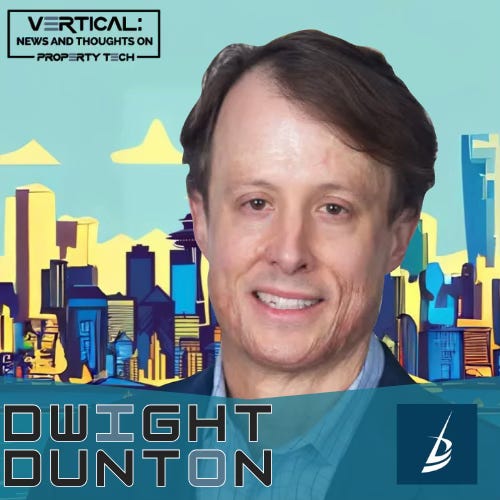
Series: The Alpha GPShow NotesSummary: A deep dive with Dwight Dunton of Bonaventure.Special mentions* Company: Fannie Mae, HUD, Verizon, AT&T, Comcast, Gemini, Grok, Claude, OpenAI, Amazon, Azure (Microsoft), and Google.* People: Eric Sharpe.Transcript(Disclaimer: Please be advised that this transcript may contain unintentionally confusing, inaccurate, and/or amusing transcription errors.)[00:00:00]Matt Knight: Hey guys, kicking off a new series here around innovative and interesting GPs or deal sponsors. People that are fundless sponsors or have a fund and are investing in property around the US and around the world really, that are doing things in a unique, innovative, or maybe just a paranoid way where they think AI’s gonna take their job.And so this first one, we’re gonna have Dwight from Bonaventure. He is in the DC area. Their portfolio, I’ll let him tell you about. But we don’t even talk about AI till two-thirds of the way into it. So just know we talk about lots of other stuff. But this is Dwight from Bonaventure talking about their take on innovation and tech strategy.Hope you enjoyMatt Knight: All [00:01:00] right, Dwight. Glad to have you here, man. Excited to get to know you a little better and have you on the podcast. Thank you for being here. And I think it’s always smart to start with where’d you come from? What is Bonaventure? How did it get started? How long have you guys been around? Give us the key stats, and then we can start chasing rabbits.Dwight Dunton: Yeah. Matt, so excited to be here. Thanks for the invitation. Bonaventure got started because we needed to solve a complex real estate problem. Our family was fortunate to own a piece of a building from the 1960s. Our partners became a huge REIT, and they one day in 1999 told us the property was in a C location and needed $5 million of capital improvements just to keep the lights on, and we didn’t have $5 million.And so that was the birth of Bonaventure, and the rest is historyMatt Knight: What’sDwight Dunton: that lead youMatt Knight: to now? I was gonna say, what’s the portfolio look likeDwight Dunton: and where- yeah. So that, over the last 25 years, what started off as helping one family, our family, has now grown to [00:02:00] about 500 families who are all trying to build long-term wealth.We help them. We have five platforms, about 400 employees, $3 billion of assets under management. So it’s go- grown a lot from that humble beginning.Matt Knight: And you say asset preservation, I think evergreen funds and REITs that are doing dividends. What’s the structure look like? It sounds like it started as a fundless sponsor, but I think you have REITs now.Walk us through if we were to give you capital, what doesDwight Dunton: that look like? Yeah. So I think our kind of investment thesis across all of our different products is that housing is broken in the United States, that where people want to live and the ability to produce housing are disconnected. And from there you have the real estate cycle and the economic cycle creating opportunities, and we seize those opportunities through a variety of different wrappers because we understand that each investor needs slightly different things.So that could be a single asset investment, that could be a development deal, that [00:03:00] could be an OZ fund, it could be, as you mentioned, a perpetual life REIT. We have a REIT that has about $1.3 billion of assets in it. And so again, it’s all about creating alignment around the economic opportunity and helping connect that capital to investors who are building for long-term wealth to afford their long-term dreams.Matt Knight: One of the things I’ve heard about you from our mutual friend Eric, is you have this ability to think from first principles. Like just because something was done one way doesn’t mean we have to do it that way. And so I’ve, one, I’m curious if you think of yourself and your firm that way, and then two, if so, give us an example of that, something that kind of other people may not do or just take for granted that you guys have reimagined.Dwight Dunton: Yeah. I think that’s a good description, but I don’t know that it started off that way. It was simply, I didn’t have any real estate experience when I started the firm, which is crazy to be 25 years old and buy a 378 unit apartment complex, convince Fannie Mae to lend me, I think it was 17 million, and let me start a property [00:04:00] management company.So I, I had no perspective on this is how we do it or you can’t do that because I had no experience. And we brought that forward, which is we challenged everything. When somebody says, “You can’t do that,” we’d really step back and ask why and really get to the root of it, and have found that so many industry conventions were brought about for one good reason, but then have been misapplied for years and years.And so for instance, we became one of the largest borrowers with HUD, and we would go to conferences and people say, “Why would you waste time with HUD? It takes so long.” It takes slightly longer, doesn’t take so long, and if you run it concurrently with your zoning and entitlements and getting your plans done and your permits, it actually adds no time whatsoever.And so the end result is most people have avoided HUD because it, quote, “takes too long.” We found it’s about the same amount of time, but we got these amazing outcomes, which are loans that have l- are gonna last for 40 years. [00:05:00] We reduced our interest rate risk. We had no personal guarantees. And so that’s a, just a simple example of we challenged the convention conventional wisdom of everybody that, quote, “knows what they’re doing in development” and said, “Avoid HUD at all costs.”Matt Knight: Yeah, I don’t think you know this about me. My first job out of college was lending HUD money, doing the 223and 221(4). So I was-Dwight Dunton: Ah.Matt Knight: I was baffled like you, where it’s like, “Look how cheap these rates are. Look at the amortization.” These are... This is great debt, and people are like, “Eh.” Yeah.Dwight Dunton: Well-Matt Knight: “Okay, whatever you want.”Dwight Dunton: And so I... Good for you. You get it. I think what I discovered, because I’m like, people are fairly rational. It seems overly convenient to say it’s too hard. What I figured out was that most people’s business plan in multifamily development is they build buildings, collect fees, and they collect lottery tickets, and those lottery tickets take the form of promotes, and the key is to scratch it off as quickly as possible to see if it has value.If it doesn’t, you move on to the next deal. [00:06:00] And HUD is not compatible with that because there’s the prepayment penalty for 10 years. And so if you’re in the business of collecting fees and lottery tickets, HUD is definitely not the ideal choice. And and that sounds really self-serving to say that to an LP of why you said, I won’t do a HUD loan,” but it sounds way more convenient to an LP to go, “Hey it just takes too long,” versus, “It’s not in the pr- the sponsor’s economic best interest.”That’s what I discovered as to why people have just continued to throw out this misunderstanding that it, quote, “takes too long.”Matt Knight: Yeah. I think that’s fair. And I think there’s another example you guys have of first principles where you were looking at tenants and their experience with internet service providers, and you guys have built something around that, correct?Dwight Dunton: Yeah. That is a great example. So I was walking one of our properties and, I walk behind the buildings, through the buildings. I wanna see everything. I just don’t want the tour that the staff has decided to prepare for the CEO ‘cause our staff [00:07:00] is awesome, and there’s always something that can be improved, and I wanna help discover that ‘cause they’re there every day, and they might miss something.So one day I was walking at one of our properties, and I saw the side of the… This is a public episode. If you'd like to discuss this with other subscribers or get access to bonus episodes, visit verticaltech.substack.com/subscribe

Comments

Download from Google Play

Download from App Store
 United States