


 Claim Ownership
Pathological Positivity
Subscribed: 376Played: 12,640
Subscribe

© 2026 Dr. Paul Jenkins · PathologicalPositivity.com
Description
Formerly Live On Purpose Radio.
Real psychology. Remarkable stories. A radically different way to live.
Think you know what positivity is? Think again. Pathological Positivity is a weekly podcast with psychologist and author Dr. Paul Jenkins. He challenges conventional thinking, explores the science of positivity, and talks with extraordinary people who put it into practice.
Each episode gives you one practical idea you can use the same day, from why you can stop waiting to feel motivated to how to stay positive through a hard week without pretending everything is fine. Episodes run about 15 to 30 minutes, and a new one comes out every Thursday.
Same show, same feed, same archive. Visit pathologicalpositivity.com to listen.
731 Episodes
Reverse
Dr. Paul Jenkins explains how to stay positive around negative people, especially during holiday family gatherings. He shares a practical four-step strategy for observing others' behavior without absorbing their negativity.
Want the framework behind this episode? Get The Positivity Model, free: https://pathologicalpositivity.com/go/positivity-model?m=notes&e=730
Get the free Positivity Power Pack, a short minibook, a workbook and guided audios from Dr. Paul: https://pathologicalpositivity.com/go/powerpack?m=notes&e=730
The episode walks through how we get emotionally hooked by personalizing others' comments and creating victim stories, and introduces the concept that feedback is information about its source. Dr. Paul teaches four steps: calm your brain, reframe the experience as an observer, take responsibility for your feelings, and create a hero story about how you choose to show up. Daily breathing exercises and meditations that support the calming practice are available on the Positives platform.
Dr. Paul challenges listeners to attend an upcoming family gathering and find a way to enjoy it regardless of what anyone else chooses to do. He frames this as a powerful psychological experiment in choosing your position and practicing resilience.
Chapters0:00 Staying positive around others1:18 Understanding emotional hooks3:57 Observing without absorbing6:32 Four steps to stay positive12:40 The holiday gathering challenge15:31 Recap and upcoming offers
Why don't I do what I know? Dr. Paul Jenkins explains why knowing what to do and being programmed to do it are not the same thing, and how to start closing the gap between the two.
Want the framework behind this episode? Get The Positivity Model, free: The Positivity Model.
Get the free Positivity Power Pack, a short minibook, a workbook and guided audios from Dr. Paul: Positivity Power Pack.
Dr. Paul points to two forces behind the gap. The first is programming. What feels natural is often simply what you've practiced the most, from your first language to how you handle conflict, disappointment and stress. Those patterns live in neural pathways, the cruise control of the brain. Awareness precedes choice, and just because a thought comes naturally doesn't mean it's the only thought available.
The second force is the pleasure and pain dynamic. Every choice has a cost, and so does the choice not to act. Using exercise as the example, Dr. Paul shows how avoiding it brings comfort now and sends the bill later. We give extra weight to whatever is happening right now, so postponing pain feels like eliminating it. He shares the story of a client who quit smoking the day an emphysema diagnosis made the cost immediate and personal.
To change the programming, Dr. Paul describes two ingredients he demonstrates with a scrambled keyboard: a strong enough why, and enough repetitions to build the new pathway. Then he offers a practical way to get moving. Ask what the next physical action is, the next visible, concrete step you can take in the next five minutes. Put your walking shoes by the door. Schedule a conversation. Find the contact information for the class. Movement creates opportunities for adjustment, and the next right thing is usually smaller than the whole thing you're trying to imagine.
The episode also mentions the Positives platform, where the daily practice takes about three and a half minutes and gives you a rhythm for getting the reps in.
Want the framework behind this episode? Get The Positivity Model, free: The Positivity Model.
Get the free Positivity Power Pack, a short minibook, a workbook and guided audios from Dr. Paul: Positivity Power Pack.
Dr. Paul Jenkins explains that your brain is doing exactly what it's supposed to do. Fear and anxiety come from the brain anticipating threats, even imagined ones. Avoidance and procrastination are the brain trying to reduce discomfort. Negative thinking and rumination are attempts to solve problems. These protective functions can be helpful, but they can also get in the way when the brain treats a perceived threat like immediate danger.
Dr. Paul asks a question that can change how you understand your reactions: How old does your brain think you are? Many emotional patterns develop when we're young, at a time when we didn't have the resources and life experience we have now. An old protective response might activate before you consciously evaluate your present situation. Your brain may be responding to today's circumstances with yesterday's programming.
Dr. Paul offers a three-step practice for talking to your brain instead of just listening to it. First, notice what your brain is doing. Second, acknowledge your brain's protective intention. Third, offer a new direction. Understanding creates an opportunity for change, and repetition helps establish new patterns. The episode discusses how daily practice on the Positives platform can support this transformational learning.
In this solo episode of Pathological Positivity, Dr. Paul Jenkins looks at the question we ask ourselves when something goes wrong. Most of us start with a quick 'why me?', but it usually isn't a question at all. It's a complaint or a protest dressed up as one. He offers a four step strategy: recognize the question, notice the answer, choose a more powerful question, and remain in the question.
The first step is telling a genuine question from a complaint in disguise. "Why does this always happen to me?" already has an answer, and it isn't a helpful one. A real question stays open to discovering something we don't already know. Dr. Paul uses the example of a child who answers a limit with a protesting why. They aren't really wondering, they're trying to get you to change the limit. We do the same thing in our own minds without noticing.
The second step is noticing the answer. Our brains would rather have a questionable answer than sit with an unanswered question, so they will make one up. Dr. Paul shares a story from his book, Pathological Positivity, about the years before he was diagnosed with spasmodic dysphonia, a neurological voice condition. His mind had already handed him fabricated explanations, from unresolved psychological issues to old religious guilt, long before a specialist gave him the real answer. Once we see the answers we've accepted, we can ask whether they are true or even useful.
The third step is choosing a better question. Dr. Paul offers five to try when things don't go as planned. What's in this for me? What can I learn from this? What is there to be grateful for in this? How is this perfect for me? Given what is, what could I create next? Each one needs to be a real question, not a statement with a question mark on the end. He tells the story of spraining his ankle on the basketball court and hearing himself say "this is perfect for me" before he could see how it was.
The final step is the hardest: you don't need an answer right away. Dr. Paul describes a minister he once interviewed who would pause, put a hand over his heart, and ask what the lesson was whenever something painful or unexpected happened. Remaining in the question builds patience and humility, and it leaves room for the hidden treasures in the troubles to show up over time. Next time something goes wrong, notice the question, notice the answer, choose a better question, and stay in it.
Positives is the platform where these ideas become daily practice, and there is a free sample at pathologicalpositivity.com/positives. Learn more about the show at pathologicalpositivity.com and about Dr. Paul's work at drpauljenkins.com.
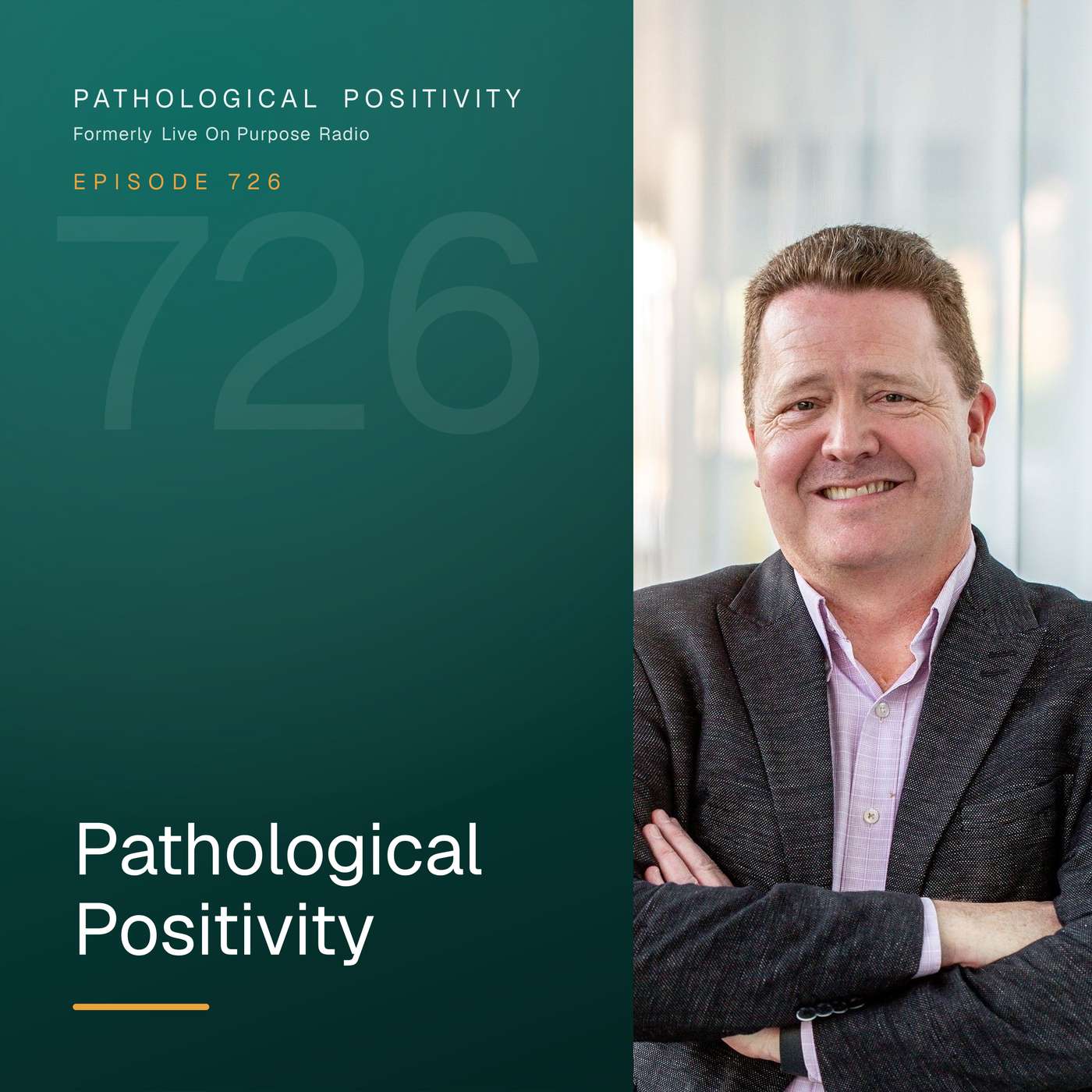
Live On Purpose Radio is now Pathological Positivity: same show, new name. In this solo launch episode, Dr. Paul Jenkins explains where the name comes from. It is the title of his first book, and it came from a moment with his editor, Thomas Cantrell, when Dr. Paul mentioned he had been accused of being pathologically positive. Thomas stopped him and said that was the title. In psychology, pathological can mean disconnected from reality, and it can also mean compulsively driven, like a pathological liar who can't stop. Dr. Paul borrows that second sense on purpose: a dogged determination to choose a positive position, no matter the circumstances.
He also looks back at how the show began. In 2007 he anchored a Thursday edition of a talk radio series on K Talk in the Salt Lake City market, and found out on his way to the office that his slot was gone. A friend suggested he put the show on a podcast, back before podcasting was a thing. After nearly twenty years and 726 weekly episodes, the radio name has served its purpose. The new name better reflects the contribution he wants to make: meaningful frameworks that turn knowledge into action, because it doesn't make a difference until it gets into your shoes.
Dr. Paul draws a line between this and toxic positivity, the paste-on-a-smile version that dismisses real pain. Genuine positivity acknowledges reality, including the disappointments and difficulties, and then chooses how to engage with it. He notes that attitude literally means position, an aviation term for the plane's position relative to the horizon. It doesn't tell you where you are, but it tells you where you're going. He gives a quick look at the positivity model's two mental processes, evaluation and creation, and why metacognition, thinking about your thinking, puts you in a position of power. Awareness precedes choice.
For this new season, he promises three things: real psychology, remarkable stories, and a radically different way to live. He invites listeners to recommend guests, and closes with a word about Positives, the platform where these ideas become daily, weekly, and monthly practices. Breakthrough learning changes what you know. Transformational learning changes who you become. There's a free sample at pathologicalpositivity.com/positives. Learn more about the show at pathologicalpositivity.com and about Dr. Paul's work at drpauljenkins.com.

Comments

Download from Google Play

Download from App Store
 United States