


 Claim Ownership
Pathological Positivity
Subscribed: 376Played: 12,658
Subscribe

© 2026 Dr. Paul Jenkins · PathologicalPositivity.com
Description
Formerly Live On Purpose Radio.
Real psychology. Remarkable stories. A radically different way to live.
Think you know what positivity is? Think again. Pathological Positivity is a weekly podcast with psychologist and author Dr. Paul Jenkins. He challenges conventional thinking, explores the science of positivity, and talks with extraordinary people who put it into practice.
Each episode gives you one practical idea you can use the same day, from why you can stop waiting to feel motivated to how to stay positive through a hard week without pretending everything is fine. Episodes run about 15 to 30 minutes, and a new one comes out every Thursday.
Same show, same feed, same archive. Visit pathologicalpositivity.com to listen.
733 Episodes
Reverse
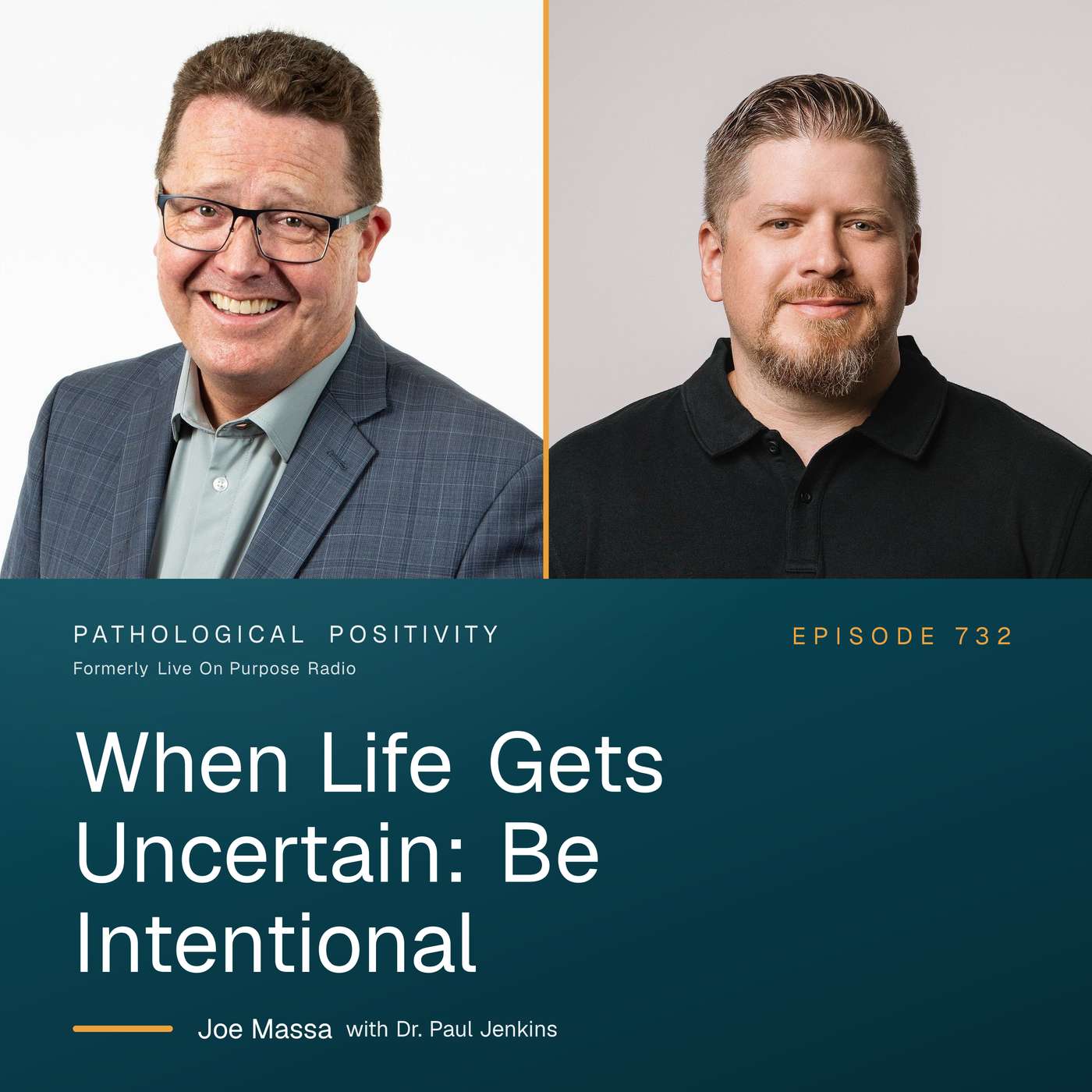
Dr. Paul Jenkins talks with Joe Massa about getting intentional when life becomes uncertain. Joe Massa is an entrepreneur and podcast host who founded Podtopia Network and hosts The Measuring Post, where he interviews people facing serious adversity.
Guest: Joe MassaThe Measuring Post (Apple Podcasts): https://podcasts.apple.com/us/podcast/the-measuring-post/id1680005559The Measuring Post (show page): https://www.joemassaofficial.com/measuring-postPodtopia Network: https://podtopianetwork.comJoe's website: https://www.joemassaofficial.com
For the hard days, take a free copy of Portable Positivity with you: https://pathologicalpositivity.com/go/portable-positivity?m=notes&e=732
Get the free Positivity Power Pack, a short minibook, a workbook and guided audios from Dr. Paul: https://pathologicalpositivity.com/go/powerpack?m=notes&e=732
Joe shares his five-pillar framework for handling uncertainty: vision, effort, consistency, reflection, and adaptability. Dr. Paul and Joe discuss why reflection is often the hardest pillar, using Dr. Paul's story of driving a U-Haul to the wrong state as an example of seeing your own hands on the wheel of your life. They explore when to persist and when to pivot, and how perspective shifts when you hear from people facing real challenges.
Joe explains why making yourself a priority is not selfish but necessary for being present for others. Listeners can try asking where their hands are on the wheel of their lives and whether they are being intentional or just reactive to circumstances.
Chapters0:00 Introducing Joe Massa2:32 Origins of The Measuring Post7:09 The five pillars framework11:47 Hands on the wheel17:04 When to pivot your path20:17 Gaining perspective29:22 You are worth it
Dr. Paul's Black Friday sale on Positives opens Monday, November 23 at 7:00 AM Mountain, with a 30-day money-back guarantee on every purchase. Leave your email and he writes to you that morning: https://positives.life/blackfriday?utm_source=podcast&utm_medium=audio&utm_campaign=bf2026&utm_content=ep731
Dr. Paul Jenkins interviews John Simmons about his son Jack, who has Down syndrome, and what Jack taught his family about love, tenacity, and inclusion. John shares how Jack moved from isolation and video games to active participation in youth baseball, where his presence changed everyone around him. The episode explores how people with special needs demonstrate unconditional love, forgiveness, and resilience.
Guest: John Simmons, author of Happy Like Coach JackJohn's website: https://johnmsimmons.comJohn on Goodreads: https://www.goodreads.com/author/show/2820543.John_M_Simmons
Get the free Positivity Power Pack, a short minibook, a workbook and guided audios from Dr. Paul: https://pathologicalpositivity.com/go/powerpack?m=notes&e=731
John, who has an engineering background, describes how his mindset shifted when Jack and other adopted children joined the family. He explains why inclusion is essential, not just kind, because everyone benefits. The conversation covers the neighbor who created opportunity for Jack, how safe environments help people overcome trauma, and why people with special needs are among our greatest teachers of tenacity and unconditional forgiveness.
Chapters0:00 Introducing Jack's dad3:14 How Jack came into their family8:45 What special needs people teach us12:31 From video games to playing baseball on the team19:23 From engineer to believer in miracles23:20 The neighbor who helped them heal
Dr. Paul Jenkins explains how to stay positive around negative people, especially during holiday family gatherings. He shares a practical four-step strategy for observing others' behavior without absorbing their negativity.
Want the framework behind this episode? Get The Positivity Model, free: https://pathologicalpositivity.com/go/positivity-model?m=notes&e=730
Get the free Positivity Power Pack, a short minibook, a workbook and guided audios from Dr. Paul: https://pathologicalpositivity.com/go/powerpack?m=notes&e=730
The episode walks through how we get emotionally hooked by personalizing others' comments and creating victim stories, and introduces the concept that feedback is information about its source. Dr. Paul teaches four steps: calm your brain, reframe the experience as an observer, take responsibility for your feelings, and create a hero story about how you choose to show up. Daily breathing exercises and meditations that support the calming practice are available on the Positives platform.
Dr. Paul challenges listeners to attend an upcoming family gathering and find a way to enjoy it regardless of what anyone else chooses to do. He frames this as a powerful psychological experiment in choosing your position and practicing resilience.
Chapters0:00 Staying positive around others1:18 Understanding emotional hooks3:57 Observing without absorbing6:32 Four steps to stay positive12:40 The holiday gathering challenge15:31 Recap and upcoming offers
Why don't I do what I know? Dr. Paul Jenkins explains why knowing what to do and being programmed to do it are not the same thing, and how to start closing the gap between the two.
Want the framework behind this episode? Get The Positivity Model, free: The Positivity Model.
Get the free Positivity Power Pack, a short minibook, a workbook and guided audios from Dr. Paul: Positivity Power Pack.
Dr. Paul points to two forces behind the gap. The first is programming. What feels natural is often simply what you've practiced the most, from your first language to how you handle conflict, disappointment and stress. Those patterns live in neural pathways, the cruise control of the brain. Awareness precedes choice, and just because a thought comes naturally doesn't mean it's the only thought available.
The second force is the pleasure and pain dynamic. Every choice has a cost, and so does the choice not to act. Using exercise as the example, Dr. Paul shows how avoiding it brings comfort now and sends the bill later. We give extra weight to whatever is happening right now, so postponing pain feels like eliminating it. He shares the story of a client who quit smoking the day an emphysema diagnosis made the cost immediate and personal.
To change the programming, Dr. Paul describes two ingredients he demonstrates with a scrambled keyboard: a strong enough why, and enough repetitions to build the new pathway. Then he offers a practical way to get moving. Ask what the next physical action is, the next visible, concrete step you can take in the next five minutes. Put your walking shoes by the door. Schedule a conversation. Find the contact information for the class. Movement creates opportunities for adjustment, and the next right thing is usually smaller than the whole thing you're trying to imagine.
The episode also mentions the Positives platform, where the daily practice takes about three and a half minutes and gives you a rhythm for getting the reps in.
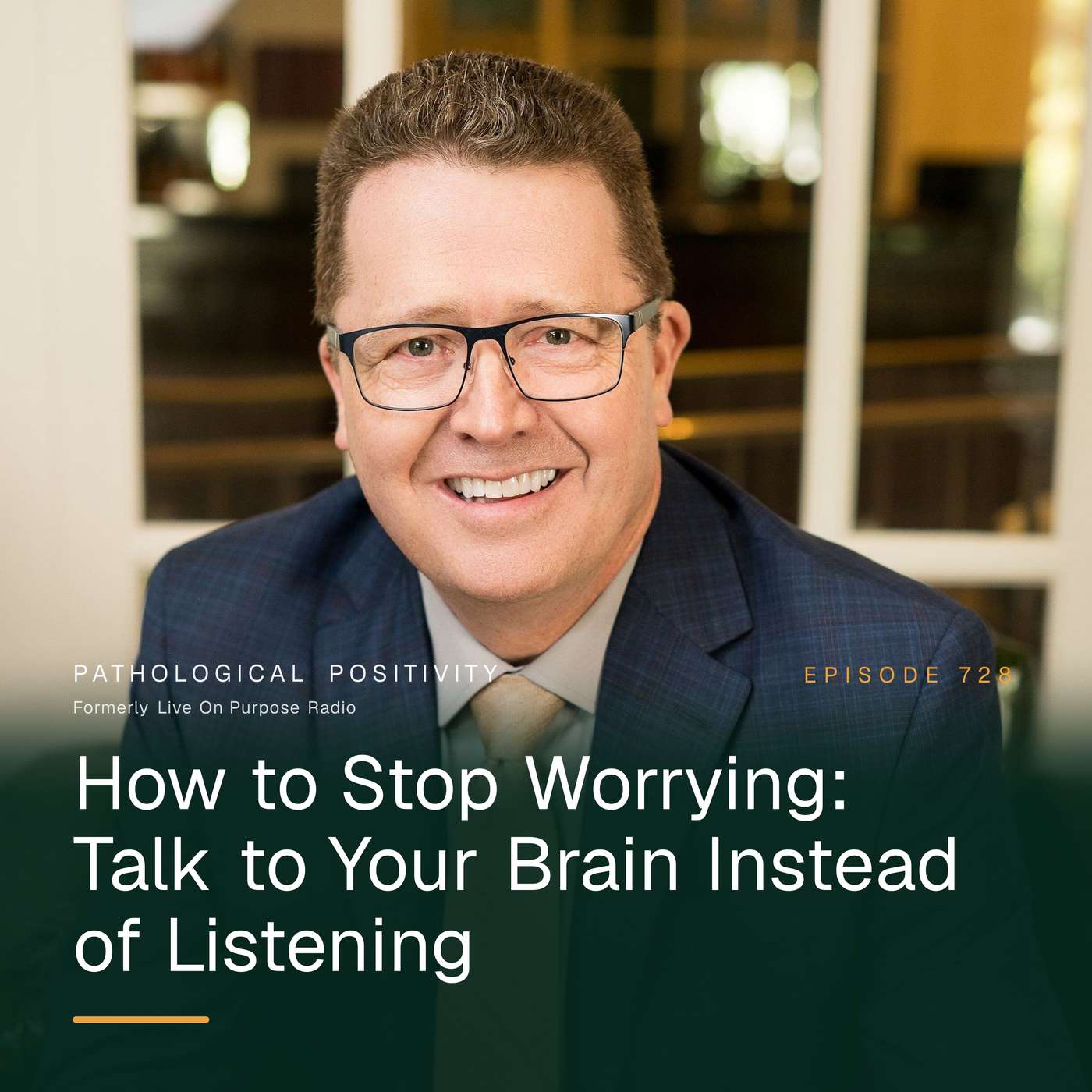
Want the framework behind this episode? Get The Positivity Model, free: The Positivity Model.
Get the free Positivity Power Pack, a short minibook, a workbook and guided audios from Dr. Paul: Positivity Power Pack.
Dr. Paul Jenkins explains that your brain is doing exactly what it's supposed to do. Fear and anxiety come from the brain anticipating threats, even imagined ones. Avoidance and procrastination are the brain trying to reduce discomfort. Negative thinking and rumination are attempts to solve problems. These protective functions can be helpful, but they can also get in the way when the brain treats a perceived threat like immediate danger.
Dr. Paul asks a question that can change how you understand your reactions: How old does your brain think you are? Many emotional patterns develop when we're young, at a time when we didn't have the resources and life experience we have now. An old protective response might activate before you consciously evaluate your present situation. Your brain may be responding to today's circumstances with yesterday's programming.
Dr. Paul offers a three-step practice for talking to your brain instead of just listening to it. First, notice what your brain is doing. Second, acknowledge your brain's protective intention. Third, offer a new direction. Understanding creates an opportunity for change, and repetition helps establish new patterns. The episode discusses how daily practice on the Positives platform can support this transformational learning.

Comments

Download from Google Play

Download from App Store
 United States