


 Claim Ownership
AI Exchange @ UVA Substack Podcast
Subscribed: 0Played: 0
Subscribe

© University of Virginia
Description
The AI Exchange @ UVA is a biweekly newsletter and podcast exploring how Artificial Intelligence is reshaping teaching, research, personal productivity, and operations at the University of Virginia.
aiatuva.substack.com
aiatuva.substack.com
19 Episodes
Reverse
In this episode, we talk about literature and artificial intelligence with two guests from the Department of English, Adrienne Ghaly and Tom Williams. They are using AI to read more than a century of fiction and find out what novels can tell us about biodiversity.The CollaborationAdrienne and Tom’s partnership brings together literary scholarship and computing. Their project uses large language models to examine how novels published between 1800 and 1925 depict the natural world. The work also raises a question about what role literature plays in environmental awareness.“The Anglophone novel often describes the non-human world extensively, and we want to see how this can be explored at scale.”Adrienne GhalyUpcoming PresentationAdrienne and Tom will present their findings publicly on Friday, Nov. 6, in a talk titled “Training AI to Read Prose Fiction.” They are the 2025-27 fellows of a joint program from the UVA Library’s Digital Humanities Center and the Data Analytics Center that funds faculty and graduate student research teams. Their model reads extracts from historical novels collected in Tom Comitta’s The Nature Book (2023) and flags signs of biodiversity. The team tested the model over the summer and is now ready to share results.Date: Friday, Nov. 6Time: 10 AM (coffee and pastries will be served)Location: The Digital Humanities Center, 3rd Floor, Shannon LibraryA New AI JourneyAdrienne came to AI through her questions about literature and the natural world. “We can answer questions at a smaller scale, but LLMs give us the opportunity to take a broader view and understand the non-human world in a more comprehensive way.”Adrienne GhalyThe project was a team effort. Adrienne and Tom worked closely with the Data Analytics Center and with many graduate and undergraduate researchers.They would like to thank:DAC/DHC Fellowship: Jackie Huband, Bruce Rushing, Alison Booth, Lisa Blackmore, Sarah Wells, and Brandon WalshUVA Library: Sherri Brown and Kiowa HammondsGraduate researchers: Jo Gao and Kaylin PritchardUndergraduate researchers: Hailey Chung, Olivia Orellana, Julia Herrmann, and Julia HubandEarly interlocutors: Brad Pasanek and Raf AlvaradoConclusionAdrienne and Tom’s work shows what humanities scholars can do with AI when they set their own research questions. We look forward to hearing what they found on Nov. 6. Listen to the full episode to hear how they built the project and what they learned along the way.Their workshop starts at 10am in the Digital Humanities Center, 3rd Floor of Shannon Library with coffee and pastries. They would love listeners to join!Links: * UVA’s Digital Humanities Center* UVA’s Digital Humanities and AI Program* UVA’s Digital Humanities Certificate* UVA’s Data Analytics Center* UVA’s Scholars Lab This is a public episode. If you would like to discuss this with other subscribers or get access to bonus episodes, visit aiatuva.substack.com
My guest is Leo Lo, Dean of Libraries and University Librarian at the University of Virginia and Special Advisor to the Provost on AI Literacy. He co-founded the AI Literacy and Action Lab with Christa Acampora, Dean of the College and Graduate School of Arts & Sciences. His work includes the Universal AI Literacy Framework and the Archival AI Protocol.In this episode:* AI literacy versus AI fluency: why everyone needs a common foundation, while each discipline must determine what deeper expertise looks like.* The library’s role in the AI era: helping people find, evaluate, and verify information as AI changes how knowledge is accessed.* From framework to action: developing technical knowledge, ethical awareness, critical thinking, practical skills, and an understanding of AI’s societal impact.* Preserving human judgment: using AI without surrendering the critical thinking and judgment that meaningful learning requires.* Starting something you can stop: protecting provenance, attribution, and institutional control when archival materials are used by AI systems.Links:* UVA’s AI Literacy and Action Lab* AI Literacy for All: A Universal Framework* The UVA Archival AI Protocol This is a public episode. If you would like to discuss this with other subscribers or get access to bonus episodes, visit aiatuva.substack.com
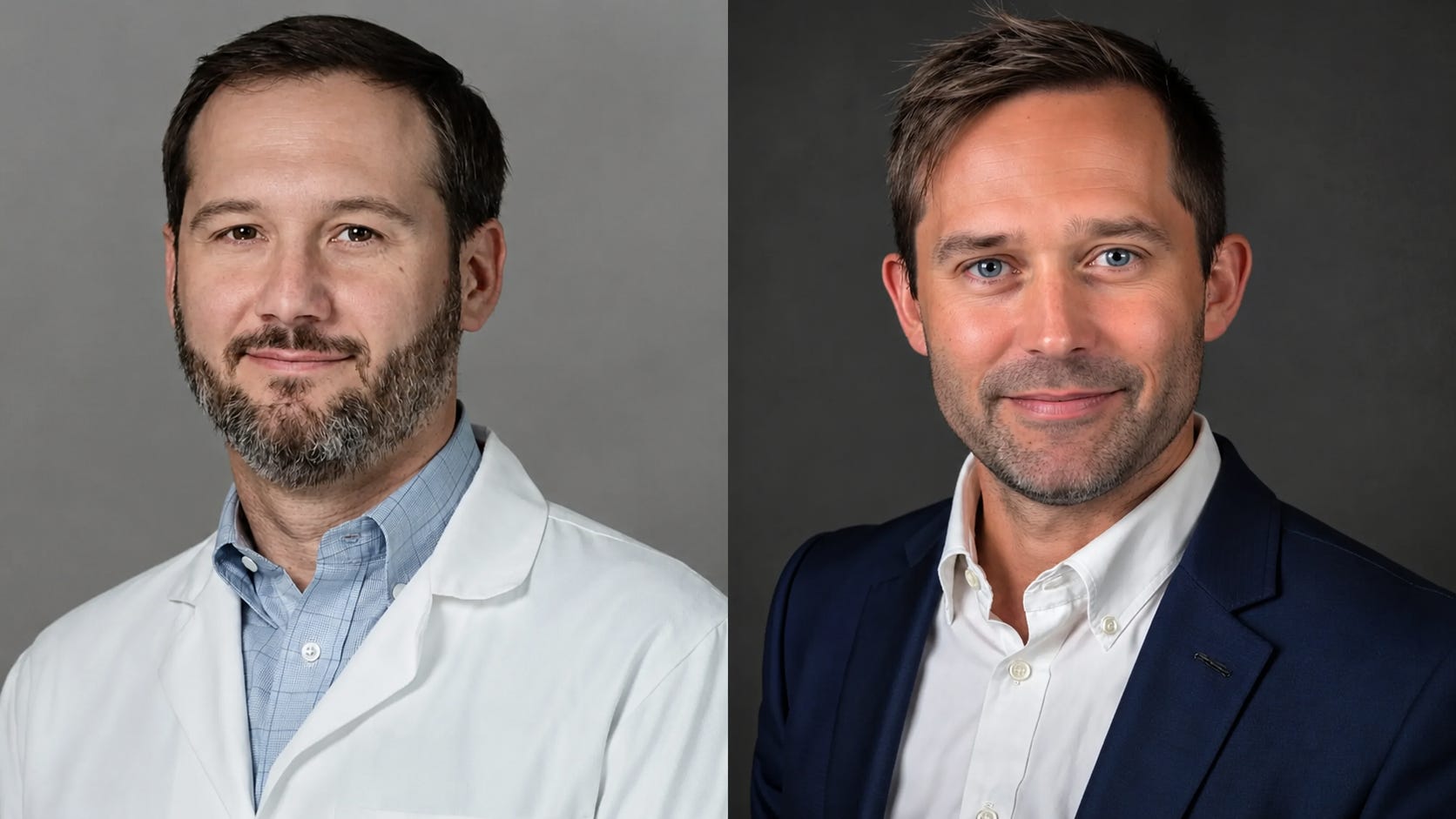
My guests are Dr. Thomas Hartka, Associate Professor of Emergency Medicine and Interim Vice Chair of the Emergency Medicine Research Office, and Dr. R. Andrew Taylor, Professor of Emergency Medicine and Vice Chair of Research and Innovation at UVA. “The best results I get from AI are not when I turn my brain off. It’s when I’m actually thinking harder because I’m using AI.” Dr. Thomas HartkaIn this episode:* AI in the emergency department: why high stakes and limited time make it the ultimate pressure test.* AI as a clinical thought partner: helping physicians identify risks and make informed decisions.* From car crashes to patient care: using vehicle data and machine learning to predict injuries.* The future of medicine: ambient AI, automated documentation, and the changing role of physicians.* Preparing future doctors: building AI literacy without sacrificing judgment, empathy, or human connection.Links* UVA’s Data, AI, and Health Collaboratory* Research and Innovation in Emergency Medicine* Guiding Principles for AI in Healthcare This is a public episode. If you would like to discuss this with other subscribers or get access to bonus episodes, visit aiatuva.substack.com
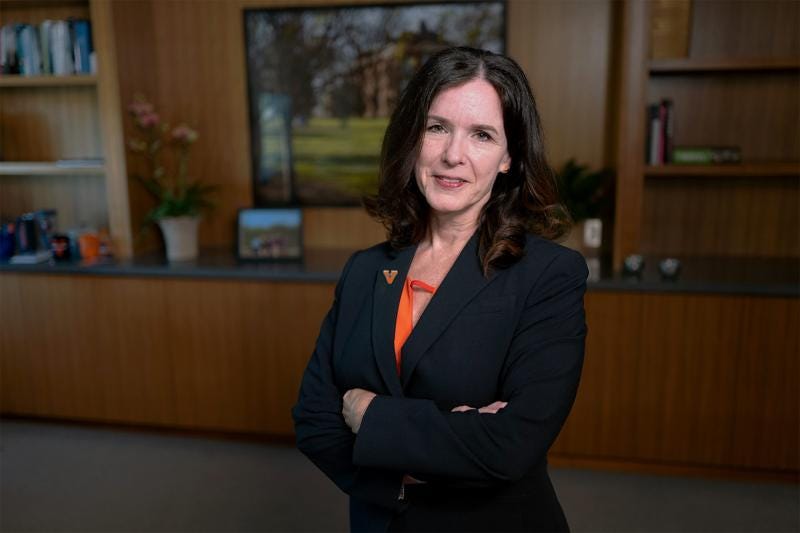
My guest is Christa Acampora, Buckner W. Clay Professor of Philosophy and Dean of UVA’s College and Graduate School of Arts & Sciences. In this episode, Dean Acampora takes on the question: what is higher education for when AI can generate the outputs? We also talk about cultivating human judgment and calling out the moments students exercise it. Plus the AI Literacy and Action Lab, Career Design and Discovery, and her advice for students, faculty and staff.“AI is a powerful tool that can fundamentally advance teaching, learning and discovery, and its ubiquity and growth really mean that we have to embrace it rather than resist it. I want every student to learn how to use it critically, practically, and in the service of their own education and formation.”In this episode:* Why AI forces the question higher education has avoided: when it can generate a student’s outputs, what are we really trying to do? * Judgment as the superpower: identifying what matters, giving an answer for why, and calling out the moments when students exercise it.* Inside the AI Literacy and Action Lab, the College’s joint venture with the UVA Library: hands-on judgment practice for students and a sandbox for faculty.* Career Design and Discovery arrives in the first-year experience: not what should I do with my life, but what kind of life do I want to lead?* Advice from the Dean’s desk for first-years, faculty, and staff.Links· Q&A: In the AI age, why are the humanities still relevant? (UVA Today)· The AI Literacy and Action Lab (UVA Library)· Career Design and Discovery (UVA Arts & Sciences)· Can Colleges Make All Their Students “AI Fluent”? (The Chronicle of Higher Education) This is a public episode. If you would like to discuss this with other subscribers or get access to bonus episodes, visit aiatuva.substack.com
In this episode of The AI Exchange, we sit down with Dr. Matthew Trowbridge, an Associate Professor at UVA, to explore how he is empowering the next generation of physicians to actively shape the future of healthcare. Through his groundbreaking 10-day Health Design Sprints, medical students with zero coding experience are transforming from passive AI users into active software builders that can create functional, AI-driven medical education apps from scratch.Discover why healthcare professionals need to stop treating AI as an infallible “oracle” and start engaging with it as a collaborative clinical partner. Plus, Dr. Trowbridge shares a radically simple, actionable method for anyone looking to get started with AI today (hint: it involves stepping away from your keyboard and taking your dog for a walk). This is a public episode. If you would like to discuss this with other subscribers or get access to bonus episodes, visit aiatuva.substack.com

Comments

Download from Google Play

Download from App Store
 United States