


Wellness Explained
Subscribed: 1Played: 0
Subscribe

© 2026
Description
Wellness Explained cuts through the noise to make health and wellness easier to understand and actually apply to your life. Join nutritionist Sandy Jolles as she explores the science and real-life strategies behind nutrition, movement, mindfulness, longevity, and overall well-being.
From everyday habits to the latest wellness trends, each episode breaks down what the evidence really says, what’s worth your attention, and what you can realistically put into practice. No extremes, no perfection...just practical conversations and takeaways designed to help you feel informed, empowered, and confident in the choices you make for your health.
From everyday habits to the latest wellness trends, each episode breaks down what the evidence really says, what’s worth your attention, and what you can realistically put into practice. No extremes, no perfection...just practical conversations and takeaways designed to help you feel informed, empowered, and confident in the choices you make for your health.
15 Episodes
Reverse
Could the technology we use every day be influencing our biology in ways we're only beginning to understand?In this Wellness Bite, we're exploring electromagnetic fields (EMFs), how they interact with biological systems, and what current research can and cannot tell us about potential health effects.In this episode, we explore:What EMFs actually are: The differences between naturally occurring electromagnetic fields, extremely low-frequency fields, and radiofrequency exposure from wireless devices.Your body's electrical activity: How our cells use electrical signaling and how bones generate electrical signals in response to mechanical stress.Calcium signaling and cellular health: The proposed role of voltage-gated calcium channels (VGCCs), oxidative stress, and mitochondrial function in EMF research.Sleep and thyroid health: Research questions surrounding melatonin, circadian rhythms, and thyroid function.What the evidence actually shows: Why findings from laboratory studies, observational research, and real-world human health outcomes aren't interchangeable.Practical exposure-reduction strategies: Simple adjustments involving phones, Wi-Fi routers, device placement, and everyday technology habits.A note about EMF protection productsThis episode also references information from DefenderShield, a company that manufactures EMF-shielding accessories. Its materials describe conductive shielding technology and laboratory measurements of signal attenuation under specified testing conditions.It's important to distinguish a product's ability to reduce measured electromagnetic exposure in a particular setup from evidence that using the product improves long-term health outcomes.Resources and further readingDefenderShield — Product information and company-reported shielding research.World Health Organization: Electromagnetic FieldsNational Cancer Institute: Cell Phones and Cancer RiskUnderstanding potential biological mechanisms is valuable, but it doesn't automatically establish that everyday EMF exposure causes disease. The goal is to stay informed, recognize where evidence is still developing, and make practical decisions without unnecessary fear.
Wellness ExplainedEvidence-based wellness, explained simply.Hosted by Sandy Jolles, MS, CNS, LDN.Disclaimer: Wellness Explained is for educational and informational purposes only and is not intended to diagnose, treat, cure, or prevent any disease or replace individualized medical advice from a qualified healthcare professional.
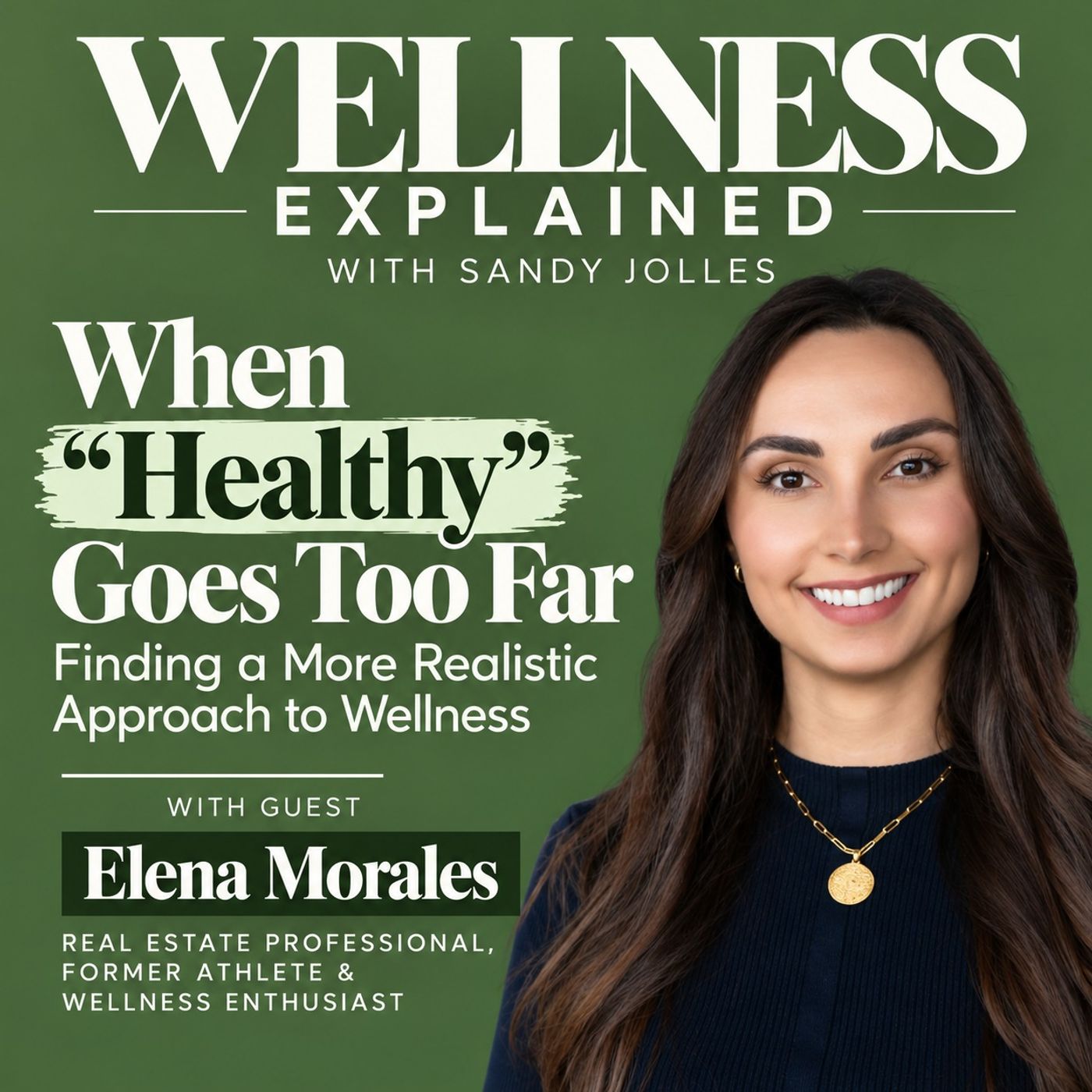
What happens when the pursuit of health starts taking a toll on your physical and emotional well-being?In this episode of Wellness Explained, Sandy sits down with Elena Morales for an honest conversation about perfectionism, body image, PCOS, women's health, and redefining what it means to live well.From her years as a competitive athlete to experimenting with restrictive diets, intermittent fasting, and intense exercise routines, Elena shares how her pursuit of wellness eventually led her to question whether she was truly supporting her health.Now a mother and successful Northern Virginia real estate professional, Elena offers a refreshing perspective on building sustainable habits, trusting your body, and finding joy in movement, food, and everyday life.In this episode, we explore:When healthy habits become an unhealthy obsessionThe all-or-nothing mindset and its relationship with exercise and dietingElena's personal experience with PCOS, hormonal health, and birth controlRestrictive eating, intermittent fasting, and the importance of adequate nutritionWhy research on women's health and exercise deserves more attentionYoga, mindfulness, and shifting away from exercise as punishmentFitness trackers, wellness trends, and knowing when data is helpful...or stressfulSelf-trust, therapy, boundaries, and the connection between emotional and physical healthMaking wellness realistic while balancing work, parenting, and everyday responsibilitiesResources mentionedDr. Stacy Sims Women's Exercise Physiology and NutritionDr. Stacy Sims is an exercise physiologist and researcher known for her work on female-specific exercise and nutrition considerations. Elena discusses her work in relation to the historical underrepresentation of women in sports and exercise research.Website: https://www.drstacysims.com/Mary Cain “I Was the Fastest Girl in America, Until I Joined Nike”Elena references Mary Cain's story about the pressures of elite athletics, weight expectations, and the consequences of inadequate fueling. Her experience highlights important conversations around athlete health, menstrual function, and performance.Watch/read via The New York Times: https://www.nytimes.com/2019/11/07/opinion/nike-running-mary-cain.htmlAdult Children of Emotionally Immature Parents Lindsay C. Gibson, PsyDElena shares how this book helped her reflect on family relationships, emotional patterns, boundaries, and developing greater self-trust.Additional topic: PCOS and women's hormonal healthElena shares her personal experiences navigating a PCOS diagnosis and exploring different approaches to her health. Her story is a reminder that everyone's circumstances are different and individualized medical guidance matters.Meet Elena MoralesElena Morales is a Northern Virginia real estate agent and member of an all-women team ranked #2 among medium-sized teams in Virginia, with more than $150 million in combined sales in 2025.Before building her real estate career, Elena's journey included competitive basketball and volleyball, long-distance running, strength training, and yoga. She also worked on an organic fruit farm in Hawaii, managed cold-pressed juice sales and deliveries throughout Northern Virginia, and served as a store manager at South Block in Clarendon and Vienna.A Northern Virginia native and Virginia Tech alumna, Elena began her real estate career in Northern California before returning home to raise her family and continue growing her business.Connect with ElenaInstagram: https://www.instagram.com/elena__morales_/Facebook: https://www.facebook.com/elena.morales.serhant/TikTok: https://www.tiktok.com/@elena__morales_Email: [email protected]: (571) 294-5148
Wellness ExplainedEvidence-based wellness, explained simply.Hosted by Sandy Jolles, MS, CNS, LDN.Disclaimer: Wellness Explained is for educational and informational purposes only and is not intended to diagnose, treat, cure, or prevent any disease or replace individualized medical advice from a qualified healthcare professional.
Is estrogen dominance really about having too much estrogen?Not necessarily. The term estrogen dominance is commonly used in wellness discussions, but it isn't a standardized medical diagnosis. Sometimes the concern is an imbalance between estrogen and progesterone rather than an elevated estrogen level.In this Wellness Bite, we explore:Estrogen and progesterone: Why their relationship matters and how hormone patterns change throughout life.Estrogen receptor sites: Why the effects of estrogen depend on receptor binding and the signals activated inside our cells, not just estrogen levels in the bloodstream.Soy and phytoestrogens: How plant compounds such as genistein and daidzein interact with estrogen receptors, and why their effects differ from those of the body's own estrogen.Flaxseed and lignans: How gut bacteria metabolize lignans into compounds that may influence estrogen signaling, while fiber supports normal digestive elimination.The gut-liver connection: The role of estrogen metabolism, the estrobolome, and the body's normal elimination pathways.Nutrients and herbs: A look at B vitamins, magnesium, vitex, red raspberry leaf, and traditional emmenagogue herbsHormonal health is more complicated than simply trying to lower estrogen. Understanding hormone signaling, metabolism, and your individual symptoms is a much more useful starting point.
Wellness ExplainedEvidence-based wellness, explained simply.Hosted by Sandy Jolles, MS, CNS, LDN.Disclaimer: Wellness Explained is for educational and informational purposes only and is not intended to diagnose, treat, cure, or prevent any disease or replace individualized medical advice from a qualified healthcare professional.
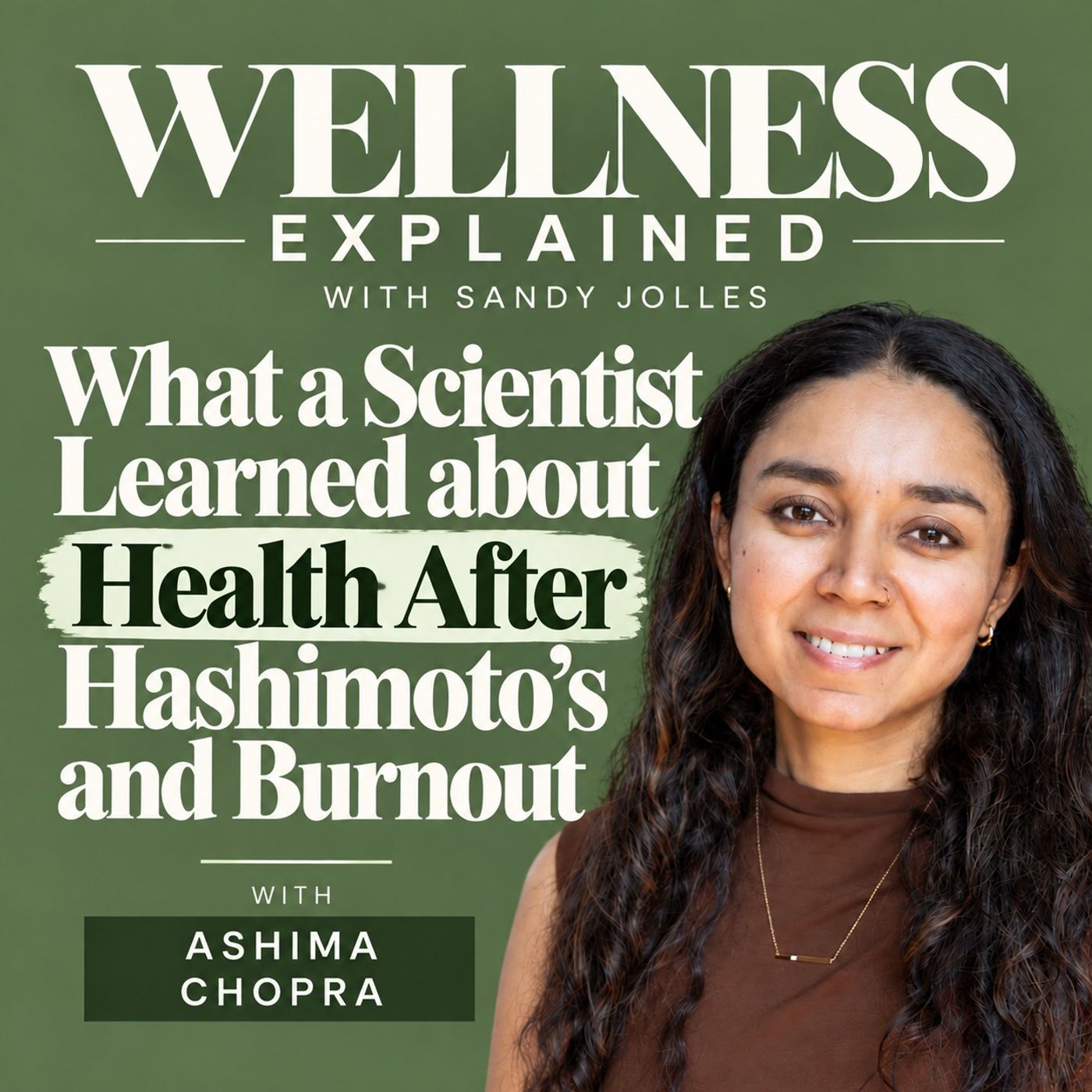
What does it really mean to listen to your body, and how do you know which wellness advice is worth following?In this episode, Sandy welcomes Ashima Chopra, a scientist who shares how her experiences with hypothyroidism, Hashimoto's, and persistent fatigue reshaped her approach to health.Together, they explore the balance between modern science, traditional wellness practices, and the realities of maintaining healthy habits when life gets busy.In this episode, we discuss:Recognizing your body's signals: What changes in energy, digestion, menstrual cycles, and hunger can tell us about our health.Protein, fiber, and nutrition trends: Why fundamentals matter more than constantly chasing the latest dietary recommendation.Wellness without perfection: Making room for convenience, flexibility, and realistic routines without guilt.Strength training for longevity: Ashima's experience with muscle weakness, injury, and finding a sustainable approach to resistance training.Ayurveda and individualized wellness: An introduction to the traditional Indian system, including the three doshas—Vata, Pitta, and Kapha.Adaptogens and ashwagandha: Why popular stress-support supplements deserve thoughtful consideration rather than automatic inclusion in your routine.Hydration, sleep, and stress: The everyday habits that can get overlooked when we're focused on optimization.Navigating wellness misinformation: How to question social media claims, recognize marketing influences, and avoid unnecessary purchases.Reconnecting with hunger and fullness cues: A practical starting point for becoming more aware of your body's needs.Resources & Recommendations Mentioned in This EpisodeIntuitive Eating & Reconnecting With Hunger CuesColleen Christensen - No Food RulesWebsite | Instagram: @no.food.rulesColleen Christensen is an intuitive eating educator whose approach focuses on rebuilding trust with your body and developing a healthier relationship with food.Ashima particularly appreciates that her program emphasizes reconnecting with hunger and fullness cues before transitioning into intuitive eating: an important distinction for people who may have lost touch with those signals after years of restrictive eating or rigid food rules.Her content offers a fun, approachable, and nonjudgmental perspective on nutrition without promoting food guilt or unnecessary restrictions.Ayurveda & Understanding Your DoshaJoyful Belly - Ayurvedic Dosha QuizExplore the Dosha QuizFor anyone curious about Ayurveda, Ashima recommends Joyful Belly as a comprehensive resource for exploring your individual dosha, or constitution.Unlike many short online quizzes, Joyful Belly offers multiple questionnaires that you can complete over time, with the option to create an account and save your results.The platform also includes information about Ayurvedic body types, food recommendations, recipes, and lifestyle practices.Ayurvedic Educators Worth ExploringAshima also recommends learning about Ayurveda from educators with roots in the Indian tradition who understand the realities of modern Western lifestyles.My Ayurvedic Life — InstagramDr. Vara Ayurveda — InstagramWhat Ashima appreciates about these creators is their practical approach: sharing traditional Ayurvedic concepts in ways that feel accessible, culturally grounded, and realistic for busy people, without suggesting that wellness requires elaborate daily rituals.Note: Ayurveda is a traditional system of health and wellness. Dosha quizzes are tools for exploring its traditional framework, not medically validated diagnostic tests. Similarly, online educational resources should complement, not replace, individualized medical or nutrition care.
Wellness ExplainedEvidence-based wellness, explained simply.Hosted by Sandy Jolles, MS, CNS, LDN.Disclaimer: Wellness Explained is for educational and informational purposes only and is not intended to diagnose, treat, cure, or prevent any disease or replace individualized medical advice from a qualified healthcare professional.
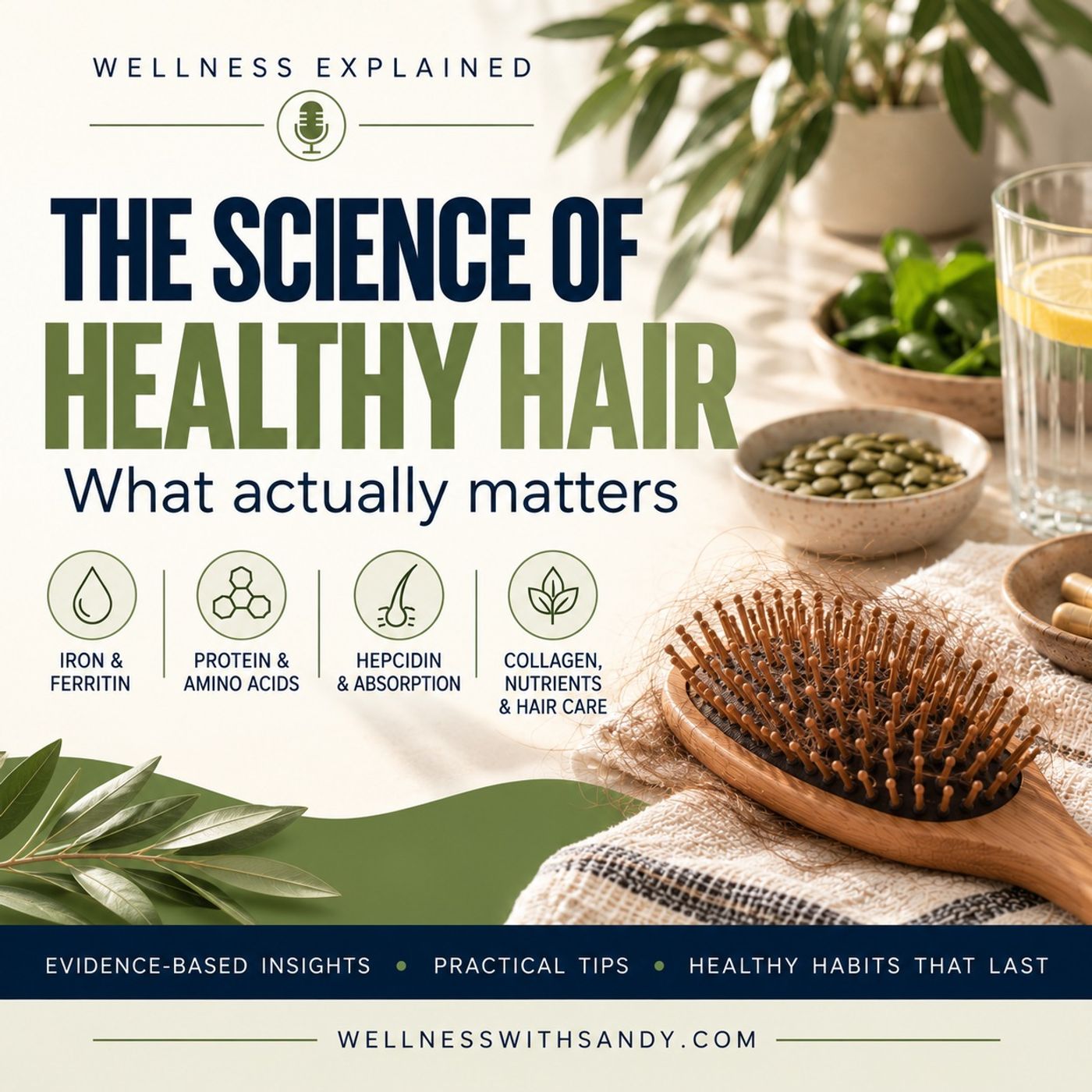
Hair health is more complicated than buying a “hair, skin & nails” supplement.In this episode, we’re unpacking what may actually matter when it comes to nutrition and healthy hair, including:Ferritin vs. iron: why your iron stores can matter even before obvious anemia developsWhy there isn't one universally accepted “perfect” ferritin level for hair growthHepcidin: what it is and why taking iron more often doesn't necessarily mean absorbing more ironWhy alternate-day iron dosing has become an interesting strategy in the researchWhy the form of an iron supplement matters, including ferrous bisglycinateFood and supplement combinations that can help, or interfere with, iron absorptionWhy adequate protein matters for hairWhere collagen fits, and why collagen shouldn't replace complete dietary proteinWhy “more biotin” isn't automatically the solutionThe difference between hair shedding and hair breakageHow heat and everyday hair-care practices can damage the hair shaftThe bigger takeaway: Hair is often treated like a cosmetic issue, but nutrition, nutrient status, and what’s happening inside the body can play an important role. Instead of blindly adding another supplement, start by asking why the changes may be happening.
Wellness ExplainedEvidence-based wellness, explained simply.Hosted by Sandy Jolles, MS, CNS, LDN.Disclaimer: Wellness Explained is for educational and informational purposes only and is not intended to diagnose, treat, cure, or prevent any disease or replace individualized medical advice from a qualified healthcare professional.

Comments

Download from Google Play

Download from App Store
 United States