


 Claim Ownership
Weltgeist
Subscribed: 0Played: 4
Subscribe
Description
Philosophy, video essays. New videos every week.
160 Episodes
Reverse
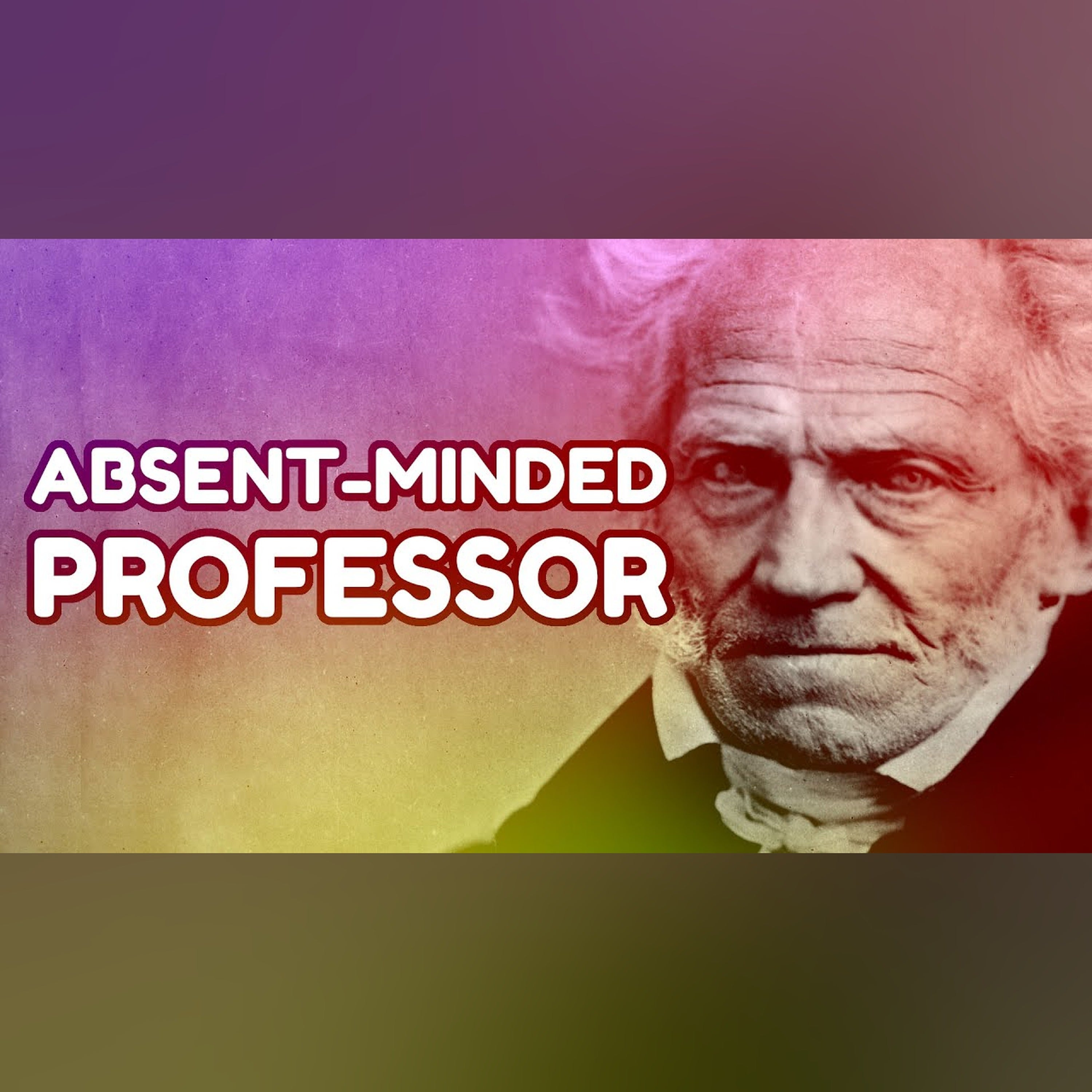
WATCH: Schopenhauer on being alone and how to deal with society: https://youtu.be/eSbaqqDfGxUWe’re all familiar with the archetype of the absent-minded professor. A recurring stock character in fiction, the absent-minded professor is the prototypical genius, great at what he does, but horrible at being a normal human being. The website TVTropes has a great write-up on the character, plus a huge database of examples of absent-minded professors in fiction.Thales of Miletus, considered by many to be the first philosopher in the Greek tradition, is said to have been so engrossed in philosophical thought while looking up at the stars, that he didn’t notice the well in front of him, and he promptly fell down into it. Schopenhauer also noticed this tendency of great geniuses to be absent-minded or otherwise ill-equipped to deal with the social reality of day to day life. The phenomenon arises because the genius takes a bird’s eye view of humanity. The genius rises above the petty concerns of man. He is preoccupied with the world in its totality, not in its parts. All of existence poses a riddle to him. What time does such a person have to concern himself with gossip, conversations about the weather, or social etiquette?The commoner, by contrast, has a much simpler point of view. The common man cannot transcend his own viewpoint and see the world from a higher vantage point. The commoner is stuck with his own individuality, and only looks at the world from his own selfish perspective.
Learn more about your ad choices. Visit megaphone.fm/adchoices

SUPPORT US ON PATREON:▶ https://www.patreon.com/WeltgeistYTWATCH: Schopenhauer: How to Be Happy (all parts):▶ https://youtu.be/4Qv6OLWzMZoSCHOPENHAUER'S WORKS:Parerga and Paralipomena vol. 1: https://amzn.to/3pK6xCjParerga and Paralipomena vol. 2: https://amzn.to/3jJa2p0The World as Will and Representation vol. 1: https://amzn.to/3FPGkIjThe World as Will and Representation vol. 2: https://amzn.to/3FT0nFCVolume II of Schopenhauer’s The World as Will and Representation is made up of commentary or exposition of the first volume. As such, it’s written in a more literary, free flowing style as opposed to the technical philosophical language of the first volume. This second volume is filled with essays which could even be read on their own, yet they still find their place in the overarching whole of The World as Will and Representation. Theoretically, everything in these essays is a consequence or an elaboration of what is said to the corresponding chapter or book of the first volume, but in practice, there is much extra value in reading these essays.Affiliate disclaimer: At no cost to you, by purchasing products linked above, I make a small commission. Thank you for supporting the channel.
Learn more about your ad choices. Visit megaphone.fm/adchoices
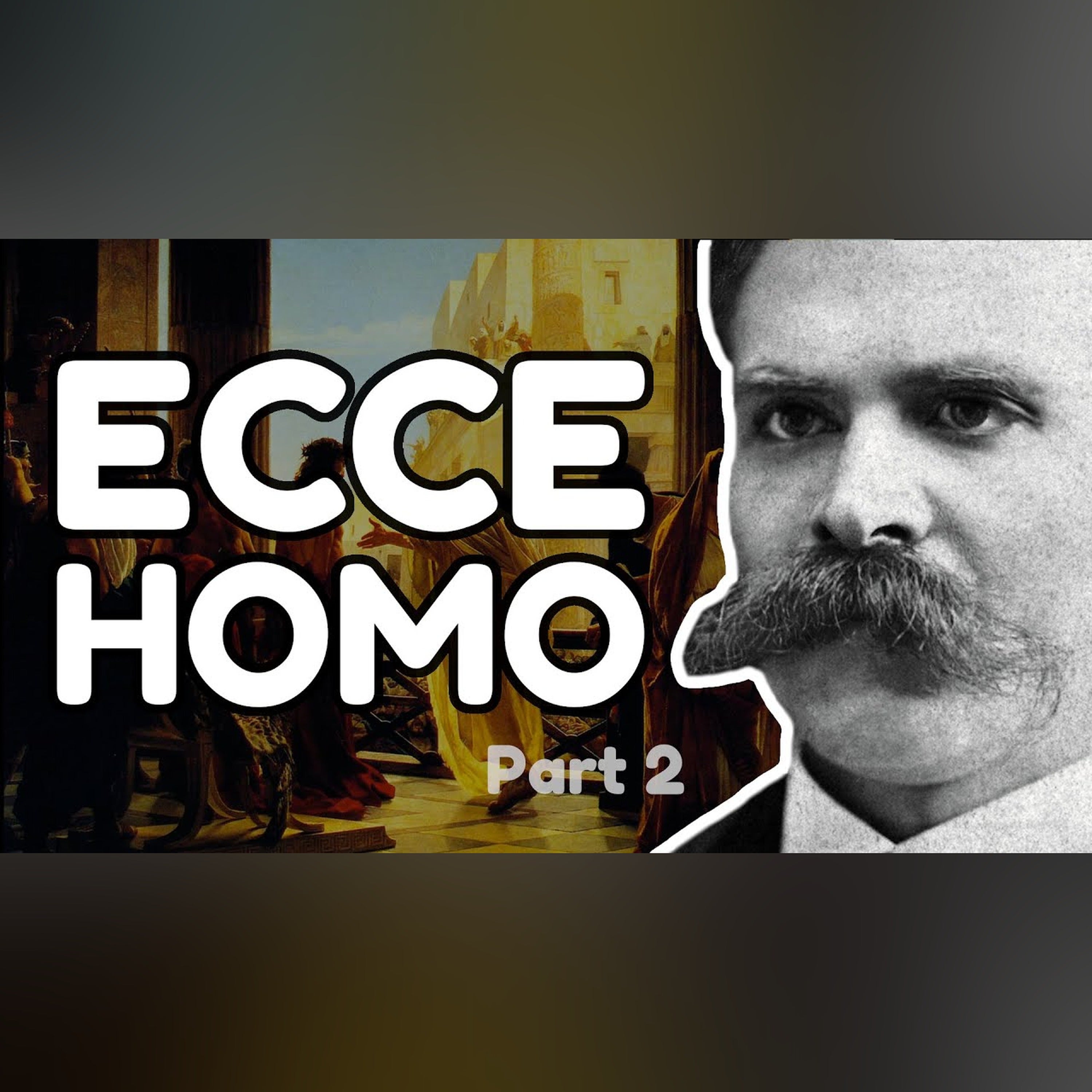
SUPPORT US ON PATREON:▶ https://www.patreon.com/WeltgeistYT▶ Part 1: https://youtu.be/0mNowitqXSoWATCH: ▶ Beyond Good and Evil: https://youtu.be/WIHXZUltfqk▶ The Antichrist: https://youtu.be/qej1Z8Qzq_c▶ Genealogy of Morals: https://youtu.be/6PUx4cOfFcI▶ Twilight of the Idols: https://youtu.be/YpVr_NEvWYA▶ The Will to Power: https://youtu.be/He6ZC7ZFBt8BUY THE BOOK (Preferred translation)▶ https://amzn.to/3Jo1q29Ecce Homo is the last book Nietzsche wrote. It followed a period of sustained productivity in the year 1888, during which he wrote four works: The Case of Wagner, Twilight of the Idols, the Antichrist, and Ecce Homo. In Ecce Homo, Nietzsche makes it clear that his personality cannot be separated from his philosophy. Nietzsche will seek to transparently and obviously embrace his personality when doing philosophy. In doing so, he breaks with the old philosophers, according to Nietzsche, have always tried to hide their personality from their work so as to maintain the illusion of objectivity and disinterested truth. The focus on biography as an underpinning of philosophy, also serves another purpose. It provides Nietzsche with ammunition to attack the idea of the Hinterwelt. The Hinterwelt is a general term for the kind of philosophy or religion Nietzsche attacks throughout his writings. German for “behind-world”, it refers to the idea common in philosophy and religion that this world, the world of the here and now, the material world, is not of supreme importance. The Hinterwelt takes many forms. It could be Heaven or the Kingdom of God, as in Christianity. Or it could be the thing-in-itself in the philosophy of Kant, or the Will in the philosophy of Schopenhauer. It could even be the veil of Maya, the idea in Hinduism that the material world is an illusion. The Platonic World of Ideas or Forms, is another example.Nietzsche takes issue with this kind of philosophy, and sought to make an end to the Hinterwelt. His philosophy is an invitation for us to live in this world without hope for salvation in the next, and to courageously endure and overcome the struggles of the material world. That is what the Will to Power is all about. Affiliate disclaimer: At no cost to you, by purchasing products linked above, I make a small commission. Thank you for supporting the channel.
Learn more about your ad choices. Visit megaphone.fm/adchoices

WATCH: Schopenhauer Explained: Aesthetics of Music and Nature:https://youtu.be/JamIJ2IQHe8Have you ever looked at a piece of abstract painting, and thought "what is this about?" This video is for you. We offer an interpretation of abstract painting using German philosopher Arthur Schopenhauer's theory of aesthetics. We compare two paintings, Jacques-Louis David's Oath of the Horatii, and Wassily Kandinsky's Composition 8. A look at Kandinsky's theoretical writings, in particular On the Spiritual in Art, will offer a solid interpretation of abstract painting that you might not have heard of before.If you like this video, please share and like. It helps out the channel a lot. And if you've subscribed, thank you!
Learn more about your ad choices. Visit megaphone.fm/adchoices

SUPPORT US ON PATREON:▶ https://www.patreon.com/WeltgeistYTWATCH:▶ Why Nietzsche Hated Socrates: https://youtu.be/DM78nStythg▶ Why Nietzsche Hated Plato: https://youtu.be/nEhNRuPh4AsOUR ANALYSES: ▶ Beyond Good and Evil: https://youtu.be/WIHXZUltfqk▶ The Antichrist: https://youtu.be/qej1Z8Qzq_c▶ Genealogy of Morals: https://youtu.be/6PUx4cOfFcI▶ Twilight of the Idols: https://youtu.be/YpVr_NEvWYA▶ The Will to Power: https://youtu.be/He6ZC7ZFBt8▶ Daybreak: https://youtu.be/cOL2z7nuXdAThe Joyful Science is one of Friedrich Nietzsche’s middle works. As a sort of sequel to Daybreak, it features many of the ideas for which Nietzsche would later become famous.But when we look at the chronology, we see that the work was also released before his most well-known works such as Beyond Good and Evil, Thus Spoke Zarathustra, The Genealogy of Morals, and Twilight of the Idols and the Antichrist.Although that’s not the entirely true, because the Joyful Science has an interesting publishing history. The first edition of the work was released in 1882, while a second edition, which added a fifth book and a prelude and appendix with poems, came out in 1887. So in between publishing the first and the second edition, Nietzsche wrote and released his two most famous works: Beyond Good and Evil and Thus Spoke Zarathustra.And the additions to the second edition will sound very familiar to anyone who has read The Genealogy of Morals.So in a way, the book we know as the Joyful Science functions as a sort of transition between the intermediate and the late Nietzsche. Many ideas that would come to dominate his thought in his later work, will find their first expression here. The two most notable ideas are the Death of God and the Eternal Recurrence.In this series, we will discuss those ideas along with other central themes of the works. By the way, we have covered many of Nietzsche’s works right here on the channel. We have a full analysis of Beyond Good and Evil, On The Genealogy of Morals, Twilight of the Idols, The Antichrist, Daybreak, and Ecce Homo. Check the links in the description if you’re interested. If you like analyses like these, we highly recommend you subscribe to the channel and click the Bell button. Thank you!
Learn more about your ad choices. Visit megaphone.fm/adchoices

Comments

Download from Google Play

Download from App Store
 United States