


 Claim Ownership
CERIAS Weekly Security Seminar - Purdue University
Subscribed: 302Played: 426
Subscribe

© Purdue University
Description
CERIAS -- the Nation's top-ranked interdisciplinary academic education and research institute -- hosts a weekly cyber security, privacy, resiliency or autonomy speaker, highlighting technical discovery, a case studies or exploring cyber operational approaches; they are not product demonstrations, service sales pitches, or company recruitment presentations. Join us weekly...or explore 25 years of archives for the who's-who in cybersecurity.
655 Episodes
Reverse

Let's say you wanted to make sure that your AI is secure. Can you just maximize the security and privacy benchmark and call it a day? Nope, because benchmarks don't actually work for measuring AI capabilities (even when they are NOT emergent systemic properties like security). So let's take a step back: how do you measure security in the first place? Good question. Over the last 30 years, security engineering for software evolved from black box penetration testing, through whitebox code analysis and architectural risk analysis to de facto process-driven standards like the Building Security In Maturity Model (BSIMM). Software had a very deep impact on business operations, and it appears that AI is going to have an even deeper impact. Will a software security-like measurement move work for AI? Probably. In the meantime we can make real progress in AI security by cleaning up our WHAT piles and managing risk by identifying and applying good assurance processes. (Spoiler alert: no matter what we do, we still don't get a security meter for AI, so we need to be extra vigilant about security.) About the speaker: Gary McGraw is co-founder of the Berryville Institute of Machine Learning where his work focuses on machine learning security. He is a globally recognized authority on software security and the author of eight best selling books on this topic. His titles include Software Security, Exploiting Software, Building Secure Software, Java Security, Exploiting Online Games, and 6 other books; and he is editor of the Addison-Wesley Software Security series. Dr. McGraw has also written over 100 peer-reviewed scientific publications. Gary serves on the Advisory Boards of Maxmyinterest, Starseer, and Vaultree. He has also served as a Board member of Cigital and Codiscope (acquired by Synopsys) and as Advisor to CodeDX (acquired by Synopsys), Black Duck (acquired by Synopsys), Dasient (acquired by Twitter), Fortify Software (acquired by HP), and Invotas (acquired by FireEye). Gary produces the monthly Silver Bullet Security Podcast with BIML. His dual PhD is in Cognitive Science and Computer Science from Indiana University where he serves on the Dean's Advisory Council for the Luddy School of Informatics, Computing, and Engineering.

Melissa Dark has worked in cybersecurity education for 26 years. Her work spans practical projects that grow cybersecurity education opportunities, build capacity in educational institutions, and strengthen robust cybersecurity learning. Melissa continuously tries to bring evidence-based practices to her work as a practitioner. And conversely, she tries to use her field experiences to reflect on the abstract and bigger questions that affect the field of cybersecurity education. It is from this cycle of plan->do->reflect->revise, that she will talk about "The Nature of Cybersecurity Knowledge".
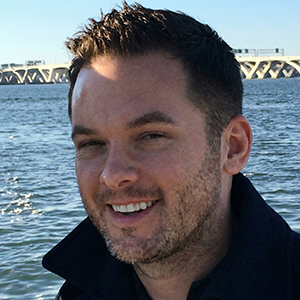
Military, intelligence and critical infrastructure systems increasingly run AI and mission workloads at the edge. That means contested, disconnected, and physically exposed environments where the usual cloud security assumptions fail. You can't count on a reachable identity provider. You can't trust the host operator. You can't patch on demand.This talk is a case study in building a defense-in-depth model for that environment. It follows the stack from the bottom up: Confidential computing. Intel TDX and AMD SEV-SNP isolate workloads even from a compromised host, and remote attestation verifies them. Software supply chain assurance. Immutable, signed OS images ship with SBOMs, continuous vulnerability scanning using Trivy and Grype, and STIG compliance reporting. Policy-as-code authorization. Cedar provides fine-grained, analyzable access control across compute, storage, networking and AI agents. Policies keep enforcing when the link to the enterprise is gone. Identity lifecycle. SCIM federates with enterprise directories without making them a runtime dependency.We'll examine the design tradeoffs, the threat models behind each layer, and where the gaps remain. Examples are drawn from Mainsail's work on Starlight. About the speaker: Brad Sollar is Co-Founder and CTO of Mainsail Industries, a veteran-owned defense technology company. Mainsail builds secure edge compute and AI infrastructure for the DoD, the intelligence community and critical infrastructure. Before Mainsail, Brad was a solutions architect at Red Hat, focused on OpenShift, automation and cloud platforms. He served as an enlisted soldier in the U.S. Army and holds a master's degree in information assurance.

GPS was formally approved as a U.S. Department of Defense program in December 1973 and developed as a military system for precise three-dimensional positioning, navigation, and timing—driven in large part by requirements for accurate munitions and missile guidance. The first developmental satellite launched in 1978; the system reached full operational capability in 1995. Civilian access was authorized beginning in the 1980s and later expanded widely into aviation, maritime shipping, and consumer devices. Its radio-frequency signals in the L-band enable global positioning through time-of-flight ranging, yet the same open, relatively weak signals that made GPS ubiquitous have become a systemic vulnerability. Recent incidents illustrate the stakes: a man jamming the Denver International Airport in January 2022 disrupted GPS over a roughly 50-nautical-mile radius for about 33 hours, affecting aircraft and other critical infrastructure; GPS jamming contributed to the 2024 Azerbaijan Airlines crash (38 fatalities) after loss of navigational aids near Grozny; AIS anomalies linked to GPS interference preceded the 2025 Front Eagle–Adalynn tanker collision near the Strait of Hormuz; and widespread jamming in Ukraine has driven the rapid adoption of fiber-optic-controlled drones. Mitigation efforts range from stronger LEO signals (Xona Space Systems' Pulsar) to physical tethers that bypass radio entirely, multi-modal feature fusion architectures that incorporate optical flow and geo-registration (such as Northrop Grumman's ANAGDA), and inertial/photonic systems. This talk examines these approaches as partial mitigations of a radio-based paradigm and contrasts them with fundamentally different sensing modalities—such as visual and topological fingerprinting of environmental features developed by Xphera—that reframe the positioning problem itself. Ultimately, this illustrates a broader cybersecurity lesson: every technology has inherent weaknesses, and it is common to develop tunnel vision focused solely on mitigating the risks of the original solution. Sometimes the most effective path forward is to return to identify the problem at a foundational level and apply different technologies to achieve the same outcomes. About the speaker: JohnGabriel is a Saint Louis University alumnus with a bachelor's degree in Forensic Science. Growing up and helping his Vietnamese refugee parents navigate new cities and airports, he pivoted to his passion in spatial navigation and founded Xphera in 2021. At Xphera, he spearheaded partnerships with airports and local government and managed LiDAR surveys at international airports ranging from 20K to 1M+ square feet. Xphera's offline Visual GPS/AltPNT system xEarth restores positioning and navigation in GPS-denied environments at ±15 cm accuracy using computer vision, LiDAR, and terrain maps. The system is currently deployed at the Indianapolis International Airport (IND) to enable spatial positioning in GPS-denied, TSA-secure zones. xEarth offers a resilient, offline ground layer that closes the most critical gap in the United States' multi-source PNT strategy. JohnGabriel is a Forbes 30 Under 30 lister, and his work with GPS and navigation has been featured by the European Business Review.
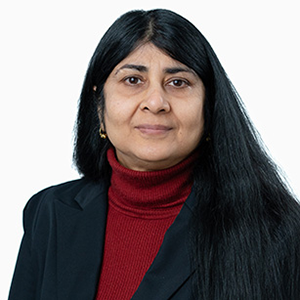
Modern communication networks face growing challenges in performance, security, and resilience as superintelligence,the Internet of Things, and high-performance computing continue to evolve. This talk explores how AI-driven techniques can transform network data into actionable intelligence to improve efficiency, adaptability, and security. It highlights three interconnected research areas: intelligent congestion control, network traffic fingerprinting, and resilient computing systems. First, machine learning techniques, including Gated Recurrent Units (GRUs), are examined for identifying TCP congestion control protocols and analyzing network behavior. Second, deep learning approaches for browser and IoT device fingerprinting using encrypted traffic are discussed, emphasizing their applications in network security. Third, fault-tolerant and adaptive mechanisms for improving the reliability of heterogeneous computing environments are explored. The talk concludes by discussing emerging opportunities for integrating large language models, knowledge graphs, and intelligent decision-making to develop more efficient, secure, and self-adaptive communication networks. About the speaker: Dr Sandhya Aneja is an Assistant Professor of Computer Science at Marist College in Poughkeepsie, New York. Her primary areas of interest include Wireless Networks, High-Performance Computing, the Internet of Things, and Artificial Intelligence technologies—machine Learning, machine Translation, and deep Learning.

Comments

Download from Google Play

Download from App Store
 United States