



 Claim Ownership
tastylive: Last Call
Subscribed: 35Played: 653
Subscribe

© ℗ & © copyright 2013 - 2025 tastylive. All Rights Reserved.
Description
Join our hosts as they review their trades of the day as well as analyze opportunities for the next trading day, all live, on Last Call.
2307 Episodes
Reverse

Hosts Liz and Jenny analyzed Kai's two-week zero-DTE study revealing that mechanical 25% profit targets worked perfectly (100% success) while 50% targets significantly underperformed due to one extreme directional session. The analysis covered the chaotic period including the day markets swung from +125 to -125, with the segment noting that despite the violence, SPX still spent 30-45% of those sessions inside iron condor strikes, providing "enough time for active profit taking before breach." The key insight was that in volatile environments, lower profit targets prove superior - the 25% target group achieved 89% win rate versus 80% for 50% targets, with dramatically lower max loss percentages (11% vs 20%). The VIX-1D chart revealed it exceeded regular VIX only once during the period (first occurrence since October 21st), potentially marking the volatility peak. The study emphasized that call-side testing dominated (68% call-side vs 32% put-side outside strikes) consistent with strong market rally, though hosts cautioned this represents only 2-3 weeks of data requiring continued monitoring as market conditions evolve.
In today's Skinny on Options: Abstract Applications, Dr. Jim Schultz and the hosts discussed the Black-Scholes option pricing model, emphasizing its theoretical underpinnings and assumptions. They debated the model's practicality, recognizing its limitations in real-world trading scenarios. The conversation explored topics such as geometric Brownian motion, European style options, and the constant volatility assumption, with hosts noting that while the model serves as a foundational framework, it often diverges from market reality. Ultimately, they acknowledged its relevance for retail traders despite its shortcomings.
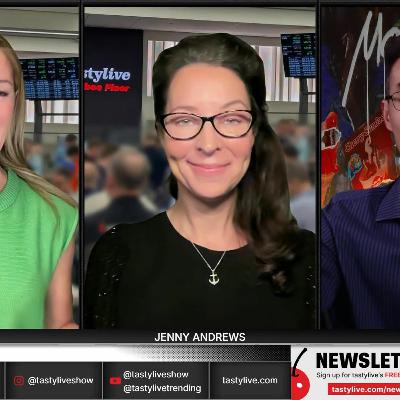
Hosts Liz and Jenny welcomed researcher Kai after a snowy Chicago weekend where Kai's backyard sledding hill became neighborhood central with kids spending 3-4 hours outside. The market discussion focused on an exceptionally strong but deceptively quiet week where S&P 500's 3.7-4.7% gain represented a top-5-percentile weekly move, though lighter trading volumes and selective stock participation made it feel less dramatic. Rate cut expectations whipsawed from 96% down to 55% before rebounding to 87-90% as economic data came in line with expectations, with the December 18-19th Fed meeting approaching. Implied volatility declined across most assets with only Euro and gold staying relatively unchanged, creating excellent conditions for put sellers. The upcoming week features busy retail earnings including American Eagle, Macy's, Dollar Tree, Dollar General, and technology names like Marvell, CrowdStrike, Okta, Salesforce, and Snowflake. The hosts also requested Kai research NASDAQ 100 rebalancing impacts on deleted stocks (Lululemon, Trade Desk) versus added stocks, exploring whether removed stocks tend to decline post-announcement.
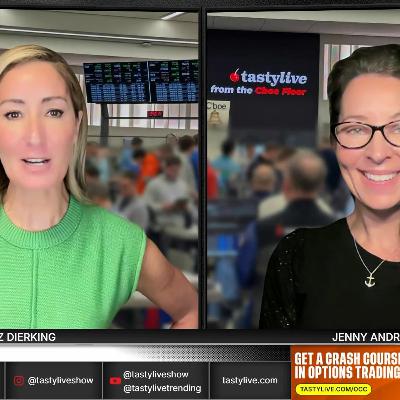
In this segment of "Confirm and Send," Liz and Jenny address common trading questions, starting with the potential for a Santa Claus rally in December, suggesting a tendency for upward movement as the year closes. They discuss a long call spread example using SPX options, clarifying risk and profit potential. The conversation shifts to NASDAQ 100 rebalancing, highlighting concerns about companies dropped from the index, specifically mentioning Lululemon (LULU) and Trade Desk (TTD). They plan to consult their research team for deeper insights on this topic.
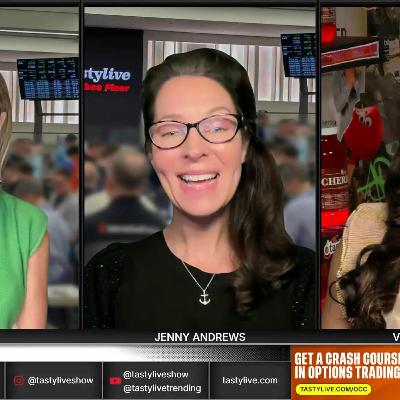


Hosts Tony and Chris conducted a selective What's Your Assumption session executing only two trades out of ten submissions due to challenging market conditions including low implied volatility and wide bid-ask spreads. Both hosts entered AMD positions with Chris doing 185-195 put spread at 62% probability of profit and Tony executing inverse 195-185 put spread, with Chris providing technical analysis identifying potential gap fill to October 3rd close at $164.67 or double bottom formation around $194. Multiple passes included UNH complex structure (280 put with 360-370 call ratio deemed confusing), iBit covered calls (waiting for resistance test at $56 level), Palantir strangle (12.5 IV rank too low despite viewer Roberto's suggestion), Roblox iron condor (30-50 cent wide markets deemed untradeable), MU iron condor (dollar-wide markets on 40-delta options), and Coinbase call ratio (preferring direct crypto exposure over corporate stocks). The session featured Chris's dramatic Fort Collins stories about saving Dominique Collins from car accident using tourniquet skills learned from "American Legion" game, plus Tony's Costco membership restriction due to wife's superstition about prior relationships ending after getting memberships.
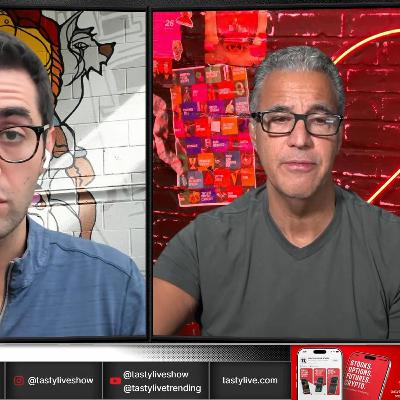

The stock market surged before Thanksgiving starts off the holiday season, cheering as December Fed rate cut bets solidify. What's next from here? tastylive's Head of Global Macro Ilya Spivak breaks down price action and latest economic news to consider if this rally has room to continue, or if sellers will return in force as the FOMC meeting draws closer.
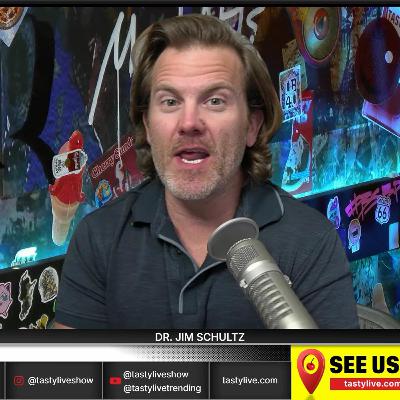
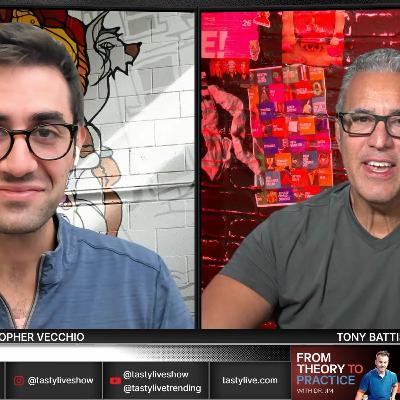
In today's From Theory to Practice, Dr. Jim used the huge market rally to close several profitable positions ahead of the holiday break, including strangles in /MES, DAL, and QCOM, and also a short put in TGT—all displaying the advantages of strategic premium selling. He highlighted the importance of managing positions before extended market closures and demonstrated how short puts can provide beneficial buffer room during market volatility.

Comments

Download from Google Play

Download from App Store
 United States