


'The Trump Administration Must Abandon Its Delusions About Destroying the EU'
Update: 2025-12-12
Description
Read our Digital & Print Editions
And support our mission to provide fearless stories about and outside the media system
SUBSCRIBE TODAY
Members of the Trump administration are guilty of making the same mistake as backers of Brexit in the UK, in assuming other people share their own prejudices about the European Union. This perception bias has led the administration to conclude that Europeans are yearning to be "free" from the "shackles" of the EU, and that the US has a crucial role to play in achieving this.
In its recent National Security Strategy, the administration blames what it calls Europe's decline on the supposedly malign "activities" of the European Union, which it accuses of undermining political liberty and sovereignty, and imposing stifling over-regulation. It hints at its desire to break the bloc apart, in order to restore European nations' "individual character and history."
According to the defense analysis organization, Defense One, this aspiration is made even more explicit in a longer unpublished version of the NSS which it claims to have seen, which lists Austria, Hungary, Italy and Poland as countries the US should "work more with…with the goal of pulling them away from the [European Union]"
However, recent opinion polls confirm that across the EU, a majority of people still have a broadly positive view towards it, even in countries like those above targeted by the US.
An opinion poll conducted by the Pew Research Center in September revealed that among the nine member countries surveyed, seven-in-ten or more in Sweden, Germany and the Netherlands, and over half in Spain, Italy, Poland, France and Hungary, have a favourable view of the EU. The only country where views were more negative than negative was Greece.
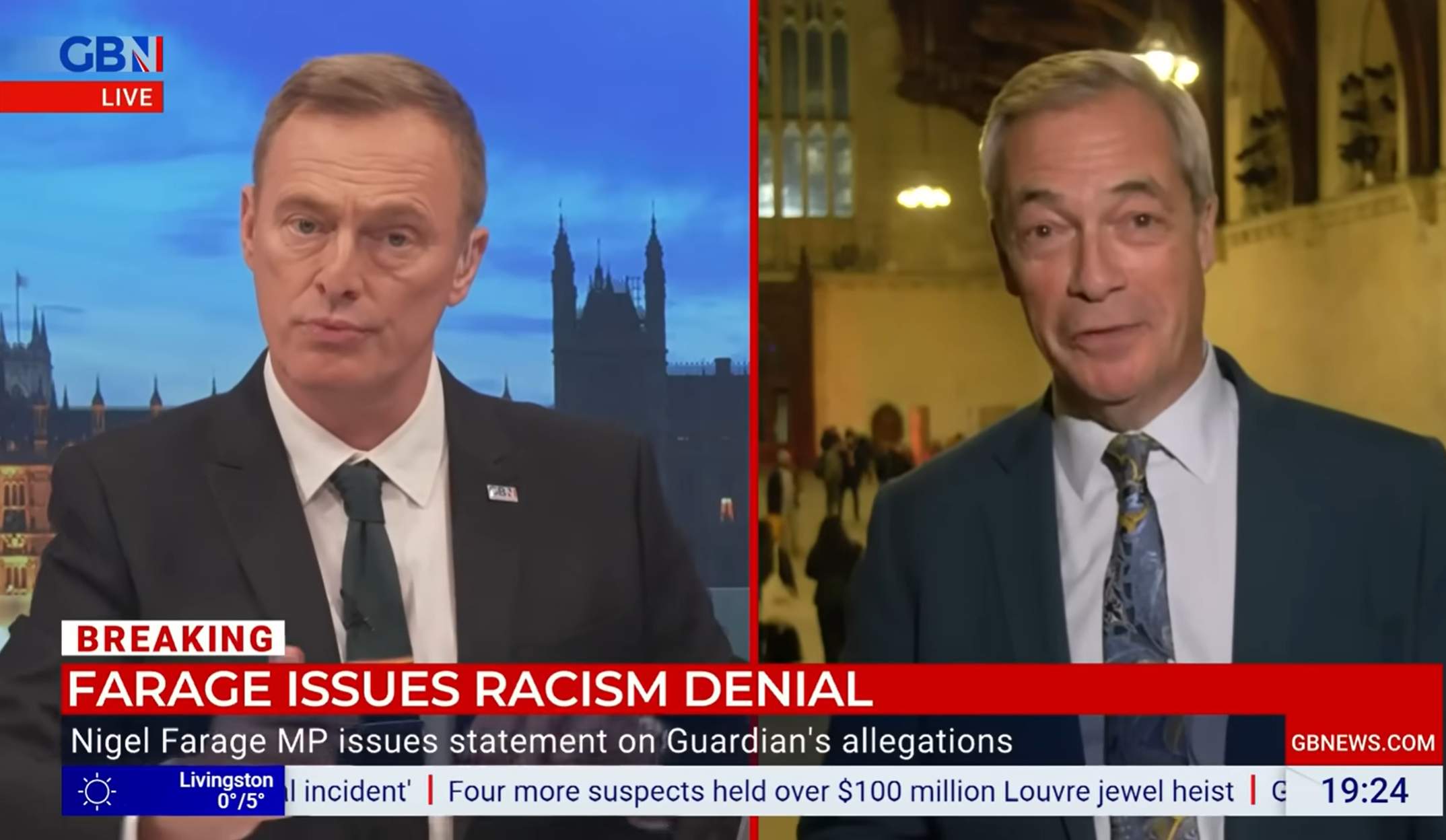
Nigel Farage Accepts Another £135,000 From Gold Bullion Firm for Just 12 Hours Work
The Reform UK leader has pocketed £415,500 so far this year to act as the company's "Brand Ambassador"
Russell Scott
The same poll revealed that even in countries outside the EU many held a broadly positive attitude towards the bloc. In Canada, Nigeria, South Korea and Australia, roughly three-quarters had a favorable opinion of the EU. Six-in-ten or more agreed in five other nonmember countries, including the United Kingdom, and even the United States itself.
Views were more finely balanced in Argentina, Brazil, Israel, Mexico, Turkey and South Africa.
A similar poll conducted EU-wide earlier this year by the EU's in-house surveyor, Eurobarometer, revealed that over 74% of respondents think that their country benefits from EU membership - the best result ever recorded since this question was first asked in 1983. Figures ranged from a staggering 92% in Malta, over 90% in Ireland, Lithuania, Estonia and Denmark, to the lowest percentage in Bulgaria, at a still solid 61%.
In the same survey, 89% said they believed that more unity was crucial to tackle global challenges, with 75% or more citizens agreeing with this in every Member State.
Another poll conducted by the same organization this year found that over 70% of respondents in the 20 euro member states also believed that the euro was a good thing both for the EU and for their own country.
In a third poll, a majority of correspondents in nearly every EU member state supported further EU enlargement, with Ukraine the most favoured country for accession, provided it can meet the membership criteria.
Amongst those more sceptical about enlargement, concerns included uncontrolled migration (40%), corruption, organized crime, terrorism (39%) and the cost to European taxpayers (37%).
This suggests that the US administration may be onto something, when it highlights concerns in its NSS about Europe's stagnating economy, migration policies, and loss of self-confidence. But, just as Brexit was never the right solution to the UK's genuine domestic problems in 2016, when the Brexit referendum took place, so, breaking apart the EU would not resolve Europe's current ills.
Emp...
And support our mission to provide fearless stories about and outside the media system
SUBSCRIBE TODAY
Members of the Trump administration are guilty of making the same mistake as backers of Brexit in the UK, in assuming other people share their own prejudices about the European Union. This perception bias has led the administration to conclude that Europeans are yearning to be "free" from the "shackles" of the EU, and that the US has a crucial role to play in achieving this.
In its recent National Security Strategy, the administration blames what it calls Europe's decline on the supposedly malign "activities" of the European Union, which it accuses of undermining political liberty and sovereignty, and imposing stifling over-regulation. It hints at its desire to break the bloc apart, in order to restore European nations' "individual character and history."
According to the defense analysis organization, Defense One, this aspiration is made even more explicit in a longer unpublished version of the NSS which it claims to have seen, which lists Austria, Hungary, Italy and Poland as countries the US should "work more with…with the goal of pulling them away from the [European Union]"
However, recent opinion polls confirm that across the EU, a majority of people still have a broadly positive view towards it, even in countries like those above targeted by the US.
An opinion poll conducted by the Pew Research Center in September revealed that among the nine member countries surveyed, seven-in-ten or more in Sweden, Germany and the Netherlands, and over half in Spain, Italy, Poland, France and Hungary, have a favourable view of the EU. The only country where views were more negative than negative was Greece.
Nigel Farage Accepts Another £135,000 From Gold Bullion Firm for Just 12 Hours Work
The Reform UK leader has pocketed £415,500 so far this year to act as the company's "Brand Ambassador"
Russell Scott
The same poll revealed that even in countries outside the EU many held a broadly positive attitude towards the bloc. In Canada, Nigeria, South Korea and Australia, roughly three-quarters had a favorable opinion of the EU. Six-in-ten or more agreed in five other nonmember countries, including the United Kingdom, and even the United States itself.
Views were more finely balanced in Argentina, Brazil, Israel, Mexico, Turkey and South Africa.
A similar poll conducted EU-wide earlier this year by the EU's in-house surveyor, Eurobarometer, revealed that over 74% of respondents think that their country benefits from EU membership - the best result ever recorded since this question was first asked in 1983. Figures ranged from a staggering 92% in Malta, over 90% in Ireland, Lithuania, Estonia and Denmark, to the lowest percentage in Bulgaria, at a still solid 61%.
In the same survey, 89% said they believed that more unity was crucial to tackle global challenges, with 75% or more citizens agreeing with this in every Member State.
Another poll conducted by the same organization this year found that over 70% of respondents in the 20 euro member states also believed that the euro was a good thing both for the EU and for their own country.
In a third poll, a majority of correspondents in nearly every EU member state supported further EU enlargement, with Ukraine the most favoured country for accession, provided it can meet the membership criteria.
Amongst those more sceptical about enlargement, concerns included uncontrolled migration (40%), corruption, organized crime, terrorism (39%) and the cost to European taxpayers (37%).
This suggests that the US administration may be onto something, when it highlights concerns in its NSS about Europe's stagnating economy, migration policies, and loss of self-confidence. But, just as Brexit was never the right solution to the UK's genuine domestic problems in 2016, when the Brexit referendum took place, so, breaking apart the EU would not resolve Europe's current ills.
Emp...

Comments

In Channel















Download from Google Play

Download from App Store
 United States
00:00
00:00
1.0x

