


125: The Devolution of Neoliberalism – UTS Finance Department Roundtable
Description
In this special edition of the [i3] Podcast, in collaboration with the UTS Finance Department, we explore how the neoliberal model of economics, which largely ignored politics and focused on financial metrics, has eroded over time and made way for the rise of populism, which has exerted its influence on economies around the world. Why did the guardrails that neoliberalism provided slowly disappear and what are the consequences of this? Is there any model that will replace it? Political Economist Elizabeth Humphrys, Geopolitical Specialist Philipp Ivanov and UTS Industry Lecturer Rob Prugue delve deep into this fascinating topic as part of the Circle the Square roundtable series.
__________
Follow the Investment Innovation Institute [i3] on Linkedin
Subscribe to our Newsletter
Explore our library of insights from leading institutional investors at [i3] Insights
__________
Overview of Podcast
00:00 – Introduction
Wouter introduces the special i3 Podcast edition, produced with UTS Finance. He outlines the episode's theme: how the post-war neoliberal guardrails that long supported economic certainty have eroded, creating persistent uncertainty in markets. He introduces guests Elizabeth Humphrys, Philipp Ivanov and Rob Prugue.
03:04 – Origins of Neoliberal Guardrails (Rob)
Rob explains the emergence of post-WWII guardrails: Bretton Woods institutions, NATO, the World Bank, IMF and other frameworks enabling stability and collective economic growth. They created a predictable environment but gradually weakened.
06:05 – Australian Context & Rise of Neoliberalism (Elizabeth)
Elizabeth describes the long boom after WWII, its collapse in the 1970s, and neoliberalism's emergence. She explains how the Hawke Government in 1983 implemented major reforms—floating the dollar, tariff cuts, privatisation—enabled by strong political capital and union involvement.
10:09 – Global Perspective (Philipp)
Philipp explains the Cold War dynamic: US-led order versus the Soviet bloc, with non-aligned states largely weak. Post-1970s Soviet stagnation and 1990s globalisation cemented US dominance, setting the stage for the "golden age" of the neoliberal order.
14:21 – Pax Americana and the Peace Dividend
Rob discusses how guardrails encouraged discipline: countries deviating too far politically were penalised by markets. But global shifts, manufacturing loss and deindustrialisation gradually hollowed out these systems.
16:02 – Contestation of Neoliberalism & Social Impacts (Elizabeth)
Elizabeth stresses that neoliberalism was contested from the start. She highlights social movements in the Global South, rising inequality, and sharp pain in Eastern Europe during rapid liberalisation. Domestic consequences—job losses, wage stagnation—fuelled political distrust.
22:03 – Globalisation, Inequality & a Multipolar World
Wouter links globalisation to economic displacement. Philipp outlines four major geopolitical mistakes after the Cold War:
-
Assuming China would remain benign
-
Dismissing Russia
-
Taking the developing world for granted
-
Ignoring the power of nationalism and inequality
27:26 – Where Are We Now? Have the Guardrails Fully Collapsed?
Rob argues that the guardrails can't simply be rebuilt—political divisiveness and grievance-driven politics are now embedded. Trust in US institutions and commitments (e.g., AUKUS) is eroding.
30:45 – Are We Heading Toward Chaos? (Elizabeth)
Elizabeth argues capitalism is resilient but political legitimacy is collapsing. The promise of neoliberalism—trickle-down prosperity, stable institutions—failed large groups of people, fuelling anti-politics, housing unaffordability and climate-related tensions.
37:17 – Beyond Traditional Politics
Elizabeth notes the breakdown of mass-membership parties and unions. Declining voter turnout and low trust create fertile ground for populism and fragmented political identities.
40:13 – Global Fractures & Major Trends (Philipp)
Philipp highlights five converging forces shaping today's uncertainty:
-
Economic fragmentation
-
Great-power competition
-
Societal divisions
-
Climate change
-
Technological revolution (especially AI)
45:28 – Technology as an Amplifier
Rob and Philipp discuss how technology intensifies divisions but is ultimately a human-driven tool. AI raises the stakes of geopolitical competition, especially between the US and China.
53:14 – What Could Future Guardrails Look Like?
Rob foresees three emerging forces:
-
Rise of nationalistic policymaking
-
Oligarchic influence filling the institutional vacuum
-
A tri-polar world (US, Europe, BRICS)
55:24 – Can Australia Rebuild Guardrails? (Elizabeth)
Elizabeth doubts that politicians currently have the vision for a new national project. She emphasises conflicts between economic growth, climate needs and powerful resource sectors.
59:24 – The Populist Base
Rob asks whether a new base of disillusioned voters is forming. Elizabeth agrees: anti-politics creates a vacuum easily filled by opportunistic populists, on either left or right.
1:02:03 – Role of Media
Rob highlights how politically aligned media ecosystems widen the vacuum and intensify division.
1:03:10 – Conclusion
Wouter closes by noting the episode doesn't provide solutions, but maps the journey from stable post-war neoliberalism to today's entrenched uncertainty.
Full Transcription of Episode 125
Wouter Klijn 00:00
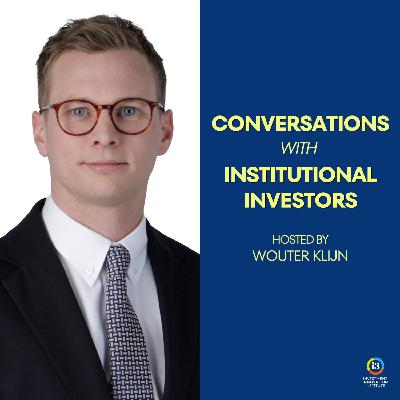
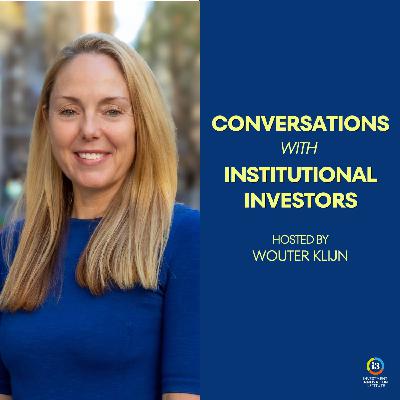
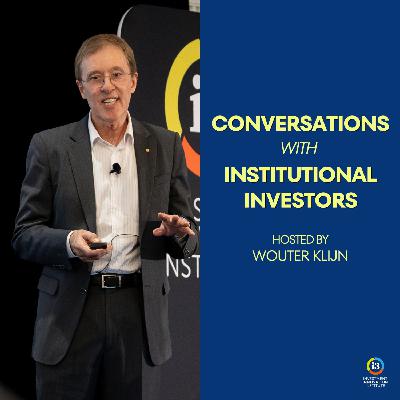
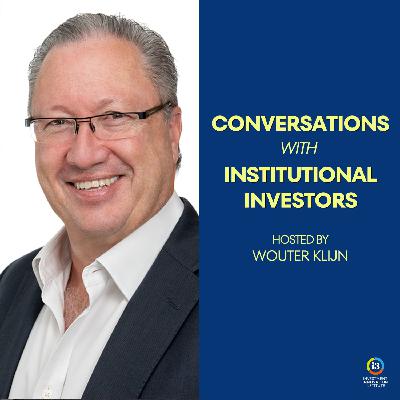
Welcome to a special edition of the [i3] Podcast, produced in partnership with the University of Technology of Sydney's Finance Department, which includes the Anchor Fund, an educational investment fund managing real money, which is run by students and overseen by Associate Professor of Finance, Lorenzo Casavecchia of UTS. So this episode aligns with the second instalment of the UTS Circle The Square sessions, which are a thought-provoking series of roundtables on economic, financial and political ideas. You can find them on YouTube, and of course, [i3] is very happy to support them. So today we will delve into the neoliberal model, which, post-war, has provided guardrails for economics to operate in and allow investors to focus on the usual numbers, earnings, inflation and growth. But these guardrails have been eroding under the influence of various forces, including the rise of populism, and this has led to an almost permanent state of uncertainty. And of course, we all know markets don't like uncertainty. So how did we get here? What has changed, and why did a neoliberal model held together for such a long time in the first place? So this episode sits a little bit outside of our usual investment talk. It's more about the system underneath the data, applied political economics, and we're asking why the guardrails that once held in place neoliberalism have been thinned out and what is left behind. So I'm joined here today with three panellists. So first off, we have Elizabeth Humphrys, who is the Head of Discipline for Social and Political Sciences at the University of Technology Sydney. Elizabeth is a political economist who focuses on the impact of financial crisis and climate change on labour relations. She is the author of the 2019 book 'How Labour Built Neoliberalism'. We're also joined by geopolitical strategist Philipp Ivanov. Philipp has been globally recognised as an expert on international relations, particularly China and China-Russia relations, and he has worked in Russia, in China and the United States. So he will provide us with a global view on this issue. He's also an Industry Fellow at UTS. And finally, we've got Rob Prugue, who is an Honorary Industry Lecturer at UTS, but who most of you probably know as the former CEO of Lazard Asset Management for the Asia-Pacific region. He's one of the driving forces behind the Circle The Square roundtable series. So welcome everyone. Okay, so we're looking at uncertainty in markets, which, to a large extent, has been caused by the dismantling of the guardrails in which the political debate have moved. Now let's start at the beginning. What were those guardrails and what kept politics out of the market for such a long time?
Rob Prugue <span lang="EN-US" style="font-fa









 United States
