


183 Palacinke & Cheesemaking: Nick’s Quest to Honor Baba Saveta’s Legacy
Description
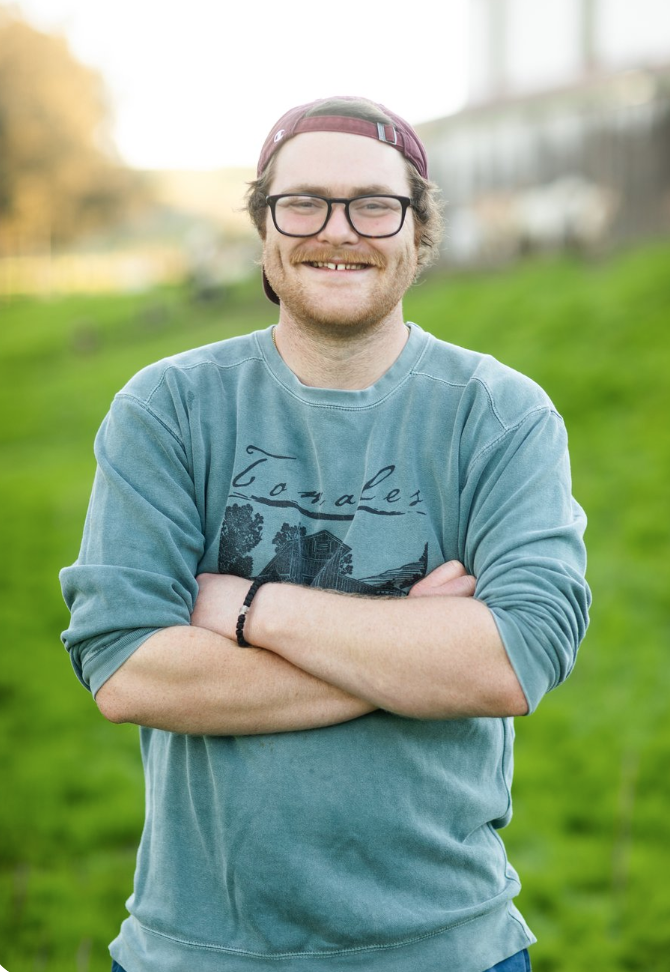
Our story begins with Nick’s memories of Saturday mornings with his cousins, consuming endless stacks of Palacinke, Balkan-style pancakes eaten with cheese or sugar (or both - and don’t knock it until you try it, because I did, and then I had to eat my words. Literally!).
As we trace the makers of Palacinke back through Nick’s lineage, Nick introduces us to his great-grandmother, Baba Saveta, who lived her entire life in the craggy mountains of Montenegro.
Though they never met and only overlapped on this earth by two years, Baba Saveta’s story, character, and expertise have left an indelible mark on Nick. Baba Saveta raised five children in a home hand-built by her husband, who she married in a love match disapproved of by her wealthy family of birth, living through war, hardship, and a century of radical change.
The difference between starvation and survival was the cheese Baba Saveta made twice daily during the summer months in her little mountaintop dairy, scrubbed clean with ashes each spring. Baba Saveta’s skill with cheese has become a particular point of connection for Nick, who now works as a cheesemaker in California. In today’s episode, he shares a great deal about the fascinating process of cheesemaking, particularly from the perspective of Baba Saveta, who did so much with so little.
In moments of daily work—tending his garden, curating cheeses, folding laundry—Nick reflects on this great-grandmother he never met and what she passed on to him. Today, I join Nick in honoring Baba Saveta’s values of self-sufficiency as well as her enduring spirit, wisdom, and love - and I ask, with him, how we can carry her legacy forward.
One note about this episode! Nick’s first shared his story with Alison Kay of Ancestral Kitchen, who was just recently a podcast guest in Episode 179, What Happens After Happily Ever After? Nick submitted this through Alison’s new portal on the Ancestral Kitchen website, where she is collecting memories, documents, recipes, and stories of those who cooked ancestrally. If you have anything to add to this repository, I’m putting the link in the show notes. Thanks so much to Alison for sharing Nick’s story with me - thank you to Nick for his time and this beautiful story - and thank YOU for beig here!
<figure class="wp-block-image size-full">
 </figure>
Listen to Nick Now
Follow The Storied Recipe in Your Favorite Player


Nick's Storied Recipe: Balkan Palačinke
<figure class="wp-block-embed is-type-wp-embed is-provider-the-storied-recipe wp-block-embed-the-storied-recipe">
https://thestoriedrecipe.com/palacinke-balkan-crepes-pancakes/
</figure>
Find Nick Campbell and Toluma Farms
Website: Toluma Farms and Tomales Farmstead Creamery
Address: Tomales Farmstead Creamery 5488 Middle Rd, Tomales, CA 94971
Share an Recipe, Document, or Memory of Ancestral Cooking with Alison here:
The Ancestral Kitchen Repository
The Storied Recipe Needs Your Help!
Please leave a 5-star review for the podcast right here!
This link will give all review options available on your device. Simply choose any option, click, and leave a review. Thank you!
The Storied Recipe Print Shop
Where every print tells a story.
High end prints for your kitchen walls: Download and print immediately.
The Storied Recipe Newsletter
The Storied Recipe is a community that believes food is a universal love language. Join for episode & recipe updates every Friday mornings. (And occasional free gifts!)
Nick's Original Tribute to Baba Saveta, Submitted to The Ancestral Kitchen Repository
My great-grandmother Saveta (Sah-vet-a) was born in 1909. She had my maternal grandmother in 1943, in a house with no electricity and water that came from a well a long walk down the road. She came from a well off family, compared to most people in her region of northern Montenegro, and was the first person in our family village to have a cast iron stove and not cook over an open hearth in the middle of the room. It was purchased by her father when she ran off with my great-grandfather Bašo (Basho) to be wed. He had been a worker on her father’s farm, and they had fallen in love.
Baba Saveta was the main character in most of my mother’s stories about her childhood visiting the village. She was a wonder woman. She could spin wool, weave cloth, care for and milk animals, make cheese and other dairy products, cook anything from seemingly nothing, help with butchering and put up the meat, help with the hay and grain harvests, all things my young suburban brain could barely understand a single person knowing. She is surely the reason I found interest in rural living and real food.
We still make some recipes that she did. In spring, we make a spread from soured cream, mashed young cheese curds and finely sliced green onions to eat with hot bread or baked potatoes. Many of my cousins’ favorite way to eat eggs are “Baba’s eggs,” where a pan of salted cream is brought to just scalding, whole eggs are added and the whole lot is gently mixed together over the stove until an unctuous, bright yellow mass forms and is eaten piping hot with chunks of bread, preferably together taken from the pan it was cooked in. As cold weather approaches, we put smoked pork ribs to simmer, and add diced potatoes to the broth along with a roux made flour added to onions fried in lard, enlivened with bright red paprika, and plenty of soured cream to finish. Her potato soup is one of our family’s true comfort foods. My great-grandmother was apparently well known for making savory filo dough pies called pita, filled with either brined cheese and egg or cream and egg. She passed this knowledge down to my grandmother, and while my mother never really learned the art of how to make the paper-thin stretched dough by hand, I was able to convince my grandmother to show me and keep the tradition going, in spite of her wanting to show my girl cousins (all called sisters in Serbian) before showing me, though none showed interest. I like having that connection with Baba Saveta.
Baba Saveta had a little dairy that served as a smokehouse in the winter, and would be scrubbed sparkling clean with ashes in spring when the cows and sheep would come back into milk and dairying would begin for the year. All of the animals would be milked in the morning and evening. The still-warm morning milk was made into full fat cheese immediately. The curd was ladled into cheeseclothes, tied up, and put between boards on sloped tables with pristinely cleaned rocks kept for years for this purposed, probably soaked through with whey and full of friendly bacteria. The resulting thin, pressed curd was sliced into pieces, heavily salted, and put into wooden buckets and barrels made by her husband and would make their own brine to age until needed. The evening milk would be scalded in a large copper kettle, and portioned out into long wooden bowls, similar to American dough troughs or biscuit bowls, hewed by my great-grandfather from logs, to sit overnight to form a thick clotted cream called kajmak (kai-mak) in most of the Balkans, but skorup (sko-roop) in our regional dialect. That could be eaten fresh, or could be salted and packed into containers like the cheese. My mother always cherished memories of Ivandan (Eevahn-dahn), St. John’s Day, on June 24th, when Baba Saveta would make daisy wreaths and put them over all the doors of the different buildings, and would serve the fresh skorup with fresh bread as a treat. This surely had pagan roots from the early Slavs settling the area, and lasted well past the conversion of the Serbs to Eastern Orthodoxy. The skim milk from the production of skorup was made into a cheese called prljo (per-ly-oh). It was a sharp tasting, lean cheese that was stored in hide bags made from carefully skinned l


 United States
