


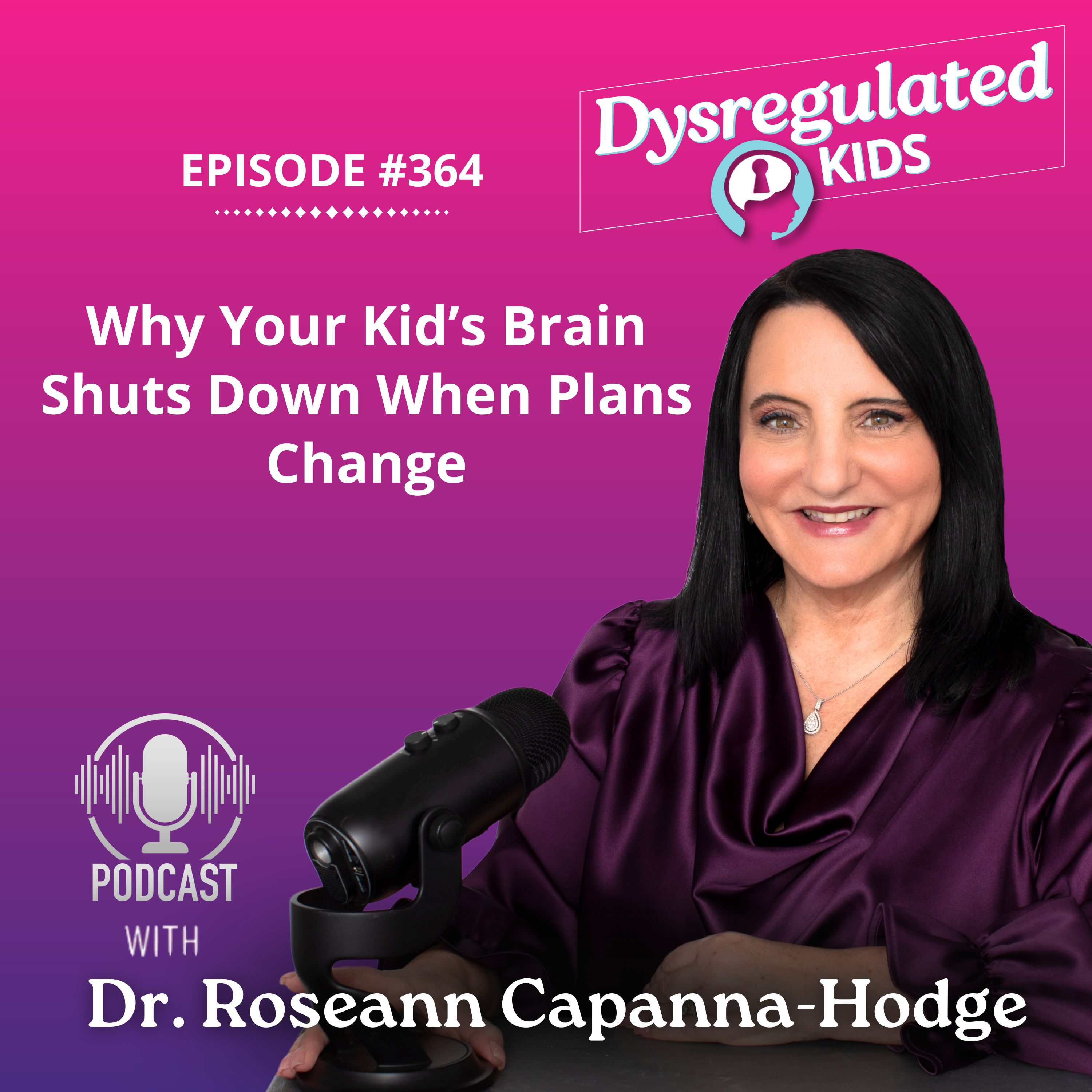
364: Why Your Kid’s Brain Shuts Down When Plans Change
Description
Child meltdowns spike when plans change because your child’s brain feels unsafe and the nervous system goes into survival mode. I’ll guide you through Regulation First Parenting™ strategies to calm, support, and help your child adapt with confidence.
Every parent knows the moment when plans change and your child suddenly spirals into tears, anger, or shutdown. It feels overwhelming, frustrating, and sometimes even personal—but you’re not alone.
In today’s episode, we explore why these meltdowns happen and practical ways to help your child stay regulated and resilient.
Why does my child shut down when plans change?
It’s not defiance—it’s anxiety in disguise. Many children struggle with flexibility because their nervous system craves predictability.
When plans change, the amygdala—the brain’s fear center—takes over, and the prefrontal cortex responsible for logic goes offline.
- Small changes feel like danger to a dysregulated brain.
- Stress accumulates silently throughout the day (think schoolwork, transitions, friendships), filling your child’s “stress cup.”
- Meltdowns are the overflow, signaling their brain is overwhelmed.
Parent Story
Maria’s daughter, Molly, would explode every weekend when plans shifted. By previewing the day and co-regulating, Maria helped Molly feel safe—and those meltdowns stopped.
How can I help my child cope with unexpected changes?
The key is regulation first, flexibility second. You can’t force a child to adapt if their nervous system is in survival mode. Instead:
- Preview changes in advance—give gentle warnings or visual schedules.
- Co-regulate through transitions—model calm, name emotions, and breathe together.
- Practice flexibility in small doses—switch dinner seating or minor routines while your child is calm.
Tip: Every time your child navigates a small change successfully, their brain rewires for resilience. Predictability isn’t coddling—it’s scaffolding their emotional growth.
Why do some kids struggle more than others?
Nervous system sensitivity plays a big role.
Children with neurodivergence, trauma histories, or heightened sensory experiences often feel emotions and changes more intensely. Their brains are wired to survive, not to negotiate logic in the moment.
- Over- or under-stimulation can trigger emotional dysregulation.
- Daily stress adds up, making even minor changes feel impossible.
- Developmental expectations vary by age, from toddlers needing reassurance to teens pushing back verbally.
A tween might say, “You ruined everything!” while a teen might retreat with, “I don’t care.” Same nervous system reaction—different expression.
Get instant tools to soothe your child’s stress and prevent meltdowns—grab your Quick CALM now at https://drroseann.com/quickcalm/
What mistakes do parents make during meltdowns?
It’s natural to want to lecture, explain, or impose consequences—but when the brain is in red-zone survival mode, logic doesn’t land.
- Talk less, regulate more—be the calm anchor your child needs.
- Avoid rescuing—overcorrecting adds stress to the cup.
- Model coping strategies—deep breaths, pausing, and gentle guidance teach resilience more than words.
🗣️ “Change isn’t the enemy for your kid, it’s the dysregulation of their nervous system that’s causing them to freak out. When we regulate first, we build resilience for life.”— Dr. Roseann
Yelling less and staying calm isn’t about being perfect—it’s about having the right tools.
Join the Dysregulation Insider VIP list and get your FREE Regulation Rescue Kit, designed to help you handle oppositional behaviors without losing it.
Download it now at www.drroseann.com/newsletter
How do I create a safe space for my child to learn flexibility?
- Anchor with routine—consistent rituals lower baseline stress.
- Rehearse calm transitions—practice small changes when your child is regulated.
- Build cognitive flexibility gradually—regulation strengthens the brain pathways that support adapting to change.
Tip: Think of it like insulin for a diabetic—the brain needs predictability and regulation to thrive.
Takeaway
Helping a child navigate changes is not about control—it’s about connection. By calming the brain first, providing predictability, and practicing small doses of flexibility, parents can reduce meltdowns, strengthen emotional regulation, and support brain development.
With patience, consistency, and empathy, your child can learn to manage stress and thrive.
FAQs
Why does my child throw tantrums when plans change?
It’s their nervous system signaling overload. Stress, sensory sensitivity, and anxiety combine, making even minor changes feel threatening.
How can I help my child regulate emotions during a school day?
Preview transitions, co-regulate, and practice calm coping strategies to prevent the stress cup from overflowing.
What is the role of the prefrontal cortex in emotional regulation?
It manages logic and problem solving, but when the amygdala triggers fear, the prefrontal cortex temporarily shuts down.
Can kids learn flexibility if they are neurodivergent?
Yes! With regulation first, consistent routines, and safe, small practice opportunities, cognitive flexibility can develop over time.
Is my child’s rigidity normal for their age?
All children have varying tolerance for change, but dysregulated brains need extra predictability and support to navigate transitions successfully.
When your child is struggling, time matters.
Don’t wait and wonder—use the Solution Matcher to get clear next steps, based on what’s actually going on with your child’s brain and behavior.
Take the quiz at www.drroseann.com/help









 United States
