


#41 - Michael Stroe | Solving Happiness, Oneshotting Procrastination & Speed Running Stream Entry
Description
Michael Stroe (@Plus3Happiness) is a phenomenologist and “happiness concierge.” Through a combination of the Buddhist Fetters & somatic practices, he’s allegedly reduced his suffering by ~90%. He claims to consistently live at 9/10 life satisfaction and has skillfully guided others into similar transformations.
Today we demystify his journey and discuss concrete practices for oneshotting procrastination, reducing reactivity and permanently raising the floor of your happiness (seriously).
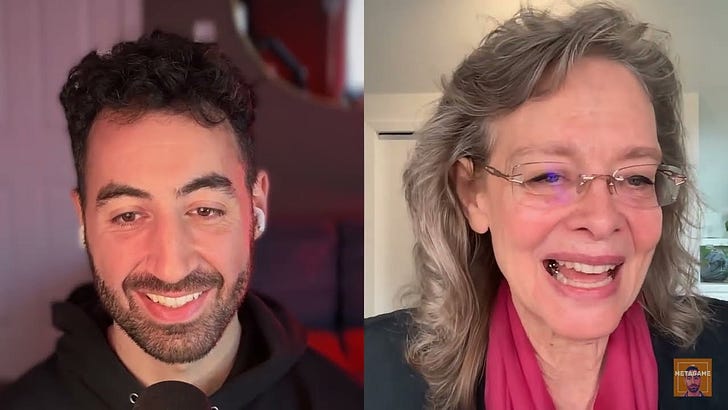
Watch on YouTube:
Transcript — Michael Stroe
[00:00:00 ] Daniel Kazandjian: Michael Stroe, welcome to the Metagame.
Michael Stroe: Well, thank you for having me. How you doing?
Daniel Kazandjian: I’m doing great. I’m really excited for this conversation. You famously, through a combination of Buddhist practices and somatic practices reduced your suffering by around 90%, which
Michael Stroe: Even more these days.
Daniel Kazandjian: And now you’re teaching other people how to do that, which is fantastic. How did you figure that out? Like what, what’s the story there?
Michael Stroe: As many great things happened by mistake, it’s a total mistake. I was on a more or less sabbatical in like 2023 in Barcelona. Uh, not in a great place in life, honestly.
Daniel Kazandjian: Hmm.
Michael Stroe: and towards the end of the trip, someone actually, someone that, someone being Frank Yang, which you might be familiar with,
Daniel Kazandjian: Mm-hmm.
[00:01:00 ] Michael Stroe: Shared, Kevin Schanilec’s website, which I’ve messaged, and he was very succinct as like, “try Liberation Unleashed” being a Liberation Unleashed being this forum for, for these practices
Daniel Kazandjian: Can you say that again? Liberation
Michael Stroe: unleashed. Yes,
Daniel Kazandjian: Unleashed. Yeah.
Michael Stroe: Yes. And very quickly realize that the way they’re doing it is one practice at a time and it’s months of work. My ADHD Mind, uh, was like, yeah, but what if we do everything all at once? Um, instead of doing one practice at a time, I basically did eight of them daily for a couple of hours.’cause that’s how you do it. Uh, in a bunch of days I had a perceptual shift, which was very interesting, and a bit of a honeymoon for like two days. Uh, that was something that I found funny that um, some people speak of these, uh, awakenings or whatever in terms of like, oh, months of bliss. And I just had two days and on the second day I was in an airport delayed for like five hours, which I was chill about.
[00:02:00 ] But that wasn’t necessarily like, whoa, I’m so alive. They’re like, yeah, that’s not happening. It was a bit better than usual. That perception shift coincided with a bit of a, what should I put it? Less? Uh, stress, let’s call it initially. ‘cause I didn’t know what was happening. Just less stress, less, uh, overthinking, less, chatter.
And actually one of the, one of the few things that I found really interesting somehow coincided with great sleep. I don’t know how to explain it seconds to sleep.
Daniel Kazandjian: Wow.
Michael Stroe: I found it very interesting because I used to get like one hour, two hours, three hours to get to sleep. And I just have ideas and sit in bed for just 30 seconds. I was out and I’m like, okay, this is an interesting benefit. Not gonna lie. Uh, I don’t even care about all these benefits, I’m sleeping. Like that’s, that’s enough. And from then on I sort of returned to simply the scene, the, the initial website where I was guided, uh, to Liberation Unleashed.
And I’ve done the practices on attachment and version. Okay.
[00:03:00 ] And I should mention that immediately after stream entry, which would be the first shift that I had where it kind of, you notice that there’s just the body mind, there’s no little guy driving this, uh, body around. Um, you start to be aware of the fact that you kind of don’t like a lot of the things that are happening.
You’re trying to pull out experience to such an extent. And, I had 10, 15 years of anxiety and other things on and off. Um, when I started looking at them, uh, I sort of noticed that I had a sort of a version towards so many things even after the first shift in like two more weeks had another one where, oh, like I, my, my, like that was the point where anxiety got reduced both in size and intensity and that was a big deal, even more of a big deal than the first one. ‘cause the first one is, like I said, it was nice, I was sleeping better, but also realizing how much you hate your experience,
[00:04:00 ] let’s call it, put it into a certain perspective and realize that from whatever anxiety I used to have or whatever intensity, it went down by like 60, 70%, at least in duration.
Michael Stroe: One of the things I’ve noticed is actually, I used to have anxiety for days and weeks at a time about some stupid thing, or in general, like a generalized anxiety. And I realized that I couldn’t. Get anxiety going for more than 30 minutes. As in, if someone distracted me, I forgot I had anxiety, and I’m like, huh, don’t understand what’s happening.
Why do you mean like, I forgot I had anxiety. What do you mean? Like that makes no sense. And sort of like this continued, uh, after a bunch, uh, more time, a few other shifts, but this one especially, were like, oh, there’s a dare there. Which for me, there were years of trying self-development, failing at meditation, um, or is nothing working actually.
You sort of like, you do all these self-development things.
[00:05:00 ] You, you’re gonna do your finances and orders, like you’re not happy. You’re gonna get a great job, not happily encouraged to do these things. It’s like, okay, but like what works? Um, and I had a notion that there’s a debt there, but I didn’t have a notion about what’s possible.
It’s sort of like more of a faith, even though I’m not religious, more of a fate that it’s possible. I didn’t
Daniel Kazandjian: Yeah.
Michael Stroe: I feel like maybe some of the people that I was following were somewhat trustworthy in this sense.
Daniel Kazandjian: So, you just, so to recap, you had 10, 15 years of suffering with like, maybe above average levels of anxiety, is that what you’re saying?
Michael Stroe: Yeah.
Daniel Kazandjian: Yeah.
Michael Stroe: Were months at a time where I was to be okay. And the, the moments where I was okay were just the moments where I wasn’t doing anything. As you know, I was mostly taking sabbaticals, which is not necessarily a great thing in the sense of like, if you’re not active in society, you’re feeling great.
It’s like saying, oh, I’m feeling great on vacation, but I hate my job.
Daniel Kazandjian: Yeah, yeah, yeah. So from that, the practices at On Liberation Unleash, the first thing,
[00:06:00 ] Daniel Kazandjian: the thing that allowed you to sleep fast and stuff was, was that stream entry.
Michael Stroe: Yes. That would be stream entry. Yeah. And
Daniel Kazandjian: So just,
Michael Stroe: Obvious. Yeah.
Daniel Kazandjian: Just to bring people on board with that, what is stream entry?
Michael Stroe: Stream Entry, if I am to take away from the woo stuff, it’s like realizing there’s no self, but the problem with realizing there’s no self, it’s so, uh, abstract, but we, no one, no one know what it means, but it’s provocative.
But if I’m to be a very mundane phenomenologist, it’s just the sense that I’m no longer the little guy in the behind the eyes. I used to call it behind the eyes or behind the, an experience that sort of looks like a watches experience from afar a bit.
Daniel Kazandjian: Mm-hmm.
Michael Stroe: So realizing that, oh, I guess there’s nothing separate from the body, mind world. There’s just the body and mind. And my identity is more so that of a witness, uh, not of the tour, let’s call it. And it’s very simple. Like it’s mundane. One of my, uh, most treasured experiences, right? When someone says, uh.
[00:07:00 ] Is it almost disappointing that there is not more there? Because that’s what you kind of know. Like, okay, like yeah, they got it. And it’s like, of course, like after enlightenment, it’s just, just ordinary experience. Um, and yeah, basically just the sense of no longer identifying as the doer. It’s
Daniel Kazandjian: Mm-hmm.
Michael Stroe: There’s no one moving the body mind, just the body mind moving itself. Uh, it doesn’t need a do or it’s all conditioning. And so,
Daniel Kazandjian: Yeah.
Michael Stroe: freeing.
Daniel Kazandjian: So, so, uh, we might get into more details on this, but what’s interesting to me is what you said after that was when you realized that you had a lot of aversion to things.
Michael Stroe: Yes.
Dani



 United States
