


Continued Conversations with Alia Parise
Description
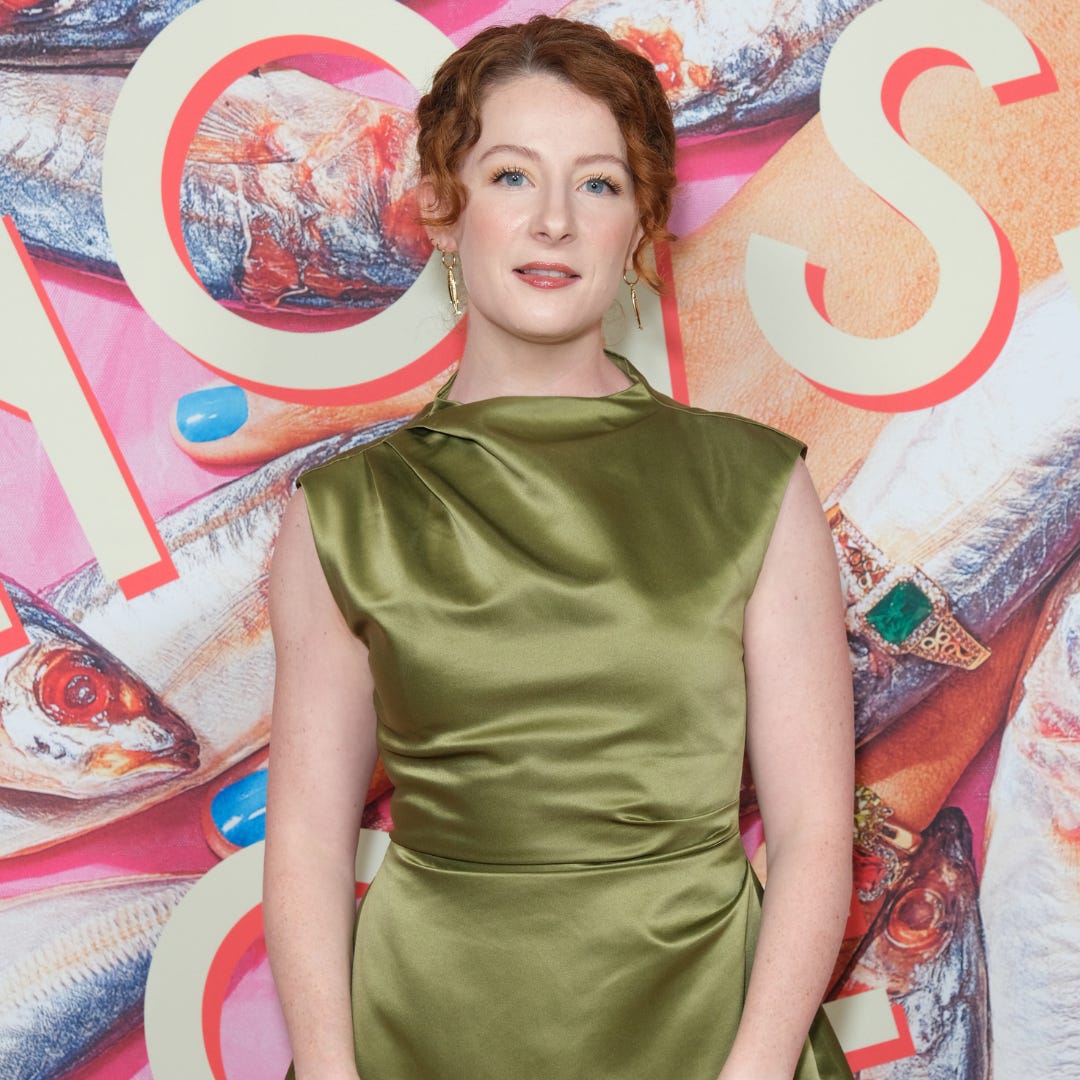
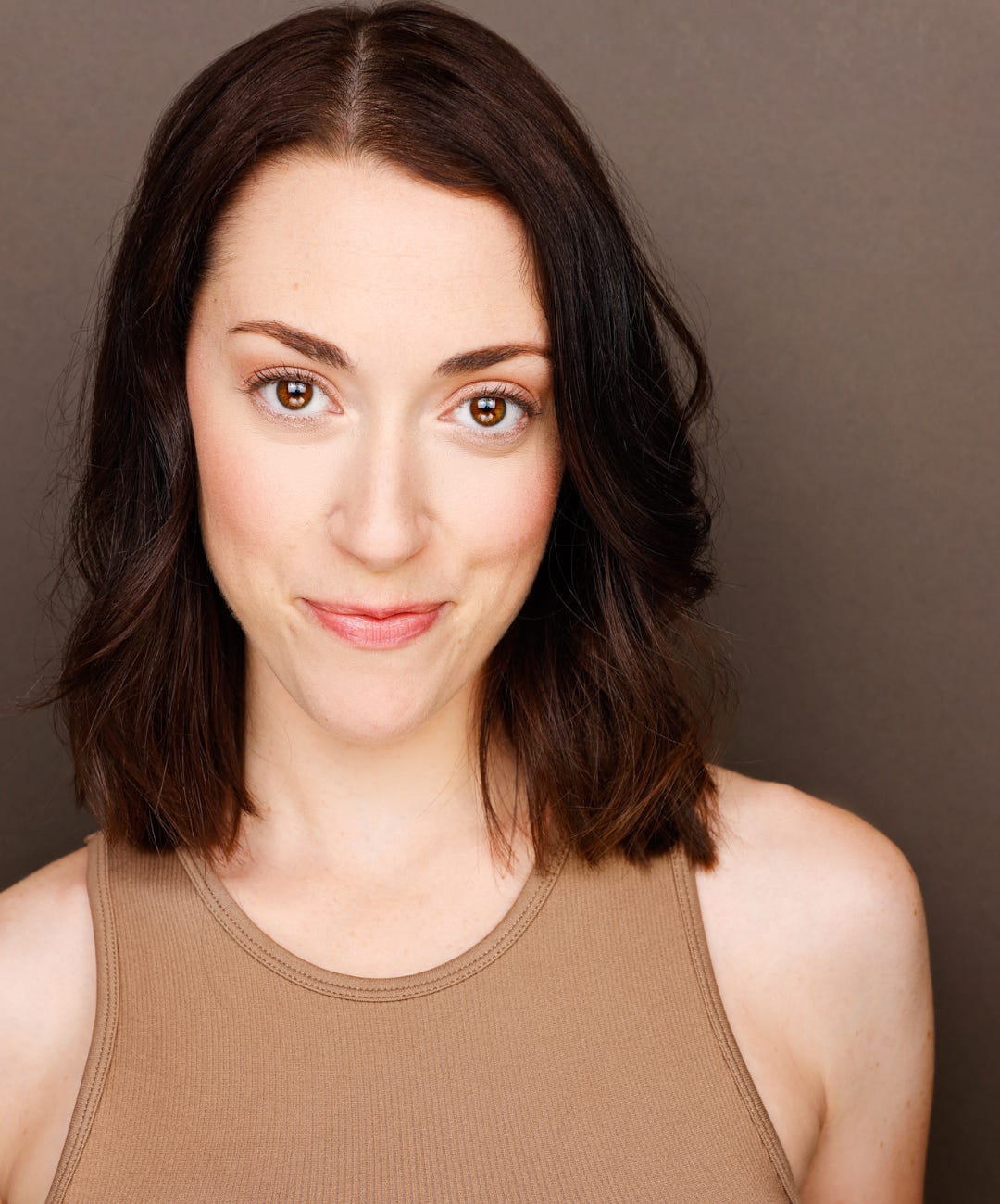
Everyone please welcome my friend and fellow fit model Alia Parise to A Broadway Body: Continued Conversations! Alia and I have been seeing each other around the fit model world for a few years now. We often work together with the same clients, and I knew I needed to have a conversation with her.
Alia is a plus model who works with a wide range of clients. Because we both actively work as fit models, I wanted to discuss her experience as it pertains to her own body image. Her insight into what it takes to mentally protect yourself as a fit model is very similar to my own experience, and it was so lovely and healing to chat with someone who works in the same industry.
She references how fitting has helped her relate better to her own body and how, despite diet culture and the beauty industry’s loud opinions, she doesn’t want her body to change because she likes the size she’s at - something I can very deeply relate with as well. Alia is a wealth of knowledge in the fit world, and her views on body image inspired me. I left our conversation feeling as empowered as ever in my body, and I hope hearing Alia’s story empowers you too!
“ So it's understanding your measurements and how it relates to the public, so you almost become an advocate for other people of your size. And knowing how those comments affect you, that's where you can shut other people down, whether it's a tech, a designer or a friend, and you become a person who can speak for others, and that's really, really gratifying. “
- Alia Parise
Alia Parise: So I've always been a big girl. My dad was 6’3”, my mom was always 5’7”. So I've always been very tall on the thicker, curvier side. And, you know, growing up through high school and middle school, I was always the tall girl. I always stood at least four or five inches taller than my friends. But I was also always fuller-figured – I'm a 2X model. Most of my clients consider me 2X. And so, I would tend to wear baggy clothing, just things I was really comfortable in, you know, always kind of hiding my body, right? And I didn't get a lot of comments about people saying stuff to me because the thing about being the tall girl was nobody wanted to mess with me. So that was good. I didn't really get picked on a lot.
So going into college, I went to an art school. So again, it was really chill. Everybody there was very relaxed. Everybody's kind of focused on their art, so it wasn't really a lot of cliquey. It was kind of divided by majors. I was a graphic design major, and right out of college, I went into this lingerie company. And I know now that they were not very good. At the time, I just took it as a learning experience. So they said, “Oh, as a graphic designer, you're just gonna be back here behind the computer, making sure all the photos look good.” That lasted for all of one photoshoot.
So, from there, I started working the photoshoots. I worked hand in hand with the designers. At one point, I was helping them. She was “Ah, I need an idea for this.” I was even helping her. I was like, “Well, what if you try this for a design?” And she and I got very, very close, and we're still friends to this day, but they would also try stuff on me. And I still wasn't kind of comfortable in my body, but I was like, “Nobody's looking. We're all girls. I'm like whatever, I kind of don't care.” And then they brought in a new person to do marketing, and she saw that they were trying some stuff on me. She pulls me aside and goes, “You know you can get paid for that?” I said, “No, I didn't know that.” I didn't even know what a fit model was.
Megan Gill: Yeah.
Alia Parise: This was about seven years ago. And by that time, this job had just really deteriorated. The place was getting more and more toxic. And so, I was actually on an open casting for Torrid for a fit model, and they were my exact measurements, size 18. And it was actually during that casting that the designer and I were like, “We've had it. We quit!” I was coming home from the casting, I emailed this job and I just said, “I quit!”
Megan Gill: Mm-hmm. Good for you!
Alia Parise: Honestly, the best thing I could have done because this place was toxic. It was like too many cooks in the kitchen, and nobody wanted to take responsibility for anything. But I did chalk it as a learning experience because I did learn, you know, how things were supposed to fit, how photoshoots are actually run, coordinating this model with this agency and this photographer. So that was good.
From there, straight up quitting that job. I got the number of the agency that that girl had recommended the new marketing person, and I've been with that agency ever since. I went not necessarily full-time into fit modeling because, you know, as you start as a fit model, your work is slow. It was about a month or two before I got a really good client. I was there twice a week starting off, and from there I got thrown into the deep end of the fitting pool. I started off doing swimwear.
Megan Gill: I actually started off doing swimwear as well. So you're like, “Ope!” Yeah, you're right in it. Okay. Cool. Cool, cool.
Alia Parise: Exactly. I got thrown into the deep end. It's like I'm trying on skimpy underwear. And so, I got thrown into the deep end of the pool. I was having a conversation with somebody else one time. They're like, “I didn't realize just how much you're actually naked.” I was like, “Well, yeah, you're constantly changing clothes. You're not always naked in front of people, but yes, depending on what you're wearing.”
Megan Gill: Right, and I feel like that forces you to get a little bit more comfortable with your body, kind of right off the bat, or not even comfortable, but it forced me to be okay with being in bikinis in front of people, you know?
Alia Parise: Absolutely. I definitely agree with that. That first job where I got two days a week, it was knitwear, so it was like sweaters like this, shirts, skirts. And so, that got me a little more comfortable into actually talking about fit modeling, you know, fixing this, fixing that.
And then going into swimwear, like you said, I started to get more comfortable with my body much faster. And what I did realize, I got this from a couple of the techs, a couple of the designers, is they want you to be happy in the clothes. And so, it's like what can I do to change this? So you would be happy buying this? And that really changed my mindset. So they want the clothes to look good on you, and they want you to feel good in them, so you would be comfortable buying them at whatever price range they have at that point.
And so, I really got really comfortable with myself really fast. I've always been a big girl all my life. I've never been smaller than a 16 (except when I was 16). So I got comfortable being bigger chested, being curvier in my hip, and I've never really had a problem with that. But also what I've learned in fit modeling is you go into a fitting, and you're gonna hear a couple of phrases like, “This looks awful. “This doesn't look good.” And “Oh, this looks terrible. We need to fix it.” And if you're new to fit modeling and don't know anything about constructive criticism, that's gonna hurt.
Megan Gill: Yeah.
Alia Parise: So I will say having that little bit of design background from design school, teachers telling you your art sucks, fix, has given me a little bit of a thicker skin. So I will say, I feel like I had a little bit of a leg up there.
Megan Gill: Mm-hmm. I can relate with you on that too, coming from the theater world and the acting world where I'm so used to hearing no at this point, that when I get feedback or when I get that email like, “Oh, sorry, we went in a different direction.” I'm like, “Oh, wow, that's out of the norm.” So I can relate with you on that. I think it does help prepare you to not take things personally when comments are made, or when maybe you don't get the job even, or helping you understand that it's not about your body. It's not your body that “doesn't look good.” It's like we're here for like garments, right?
Alia Parise: Exactly, you develop a little bit of a thicker skin. Every now and again, you get some comment that was just like, okay, that was out of line. I think you mentioned here, not necessarily horror stories, but that first client, that swimmer client, they had a male tech there. It's not often that you see men who are techs, but every now and again, you get one. And we were talking about plans for the weekend. I said, “Oh, I'm going to the Sriracha factory.” Once a year. They had like a big open house. You get to see them process the chilies and they have different vendors come in. It was very, very cool. I don't know if they still do that. I need to look that up.
Megan Gill: That's so cool.
Alia Parise: And so, I was very excited telling them about this. I was like, “They have all these things you could try, sriracha chips and all this other stuff.” And he made some comment to the effect of, “Well, don't overdo it this weekend. I want these samples to fit on Monday.” And I was like, “Excuse me?”
Megan Gill: Yep. Mm-hmm. Wild.
Alia Parise: Even the other texts and the designers looked at him like, “I can't believe he said that.” He wasn't there for that long afterwards. I maybe he had one more fitting with him, and then he was gone.
Megan Gill: Okay, that's good because that's, oof. Yeah.
Alia Parise: They realized that’s not okay.
<st





 United States
