


Continued Conversations with Jen DiBella
Description
Trigger Warning: This conversation contains discussion of eating disorders, nutrition, and body dysmorphia. Please take care of yourselves as you listen and avoid if these topics might be triggering for you.
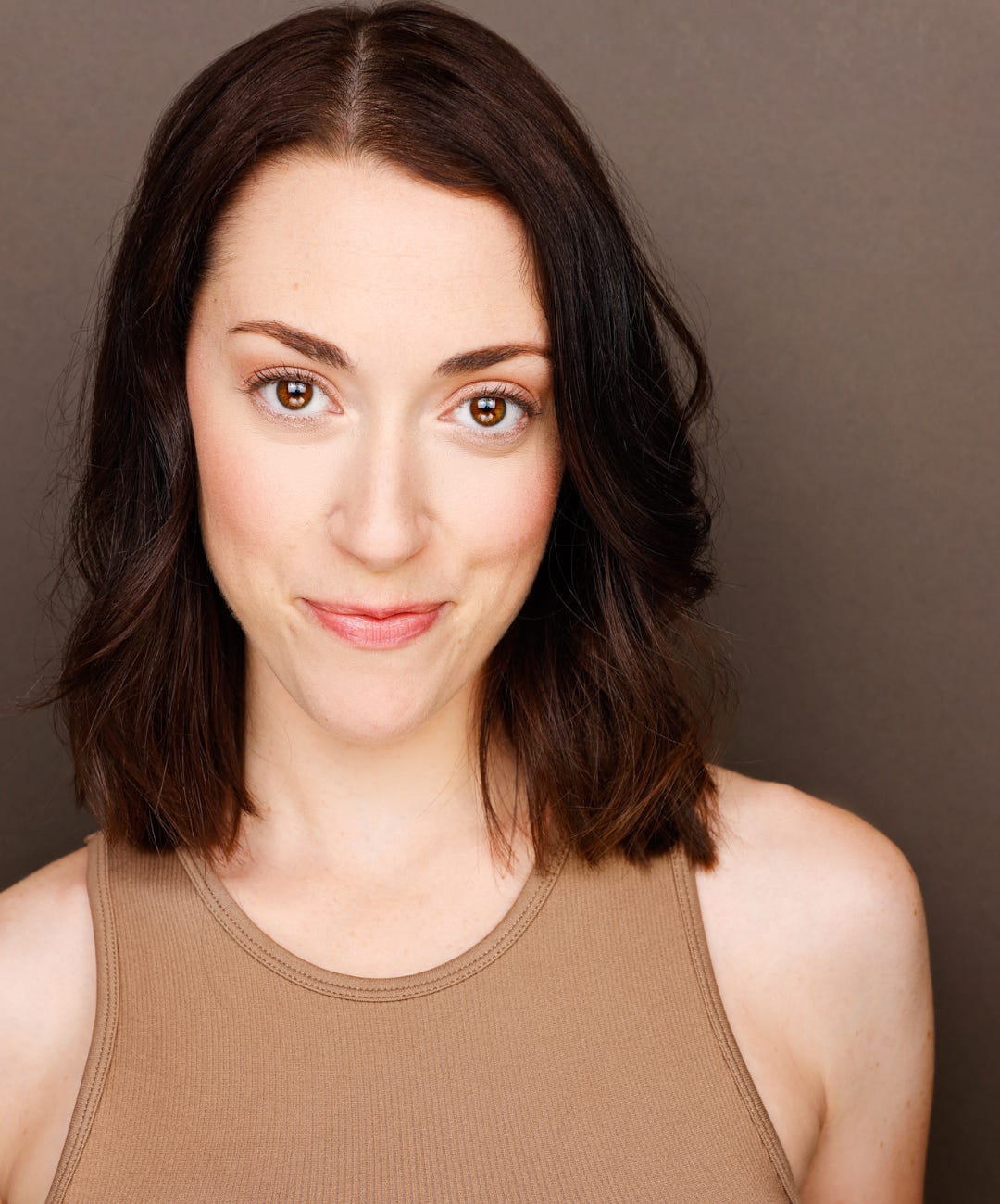
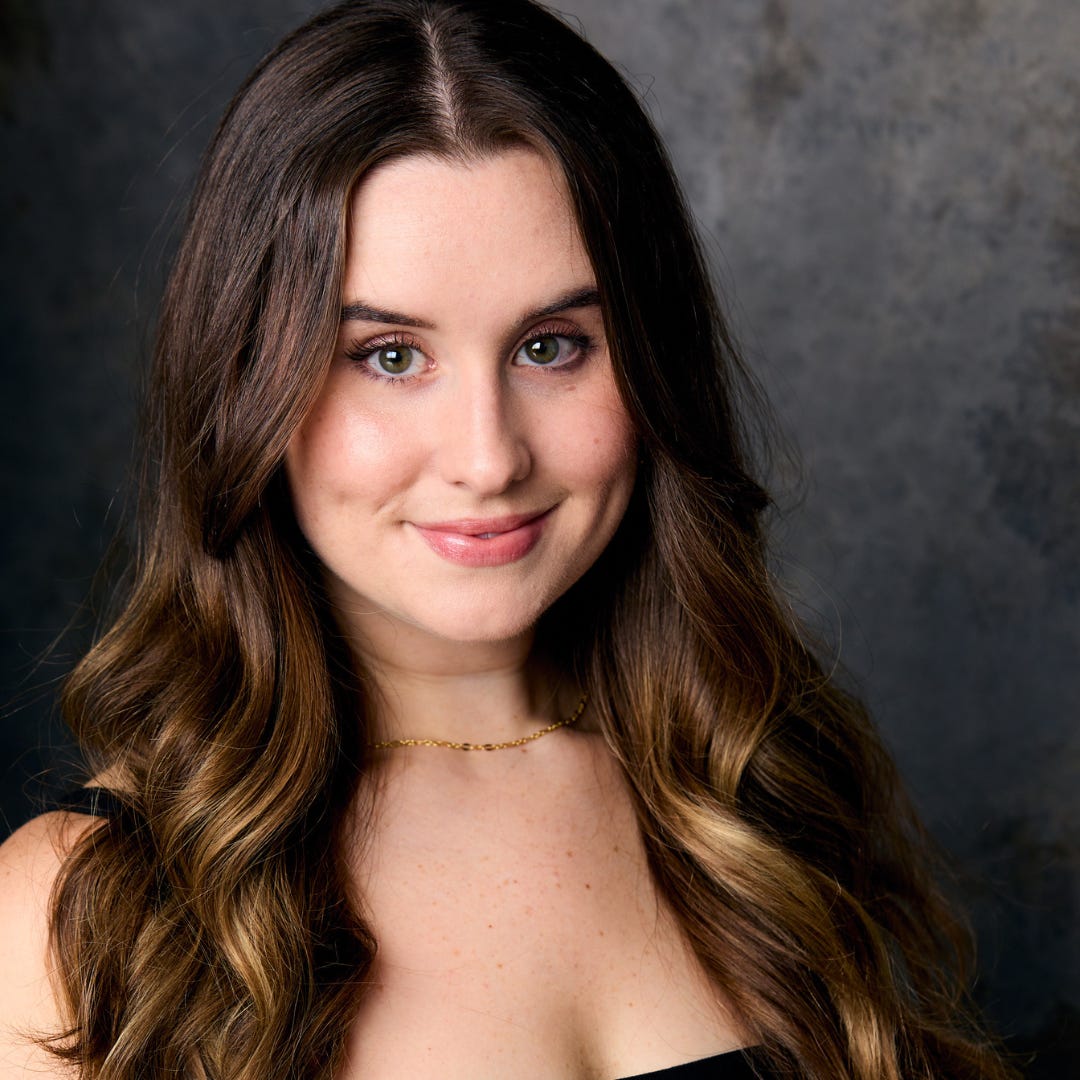
Everyone please welcome my friend and acting consultant Jen DiBella to A Broadway Body: Continued Conversations! Jen is an actor, acting coach, and acting career consultant. I’ve been working with Jen since 2020, and not only is she a wonderful human being, she’s also an insanely talented actor and knows exactly what she’s doing when it comes to helping actors.
Jen approaches our conversation through her lens as both an actor and a coach. She spoke about her own body image story and shared how she brings what she has experienced in this industry into her coaching sessions and career consultations to help better support the actors she works with. Jen is incredible, and I cannot wait for you to hear our conversation!
Below, I’ve selected a few excerpts from our conversation for the blog. If you’d like to listen to the full talk, you can hit play above or listen on Apple Music or Spotify.
When I was younger in dance classes, we had this dance teacher who was notorious for (I mean, rightfully so) coming up to someone going, “Are you okay? Are you eating?” this and that, and it almost became a goal to me and my best friend – and we were young, maybe 12 or 13. We wanted to have a talk with that dance teacher. We wanted that dance teacher to say, “Are you okay? Are you eating?” Because we thought that that was a spotlight being shown on us. Like, “We're thin. We're thin.” How unhealthy is that?
- Jen DiBella
Megan Gill: It's also funny asking people, “Hey, do you want to get coffee with me and talk body image?” How fun! Can this be the norm?
Jen DiBella: I feel like so many people in LA would be like, “No.”
Megan Gill: “You want me to divulge all of the weird things that my brain thinks about my body?”
Jen DiBella: And, like I said earlier to you while we were off record, it is something, my relationship to my body, my relationship to body image, is not only something that has shaped who I am as a person, but also an artist. In this industry, I've had to work with different tools to make me feel more secure when I'm feeling insecure. I think now as a consultant and talking to actors every day, of all shapes, sizes, colors, whatnot, there's more perspective for me to get outside of my own self and to hear what other people are concerned about, and then look back into the mirror going, “Okay, you just told that person they have nothing to worry about. Why are you worrying about this?” And I just think it's really important especially as a consultant and coach who just wants the best things for actors.
Megan Gill: And for the actors that you love and that you work with and that you just see the good in them.
Jen DiBella: I know I'm partial, but everyone I work with, I'm just like, “You're amazing! You can do this! You succeed at everything you do!” And I'm so proud of them, and so, it hurts my heart when someone gets a breakdown for a character and they go, “Oh, but they're gonna want someone like this. They're gonna want someone like this,” physically. I'm like, fuck that.
Most of the time, no one knows what they're looking for, so give them the best option that they can find, and you're not going to be ignored. And second of all, just get out of your own way, I think is really what it comes down to. Just get out of your own way. You have no idea what they're looking for. You're limiting yourself.
Now, you could say that, but then I'd do the same shit to myself, and I'd have to catch myself and go, “Okay, well, walk your walk,” you know?
Megan Gill: Which is just so hard to do. It's so easy to sit here and compliment your friend.
Jen DiBella: Yes!
Megan Gill: It's hard to look in the mirror and compliment yourself.
Jen DiBella: Yeah.
Megan Gill: And isn't that just really sad?
Jen DiBella: Because when it comes to seeking validation from partners, from friends, just having this conversation and prepping to think about certain things that did shape me with body image, when I was younger in dance classes, we had this dance teacher who was notorious for, I mean, rightfully so, coming up to someone going, “Are you okay? Are you eating?” this and that, and it almost became a goal to me and my best friend – and we were young, maybe 12 or 13. We wanted to have a talk with that dance teacher. We wanted that dance teacher to say, “Are you okay? Are you eating?” Because we thought that that was a spotlight being shown on us. Like, “We're thin. We're thin.”
Megan Gill: Right, like that's the goal.
Jen DiBella: How unhealthy is that?
Megan Gill: Oh my god. Oh my god. Oh my god. And it's wild, too, because that teacher was probably – good on that teacher for checking in with the students, absolutely. But the educator doesn't understand how that, then, affects the other students who are not having that conversation, or who are not being pulled aside. It's like, whoa, the psychological gymnastics of that then trickles out.
Jen DiBella: But also, something that I hadn't thought about until you invited me to have this conversation – it’s interesting because, again, trigger warning for eating disorders, anorexia specifically. I think that these thoughts are there with you at a pretty young age and if you are – I don't want to say vulnerable to them. I don't really know where it comes from, but starting in dance classes, real young, I can remember looking in the mirror, because we all have to wear our leotards (hat was the uniform, obviously) and just thinking, “Oh, my legs are thicker than theirs. Why do I have a butt, and why don't they?”
Megan Gill: Yeah, me too, girl.
Jen DiBella: And then it was also just kind of like, “I'm so pale. I need to wear blush all the time.” Like, it also did develop into other things, and guess what? I'm still so pale. But it led to other things, but at a young age, thinking, “Okay, I look different in a leotard.” That was one thing.
I booked my first commercial, maybe one of my first commercials, in seventh grade, and it was this big deal. I got to take Amtrak to a different location. I got to go with my mom, obviously. And they needed my sizes, and me and this – so I was probably 13 or 12, in seventh grade, right? Something like that? And the other girl, who was +18 to always play younger. She was 20, I think, and it was me and her in this commercial playing high school students or something. And she was a size zero. I remember they asked for numbers. Numbers is what always what it came back to you for me. So, she was a size zero. I was a size six slash eight. And I just remember, “But she's so much older than me. Like, why am I so young with this larger number?”
Megan Gill: Oh, god, yeah. Yeah.
Jen DiBella: And then trying on the pants that wardrobe got for me, also, let's just keep in mind, all sizes are not uniform. Every single brand that is mass produced, it's still a frickin’ struggle to find jeans that fit me correctly, for most people. And so, yes, a size six in whatever brand I was wearing, I was six. Whatever brand wardrobe got, I did not fit in the six. So they had to go out shopping and get it, and then all of a sudden I felt guilty for that because they had to go get me a different size. I also felt, “Why did I have another number that was larger than my co-worker?”
And what's really sad – oh god, I feel like this is where my childhood kind of died. In a way. Oh my god, in a way. I had such a beautiful childhood. I love my family so much. But on the way to the shoot on Amtrak, my mom and I were so excited and like I got a Frappuccino from Starbucks and I got a big cookie for the train. And then on the way back from the shoot, my mom was like, “Do you want to get Frappuccino? Do you want to get –?” and I wouldn't have anything. And this is where it starts because I felt like I inconvenienced wardrobe that they had to go get a different size. First of all, props to wardrobe. They always have multiple sizes.
Megan Gill: Right, yes. For this reason.
Jen DiBella: They were not mad at me.
Megan Gill: Yeah. No, no, of course not.
Jen DiBella: They were like, “Oh, we need to go up a size. That’s fine.”
Megan Gill: When you’re that young and this is your first experience with it, it's a big moment, and you don't really know what's going on, and you're taking it all in, and you're learning.
Jen DiBella: So that's where the awareness started, and Seventeen magazine at the time, I just mentioned Frappuccinos, and they had some kind of article, “Are You Drinking Your Calories?” I think it was Seventeen magazine. I can't say. I loved Seventeen magazine,.
Megan Gill: Oh, there was a lot of that stuff. A lot of diet culture, beauty industry baked right on into those magazines, yeah.
Jen DiBella: Yeah, so then I was suddenly very aware of what I was putting into my body. Cut to two years later, I was a freshman in high school, and my best friend passed from cancer. That's a really young age, obviously, to have that happen, to have you try to wrap your head around what was happening. My friend was there, and then he wasn't.
And so, I didn't know th








 United States
