



Continued Conversations with Jennie Hughes
Description
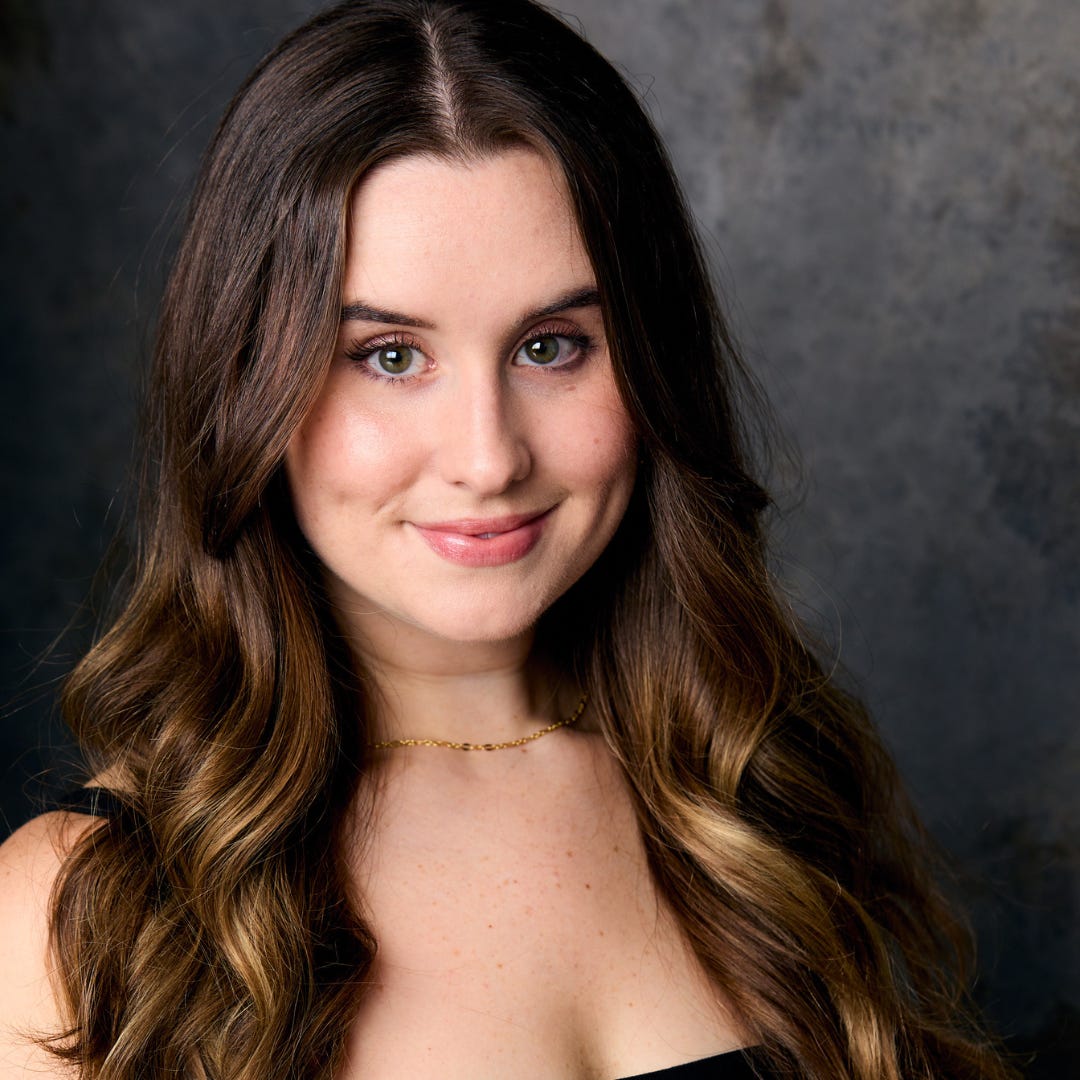
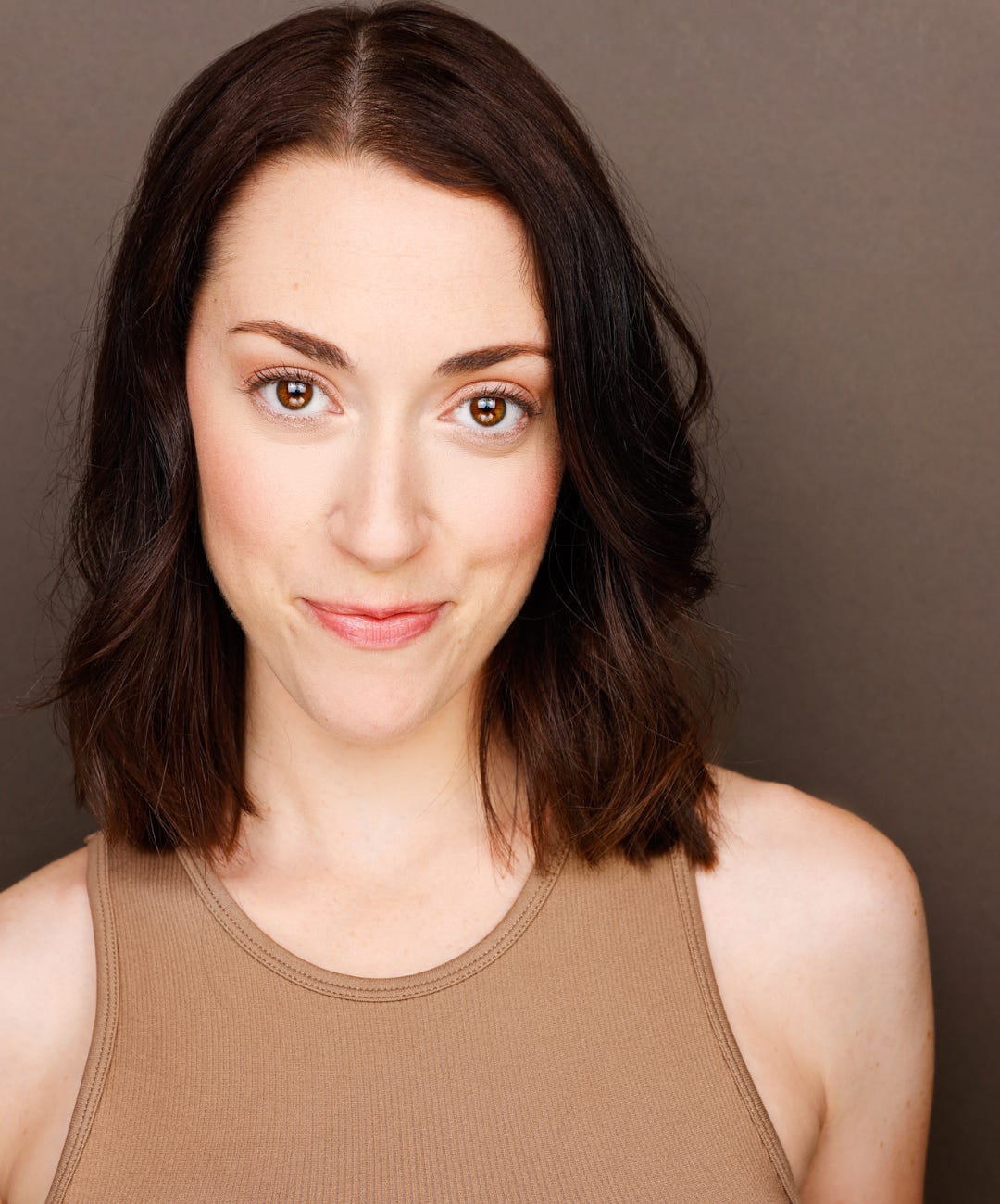
Everyone please welcome my Jennie Hughes, to A Broadway Body: Continued Conversations! Jennie is a multi-hyphenate theatre-maker based in New York City. She’s also the co-founder of Forager Theater Company, making art with those in her orbit to tell the stories she believes in. Jennie and I met in our college program, and her personal adversities as a stage actor helped shaped the story for my short film, A Broadway Body. Jennie’s body image resilience is admirable, and I’m obsessed with how Jennie’s experiences, as both an actor and a director/choreographer, lead her to cast a variety of different human beings in her productions.
In our conversation, we debunk “clean girl aesthetic,” how it feels to come out of a college musical theatre program and reorient to our health, “The Chicago Effect,” and finding the balance when it comes to food, movement, and overall health. I cannot wait for you to listen into Jennie’s thoughts around bodies onstage and her own body image journey too!
“I'm now trying to find the middle between working out and obsessing, and never working out and not thinking twice about any portion of my health. Like you said, it's all balance. And doing something for me instead of for other people is kind of where I'm at in my body journey.“
- Jennie Hughes
Megan Gill: Jennie, do you want to introduce yourself and a little bit about your work and the work you're doing in the world now?
Jennie Hughes: Absolutely. So I'm Jennie. I am a New York City-based theater maker. I am multi-hyphenate to the extreme. I am the co-founder and artistic director of Forager Theater Company, which I'm really happy that we just got our 501-C3 Nonprofit status, so I'm really excited to be in that world. It's gonna be a challenge but a new challenge and one where hopefully people can give us tax-free donations and their lives a little bit easier.
Yeah, so our mission as a company is actually my mission as a person, which is to make theater and art with what is around you and who you have in your orbit, the pieces that physically come to you. I'm a huge street picker. I love to take furniture and stuff from the street, and I kind of take that mindset with me in every aspect of the theater world. If I meet someone with an interesting idea, I'm like, “Oh, how can I make that a play or a concert, or things that.” And I also am really interested in the idea of sustainability, both environmentally but also humans, you know? I feel a lot of times in our industry, actors and directors and designers are kind of seen as commodities or things – obviously we're all humans, we're all people, but oftentimes we're expected to sort of be a machine and power through. And I'm really interested in creating space where you're a human first and an artist second. So that's a kind of my zhuzh as a person.
I moved to New York City almost nine years ago, and we'll get into it more, but I started as an actor you know, got my little BFA and then moved to New York City straight out the gate from graduating. I always directed in school and assisted everybody, and we can get into that a little bit more later, but I grew really sort of excited by the potential of making something from the ground up. So I do a lot of original work and a lot of plays and musicals and things like that. So that's me!
I of course have a side gigs barista teaching nannying, and I try to find work that excites me and I can still feel creative while doing so. So that's my biz!
Megan Gill: That's lovely. That's so important. And I also really appreciate how you have followed your heart, moving from being an actor to becoming a director and now having a theater company where you get to tell the stories you want to tell and you get to cast the bodies you want to see on stage. And I think it's so, so vital that more of us are doing that and making space for those types of productions.
Would you want to share a little bit about the ways in which you make sure that you're prioritizing centering different humans and different humans’ stories?
Jennie Hughes: Yeah, absolutely. I grew up obviously in the theater scene, and we went to the same college which I don't think our school is unique in its sort of fatphobia. I think that that is just a very common thread when it comes to many schools and BFA programs. But I was lucky enough during that time to be parallel learning with my mentor at the time. She ran a theater company, and she was really always pushing me to choreograph and assistant direct and help in any way I could. And she gave me the advice, you know, when I wasn't getting cast in school like, “Oh, well why don't you be the assistant director? Why don't you be the assistant choreographer and try to be the voice that you wish you had in the space, in the rooms?”
So I learned a lot by observing these directors and people, but again, the parallel person in my life, that's the reason I stuck with it. I think if I had just had the BFA program, I probably would've been so disheartened, you know? But I had this woman who was casting tall girls as ingenues. She was casting fat girls. She was casting any type of body in an unconventional casting way. I've always just known that that was the way to go, but I didn't have that example in school. I had it with my mentor.
And I think that I kind of went off on a tangent, but with my work, one of the big reasons I wanted to direct and produce was, yes, to tell my own stories and to tell the stories that I feel passionately about. And you learn very quickly when you move to a new city, or at least New York City, that if you want something done you can't just wait for it to happen. You do have to just make it. And not all of us have that privilege. Not everybody has the privilege to work a full-time job and then have the energy and the stamina to do your other work outside of that. I do think that's a very privileged thing that I get to do. Some people, you know, have to wait and things that. So I want to recognize that too.
But my purpose is I look at Broadway and I look at commercial theater and they're – not to shit on Broadway. They’re trying, but it’s still with the goal of just ticking a box and selling tickets. And I'm more interested in, well, why can't a fat person play a romantic lead? And same with queerness and transness too. I'm developing a show right now where we want it to be a collective of people, and we're pushing really hard to make the trans actors not only play trans characters, you know? Why do we put people in these tight boxes? I was always put in like, “Oh, well you're curvy, so how about you be the mom? How about you be the best friend?” Which, sure, I love playing those characters, but I was lucky to go to a program after college where I was putting myself in these boxes. We're getting a little bit into my actor side now, but I was putting myself in these boxes.
I went to the Open Jar Institute by the way. It was super eye-opening and really cool. And any young folks out there should try to go and check it out because the guy who runs it, his whole concept is that if you teach yourself that you can only jump so high, you'll never jump higher, you know? And I was sort of putting myself in this box. I was like, “Oh, well, you know, I know I'm kind of bigger, so I'm feeling really pressured to lose weight, but I just hate working out. No matter what I do, I can never be thin enough.” And in school they were like, “Well, so just try harder.” They're like, “Here's this diet book. Here's this exercise plan,” right? And when I got to New York City, my mentor goes, “Well, do you want to work out? Do you want to be thin?” And I was like, “Well, no, but I feel I have to.” And he goes, “You can dance circles around all these other girls. That makes you surprising. That makes you interesting. If you don't want to be thin, you don't need to be. Just do what you want to do and trust that whoever sees that is going to know what to do with it,” basically.
And that was great. And once I clocked that and once I understood, “Oh wait, it's actually a waste of my time and energy to force myself into this box, I started getting more and more callbacks.” Almost every dance call I went to, I got kept because I just went in with the knowledge that I know what I'm doing, you know? And sometimes it will be rewarded, you know, or not even rewarded, but that it's worth trying and it's not worth waiting until you're the right body to do something.
Megan Gill: Right. Do you feel that completely shifted your confidence and your alignment with showing up authentically as a human and a performer?
Jennie Hughes: Absolutely. It totally did. And I think it's still so ingrained. The fatphobia and the body checking is really, really ingrained in us depending on, you know, your upbringing and whatever. But at least if you went to a BFA program, you're aware of what your body looks like. But I honestly – and again, this might just be because this is my path in life – but I started to sort of collect other people like me in my circles. I started to find the people who were not aligning with five-foot-eight, a hundred and, you know, whatever pounds. And I started making stuff with them. I would start doing cabarets and play readings in my living room and things like that. I'm trying to find the right words. I feel everybody knows that what they're seeing on commercial Broadway is everyone's perception of the ideal. But if you look around you, everybody does not look like that. So I'm kind of like I want to create theater with people who agree that that's not reality. And I also want to make theater for people who want to see themselves represented in






 United States
