


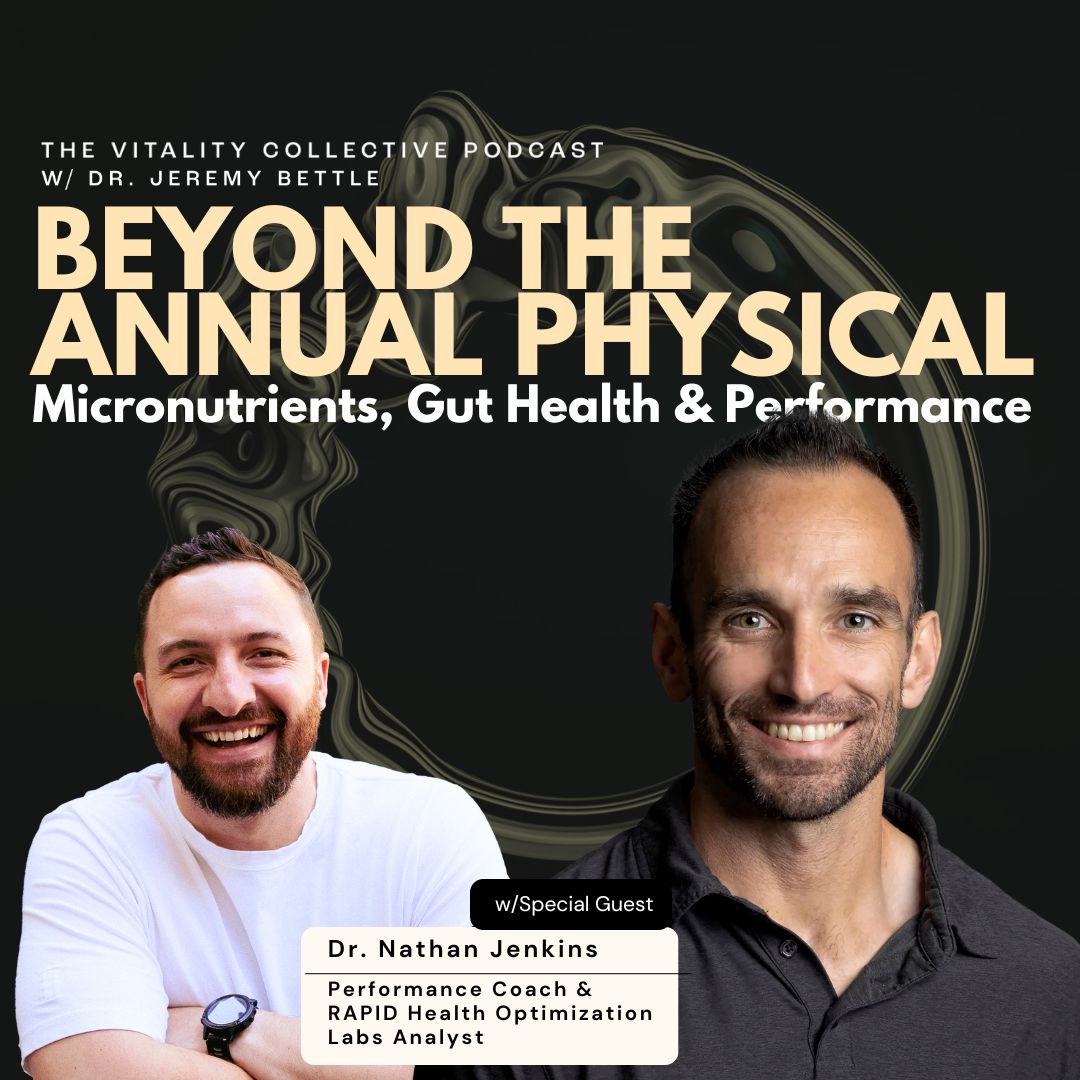
EP 46: Beyond the Annual Physical: Micronutrients, Gut Health & Performance With Dr. Nathan Jenkins
Description
Episode Summary
In this conversation, Dr. Jeremy Bettle sits down with Dr. Nathan Jenkins, a former University of Georgia professor with nearly 100 published research papers who now serves as the labs analyst for RAPID Health Optimization. They explore why so many people are deficient in key micronutrients like magnesium and vitamin D, critical connections between gut health and systemic inflammation, and the difference between primary aging (inevitable cellular changes) and secondary aging (lifestyle-driven decline). Dr. Nathan explains why your standard blood work misses crucial markers, what symptoms might indicate gut dysbiosis, and why eating a variety of colorful vegetables is the most underrated intervention for health. This episode is essential for anyone looking to move from reactive sick care to proactive performance optimization.
Guest Bio
Dr. Nathan Jenkins is an exercise physiologist and performance coach with nearly two decades of experience in sports nutrition and human performance. A former associate professor at the University of Georgia, he's published nearly 100 research papers examining how the body adapts to exercise and nutrition at the cellular and molecular level. Since leaving academia, Nathan has worked with over 1,500 clients as a sports nutrition coach and now serves as the labs analyst for RAPID Health Optimization. In that role, he integrates deep expertise in physiology, lab interpretation, and coaching to design highly individualized supplementation and nutrition protocols.
Links
-
Instagram: @DrNathanJenkins
Three Actionable Takeaways
-
If you're not regularly exercising three to four days per week (ideally more) and pushing yourself to some level of discomfort during sessions, you're leaving significant benefits on the table. Your training should include a mix of strength and endurance work, and at times should look somewhat similar to how a real athlete trains to combat the effects of aging.
-
Eat a bunch of different colored vegetables with different types of fiber, targeting 20 to 30 grams of fiber per day. This is the most important thing you can do for gut health, and it will have ripple effects throughout your entire system including inflammation, immune function, and even cognitive performance.
-
Think of every hour of sleep before midnight as counting for two hours, and every hour after midnight as counting for one hour. This mental framework helps prioritize getting to bed earlier and can massively improve both objective and subjective measures of sleep quality, which impacts everything else in your life.
10 Takeaways
-
Standard annual blood work typically includes only a complete blood count and metabolic panel (maybe 10-15 markers), missing critical micronutrient status, detailed hormone panels, and performance-related markers that comprehensive panels assess
-
Seven to nine out of ten active, health-conscious people going through his assessments are deficient in magnesium, omega-3s, vitamin D, and multiple B vitamins despite doing most things right with their training and macronutrients
-
RBC (red blood cell) magnesium is a better indicator of true magnesium status than serum magnesium because serum levels are tightly regulated by the kidneys and can appear normal even when cellular stores are depleted
-
Magnesium is critical for over 500 enzymatic reactions in the body, affecting sleep quality, cognitive function, muscle fatigue, muscle pain, and strength output, making it one of the few "evergreen" supplements almost everyone should take
-
Elevated homocysteine, an inflammatory marker tied to cardiovascular disease, almost always indicates a B vitamin deficiency and is commonly found even in otherwise healthy people
-
Approximately 70% of the body's entire immune system resides in the gut, meaning localized gut inflammation can have significant "spillover" causing systemic inflammation affecting every organ system
-
Dysbiosis (gut microbial imbalance) means too few beneficial commensal bacteria that produce short-chain fatty acids like butyrate, and too many opportunistic or pathogenic bacteria, creating an inflammatory environment
-
Pay attention to bowel movements as a primary indicator of gut health. They should be regular (same time daily), normally formed (not loose diarrhea or hard constipation), and consistent. Accepting irregular GI function as "normal" is a mistake
-
Brain fog, cognitive changes, difficulty recalling words, frequent illness, and persistent fatigue are all potential symptoms of gut dysbiosis and should prompt investigation even without obvious GI distress
-
Primary aging refers to inevitable biological cellular changes over time, while secondary aging is lifestyle-driven decline that can be prevented through proper training, nutrition, sleep, and stress management




















 United States
