


General Transcription Factors in Eukaryotes (CMB part 9)
Description
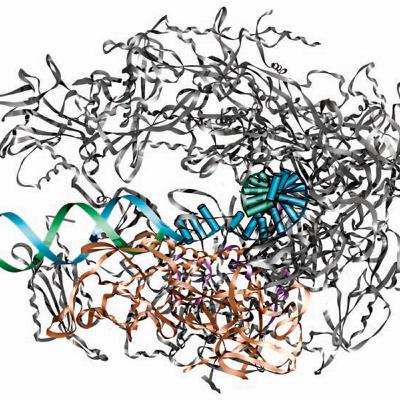
Transcription factors bind to class II promoters in vitro in the following sequence: (1) TFIID, with assistance from TFIIA, attaches to the TATA box. (2) TFIIB binds subsequently. (3) TFIIF facilitates the binding of RNA polymerase II. The remaining factors bind in this order:IIE and TFIIH, creating the DABPolFEH preinitiation complex. Notably, TFIIA's involvement appears to be optional in vitro.
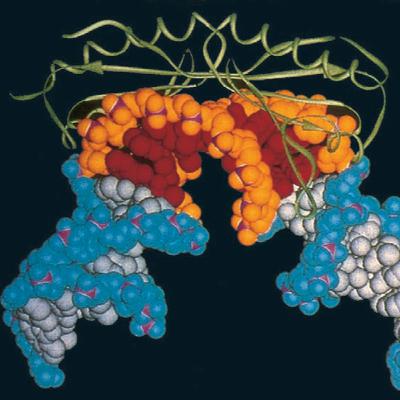
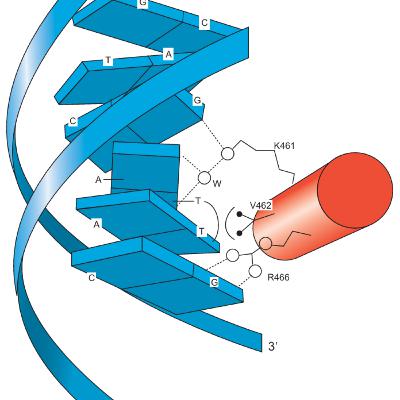
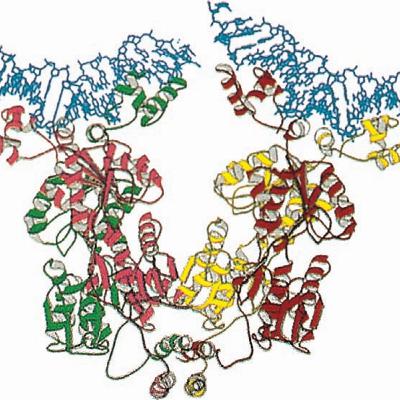
TFIID is composed of a TATA-box-binding protein (TBP) and 13 additional polypeptides referred to as TBP-associated factors (TAFs). The TATA-box-binding domain of TBP is located within its C-terminal 180 amino acid fragment. The interaction between TBP and the TATA box occurs within the DNA minor groove. The saddle-like shape of TBP aligns with the DNA, and the underside of the "saddle" forces the minor groove open, bending the TATA box by approximately 80 degrees. TBP is essential for the transcription of most genes across all three classes, not limited to class II genes.
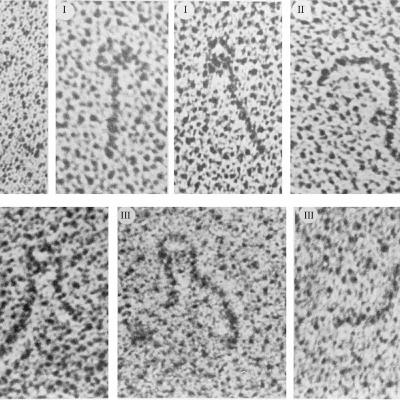
Many TAFs are evolutionarily conserved across eukaryotes and serve multiple roles, including interacting with core promoter elements and gene-specific transcription factors. TAF1 and TAF2 enable TFIID to bind to initiator elements and downstream promoter elements (DPEs), allowing TBP to bind to certain TATA-less promoters. TAF1 and TAF4 facilitate TFIID's interaction with Sp1 bound to GC boxes upstream of the transcription start site, ensuring TBP binding to TATA-less promoters containing GC boxes. Different TAF combinations are required to respond to various transcription activators, particularly in higher eukaryotes. Additionally, TAF1 exhibits enzymatic activity as both a histone acetyltransferase and a protein kinase. However, TFIID is not universally required in higher eukaryotes. For instance, some Drosophila promoters require an alternative factor, TRF1, while others depend on a TBP-free TAF complex.






 United States
