


Podcast 24, Stories of the Bible, “The Book of Job, Ch 10”
Description
Podcast 24, Stories of the Bible, “The Book of Job, Ch 10”
To help us understand Job, Chapter 10, I shall use the format of the poem itself. Chapter 10 is a Chiasm. That means the entire structure is based on Chiastic Parallelism. Chiastic Parallelism takes on the form of ABC CBA. That means that A & A are in a close parallel relationship; B & B are in a close parallel relationship; and C & C are in a close parallel relationship. The first A is comprised of verse 1; the second A is comprised of verses 18-22. The first B is comprised of verses 1-2; the second B is comprised of verses 14-17. The first C is comprised of verses 3-7; the second C is comprised of verses 8-13. You do not need to remember the numbers of course. The relationships will become clear in the discussion. First let’s combine Verse 1 and verses 18-22. It will appear that they were meant to be read together to begin with. The second completes the first. Their relationship is Synthetic, where the second concept completes, expands, or clarifies the first concept.
Job 10:1 & Job 10:18-22
“My soul is weary of my life; Wherefore then hast thou brought me forth out of the womb? Oh that I had given up the ghost, and no eye had seen me! I should have been as though I had not been; I should have been carried from the womb to the grave. Are not my days few? cease then, and let me alone, that I may take comfort a little, Before I go whence I shall not return, even to the land of darkness and the shadow of death; A land of darkness, as darkness itself; and of the shadow of death, without any order, and where the light is as darkness.”
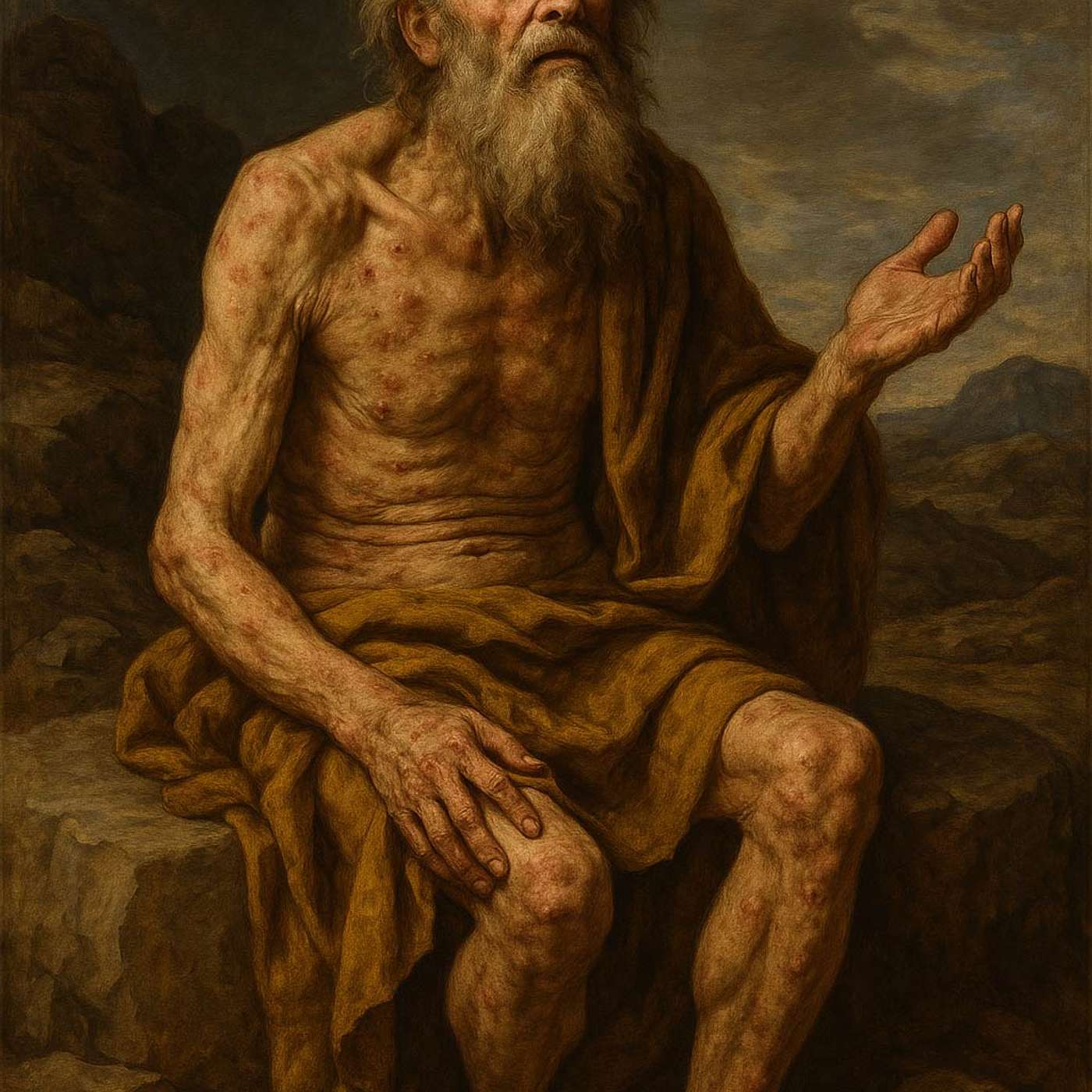
Can you see how the end completes the beginning. In fact, it appears to be a continuation of the beginning. Job is saying ‘I am weary of life. Why was I born?’ Job is in deep despair. Another point should be clarified. “Whence I shall not return, even to the land of darkness and the shadow of death.” He is not describing the spirit world or the afterlife or heaven. “The land of darkness and the shadow of death” refer to earth. Job is saying he will not come back to earth. Job’s phrase is probably Shakespeare’s inspiration for one of his most famous lines in Hamlet.
William Shakespeare, Hamlet, Act 3, Scene 1
“But that the dread of something after death—
The undiscovered country, from whose bourne
No traveler returns—puzzles the will,
And makes us rather bear those ills we have
Than fly to others that we know not of.”
3 RON
“The Land of Darkness and the shadow of death” may have been David’s inspiration for the 23rd Psalm.
Psalm 23
“The Lord is my shepherd; I shall not want. He maketh me to lie down in green pastures: he leadeth me beside the still waters. He restoreth my soul: he leadeth me in the paths of righteousness for his name’s sake. Yea, though I walk through the valley of the shadow of death, I will fear no evil: for thou art with me; thy rod and thy staff they comfort me. Thou preparest a table before me in the presence of mine enemies: thou anointest my head with oil; my cup runneth over. Surely goodness and mercy shall follow me all the days of my life: and I will dwell in the house of the Lord for ever.”
Job looks forward to death because he believes in the resurrection. He believes in God. He believes in his own worthiness. He knows it will be a greater place. Nowhere does Job lose his faith in God. He complains of his suffering because it is so unbearable. He doesn’t understand it. Later he says, he is “full of confusion.”










 United States
