


Publishing Is Getting Smaller—and Maybe Better
Description
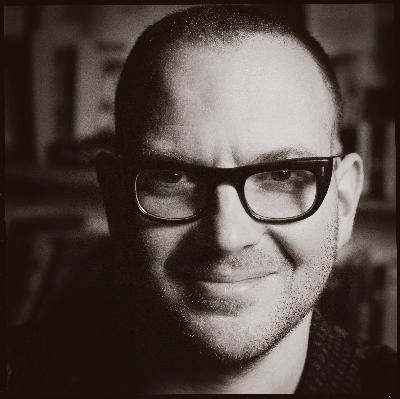
Welcome to the latest installment of our interview series here at The Honest Broker—also available on our new YouTube channel. You can also find it on Apple Podcasts and other podcasting platforms.
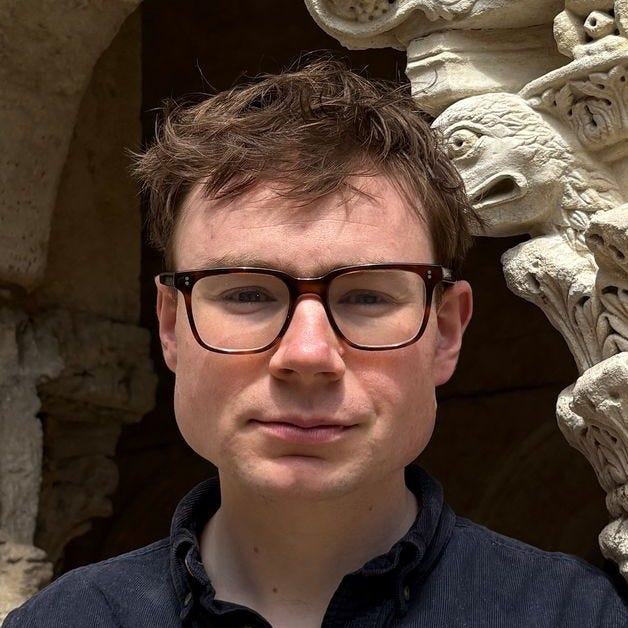
Today, I’m excited to share my conversation with Ross Barkan.
Please support The Honest Broker by taking out a premium subscription (just $6 per month).
Ross is a busy man. He is not only the writer behind Political Currents by Ross Barkan — he’s also a contributor to venues like New York Magazine, the author of the novels Glass Century and Colossus, and editor-in-chief of The Metropolitan Review. So naturally, I wanted to talk to Ross about writing and publishing.
Once we started talking, we couldn’t stop. This interview is cut down from nearly three hours of continuous conversation. We discussed the state of publishing, the difficulty of launching a new culture review, America’s political and literary history, AI art, and the ways that platforms like Substack are changing how we write and what we can get away with.
Below are highlights from the interview. For the rest of our conversation, check out the video at the top of the page.
Highlights from the Ross Barkan Interview
Jared: I was prepping for this interview, and I was talking to a mutual friend of ours, Alexander Sorondo. He asked if I was going to talk to you about politics or about literature and writing. I had to confess to him that I didn’t know you wrote about politics. I knew you exclusively from novels and things like The Metropolitan Review.
Ross: I like politics, but my love lies with literature and culture, and I think that comes across on Substack. That’s why Substack’s been so great, because the literary world is very hard to penetrate. Media is hard, but there is a very straightforward way that I could tell someone to break in. Come up with an idea, look at what the publication publishes, find the editor’s email, pitch them. They might not respond, but you can always pitch again, and at some point they might respond.
The media world still moves at a pretty quick pace, and even though it is very desiccated due to all these economic forces, there are still outlets out there. The literary world is still this very strange organism, and it really took Substack for me to have any kind of literary career or stature of any kind. Substack’s not perfect. I don’t want to turn into a Substack fanboy, but it is different. It has opened up so many pathways. You mentioned Alexander Sorondo. We published his 15,000-word profile of William Vollmann in The Metropolitan Review. This is a piece that he could not get published anywhere. And to me, that’s insane.
Jared: I think I was the third reader of Alex’s novel, Cubafruit. He sent me a copy before it was released, and I read it, and I was like ‘This is great. I love it.’ He went through that whole slog. He had an agent who loved his novel. He was getting personalized rejections, and every rejection would be effusive with praise, and they would say “We don’t know where to place this.” He’s a writer who just doesn’t fit into an easy mold. There is no niche for him right now. He’s doing something interesting, and the current media environment doesn’t know where to place him, and so he had to just go find something on his own. Insofar as I’m ever a fan of a platform, it’s because it gives people an opportunity to do something cool.
Ross: I was starting my career at the height of the 2010s digital upstarts. That was supposed to save writing and media, and it did not. And it’s fascinating to see with Substack that it has inculcated genuinely original writing. Sorondo, Naomi Kanakia, John Pistelli, Henry Begler, Sam Kriss. They write differently. That’s what’s so exciting.
You don’t see that from a lot of mainstream outlets anymore. There’s less room for literary nonfiction. When you look at New Journalism, with people like Tom Wolfe, or Joan Didion, or Gay Talese — they had very particular styles, right? They didn’t all sound the same. What bothered me about the internet era was it felt like there was a real flatness to the prose. I have really enjoyed this era much more.
Jared: It’s gone past that kind of voiceless, generic, Millennial snark.
Ross: I called it Gawker speak. The snark voice. That was so dominant. Very irony-drenched, very casual, humorous but kind of bitter. When it started, there was something refreshing about it. But then that took over the internet. I felt like the capital ‘L’ literary was lost in that, and I also felt like other types of idiosyncratic writing could not break through in the same way.
Jared: So tell me a little bit about the thought that went behind founding The Metropolitan Review. What are you trying to accomplish with this? Because I do think it sits in a really interesting space. It’s long-form. Pieces are usually over 3,000 words, which on Substack is huge. You’re also going to have a print edition.
Ross: Yes, we are planning for a print edition. It’s going to be very nice. We have a great team: Lou Bahet, Vanessa Ogle, Django Ellenhorn. Lou wanted to do something longer-lasting, that could sit on your bookshelf. So, we’re taking our time to get it there, and we have a printer in place, and now it’s really just getting these logistics in order.
I wanted to start a publication that’s going to review books, because it is harder and harder to get books reviewed. I also wanted a publication that lets the writer be the writer. We do edit The Metropolitan Review, but the edit will never erase someone’s voice. You will sound like yourself. We don’t have a single house style.
Jared: I think that the choice you’re making to have a premium printing is the right one. I read a lot of science fiction and fantasy authors as well. They expect that their books won’t sell well unless they get big on TikTok. But you make your money by then later printing 1,500 copies of an ultra-premium edition.
Ross: That’s amazing. It’s a great idea.
Jared: We’re not going to see a return to the old paperback era, where you could make a living just churning out science fiction paperbacks over the weekend. But you can cultivate a fan base that will pay for the real thing, and they don’t just want a hardback. They want a really luxurious item that they can put on their shelf.
Ross: Exactly.
Jared: When I was reading Glass Century, I noticed that the way you write it had an ambivalence about identity throughout. Very early on, there’s a fake wedding between Mona and Saul. There are these little conversations that let people know everyone’s ethnic backgrounds. Saul will tell you the difference between German Jews and Russian Jews. So, I thought this was an ‘identity-first’ book. But your main character, Mona…she doesn’t care. Was that intentional?
Ross: I think I have always felt very ambivalent about it. I am a secular Jew. I had a bar mitzvah and did a little Hebrew school, but I never identified myself first as a Jew or even as a white person. I always felt that I am me and my interests. Some would say that’s a luxury and a privilege, and I accept that. Having grown up in New York City, I always understood identity was very complicated.
I didn’t grow up with a great distinction between the German and the Russian Jew, but I knew my history. I understood that the German Jew and the Russian Jew are, in fact, quite distinct. I’m descended from the Russian Jews, the Jews who came from the pogroms of the 19th century. The fled here during the era of mass immigration, and that’s why I’m always going to be pro-immigrant. So, it’s a little similar to Saul in the book. The German Jew is very assimilated, was wealthier. They also tended to be almost Christian-passing.
Jared: I think Saul uses the phrase ‘barely part of the tribe.’
Ross: Yes, that’s how the German Jew is seen. Dianne Feinstein, the late senator from California, is a great example of this. She was a German Jew who grew up in San Francisco. She attended a Catholic school, and that was something that was not uncommon if you were part of this older community.
Jared: I liked Glass Century because it was a book that took identity seriously, but it didn’t make it the only focus.
Ross: I’ve found the woke/anti-woke binary very exhausting. I think we need to





 United States
