


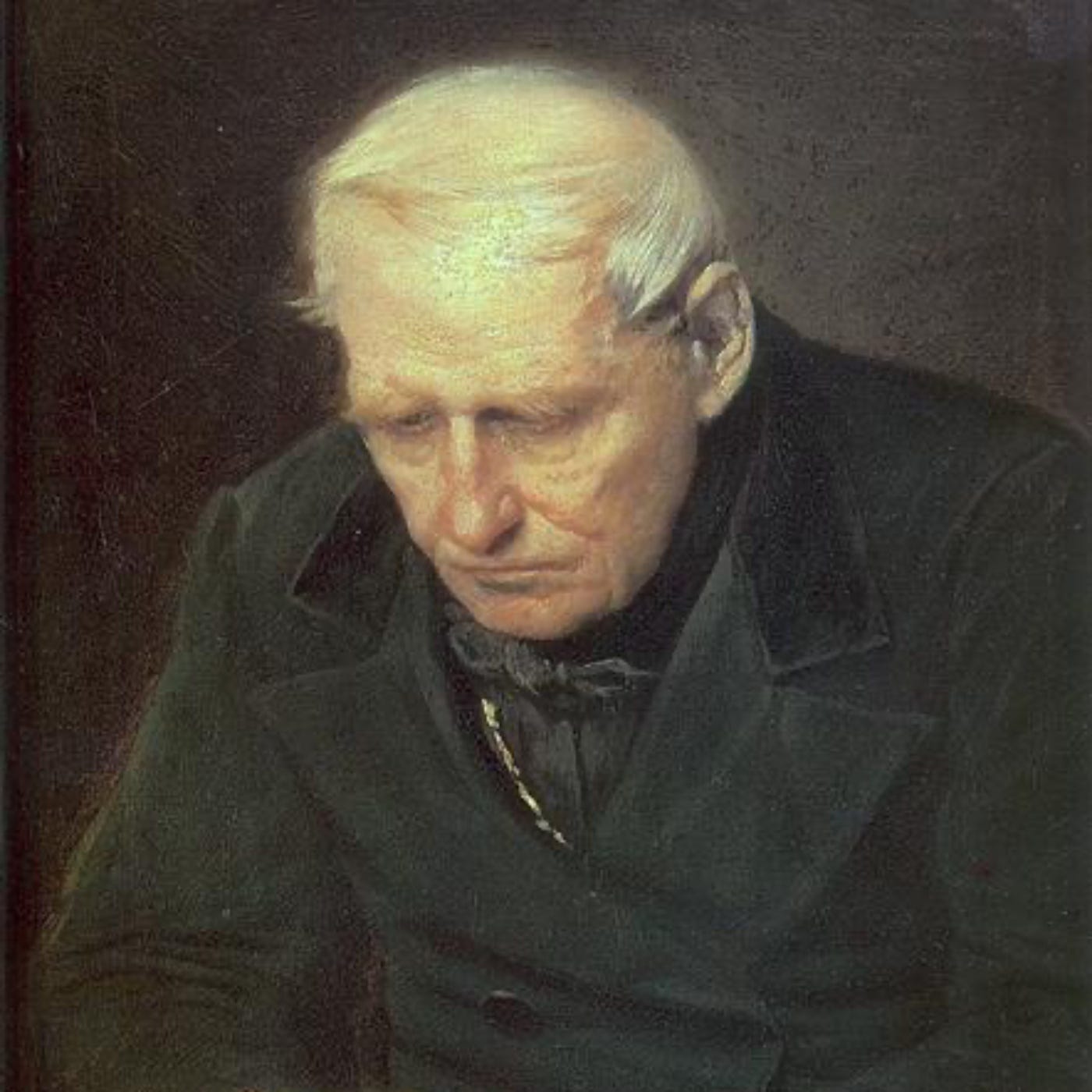
Quality
Description
"Quality" by John Galsworthy
“Then, placing my foot on a piece of paper, he would two or three times tickle the outer edges with a pencil and pass his nervous fingers over my toes, feeling himself into the heart of my requirements.”
One hesitates to draw too many conclusions about the personality of an author based solely on his or her written work. That said, I was hardly surprised in my research to find John Galsworthy described as a quiet intellectual, somewhat aloof and reserved. It seemed to me only natural that someone inclined to introspection would write a story like “Quality,” which patiently burrows into the modest but artful industriousness of a cobbler’s shop, like a mouse burrowing into the toe of a shoe.
John Galsworthy began writing in the 1890s after meeting Joseph Conrad, with whom he developed a long and mutually supportive friendship. Having been in the midst of a budding legal career, this allowed him to continue working pen-to-paper and simply alter the objective of the output. He nonetheless wrote under a pseudonym initially—John Sinjohn—to avoid disappointing his family with the shift. By 1904, Galsworthy was writing under his own name and in 1906 published The Man of Property, the first book of what became the renowned The Forsyte Saga series, later popularized with a BBC episodic in 1967 (and more recently with the excellent remake starring Damien Lewis in 2002).
Much of Galsworthy’s work circulates around the struggle between the individual and society during a period of rapid industrial upheaval. In “Quality,” originally presented as a play and subsequently published as a short story, we are exposed to the effect of this change on the business of a high-end bootmaker, through the eyes of a lifelong customer. The plight of the hard-working Gessler brothers asks the reader to acknowledge the hypocrisy and trade-offs inherent in “progress.” Galsworthy doesn’t bemoan the progress, per se, simply the associated casualty of quality and the respect its craftspeople once commanded.
Please enjoy…
Subscribe to Classics Read Aloud to receive future readings, including commentary and interesting "et cetera" tangent links, right to your inbox: https://classicsreadaloud.substack.com/subscribe
This is a public episode. If you would like to discuss this with other subscribers or get access to bonus episodes, visit classicsreadaloud.substack.com













 United States
