


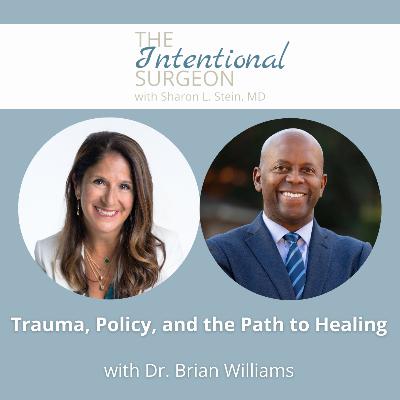
S02EP23: Trauma, Policy, and the Path to Healing with Dr. Brian Williams
Description
In this powerful episode, we welcome Dr. Brian Williams, a trauma and critical care surgeon, Air Force veteran, and former Congressional healthcare policy advisor. Dr. Williams shares the intensely personal journey that led him to write his critically acclaimed book, The Bodies Keep Coming: Dispatches from a Black Trauma Surgeon on Racism, Violence, and How We Heal.
Dr. Williams discusses how the 2016 mass shooting of police officers in Dallas—where he was the trauma surgeon on call—served as a pivot point, driving him to use his expertise to seek broader societal change. He offers deep insights into the unique burdens faced by surgeons of color, the necessity of humility in the operating room, and actionable ways all healthcare professionals can transition from clinical practice to policy advocacy.
What You'll Learn
- The Pivot Point: How the Dallas mass shooting was the impetus for him to make a serious change, building on years of internal realization that his impact needed to extend beyond the hospital walls.
- The Surgeon's Conflict: He speaks openly about the duality of a surgeon's psyche: the humility and feeling of "not enough" that drives continuous learning, balanced with the necessary confidence and bravado to perform life-saving procedures. He shares a humbling, early-career story about calling a code on a patient who was simply asleep, highlighting the core lesson of humility and attention to detail.
- The Weight of Life-and-Death Decisions: Dr. Williams reflects on the enormous responsibility trauma surgeons carry, living with the question of whether a different split-second decision could have changed a patient's outcome during a mass casualty event.
- The Burden of Black Surgeons: As a Black male physician, he discusses the burden of having to exceed standards to maintain credibility, and the emotional toll of dealing with overt and covert racism daily. He emphasizes that increased diversity in the workforce is essential for a better healthcare system and patient experience.
- Turning Expertise into Policy: Dr. Williams asserts that every healthcare professional has a voice and perspective needed by policymakers. He offers tangible, actionable ways surgeons can influence healthcare equity and policy, including:
- Writing Op-Eds based on research for a wider audience.
- Speaking at local City Council or Commissioners Court meetings about healthcare items on the docket.
- Getting involved with policy and advocacy groups within professional societies (like the ACS) or external organizations (like Doctors for America).
- The Head and the Heart of Advocacy: The key to successful policy influence is bringing both evidence (statistics and data) to make them believe you, and stories to make them care. Always offer a concrete solution when voicing a concern.
Resources:




 United States
