


Sinocism Podcast: Tania Branigan on her book Red Memory: The Afterlives of China's Cultural Revolution
Description
Episode Notes:
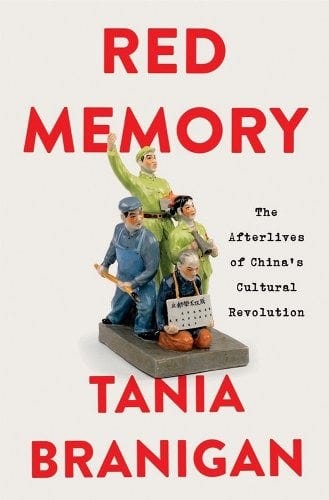
Tania Branigan and I discuss her excellent new book “Red Memory: The Afterlives of China's Cultural Revolution”. Tania writes editorials for the Guardian and spent seven years as its China correspondent, reporting on politics, the economy, and social changes. We overlapped in Beijing and became friends. I have also published an excerpt from the book here. You can purchase the book on bookshop.org or on Amazon. The audio edition will be available from Tantor starting 7/11/23 wherever audiobooks are sold.
Links:
China's Cultural Revolution remembered by artist Xu Weixin - video | The Guardian
2012 - China's Cultural Revolution: portraits of accuser and accused | The Guardian
Xilin Wang: Music by a Survivor | Hamburg International Music Festival - YouTube
Wang Xilin ( 王西麟 ): Yunnan Tone Poem (1963) - YouTube
Transcript:
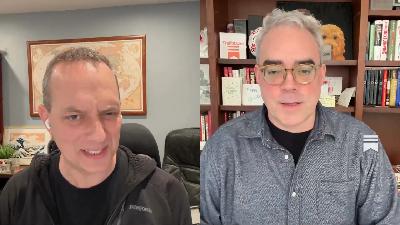
[00:00:00 ] Bill: Welcome back to the occasional Sinocism podcast. I know I've been absent for a while, and now that I do the Weekly Sharp China podcast, I've realized I like podcasting. So we'll be recording more Sinocism episodes with guests I think are really interesting.
[00:00:11 ] Bill: Today. We are very lucky to have Tania Branigan to talk about her excellent new book Red Memory: The After Lives of China's Cultural Revolution. As Tania writes, it is impossible to understand China today without understanding the Cultural Revolution. That is something I agree with wholeheartedly. So much so that I even wrote my grad school thesis on Mao badges.
[00:00:30 ] Bill: I will also be running an excerpt from her book in the coming days, which is released in the UK already and will come out on May 9th in the United States. Tania writes editorials for the Guardian and spent seven years as its China correspondent reporting on politics, the economy, and social changes.
[00:00:45 ] Bill: She lives in London. Welcome Tania, and congratulations on this great book.
[00:00:50 ] Tania: Thank you so much for having me on.
[00:00:51 ] Bill: Oh, it's my pleasure. It's great to see you. It's been it's been a few years and I appreciate it. I got an advance read of the book last year and it [00:01:00 ] really is it really is, I think, an important book and an important contribution.
[00:01:03 ] Bill: So can you, just for the listeners, can you just talk a bit about your background? So when you first started working in China and what you did when you were there.
[00:01:12 ] Tania: So I came out to China in 2008 just ahead of the Olympics, right at the start of what turned out to be an incredibly news packed year, as you may recall, right?
[00:01:22 ] Tania: And I had never particularly wanted to be a foreign correspondent per se, but I just felt that China was the story of our time, really. Which is only proof to be truer perhaps as time has gone on. And because it's a pretty small bureau there were never more than two of us, max. And quite often there was one of me, I was covering absolutely everything.
[00:01:44 ] Tania: So from natural disasters through to politics, through to culture, business even very occasionally when I couldn't help hit sport. But I became particularly fascinated by this topic and by [00:02:00 ] China's more recent history,
[00:02:02 ] Bill: one question on your time there. When you arrived, was it already past the Wenchuan earthquake?
[00:02:07 ] Tania: No. And in fact that was one of the sort of formative moments, for me reporting on, yeah,
[00:02:15 ] Bill: it's 15 years next in two weeks. It's crazy.
[00:02:18 ] Tania: It's hard to believe it's gone past so fast. I still think about those parents who lost kids.
[00:02:24 ] Bill: And that, no, it's terrible. Terrible
[00:02:29 ] Bill: So what led you to this book?
[00:02:33 ] Tania: You did actually, as I say in, as I say in the book, I probably wouldn't have written it without you. So I was obviously aware of the Cultural Revolution. I knew something about it. I'd read a little around it. But then it was just when I had that lunch with you and then over coffee, you started telling me about your father-in-law and about going to try to find his body, which I feel is probably a story actually [00:03:00 ] at this point, that you should.
[00:03:00 ] Tania: Tell rather than me.
[00:03:02 ] Bill: And just for listeners the, I actually tried to have my wife be a special guest but she didn't want to do it, but Tania has interviewed her. I'll put a link in, into the story. I think we you did that great story about the artist Xu Weixin 徐唯辛, which maybe we can talk about too.
[00:03:20 ] Bill: But no, sadly, my. Like many Chinese families people had horrible experiences in the Cultural Revolution. My father-in-law killed himself in 1967 1968 when my wife was like a year old, a year and a half old. And it, it just, it was a, he did it in Miyun outside of Beijing and involved a train.
[00:03:47 ] Bill: And so we went. We had a family member a brother of his who was dying, who came back to say goodbye, and the family went out to this train embankment with this idea that maybe they could dig up the [00:04:00 ] bones and no one could figure out remember where it happened. Someone went to the village and found an old lady who remembered, and the old lady's warning was just be careful because that time that year, a lot of people jumped in front of train.
[00:04:15 ] Bill: So just make sure you get the right bones. It was just like, oh my God. It was just like this collective ..I mean it was just, it was quite chilling, but it was also like, this is what every so many people of a certain age in China bear these kinds of memories.
[00:04:34 ] Tania: And so that I think was really what struck me.
[00:04:37 ] Tania: Obviously the sort of the cruelty and the loss and the fact that so many people are still living with loss now. And then as you said, the fact that the villagers were matter of fact about it. I remember you saying, they were sympathetic in some ways, but just uncomprehending of your mission in another way.
[00:04:59 ] Tania: And [00:05:00 ] I think in many ways it was the fact that it was so commonplace, really, that stuck with me because there were so many horror stories you hear from the Cultural Revolution, horrific atrocities that have taken place, but here was a loss, which in a way was sort of typical and that people were still living with the consequences of.
[00:05:25 ] Tania: And so I remember Carol saying to me, You know that even though she was now a mother herself, she couldn't imagine what it would be like to have a father, that there was this kind of space in her life and she couldn't imagine it being filled. And I think that really said so much about the way that people are still living with the consequences all these years on.
[00:05:50 ] Bill: And it really, I think, and it's how people process lost and process the anger and the grief and so much. A lot of it is repressed and we've [00:06:00 ] seen cycles over the years of expressions or people trying to express, we had right after Xi Jmi came into power, I think one of the, one of the earliest red guards trying to make an apology.
[00:06:10 ] Bill: And, it angered Xi Jinping. It's one of those things where in many ways there were periods where there's been an allowance or it's been allowed to talk about it and then it gets pulled back and you can't really talk about it. And I think we're now one of those periods, but back to where we were talking about it, it was also really around that, around the artist Xu Weixin and what he was doing.
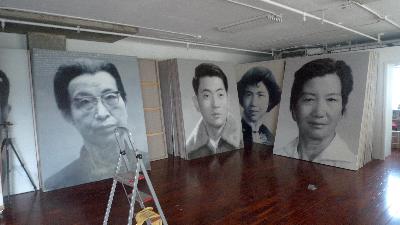
[00:06:37 ] Tania: That's right. . And so you suggested I go off to see him, which was an extraordinary experience because he has this, or had this studio full of around a hundred paintings and they are just immense. It's, I think it's quite hard for people who haven't seen them to imagine them, isn't it?
[00:06:53 ] Tania: Because they're. So daunting when you look at them, they're two and a half meters tall. They're monochrome. [00:07:00 ]
[00:07:00 ] Bill: And you, I have you did a video for The Guardian. I'll put that in the show notes for people. We've been there. We took our kids cuz my wife's dad and her grandparents were in it.
[00:07:10 ] Bill: So three, three of her family members are in it. And they are, you went there and then were you in Beijing for his show or you missed, you were, you came after?
[00:07:17 ] Tania: No, I came after. And of course that was the only show that he had on the mainland. Of these works we should proba







 United States
